Modern plastic surgery traces back to World War I, when trench warfare left many soldiers with severe facial injuries. An ear, nose, and throat (ENT) surgeon and a dentist pioneered ways to restore the form and function of those soldiers' faces, work that led to the Queen Victoria Hospital in England. David M. Butler, MD, facial plastic surgeon at Pacific Neuroscience Institute, trained in both ENT, head and neck surgery and facial plastic surgery, which is now the core of his practice. 310-829-7792 pacificheadandneck.com Call: 310-582-7640 Enjoying the show? It helps other listeners find us.
The TED-Ed team provides an in depth look at the powerful features of the newly-launched TED-ED Beta website. You'll learn how TED-Ed videos are created, how they are arranged, about the learning materials that surround each video, and how you can create customized or "flipped" lessons based on any TED-Ed video or any video on YouTube. http://ed.ted.com (http://ed.ted.com/)
On episode #119 of the Infectious Disease Puscast, Daniel and Sara review the infectious disease literature for the weeks of 10/27 – 11/9/26. Hosts: Daniel Griffin (http://www.parasiteswithoutborders.com/) and Sara Dong (https://febrilepodcast.com/about-us/) Subscribe (free): Apple Podcasts (https://podcasts.apple.com/us/podcast/infectious-disease-podcast/id1622649470), RSS (https://feeds.libsyn.com/413927/rss), email Become a patron (https://www.microbe.tv/contribute) of Puscast! Links for this episode Viral FDA Approves First Plasmid DNA-based Immunotherapy (https://www.fda.gov/news-events/press-announcements/fda-approves-first-plasmid-dna-based-immunotherapy-adults-recurrent-respiratory-papillomatosis?CampaignID=987&interactionId=ATM9cprQ0B1FDBIpa7QqwCxkCaPfbVHYvJX-BNi4hAHDRH_1aRldrA%3D%3D) for Adults with Recurrent Respiratory Papillomatosis (FDA) A DNA Shot (https://www.youtube.com/shorts/dlMFkyjVZw8) Against Warts in the Throat: How Voceryq Works (YouTube) Bacterial Doxycycline v
Why do we sleep? Well... that's a tricky question. More easily answered is the question, "How do we sleep?" In this episode of Crash Course Psychology, Hank discusses some of the ways our brain functions when sleeping and how it can malfunction as well. Want more videos about psychology? Check out our sister channel SciShow Psych at https://www.youtube.com/scishowpsych! -- Chapters: Introduction: What Happens When We're Sleeping? 00:00 What is sleep and why do we do it? 1:20 How do we sleep? 1:56 Rapid Eye Movement (REM) 2:38 4 Stages of Sleep 3:08 Sleep Deprivation 4:28 Sleep Disorders 4:47 What do we dream about? 6:08 Why do we dream? 7:26 Review & Credits 9:46 -- Crash Course is on Patreon! Want to find Crash Course elsewhere on the internet? Facebook - http://www.facebook.com/YouTubeCrashCourse Twitter - http://www.twitter.com/TheCrashCourse Instagram - https://www.instagram.com/thecrashcourse/ CC Kids: http://www.youtube.com/crashcoursekids
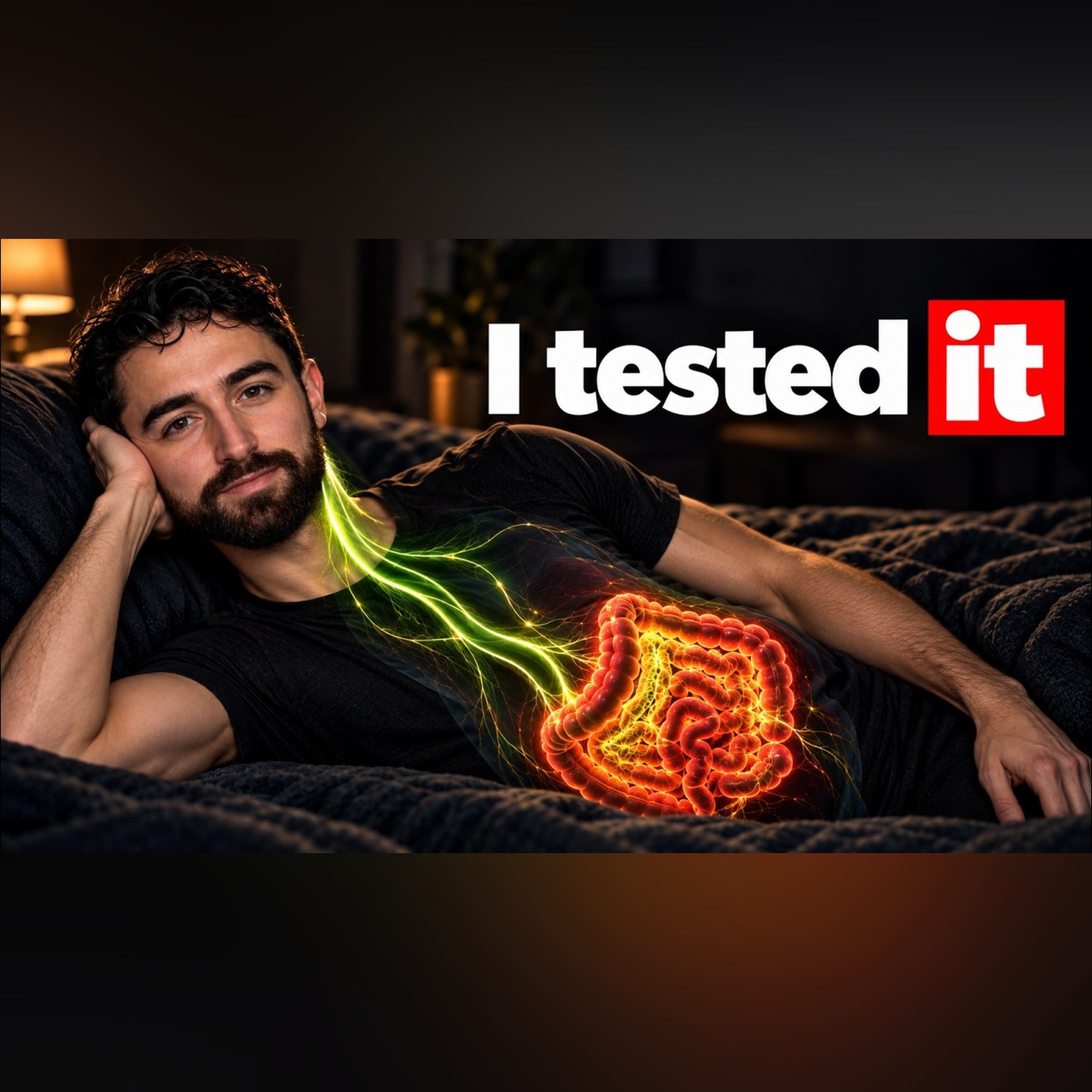
For early access, all references, and additional nuances, check out the associated StayCurious Metabolism newsletter https://staycuriousmetabolism.substack.com/p/reset-your-vagus-nerve-to-control?r=40ekz2 It’s completely risk-free with a 30-day money-back guarantee, so you can test it and see how your body responds. Chapters 0:00 – Reset Your Vagus Nerve to Control Gut Inflammation 1:38 – The Takes Are Greater Than I Realized 3:06 – The Gut Health Study That Hit Close to Home 5:52 – What The SUMOylation? 6:54 – Quick Summary of Main Points So Far 8:18 –Stimulating the Vagus Nerve Lowers Inflammation in Humans 11:04 – The Wiring Diagram 13:13 – Levers and Tools You Can Use Today Description What if stress isn’t merely “in your head,” but is physically wired into inflammation? In this video, I explore the emerging science of the vagus nerve, inflammation, gut health, and autoimmune disease. We start with research showing how stress worsened experimental colitis in mice, and how electrica
So today, Craig is going to try to get inside the heads of voters by discussing how voters make decisions. Now obviously, like all decision making, voter decisions are influenced by a multitude of factors, but the three we are going to focus on today (and the three political scientists seem to think play the biggest role) are party loyalty, the issues involved in an election, and candidate characteristics. Now this all might seem like common sense, and well it sort of is, but it's important to be aware of and take into account the factors that influence our decisions - especially when considering that many voters are not particularly well-informed. Produced in collaboration with PBS Digital Studios: http://youtube.com/pbsdigitalstudios Support is provided by Voqal: http://www.voqal.org (http://www.voqal.org/) All attributed images are licensed under Creative Commons by Attribution 4.0 Want to find Crash Course elsewhere on the internet? Facebook - http://www.facebook.com/YouTubeCrashCo
This week, Stan Muller teaches you how intellectual property law functions internationally. Like, between countries. Well, guess what. There's kind of no such thing as international law. But we can talk about treaties. There is a bevy of international treaties that regulate how countries deal with each others' IP. The upside is that this cooperation tends to foster international trade. The downside is that these treaties tend to stifle creativity by making it harder to shorten copyright terms. You win some, you lose some. Crash Course is now on Patreon! Thanks to the following Patrons for their generous monthly contributions that help keep Crash Course free for everyone forever: Mark Brouwer, Jan Schmid, Steve Marshall, Anna-Ester Volozh, Sandra Aft, Brad Wardell, Christian Ludvigsen, Robert Kunz, Jason, A Saslow, Jacob Ash, Jeffrey Thompson, Jessica Simmons, James Craver, Simun Niclasen, SR Foxley, Roger C. Rocha, Nevin, Spoljaric, Eric Knight, Elliot Beter, Jessica Wode -- Crash Cour
Explore pranayama, conscious breathing, and the science of breathwork with yoga educator Mark Stephens, author of Breathing: The Art and Science of Pranayama. On this episode of Destiny, host Cliff Dunning examines how ancient yogic breathing practices connect with modern neuroscience, meditation, and spiritual awareness.What happens when we consciously observe our breath? How does breathing influence the nervous system, our mental state, and our experience of consciousness? Stephens traces pranayama’s evolution from shamanic and Vedic traditions through the Upanishads, Buddhism, Jainism, tantra, and modern yoga. Drawing on his comprehensive guide to more than 25 pranayama techniques, Stephens explains how posture, physical preparation, and attention support a deeper breathing practice. We explore how stress and social conditioning shape breathing habits, how breath awareness develops interoception—our ability to sense the body’s internal signals—and how conscious breathing can deepen
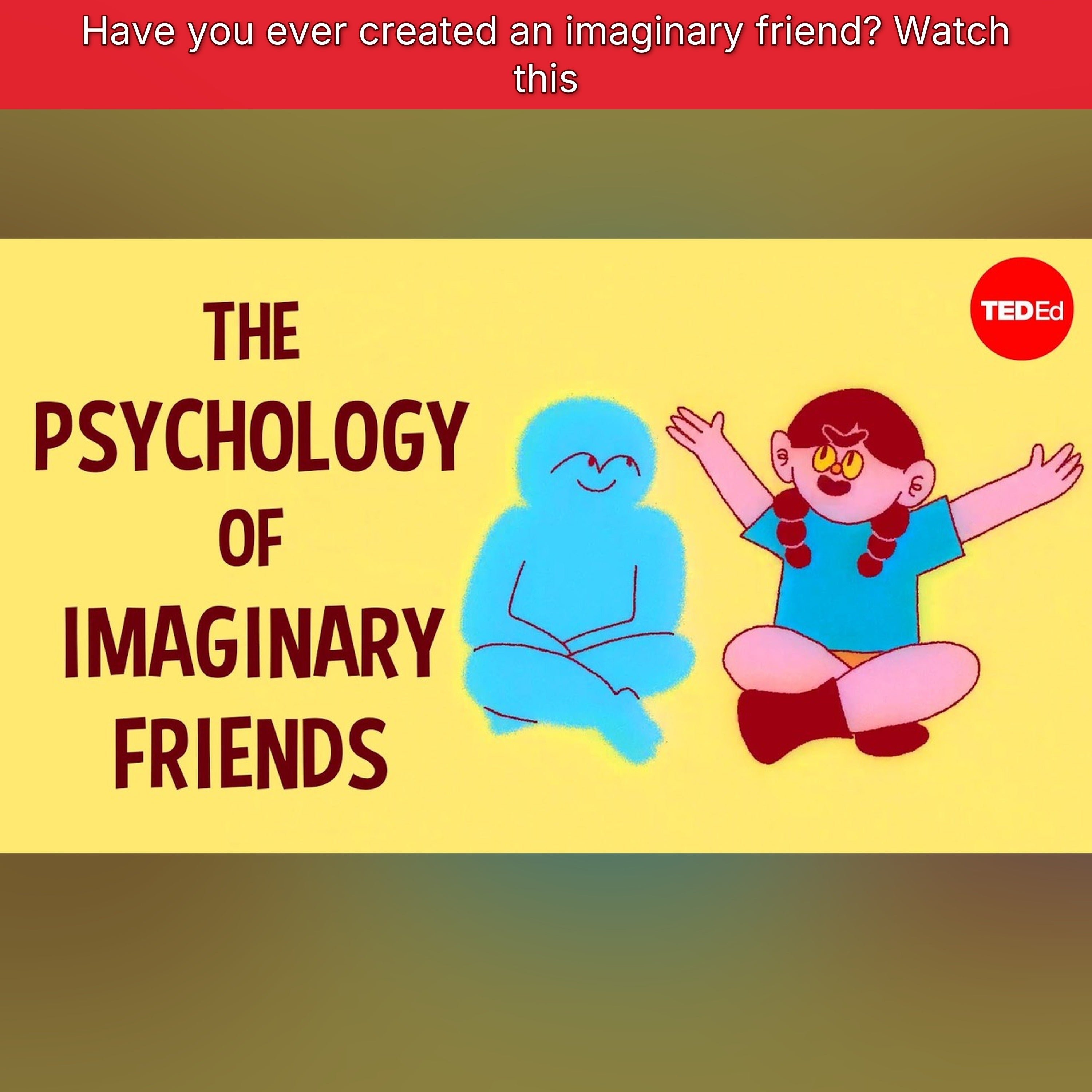
Explore the psychology behind why children invent imaginary companions and what skills they can develop through pretend play. -- Amia and her friend Zelba have been inseparable for nearly a year. They share secrets, play games, and rule over imaginary kingdoms. Amia sometimes has bad ideas, and Zelba goes along with them anyway. Amia is very real, but Zelba... is not. So, what leads kids to create these fictional figures? Explore why children invent imaginary companions and what skills they can develop through pretend play. Directed by Caitlin McCarthy. This video made possible in collaboration with the LEGO Group and the LEGO Foundation Learn more about how TED-Ed partnerships work: https://bit.ly/TEDEdPartner Support Our Non-Profit Mission ---------------------------------------------- Support us on Patreon: http://bit.ly/TEDEdPatreon Check out our merch: http://bit.ly/TEDEDShop ---------------------------------------------- Connect With Us -------------------------------------------
Trace the history of how wolves, one of humanity’s oldest rivals, evolved into the domesticated dogs we call “man’s best friend.” Uploaded 26-03-19 -- Since their emergence over 200,000 years ago, modern humans have established communities all over the planet. But they didn’t do it alone. Whatever corner of the globe you find humans in today, you’re likely to find another species as well: dogs. So how did one of our oldest rivals, the wolf, evolve into man’s best friend? David Ian Howe traces the history of humanity’s first domesticated animal. Lesson by David Ian Howe, directed by Cabong Studios. Sign up for our newsletter: http://bit.ly/TEDEdNewsletter Support us on Patreon: http://bit.ly/TEDEdPatreon Find us on Twitter: http://bit.ly/TEDEdTwitter Peep us on Instagram: http://bit.ly/TEDEdInstagram View full lesson: https://ed.ted.com/lessons/a-brief-history-of-dogs-david-ian-howe Thank you so much to our patrons for your support! Without you this video would not be possible! Javier L
Is the sweetener in your morning coffee affecting your blood sugar and insulin? In this solo episode, Dr. Mindy Pelz breaks down the science behind stevia, allulose, monk fruit, and other sugar alternatives. She explores what the research reveals about their effects on blood sugar, hormones, and metabolism, plus simple ways to reduce sugar cravings, retrain your taste buds, and make smarter choices for your health. Resources Mentioned Continuous glucose monitors (CGMs) and blood glucose testing (https://levels.link/drmindy) Eat Like a Girl (https://drmindypelz.com/books)by Dr. Mindy Pelz Reset Academy (https://resetacademy.drmindypelz.com/) For more resources related to today’s episode, visit the podcast episode page: https://www.drmindypelz.com/ep33 (https://www.drmindypelz.com/ep338)X Connect with Dr. Mindy: Follow Dr. Mindy on Instagram (https://www.instagram.com/dr.mindypelz/) Mindy’s newsletter (https://www.drmindypelz.com/)
In which Craig Benzine teaches you about the compromises met in ratifying the U.S. Constitution. The United States didn’t always have its current system of government. Actually, this is its second attempt. Craig will delve into the failures (and few successes) of the Articles of Confederation, tell you how delegates settled on a two-house system of representation, discuss the issues of slavery and population that have been embedded into our constitution, and fire up the clone machine to discuss how federalists and anti-federalist opposition provided the U.S. a Bill of Rights. And who knows, maybe all this talk of compromise will even inspire Craig and eagle to find some middle ground. Produced in collaboration with PBS Digital Studios: http://youtube.com/pbsdigitalstudios Support is provided by Voqal: http://www.voqal.org (http://www.voqal.org/) Chapters: Introduction: The Constitution 00:00 The Articles of Confederation: Precursor to the Constitution 0:28 Why did the Articles of Confe
Gamma-ray bursts are not only incredible to study, but their discovery has an epic story all its own. Today Phil takes you through some Cold War history and then dives into what we know. Bursts come in two rough varieties: Long and short. Long ones are from hypernovae, massive stars exploding, sending out twin beams of matter and energy. Short ones are from merging neutron stars. Both kinds are so energetic they are visible for billions of light years, and both are also the birth announcements of black holes. Check out the Crash Course Astronomy solar system poster here: http://store.dftba.com/products/crashcourse-astronomy-poster -- Chapters: Introduction 00:00 Gamma Ray Bursts and the Cold War 00:45 Where Do Gamma Ray Bursts Come From? 3:26 What Causes Gamma Ray Bursts? 6:11 Kinds of Gamma Ray Bursts: Long and Short 8:35 What Would Happen if a Gamma Ray Burst Hit Earth? 10:24 Review 12:53 -- PBS Digital Studios: http://youtube.com/pbsdigitalstudios Follow Phil on Twitter: https://twi
The Great Recession, the dot-com bubble, the Mexican debt crisis: for every major financial crisis in the last 50 years, the U.S. has answered with more borrowing and more money printing. These rescues were temporary fixes for an accelerating debt crisis, pushing the U.S. dollar – and the entire economic system – toward a breaking point. Now, with interest and entitlement payments slightly larger than total federal tax receipts, there are no painless options left to correct the situation. In this episode, Nate welcomes back macroeconomic analyst Luke Gromen to unpack the financial bind facing the United States and the broader Global economy, a bind that leaves governments with two options: print or default (or some combination of the two). Moving line by line through one of Luke's recent analyses (https://x.com/LukeGromen/status/2108244730379169862), they explore why austerity, long the textbook remedy for excessive debt, would likely backfire now, which in Luke's view makes a deep dep
The Fatty Liver Epidemic: Causes, Consequences, and Natural Solutions Michael T. Murray, N.D., explains the growing fatty liver epidemic, including its major causes, health consequences, and natural solutions. Learn how diet, weight, insulin resistance, inflammation, and lifestyle choices affect liver health and what steps may support recovery. #FattyLiver #LiverHealth #NaturalHealth
What exactly is consciousness? Well... that's kind of a gray area. In this episode of Crash Course Psychology, Hank gives you the basic ideas of what consciousness is, how our attention works, and why we shouldn't text and drive... ever... no, really, NEVER! Want more videos about psychology? Check out our sister channel SciShow Psych at https://www.youtube.com/scishowpsych! -- Chapters: Introduction: What is Consciousness? 00:00 States of Consciousness 1:51 Cognitive Neuroscience & Neuroimaging 2:16 Dual Processing 3:33 Selective Attention 4:23 Inattentional Blindness 6:13 How Magicians Use Psychology 7:08 Review & Credits 8:38 -- Crash Course is on Patreon! Want to find Crash Course elsewhere on the internet? Facebook - http://www.facebook.com/YouTubeCrashCourse Twitter - http://www.twitter.com/TheCrashCourse Instagram - https://www.instagram.com/thecrashcourse/ CC Kids: http://www.youtube.com/crashcoursekids
Uploaded 03-04-18 View full lesson: https://ed.ted.com/lessons/a-simple-way-to-tell-insects-apart-anika-hazra There are nearly a million known insect species in the world, but most have one of just five common types of mouthparts. Why is this information useful to scientists? Anika Hazra explains how the features of an insect’s mouthparts can help identify which order it belongs to, while also providing clues about how it evolved and what it feeds on. Lesson by Anika Hazra, animation by Giulia Martinelli. Thank you so much to our patrons for your support! Without you this video would not be possible! Mayra Urbano, Kostadin Mandulov, Alex Schenkman, Sdiep Sriram, Ivan Todorović, Antero Semi, Yanuar Ashari, Mrinalini , Anthony Kudolo, Querida Owens, Hazel Lam, Manav parmar, Dwight Tevuk, Stephen A. Wilson, Siamak H, Dominik Kugelmann, Katie Winchester, David Rosario, Samuel Doerle, Be Owusu, Susan Herder, Savannah Scheelings, Prasanth Mathialagan, Yanira Santamaria, Chad Harper, Dawn Jor
The 21st century brought a whole new host of challenges to the world, and Europe was no exception. In this video you'll learn about how an increasingly connected and complex world led to some pretty deep rifts in countries across the continent. We'll learn about financial crises that rippled across the world. We'll learn about wars and resultant migrations that sowed discord in many European nations. Increasing polarization and populism played out in movements like Brexit in the UK. While we don't know what the future holds, an understanding of the roots of conflict can help create a roadmap for the future. Watch our videos and review your learning with the Crash Course App! Download here for Apple Devices: https://apple.co/3d4eyZo Download here for Android Devices: https://bit.ly/2SrDulJ Crash Course is on Patreon! Thanks to the following patrons for their generous monthly contributions that help keep Crash Course free for everyone forever: Phil Simmons, Alexander Thomson, Mark & Susa
The drafting and adoption of the United States Constitution recalled many of the high ideals of liberty and freedom that were espoused during the Revolutionary War. But the compromises that were made to get all of the new states on board to ratify the Constitution undermined those ideals in a lot of ways. Today we'll learn about the 3/5 Clause and the Fugitive Slave clause, which entrenched the institution of slavery in the fundamental law of the new United States. Clint's book, How the Word is Passed is available now! https://bookshop.org/a/3859/9780316492935 VIDEO SOURCES -David Waldstreicher, From Revolution to Ratification (New York: Hill & Wang, 2009)John Hope Franklin, From Slavery to Freedom: A History of Negro Americans, 3rd ed. (New York: Knopf, 1967). Interpretation: The Slave Trade Clause | The National Constitution Center, , https://constitutioncenter.org/interactive-constitution/interpretation/article-i/clauses/761 (last visited Nov 13, 2020). -Article 1 Section 9 Clause 1
Get to know the story of Radio Venceremos, an underground radio collective that fought US-backed fascism during the Salvadoran Civil War. -- Since the 1800s, a handful of oligarchs had controlled nearly all of El Salvador’s land, forcing laborers to work for almost nothing. But in 1980, farmers and urban workers formed guerrilla groups to overthrow the US-backed dictatorship. These revolutionaries were attacked from every direction, but a group of rebels refused to be silenced. Diana Sierra Becerra shares the story of Radio Venceremos. Lesson by Diana Sierra Becerra, directed by Tomás Pichardo-Espaillat. Support Our Non-Profit Mission ---------------------------------------------- Support us on Patreon: http://bit.ly/TEDEdPatreon Check out our merch: http://bit.ly/TEDEDShop ---------------------------------------------- Connect With Us ---------------------------------------------- Sign up for our newsletter: http://bit.ly/TEDEdNewsletter Find us on Twitter: http://bit.ly/TEDEdTwitter
What began as an ordinary night out with friends in Denver took a frightening turn when one woman began sensing something dark and threatening nearby. She couldn't see it directly, but she felt its presence growing stronger, almost as though something was following her—and trying to get inside her. Leaving the bar didn't help. Neither did walking around or trying to distract herself. Desperate for answers, she contacted a psychic friend who suggested an unusual ritual to sever whatever connection might have formed. To her relief, it worked. But the darkness wasn't finished with her. It returned on other occasions, always bringing that same unsettling feeling. And during its final visit, something happened that made the experience even more disturbing. #RealGhostStoriesOnline #ParanormalAttachment #DarkEntities #ShadowPeople #ParanormalEncounters #SpiritAttachment #UnexplainedPhenomena #PsychicProtection #TrueGhostStories #HauntingEncounters Love real ghost stories? Want even more? Want
This is a Grave Talks CLASSIC EPISODE! PART TWO Tucked away in Salem, the Salem Witch Board Museum houses the largest public collection of Ouija boards in the world — and the only museum dedicated entirely to their history. Curated and owned by John Kozik, the collection features roughly 100 talking boards on display at any given time, spanning decades of design, cultural shifts, and public fear. As a founding member of the Talking Board Historical Society, Kozik approaches the Ouija board not as a novelty or a menace, but as a cultural artifact. Many of the boards in the museum come from private collections or donations, each carrying its own story — not of demons or possession, but of how people have interacted with the unknown across generations. The Ouija board’s reputation has long been shaped by Hollywood and rumor, casting it as a dangerous portal rather than a product of its time. But stripped down to its materials — wood, cardboard, ink, plastic — the question remains: where d
Tom Kurz promotes his book Why There Is No Climate Crisis, and argues media and politicians wrongly claim warming increases weather catastrophes. He attributes major climate swings to the Atlantic Multidecadal Oscillation and cites satellite-era hurricane data showing fewer hurricanes since 1990, with ACE and PDI declining and no meaningful trend in Category 4–5 storms. He says strong (EF2–EF5) U.S. tornadoes have declined since 1954, while weaker tornado counts rose due to better detection. Paleoclimate evidence (ice cores, dune sands, historical records) is cited to link colder periods to worse storms and droughts. He argues Arctic amplification and upper-troposphere warming weaken storm drivers, claims heatwaves/wildfires track natural cycles, droughts decline, greening and crop yields rise, climate- and famine-deaths fall, and IPCC finds no clear global flood trend. 00:00 Intro and Guest 00:39 Media Fear Claims 02:33 AMO Climate Cycles 07:27 Hurricane Trends Data 11:24 Tornado Stre
Hosted by: Fraser Cain (@frasercain (https://www.youtube.com/@frasercain)) From Jan 17, 2017. In 1859, the Sun gave off the most powerful solar flare on record. A blast of radiation and particles so strong it fried electrical wires and set telegraph towers on fire. What would happen if a solar storm of this magnitude happened today? It would be a very bad day indeed! Every bit helps! Thank you! ------------------------------------ Thank you! (Haven't donated? It's not too late! Just click (http://cosmoquest.org/Donate)!) ------------------------------------