OreoVsStatin: https://pubmed.ncbi.nlm.nih.gov/38276308/ Meta of 41 RCT: https://ajcn.nutrition.org/article/S0002-9165(24)00009-1/fulltext Cooper et al.: https://www.frontiersin.org/journals/endocrinology/articles/10.3389/fendo.2023.1326768/full Case series (Table 4): https://cdn.nutrition.org/article/S2475-2991(22)00007-5/fulltext Low-Sat Fat Keto Case Report: https://pubmed.ncbi.nlm.nih.gov/35498420/ Like this shirt? 0:00 - Something weird (Intro) 0:46 - HOW is this possible? (LEM) 3:46 - LDL 545 mg/dl! 4:37 - "Remove the driving factor" 5:12 - Why not "healthy" carbs? 5:58 - Returning to thought puzzle 6:35 - Why YOU should care 7:48 - Productive Provocation
Last time we learned about the Enlightenment, and the philosophers and thinkers whose ideas would shape governance for hundred of years. This week, we're learning how monarchs across Europe were influenced by those ideas. Adoption of Enlightenment ideas across Europe was...uneven, to say the least. In this episode you'll learn about Catherine the Great of Russia, Frederick the Great of Prussia, Maria Theresa of the Habsburg Dynasty, and Joseph II, her successor. We'll also get into the impact the Enlightenment had on a series of Louis in France. Sources -Elliot, John H. Empires of the Atlantic World: Britain and Spain in America, 1492-1830. New Haven: Yale University Press, 2006. -Judson, Pieter M. The Habsburg Empire. A New History. Cambridge: Harvard University Press, 2016. -Hosking, Geoffrey. Russia: People and Empire. Cambridge: Harvard University Press, 1997. -Spielvogel, Jackson J. Western Civilization. 7th ed. Belmont, CA: Thompson Wadsworth, 2009. -Vermes, Gábor. Hungarian Cult
Get to know the Japanese legend of Hōichi the earless, a monk summoned by a mysterious samurai to perform songs of past battles. -- Long ago, a temple was built near the site of a naval battle that concluded the long and gruesome conflict known as the Genpei Wars. For centuries after, performers throughout the country honored this tragic past in beautiful, haunting performances. But the most skilled storyteller of all was a monk from this very temple. Jeffrey Angles digs into the Japanese legend of Hōichi the earless. Lesson by Jeffrey Angles, directed by Masayoshi Nakamura, Good General. Music and sound design by Zak Engel. Support Our Non-Profit Mission ---------------------------------------------- Support us on Patreon: http://bit.ly/TEDEdPatreon Check out our merch: http://bit.ly/TEDEDShop ---------------------------------------------- Connect With Us ---------------------------------------------- Sign up for our newsletter: http://bit.ly/TEDEdNewsletter Find us on Twitter: http:/
Patreon/Supercast Special Release – Bonus – The Art of Differentiation: Finding Balance Between Me and We with Ann & Sue (317) This is a sneak peek of our newest episode – available only on our Premium Supercast and Patreon platforms. For as little as $5/month you can have access to special releases like this one, first-to-know about upcoming events and discounts and an ad-free feed. Click here to join & finish the episode!! (http://therapistuncensored.com/join) Differentiation is crucial for healthy relationships. Ann and Sue delve into differentiation—the ability to maintain your own thoughts, feelings, and needs while staying emotionally connected to others. Drawing on attachment science and Bowen family systems theory, they explore why healthy relationships require a balance between independence and connection, and how easily we can become emotionally fused or disconnected when our sense of security feels threatened. From recognizing emotional activation to navigating boundaries wi
In which John Green teaches you the history of the Indian Ocean Trade. John weaves a tale of swashbuckling adventure, replete with trade in books, ivory, and timber. Along the way, John manages to cover advances in seafaring technology, just how the monsoons work, and there's even a disembowelment for you Fangoria fans. Chapters: Introduction 00:00 Indian Ocean Trade 0:58 Monsoon Winds 2:19 How did trading work along the Indian Ocean? 3:43 An Open Letter to Kota Rani 4:57 Benefits of seaborne trade 6:14 How Indian Ocean trade facilitated the spread of technology 7:06 Indian Ocean Trade and the spread of Islam 7:33 Geography, Politics, and Indian Ocean Trade 10:13 Crash Course is on Patreon! Want to find Crash Course elsewhere on the internet? Facebook - http://www.facebook.com/YouTubeCrashCourse Twitter - http://www.twitter.com/TheCrashCourse Instagram - https://www.instagram.com/thecrashcourse/ CC Kids: http://www.youtube.com/crashcoursekids
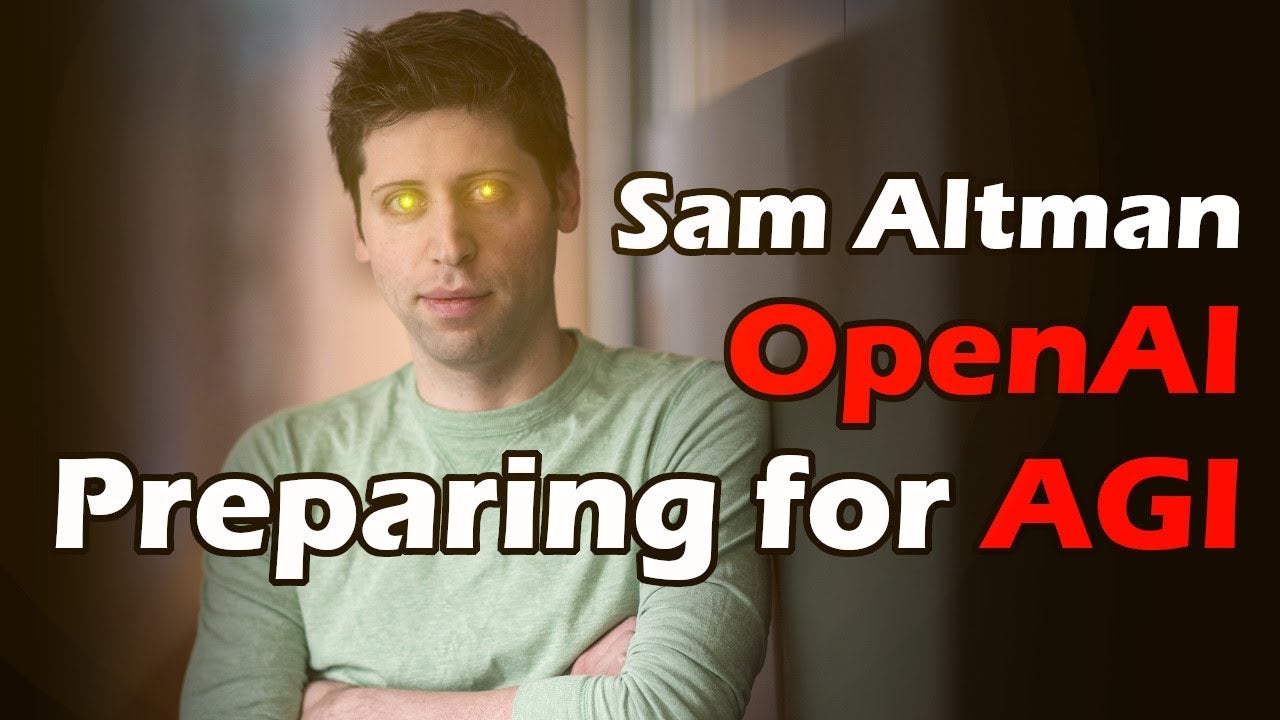
"AGI within 18 months" explained with a boatload of papers and projects Episode release date: 28 Mar 2023 Core Ideas: Metamodernism: Narratives and emergence view of reality - Reduce suffering - Increase prosperity - Increase understanding mantra: Seek knowledge. DISCLAIMER: This is a community-driven show. -------------- Keywords: singularity, prompt engineering, ai future, machine autonomy, machine learning, ai philosophy, ai safety, superintelligence
In Star Trek, Star Wars, and other space operas, starships can zip across light-years in days or even hours – blazing along at many times the speed of light. But in the real world, it takes a little longer. In fact, the most distant object ever launched from Earth is scheduled to achieve a major milestone early tomorrow: It will reach a distance from Earth of one light-day. And it’s taken almost half a century to get there. Voyager 1 is one of the most remarkable space missions in history. The craft was launched in 1977 to explore the outer planets. After stunning encounters with Jupiter and Saturn, it headed toward interstellar space. And it’s been cruising in that region for years, telling us what conditions are like between the stars. In the wee hours of tomorrow morning, Voyager will be almost 16.1 billion miles from Earth. That’s exactly how far light travels in a single day – one light-day. It’s the equivalent of almost 34,000 round-trips between Earth and the Moon. A light-year
A group of major food retailers have come together to support farmers who practice 'regenerative' farming - which tries to protect soils for long-term resilience and better food security. Companies including McDonalds, Waitrose, Nestle and Marks and Spencer have signed up to what they're calling 'The Regen Compact'. They are committing to help farmers build more resilience against the impact of climate change - which in turn would help guarantee supplies for their own food businesses long term. This month marks the 5th anniversary of Storm Arwen, which hit northeastern Scotland and northern England, with winds gusting over 100 miles an hour - causing devastation to forestry. It brought down an estimated one million trees in Northumberland alone, and among the woodlands hardest hit were those in the 15,000 acres of the Ford and Etal estate, in the far north of the county. We find out how they're recovered. As bird flu begins to spread across the UK, Scotland and Wales have brought in Pr
What makes a fact truly a fun fact? Neil deGrasse Tyson, comedian Paul Mecurio, Senior StarTalk Producer Lindsey Nyx Walker, and astrophysicist Charles Liu break down the art of choosing 5,000 facts for the book Lost in Space. Thanks to our Patrons Dee Y, Keith, Chris Littleton, Michael Sabbeth, Valerie Waites, George Henry-Schneider, Jeffery Carel, Terry McConnell, Duncan, D. Franklin’s studio, Bruce Sedloff, NoxDNA, Jovan Robinson, Jerome Shaw III, Saad, Priya Gobal, Maxwell Anderson, Dj Mula, AKA Pella21, Miguel, Arash Baratloo, Dana Browne, and Jim Beyster for supporting us this week. Hosted by Simplecast, an AdsWizz company.
This is a Grave Talks CLASSIC EPISODE! In the hills of West Virginia, historic mansions and quiet streets carry stories that refuse to fade. Appalachian Ghost Tours, founded by Pam Huff, Rhiannon Kennedy, and Mark Covey, blends investigation with preservation, using paranormal tourism to draw attention back to overlooked communities. Their work includes locations such as Maybeury Mansion and the historic Price Mansion, properties tied to layered histories and reports of ongoing activity. Visitors describe unexplained sounds, shadow movement, and an atmosphere that shifts after dark. Beyond the ghost stories, Appalachian Ghost Tours focuses on revitalizing small-town interest through responsible storytelling and community engagement. History becomes accessible, and the unexplained becomes part of a larger narrative about place, memory, and identity. In West Virginia, the past doesn’t sit quietly in museums — it lingers in hallways, on porches, and in the shadows of once-grand homes. #Th
Mandy agreed to spend two nights aboard the Queen Mary mostly because her sister loved ghost stories. Mandy was far more skeptical and deliberately avoided learning too much about the ship’s famous hauntings. If something strange happened, she didn’t want suggestion convincing her she had seen a ghost. The first night, she woke to footsteps stopping directly outside their room, followed by a woman’s soft voice. When Mandy opened the door, the corridor was empty. The following night, she saw a woman in a dark, old-fashioned dress standing at the end of a hallway. Later, the same woman appeared on deck—and walked through a door Mandy discovered was locked. By then, Mandy had begun to wonder whether the woman wasn’t simply appearing around her. Maybe she knew Mandy could see her. #QueenMary #HauntedQueenMary #GhostStories #HauntedShip #Paranormal #GhostEncounter #HauntedPlaces #SpiritEncounter #Unexplained #LostSoul #GhostWoman #Apparition #Hauntings Love real ghost stories? Want even mor
Discover how point of view can transform a story, and find out how to choose between first, second, and third person in your writing. Uploaded 25-06-20 -- Who is telling a story, and from what perspective, are some of the most important choices an author makes. Told from a different point of view, a story can transform completely. Third person, first person, and second person perspectives each have unique possibilities and constraints. So how do you choose a point of view for your story? Rebekah Bergman explores the different ways to focus a story. Lesson by Rebekah Bergman, directed by Gibbons Studio. Animator's website: http://www.gibbonsstudio.net/ Sign up for our newsletter: http://bit.ly/TEDEdNewsletter Support us on Patreon: http://bit.ly/TEDEdPatreon Find us on Twitter: http://bit.ly/TEDEdTwitter Peep us on Instagram: http://bit.ly/TEDEdInstagram View full lesson: https://ed.ted.com/lessons/first-person-vs-second-person-vs-third-person-rebekah-bergman Thank you so much to our pa
Paper: https://www.nature.com/articles/s42255-024-00978-0 BMJ human RCT: https://pubmed.ncbi.nlm.nih.gov/30429127/ Video editing generously provided by Vincent at House of Macadamia 0:00 - Fast vs Slow Metabolism, Intro 0:37 - Defining the Question 1:15 - New research in Nature Metabolism 2:26 - Fusion and Fission 2:44 - In obesity, Fission and Fusion are out of balance 3:03 - Results 5:35 - I'm Nerding out, Hard! 6:45 - Relevance 7:58 - LCD metabolic advantage WHAT ABOUT specific dietary components and mitochondrial fusion? … Thanks to @AnouarElHaji on X (Twitter) for reminding me about this fantastic 2018 Nat Comm paper and asking me to comment. I LOVE community input! (nb: I say remind because he points out “You used to have a YT video discussing this paper,” which I did, lol… TBT!) Overview of this other mito fusion paper: A set of experiments, including a double-blinded human RCT, showing that the saturated fat stearic acid (C18:0; this annotation means 18 carbon fatty acid with 0
What is Traditional Ecological Knowledge? And can it lead a path forward through climate change? In the final episode of Crash Course Native of American History, we’ll explore Native peoples’ expertise on the places they’ve lived for generations—and why it matters today. Introduction: Climate in Alaska 00:00 Traditional Ecological Knowledge 0:36 Controlled Burns 2:45 Effects of Climate Change 4:29 Environmental Justice 5:59 Review & Credits 9:11 Sources: Want to know more about how this series was made? Learn more here: https://docs.google.com/document/d/17yp3u28s40TdjyrJniIf4U9YA8wPtvQ1g1B-HSHQ2Q4/edit?tab=t.0#heading=h.6vtzps565m2 (https://docs.google.com/document/d/17yp3u28s40TdjyrJniIf4U9YA8wPtvQ1g1B-HSHQ2Q4/edit?tab=t.0) *** Support us for $5/month on Patreon to keep Crash Course free for everyone forever! https://www.patreon.com/crashcourse Or support us directly: https://complexly.com/support Join our Crash Course email list to get the latest news and highlights: https://mailchi
BONUS! Paper Wizard AI - "ask me anything" like ChatGPT - a Virtual David Shapiro Bot Episode release date: 25 Dec 2022 Core Ideas: Metamodernism: Narratives and emergence view of reality - Reduce suffering - Increase prosperity - Increase understanding mantra: Seek knowledge. DISCLAIMER: This is a community-driven show. ----------- Keywords: david shapiro, deep learning, ai masterclass, artificial intelligence, gpt, machine learning, ai podcast
A review of the paper: Reimagining the athlete development pathway: constraints-led, learning-based, life-long Article: Reimagining the athlete development pathway: constraints-led, learning-based, life-long (https://www.tandfonline.com/doi/full/10.1080/21640629.2023.2275402) My Research Gate Page (pdfs of my articles) (https://www.researchgate.net/profile/Rob_Gray) My ASU Web page (https://webapp4.asu.edu/directory/person/391944) Podcast Facebook page (videos, pics, etc) (https://www.facebook.com/perceptionactionpodcast) Credits: The Flamin' Groovies – Shake\Some Action Mark Lanegan - Saint Louis Elegy
Continuing in our journey of understanding motion, direction, and velocity... today, Shini introduces the ideas of vectors and scalars so we can better understand how to figure out motion in 2 dimensions. But what does that have to do with baseball? Or two baseballs? *** Produced in collaboration with PBS Digital Studios: http://youtube.com/pbsdigitalstudios *** Crash Course is on Patreon! Thanks to the following Patrons for their generous monthly contributions that help keep Crash Course free for everyone forever: Mark, Eric Kitchen, Jessica Wode, Jeffrey Thompson, Steve Marshall, Moritz Schmidt, Robert Kunz, Tim Curwick, Jason A Saslow, SR Foxley, Elliot Beter, Jacob Ash, Christian, Jan Schmid, Jirat, Christy Huddleston, Daniel Baulig, Chris Peters, Anna-Ester Volozh, Ian Dundore, Caleb Weeks -- Want to find Crash Course elsewhere on the internet? Facebook - http://www.facebook.com/YouTubeCrashC... Twitter - http://www.twitter.com/TheCrashCourse Tumblr - http://thecrashcourse.tumblr.
Make Money with ChatGPT - 15 (ish) White Collar Jobs ChatGPT can help you with RIGHT NOW!! Episode release date: 26 Dec 2022 Core Ideas: Metamodernism: Narratives and emergence view of reality - Reduce suffering - Increase prosperity - Increase understanding mantra: Seek knowledge. DISCLAIMER: This is a community-driven show. ------------- Keywords: post labor economics, ai masterclass, chatbots, ai education, ai philosophy
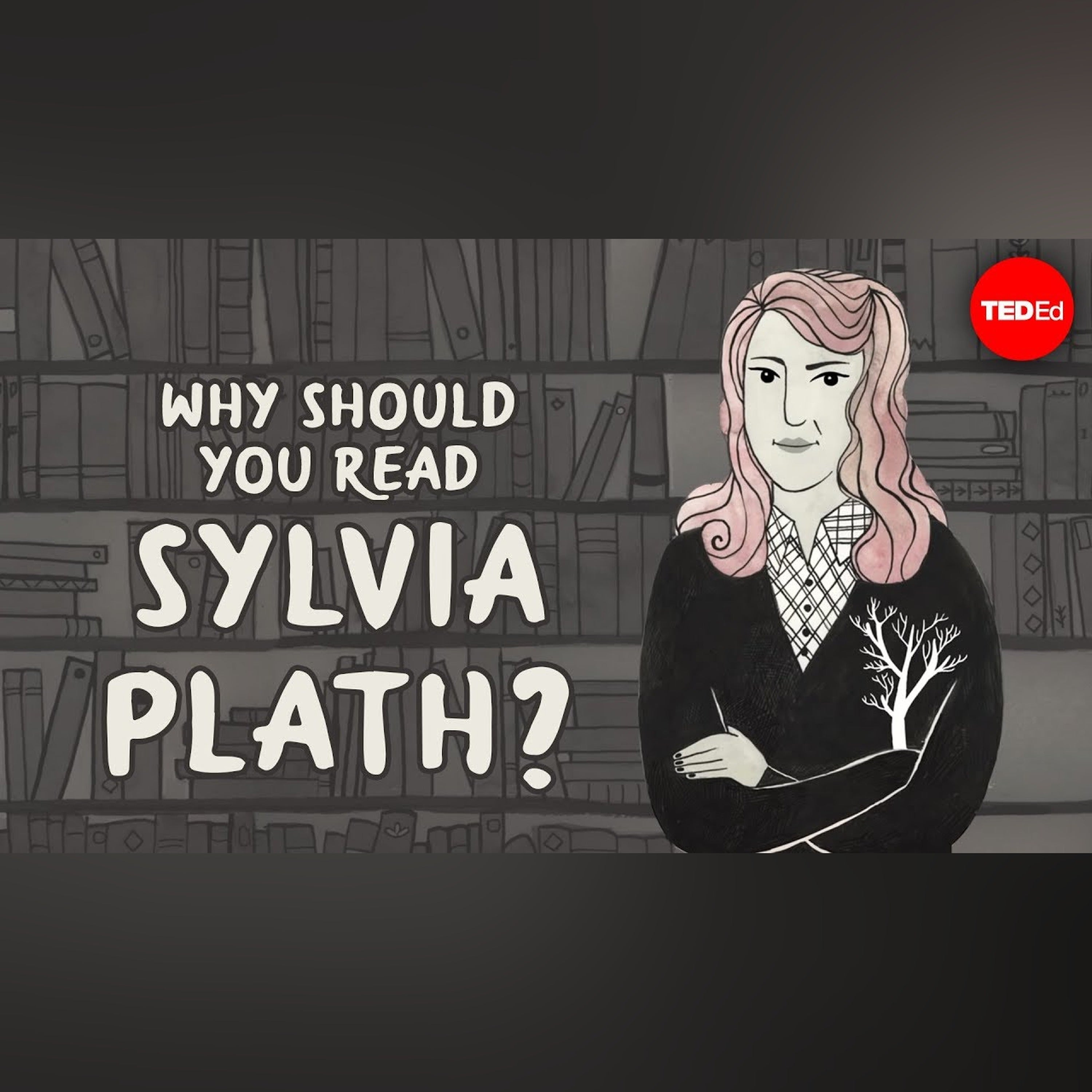
Explore the haunting and intimate works of poet Sylvia Plath, who digs into issues of mental health, trauma and sexuality in works like “The Bell Jar.” Uploaded 07-03-19 -- Under her shrewd eye and pen, Sylvia Plath turned everyday objects into haunting images: a “new statue in a drafty museum,” a shadow in a mirror, a slab of soap. Her breathtaking perspectives and unflinching language made her a touchstone for readers seeking to break the silence around issues of trauma, frustration and sexuality. Iseult Gillespie shares why Plath's writing continues to captivate. Lesson by Iseult Gillespie, directed by Sarah Saidan. Sign up for our newsletter: http://bit.ly/TEDEdNewsletter Support us on Patreon: http://bit.ly/TEDEdPatreon Find us on Twitter: http://bit.ly/TEDEdTwitter Peep us on Instagram: http://bit.ly/TEDEdInstagram View full lesson: https://ed.ted.com/lessons/why-should-you-read-sylvia-plath-iseult-gillespie Thank you so much to our patrons for your support! Without you this vide