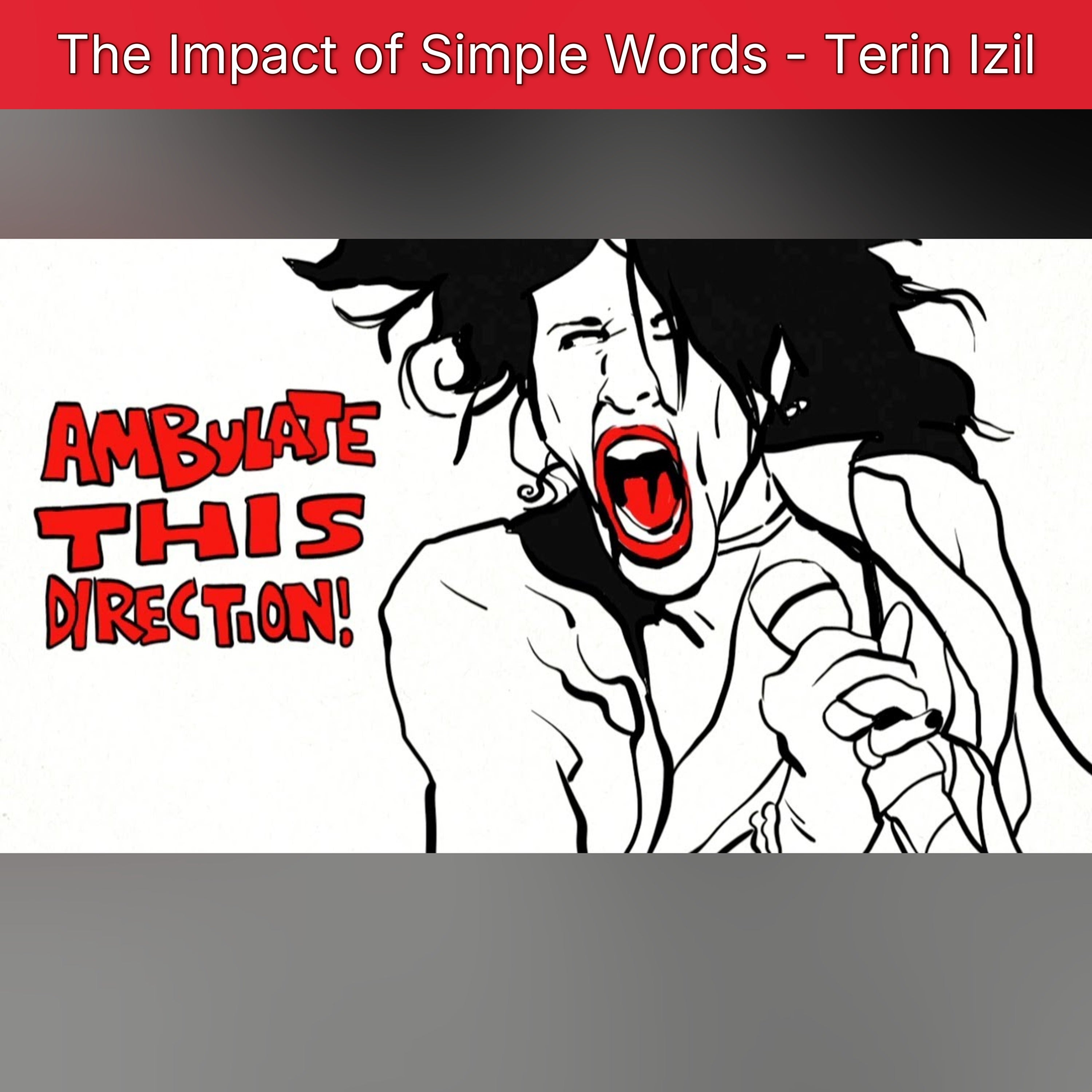
Long, fancy words designed to show off your intelligence and vocabulary are all very well, but they aren't always the best words. In this short, playful video Terin Izil explains why simple, punchy language is often the clearest way to convey a message.
People don't get points for fighting for their country. The reward you get is your country. Laura Gamboa Laura Gamboa is an Associate Professor of Democracy and Global Affairs at the University of Notre Dame and a faculty fellow at the Kellogg Institute. She is the author of Resisting Backsliding: Opposition Strategies Against the Erosion of Democracy and most recently, “How to Break an Autocrat’s Coalition” in the Journal of Democracy. The Democracy Paradox is made in partnership with the Kellogg Institute (https://kellogg.nd.edu/) of the Keough School (https://keough.nd.edu/) of Global Affairs at the University of Notre Dame. Read the full transcript here (https://wp.me/pavhaU-2YW). Key Highlights Introduction - 0:20 Nothing Ever Happens... - 4:04 Defection - 16:41 Accountability - 28:31 Fight the Fight - 39:03 Links: Learn more about Laura Gamboa (https://lauragamboa.com/). Read her article "How to Break an Autocrat’s Coalition (https://www.journalofdemocracy.org/articles/how-to-bre
What happens when you can't find recipes for the foods of your childhood? In this episode of Constant Wonder, producer Tennery Taylor speaks with Amanda Held Opelt about her quest to rediscover lost Appalachian culinary traditions. From foraging for the pungent wild leeks known as "ramps" to attending a traditional sorghum boil, Amanda explores the joy that we can find in food, heritage, and fellowship. She also rebuilds a healthy relationship with eating and her own body. Guest: Amanda Held Opelt, author of "Provisions: Finding Home Through the Food Folklore of the Appalachian Table" Chapters: (0:00) Historic Appalachian Cuisine (5:47) Breakfast at Granny's House (9:37) A Difficult Relationship with Food (20:28) Reconnecting with Her Heritage (26:46) Foraging for Ramps (35:18) Attending a Sorghum Boil (43:05) Food and Community Photo credit: Amanda Held Opelt (AI enhanced for sizing)
“You shouldn’t make decisions when you’re hungry.” Tell that to the cell that ate a bacterium 1.5 billion years ago and set in motion the evolution of all plants on Earth. In this episode of Crash Course Botany, we’ll explore how plants came to exist, the forces that drive plant evolution, and how we know what Earth’s prehistoric dystopia was like before plants came along. Chapters: A World Without Plants 00:00 Plants' Origin Story 1:09 Defining Evolution 3:06 The Five Forces of Evolution 5:15 Studying Plant Evolution 10:01 Plants' Evolutionary History 11:04 Review & Credits 13:54 Sources: https://docs.google.com/document/d/1PB6WdUJcABAccO-U-t6ic7WbfP2z0Pr5P9a8HMr6zh4/edit?usp=sharing *** Crash Course is on Patreon! Thanks to the following patrons for their generous monthly contributions that help keep Crash Course free for everyone forever: David Fanska, Andrew Woods, Tawny Whaley, Sean Saunders, Katie, DL Singfield, Ken Davidian, Stephen Akuffo, Toni Miles, Steve Segreto, Kyle & Kath
HOMUNCULUS! It's a big and weird word that you may or may not have heard before, but do you know what it means? In this episode of Crash Course Psychology, Hank gives us a deeper understanding of this weird model of human sensation. Want more videos about psychology? Check out our sister channel SciShow Psych at https://www.youtube.com/scishowpsych! -- Chapters: Introduction: HOMUNCULUS 00:00 Sensation vs. Perception 1:22 Sound Waves 1:48 How Human Hearing Works 2:20 How Human Taste Works 3:25 Synesthesia 4:24 How Human Smell Works 5:48 How Human Touch Works 7:23 Kinesthesis 8:34 Vestibular Sense 9:02 Credits 9:47 Crash Course is on Patreon! Want to find Crash Course elsewhere on the internet? Facebook - http://www.facebook.com/YouTubeCrashCourse Twitter - http://www.twitter.com/TheCrashCourse Instagram - https://www.instagram.com/thecrashcourse/ CC Kids: http://www.youtube.com/crashcoursekids
Acidity is a tricky concept, and it’s not always like how we see it in the movies. As organic chemists, we need to know how to predict the strength of weak acids and bases. In this episode of Crash Course Organic Chemistry, we’ll learn four key factors that we can use to predict relative acidity. This important tool will help us us to predict the products of chemical reactions. Episode Sources: Chen, J., Zhao, Y., Li, X. C., & Zhao, J. H. (2019). Pyridine alkaloids in the venom of imported fire ants. Journal of agricultural and food chemistry, 67(41), 11388-11395. Everts, S. (2014). “An Ant’s Acid Antidote” Chemical and Engineering News, 92(9), 44-45. Trummal, A., Lipping, L., Kaljurand, I., Koppel, I. A., & Leito, I. (2016). Acidity of strong acids in water and dimethyl sulfoxide. The Journal of Physical Chemistry A, 120(20), 3663-3669. Series Sources: Brown, W. H., Iverson, B. L., Ansyln, E. V., Foote, C., Organic Chemistry; 8th ed.; Cengage Learning, Boston, 2018. Bruice, P. Y., Org
Doctors Lisa and Sara are joined by Medical Microbiology and Infectious Diseases Consultant Jame for an overview of Antibiotics and Microbiology in General Practice. Doctors Callum and Jame host a podcast in Infectious Diseases called ID:IOTS. In this episode we were keen to pick Jame’s brain about some common conundrums we’ve encountered using some hypothetical cases such as a patient with recurrent UTIs and an elderly, frail patient with possible chest or urine infection. Jame was keen to spread the news about antimicrobial stewardship and highlight guidelines and useful tips for choosing antibiotics including using the AWaRe (Access Watch, Reserve) classification of antibiotics. Great to talk briefly at the end about the benefits for patients of challenging those labelled as Penicillin allergic and how this could be done. Resources: GAWaRe Classification System of Antibiotics, a summary from the ID:OIT team: https://idiots.notion.site/142-AWaRe-classification-2d76a1ea09d881338de1f99
Today we're going to tell the story of a quiet revolution in the 1960s that shifted our entire understanding of how the Earth works. We currently believe that the Earth's broken outer shell rises from the mantle and folds back in - kind of like a dance of creative destruction and reconstruction - giving us our continents and oceans, mountains and valleys, volcanoes, and earthquakes. And it would take a group of scientists all over the world to get us this grand unifying theory of plate tectonics. SOURCES Petersen, et al 2011. Fundamentals of Physical Geography. Cengage Christopherson, R.W. 2010. Elemental Geosystems. Prentice Hall. 6th edition Strahler, A. 2011. Introducing Physical Geography. Wiley and Sons. 5th Edition https://dinosaurpictures.org/ancient-earth#750 (https://dinosaurpictures.org/ancient-earth) ttps://www.ck12.org/earth-science/Ocean-Ocean-Convergent-Plate-Boundaries/lesson/Ocean-Ocean-Convergent-Plate-Boundaries-HS-ES/ Watch our videos and review your learning with th
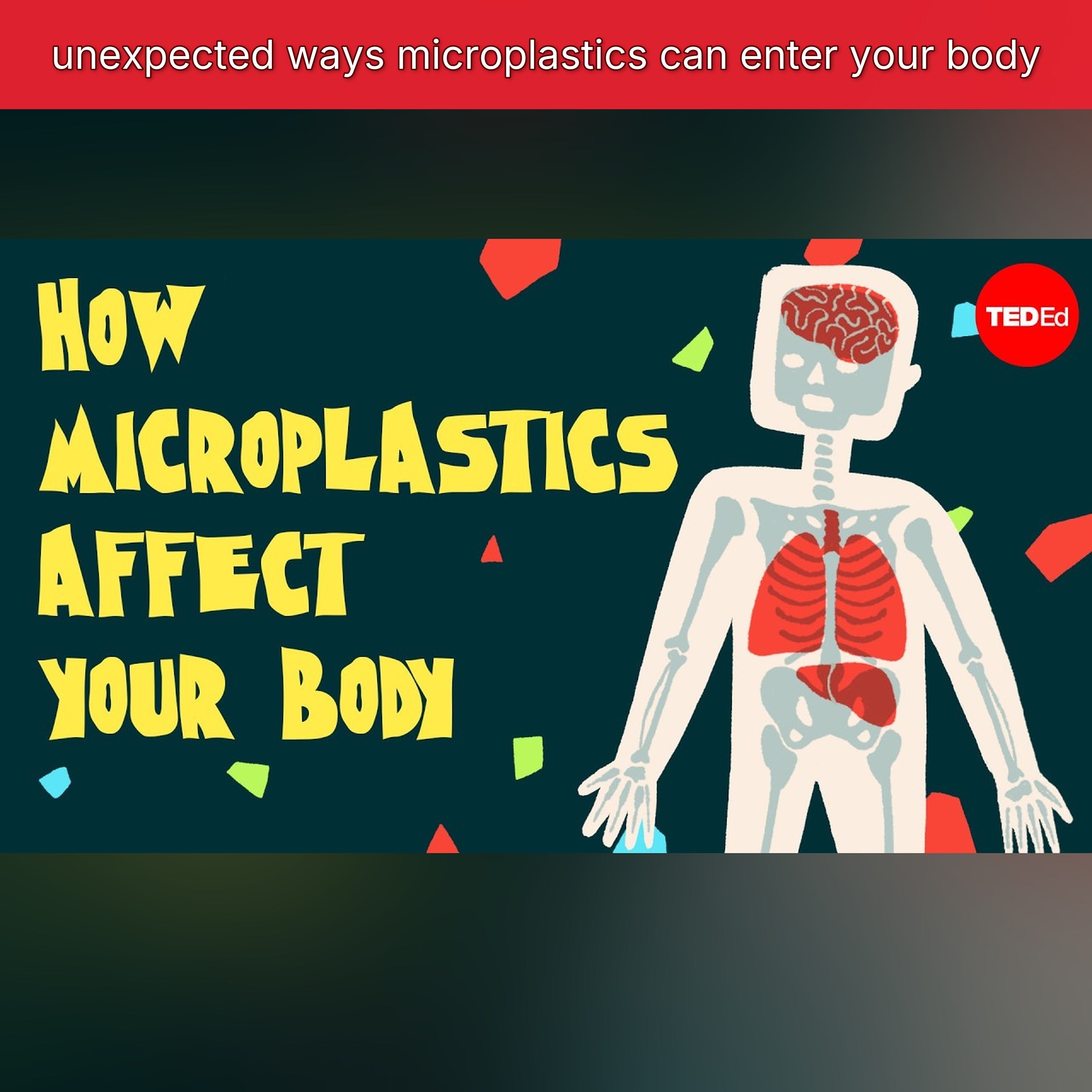
Explore how the microplastics in your body can affect your health, and how we can regulate the amount of plastic in our world. -- Plastic is everywhere. It’s in our clothes, our food, the air we breathe. And plastic is now also in our bodies. Micro and nanoplastics generally enter our bodies in one of three ways: the air, our skin, and what we eat and drink. But how exactly do these microscopic particles affect our health? Dig into how they can interrupt your body’s processes, and how we can begin to fix our plastic problem. Directed by Vicente Nirõ, AIM Creative Studios. This video made possible in collaboration with the Oceanic Preservation Society Learn more about how TED-Ed partnerships work: https://bit.ly/TEDEdPartner Support Our Non-Profit Mission ---------------------------------------------- Support us on Patreon: http://bit.ly/TEDEdPatreon Check out our merch: http://bit.ly/TEDEDShop ---------------------------------------------- Connect With Us ------------------------------
When Raymond died, his family brought his ashes home while they waited several weeks for the graveside service. Almost immediately, his granddaughter began feeling watched. Objects were moved, doors closed on their own, footsteps crossed the hallway at night, and someone seemed determined to keep the house just a little tidier than she preferred. What made it unsettling was how familiar it all felt. Raymond had been difficult, particular, and quick to let everyone know when something annoyed him. Even the irritated clearing of a man’s throat in the hallway sounded exactly like him. Her mother eventually began experiencing things too. Her father dismissed all of it as grief and imagination. Then Raymond’s ashes were buried, and the house became completely quiet. Only afterward did her father finally admit what he had seen. #GhostStories #Afterlife #HauntedHouse #SpiritEncounter #Paranormal #GhostlyVisit #SignsFromBeyond #LifeAfterDeath #Unexplained #Hauntings #Ghosts Love real ghost sto
This is a Grave Talks CLASSIC EPISODE! Tucked away in Salem, the Salem Witch Board Museum houses the largest public collection of Ouija boards in the world — and the only museum dedicated entirely to their history. Curated and owned by John Kozik, the collection features roughly 100 talking boards on display at any given time, spanning decades of design, cultural shifts, and public fear. As a founding member of the Talking Board Historical Society, Kozik approaches the Ouija board not as a novelty or a menace, but as a cultural artifact. Many of the boards in the museum come from private collections or donations, each carrying its own story — not of demons or possession, but of how people have interacted with the unknown across generations. The Ouija board’s reputation has long been shaped by Hollywood and rumor, casting it as a dangerous portal rather than a product of its time. But stripped down to its materials — wood, cardboard, ink, plastic — the question remains: where does the f
Red Tractor, the label which sets standards for a lot of food you see in the supermarket, has been reviewing all its criteria for farmers. It's published the last raft of proposals for consultation. The beef, lamb and dairy sectors have already been considered. This final tranche covers four sectors; pigs, poultry, fresh produce, and sugar beet and other crops. A review of a cull of 51 cattle in fields in Northern Ireland has been published. The cull near Fivemiletown was controversial as some members of the public witnessed the animals being shot. The review has deemed the cull carried out by government officals was “lawful”, but there were “operational shortcomings” and “insufficient consideration” was given to the human and community impact. Scotland has announced a country-wide Avian Influenza Prevention Zone. That means all bird keepers in Scotland must take extra precautions including keeping free-range birds fenced off, cleansing and disinfecting footwear and concrete areas, and
quelque chose de plus se fait naturellement sentir. Cependant, comme l'explique Sadhguru, une telle aspiration spirituelle ne peut être satisfaite par des croyances et des livres. Ce n'est qu'en accordant une attention substantielle à la vie que l'on peut passer de l'aspiration à la réalisation. Conscious Planet:https://consciousplanet.org/fr Sadhguru App (Download):https://onelink.to/sadhguru__app !!!
If anyone ever makes it to Pluto, they might want to stay away from the bottoms of steep craters. Occasional jiggling and shaking on the surface might trigger big, fast landslides – some of them big enough to bury a small city. Planetary scientists recently found evidence of several massive pileups in images snapped by New Horizons. The spacecraft flew past Pluto in 2015, giving us our only close look at everyone’s favorite dwarf planet. The aftermath of six landslides was detected on the inner slopes of three craters. All of the craters are near the edge of Sputnik Planitia, a heart-shaped ice plain that’s Pluto’s most prominent feature. The images revealed either fields of large boulders or indentations in the crater walls where material had slumped away. Because of Pluto’s weak gravity and icy surface, the slides traveled a long way. Material slid from about six to nine miles before coming to rest, and dropped up to a mile and a half from a crater’s rim to its floor. The largest sli
Welcome to episode 23 of The BirdGuides Podcast! Ed, Ian and Josh are in the booth to catch up on the recent big stories in birding, from species splits and rare British breeders, to jet-lagged shearwaters and a bumper spell for eastern warblers, wheatears and buntings, plus much more. In this episode Is Britain heading for a Waxwing winter?! Bumper redpoll numbers arrive What the new AviList splits mean for your list A new breeding species for Britain? Black-winged Kite edges closer to Britain Tracking migrating turtle doves Jet-lagged seabirds November patch goals Recent rare and scarce sightings Episode timestamps 01:30 – Waxwing winter incoming? 09:27 – Bumper redpoll numbers 17:23 – AviList's recent splits 24:20 – A new British breeding species 29:20 – Black-winged Kite breeding in Britain? 31:41 – RSPB's bird of the year 34:07 – Turtle dove tracking 40:41 – Jet-lagged seabirds 44:00 – Wallcreeper winter range expansion 49:10 – November patch goals 57:37 – Rarity round-up Links Ge
The Man With 21 Body Parts In His Freezer Unlock The Vault: Hundreds of ad-free, uncensored episodes. The truth is out there. So is your coffee. ☕ Mysterious Grounds: Bold coffee for strange minds. Violations will be reported to federal authorities.
This guest tonight has been researching the UFOs observed emerging from various bodies of water around the world. Preston Dennett has written many books on the subject, as well as on the strange creatures encountered over the years. Unlock The Vault: Hundreds of ad-free, uncensored episodes. The truth is out there. So is your coffee. ☕ Mysterious Grounds: Bold coffee for strange minds. Violations will be reported to federal authorities.
Life on Earth has weathered boiling-hot oceans and volcanic-ash-darkened skies—but that’s nothing like the climate change we’re experiencing now. In this episode of Crash Course Biology, we’ll talk about the greenhouse effect, learn why our climate is like a tangled pair of headphones, and discover that we’ve understood the science behind climate change for much longer than you might think. Chapters: Introduction to Climate Change 00:00 The Greenhouse Effect 2:24 Measuring the Greenhouse Effect 4:46 Carbon Sinks 8:26 Environmental Justice 10:07 Review & Credits 12:09 This series was produced in collaboration with HHMI BioInteractive, committed to empowering educators and inspiring students with engaging, accessible, and quality classroom resources. Visit https://BioInteractive.org/CrashCourse (https://biointeractive.org/CrashCourse) for more information. Are you an educator looking for what NGSS Standards are covered in this episode? Check out our Educator Standards Database for Biolog
In nature, cannibalism is surprisingly common. Fish eat their offspring, insects consume their siblings, and some tadpoles transform into specialized cannibals with stronger jaws and a tooth. In this episode, we explore how cannibalism can shape entire ecosystems, influencing everything from fish populations to nutrient cycles, and why so many species are cannibalistic despite its costs. We discuss selfishness in nature, filial and sexual cannibalism, and the role of developmental plasticity in evolution.
In which Hank introduces us to the world of Organic Chemistry and, more specifically, the power of hydrocarbon. He talks about the classifications of organic compounds, the structures & properties of alkanes, isomers, and naming an alkane all by observing its structure. Can't get enough OChem? Check out our 50-episode series on Crash Course Organic Chemistry in this playlist: https://www.youtube.com/watch?v=bSMx0NS0XfY&list=PL8dPuuaLjXtONguuhLdVmq0HTKS0jksS4 (https://www.youtube.com/watch?list=PL8dPuuaLjXtONguuhLdVmq0HTKS0jksS4&v=bSMx0NS0XfY) Pssst... we made flashcards to help you review the content in this episode! Find them on the free Crash Course App! Download it here for Apple Devices: https://apple.co/3d4eyZo Download it here for Android Devices: https://bit.ly/2SrDulJ -- Table of Contents Classifications of Organic Compounds 2:25 Structures & Properties of Alkanes 3:12 Isomers 3:49 Naming an Alkane Based on its Structure 5:03 -- Crash Course is on Patreon! Want to find Crash Co
In today’s brief: Trump’s “round” UFO: On 60 Minutes, the President describes Air Force pilots telling him about a round object passing an F-22 at three times its speed. A whistleblower on Capitol Hill: Jake Barber, who claims he flew non-human craft retrieval missions, has joined Rep. Eric Burlison’s UAP team. The midterms shake up UFO disclosure: Several of Congress’s leading UAP champions are on their way out. What does that mean for the UAP Disclosure Act? Black triangles and “Skinwalkers”: The Pentagon’s latest UFO files include an FBI report of a silent triangular craft and a 2010 investigation at a Utah ranch. Bigfoot in the Rockies: New reports from Colorado’s San Juan Mountains and the Idaho Panhandle. The Ozarks game camera mystery: Something keeps knocking down a family’s trail camera, and it finally caught a tuft of fur. America’s most haunted city: A new index ranks 74 US cities by reported ghost sightings. Quick hits: Canada’s UAP petition, Earth’s tiny new “second moon”,
Believe is back, and it’s back as a daily news show. Every weekday morning you’ll get a new episode, about five minutes long, covering the biggest stories from the world of the strange and unexplained: UFO and UAP sightings, and the push for disclosure Bigfoot and Yowie reports Hauntings and ghost stories Cryptids, and everything in between Every story is checked, and every source is listed in the Believe Daily Brief at believepod.com/daily-brief. New episodes drop Monday to Friday. Follow the show so you don’t miss one. Keep your eyes on the sky. Hosted on Acast.
Humans make stuff up—including the names and classifications of living things. But those categories are still useful. In this episode of Crash Course Botany, we’ll explore how taxonomy and systematics help us understand what plants are and where they come from. We’ll discuss the power of naming, and why even scientists don’t agree on what a species is. Chapters: Categorizing Plants 00:00 What Is a Plant? 1:26 Taxonomy & Systematics 3:15 Indigenous Taxonomic Knowledge 6:36 Species Concepts 9:10 Review & Credits 12:11 Sources: https://docs.google.com/document/d/1PB6WdUJcABAccO-U-t6ic7WbfP2z0Pr5P9a8HMr6zh4/edit?usp=sharing *** Crash Course is on Patreon! Thanks to the following patrons for their generous monthly contributions that help keep Crash Course free for everyone forever: David Fanska, Andrew Woods, Tawny Whaley, Sean Saunders, Katie, DL Singfield, Ken Davidian, Stephen Akuffo, Toni Miles, Steve Segreto, Kyle & Katherine Callahan, Laurel Stevens, Burt Humburg, Aziz Y, Perry Joyce,
Mr. E and Jay Clone soar high to research a bird large enough to pick up elephants! Is this merely a tall tale or is there something more concrete to this avian adversary. Cultural mythology tells us stories of giant birds around the globe, from the Thunderbird to the Plumed Serpent, so is the Roc part of this mythology or is there evidence it was a thriving species? Find out all this and more on this high flying episode of Cryptids of the Corn! Privacy & Opt-Out: https://redcircle.com/privacy