The Man With 21 Body Parts In His Freezer Unlock The Vault: Hundreds of ad-free, uncensored episodes. The truth is out there. So is your coffee. ☕ Mysterious Grounds: Bold coffee for strange minds. Violations will be reported to federal authorities.
This guest tonight has been researching the UFOs observed emerging from various bodies of water around the world. Preston Dennett has written many books on the subject, as well as on the strange creatures encountered over the years. Unlock The Vault: Hundreds of ad-free, uncensored episodes. The truth is out there. So is your coffee. ☕ Mysterious Grounds: Bold coffee for strange minds. Violations will be reported to federal authorities.
Life on Earth has weathered boiling-hot oceans and volcanic-ash-darkened skies—but that’s nothing like the climate change we’re experiencing now. In this episode of Crash Course Biology, we’ll talk about the greenhouse effect, learn why our climate is like a tangled pair of headphones, and discover that we’ve understood the science behind climate change for much longer than you might think. Chapters: Introduction to Climate Change 00:00 The Greenhouse Effect 2:24 Measuring the Greenhouse Effect 4:46 Carbon Sinks 8:26 Environmental Justice 10:07 Review & Credits 12:09 This series was produced in collaboration with HHMI BioInteractive, committed to empowering educators and inspiring students with engaging, accessible, and quality classroom resources. Visit https://BioInteractive.org/CrashCourse (https://biointeractive.org/CrashCourse) for more information. Are you an educator looking for what NGSS Standards are covered in this episode? Check out our Educator Standards Database for Biolog
In nature, cannibalism is surprisingly common. Fish eat their offspring, insects consume their siblings, and some tadpoles transform into specialized cannibals with stronger jaws and a tooth. In this episode, we explore how cannibalism can shape entire ecosystems, influencing everything from fish populations to nutrient cycles, and why so many species are cannibalistic despite its costs. We discuss selfishness in nature, filial and sexual cannibalism, and the role of developmental plasticity in evolution.
In which Hank introduces us to the world of Organic Chemistry and, more specifically, the power of hydrocarbon. He talks about the classifications of organic compounds, the structures & properties of alkanes, isomers, and naming an alkane all by observing its structure. Can't get enough OChem? Check out our 50-episode series on Crash Course Organic Chemistry in this playlist: https://www.youtube.com/watch?v=bSMx0NS0XfY&list=PL8dPuuaLjXtONguuhLdVmq0HTKS0jksS4 (https://www.youtube.com/watch?list=PL8dPuuaLjXtONguuhLdVmq0HTKS0jksS4&v=bSMx0NS0XfY) Pssst... we made flashcards to help you review the content in this episode! Find them on the free Crash Course App! Download it here for Apple Devices: https://apple.co/3d4eyZo Download it here for Android Devices: https://bit.ly/2SrDulJ -- Table of Contents Classifications of Organic Compounds 2:25 Structures & Properties of Alkanes 3:12 Isomers 3:49 Naming an Alkane Based on its Structure 5:03 -- Crash Course is on Patreon! Want to find Crash Co
In today’s brief: Trump’s “round” UFO: On 60 Minutes, the President describes Air Force pilots telling him about a round object passing an F-22 at three times its speed. A whistleblower on Capitol Hill: Jake Barber, who claims he flew non-human craft retrieval missions, has joined Rep. Eric Burlison’s UAP team. The midterms shake up UFO disclosure: Several of Congress’s leading UAP champions are on their way out. What does that mean for the UAP Disclosure Act? Black triangles and “Skinwalkers”: The Pentagon’s latest UFO files include an FBI report of a silent triangular craft and a 2010 investigation at a Utah ranch. Bigfoot in the Rockies: New reports from Colorado’s San Juan Mountains and the Idaho Panhandle. The Ozarks game camera mystery: Something keeps knocking down a family’s trail camera, and it finally caught a tuft of fur. America’s most haunted city: A new index ranks 74 US cities by reported ghost sightings. Quick hits: Canada’s UAP petition, Earth’s tiny new “second moon”,
Believe is back, and it’s back as a daily news show. Every weekday morning you’ll get a new episode, about five minutes long, covering the biggest stories from the world of the strange and unexplained: UFO and UAP sightings, and the push for disclosure Bigfoot and Yowie reports Hauntings and ghost stories Cryptids, and everything in between Every story is checked, and every source is listed in the Believe Daily Brief at believepod.com/daily-brief. New episodes drop Monday to Friday. Follow the show so you don’t miss one. Keep your eyes on the sky. Hosted on Acast.
Humans make stuff up—including the names and classifications of living things. But those categories are still useful. In this episode of Crash Course Botany, we’ll explore how taxonomy and systematics help us understand what plants are and where they come from. We’ll discuss the power of naming, and why even scientists don’t agree on what a species is. Chapters: Categorizing Plants 00:00 What Is a Plant? 1:26 Taxonomy & Systematics 3:15 Indigenous Taxonomic Knowledge 6:36 Species Concepts 9:10 Review & Credits 12:11 Sources: https://docs.google.com/document/d/1PB6WdUJcABAccO-U-t6ic7WbfP2z0Pr5P9a8HMr6zh4/edit?usp=sharing *** Crash Course is on Patreon! Thanks to the following patrons for their generous monthly contributions that help keep Crash Course free for everyone forever: David Fanska, Andrew Woods, Tawny Whaley, Sean Saunders, Katie, DL Singfield, Ken Davidian, Stephen Akuffo, Toni Miles, Steve Segreto, Kyle & Katherine Callahan, Laurel Stevens, Burt Humburg, Aziz Y, Perry Joyce,
Mr. E and Jay Clone soar high to research a bird large enough to pick up elephants! Is this merely a tall tale or is there something more concrete to this avian adversary. Cultural mythology tells us stories of giant birds around the globe, from the Thunderbird to the Plumed Serpent, so is the Roc part of this mythology or is there evidence it was a thriving species? Find out all this and more on this high flying episode of Cryptids of the Corn! Privacy & Opt-Out: https://redcircle.com/privacy
View full lesson: http://ed.ted.com/lessons/how-does-your-brain-respond-to-pain-karen-d-davis Uploaded 02-06-14 Ouch! Everyone experiences pain -- but why do some people react to the same painful stimulus in different ways? And what exactly is pain, anyway? Karen D. Davis walks you through your brain on pain, illuminating why the "pain experience" differs from person to person. Lesson by Karen D. Davis, animation by Brett Underhill.
This week's episode of Law of Attraction Tribe is incredibly special to me. I'm joined by Mike Dooley, New York Times bestselling author, creator of Notes from the Universe, and one of the teachers featured in The Secret. In this episode, we explore: Why your biggest setbacks might be redirecting you toward something greater The incredible story behind Mike's creation of Notes from the Universe Why you don't need to know HOW your dreams will happen The manifestation mistake people make when they obsess over specific details Why taking the “wrong road” can lead you exactly where you need to go How to take inspired action even when you can't see the bigger picture Why worrying doesn't mean you're automatically manifesting your fears Mike's perspective on suffering, tragedy, and the idea that life is rigged in our favor The difference between knowing your “wows” and controlling your “hows” Why it's never too late to completely reinvent your life Connect with Mike: Free daily Notes from th
Nostalgia is a bittersweet emotion, but psychologists’ research suggests that most of the time, it’s good for us – it can strengthen our relationships and give our lives meaning and continuity. Tim Wildschut, PhD, of the University of Southampton, discusses how researchers define nostalgia; why loneliness, a bad mood and even a cold day can trigger it; when it can have downsides; and how technology is changing the way we look back at the past.
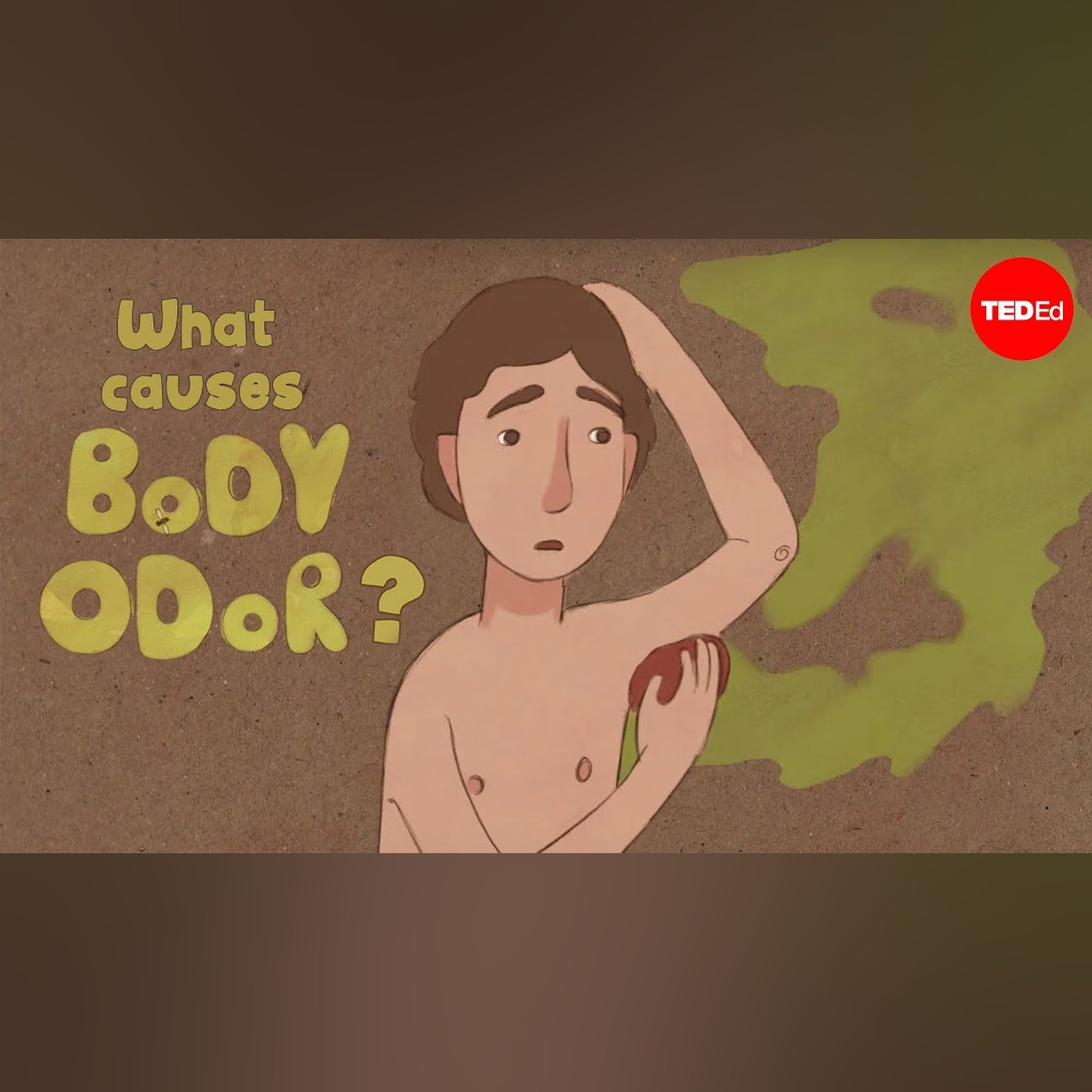
Uploaded 05-04-18 View full lesson: https://ed.ted.com/lessons/what-causes-body-odor-mel-rosenberg Most of us don’t need more than one whiff to identify that generally unpleasant, characteristic smell we call body odor. But it’s a surprisingly complex phenomenon, influenced by our genetic makeup, age, diet, and hygiene. So what is this odor, exactly? Where does it come from? And can we do anything about it? Mel Rosenberg dives into the stinky science of body odor. Lesson by Mel Rosenberg, animation by Els Decaluwe. Thank you so much to our patrons for your support! Without you this video would not be possible! maxi kobi einy, Runarm , Misaki Sato, Levi Cook, Catherine Sverko, Robert Sukosd, Mark Morris, Tamás Drávai, Peter Liu, Leora Allen, Michal Salman, Julie Cummings-Debrot, Gilly , Ka-Hei Law, Aleksandar Srbinovski, Renhe Ji, Andrés Melo Gámez, Tim Leistikow, Moonlight , Megan Douglas, Barbara Smalley, Filip Dabrowski, Joe Giamartino, Clair Chen, Karen Goepen-Wee, Bryan Blankenburg
In which John Green teaches you about one of the least family-friendly family dramas in the history of family dramas, Oedipus Rex. Sophocles' most famous play sees its main character, who seems like he's got it all together, find out that he's killed his father, married his mother, had a bunch of incest children, and brought a plague down on his adopted hometown. He doesn't take this news well. John touches on all the classic Oedipus themes, including hamartia, fate, and the wrath of the gods, and even gets into some Freud, although Oedipus was notably not a sufferer of an Oedipus complex. In any case get ready for mystery, incest, bird entrails, and self-inflicted blindness. Very dramatic. Consider supporting local bookstores by purchasing your books through our Bookshop affiliate link https://bookshop.org/shop/complexly or at your local bookseller. Crash Course is on Patreon! Want to find Crash Course elsewhere on the internet? Facebook - http://www.facebook.com/YouTubeCrashCourse Tw
There’s an immense world of tiny stuff within us and around us—but how do we know about it? In this episode of Crash Course Biology, we’ll discover how we see what we can’t see, thanks to the help of centuries-old tools and more recent technology. Along the way, we’ll learn about the major types of microscopes and how to use a typical light microscope. Chapters: Discovering Bacteria 0:00 Methods for Observing Molecules 1:36 Microscopy 2:25 Types of Microscopes 3:30 Cryo-Electron Microscopy 7:54 How Light Microscopes Work 8:38 Review & Credits 11:34 This series was produced in collaboration with HHMI BioInteractive, committed to empowering educators and inspiring students with engaging, accessible, and quality classroom resources. Visit https://BioInteractive.org/CrashCourse (https://biointeractive.org/CrashCourse) for more information. Are you an educator looking for what NGSS Standards are covered in this episode? Check out our Educator Standards Database for Biology here: https://www
Here on Earth, life is dizzyingly diverse—but it’s also surprisingly organized. A sense of order structures life and its processes, from the tiniest cell to the total sum of every living thing. In this episode of Crash Course Biology, we’ll uncover the levels of biological organization, discover soil’s superpowers, and find out why the biosphere is kind of like a really, really long train. Chapters: Life's Layers 00:00 Themes of Life 1:54 Form Fits Function 4:08 Regulation 5:29 Levels of Organization 6:39 Life's Flows 9:55 Review & Credits 12:15 This series was produced in collaboration with HHMI BioInteractive, committed to empowering educators and inspiring students with engaging, accessible, and quality classroom resources. Visit https://BioInteractive.org/CrashCourse (https://biointeractive.org/CrashCourse) for more information. Are you an educator looking for what NGSS Standards are covered in this episode? Check out our Educator Standards Database for Biology here: https://www.th
Content Warning: This episode includes sensitive discussions of suicide, PTSD, and substance use, including personal experiences with suicidal ideation. We encourage listeners to prioritize their well-being and engage with this conversation at their own discretion. The information shared is for educational purposes only and should not be considered medical advice or an endorsement of the use of Psilocybin. This episode includes personal experiences of psychedelic-assisted therapies in treatment for issues related to mental health. Always consult a qualified healthcare professional before considering new treatment If you or someone you know is struggling with mental health or experiencing suicidal thoughts, support is available. In the U.S., call or text 988 to reach the Suicide & Crisis Lifeline for free, confidential support. -- This week on the WHOOP Podcast, WHOOP SVP of Research Algorithms and Data Emily Capodilupo sits down with CJ LoConte, military veteran, entrepreneur, and foun
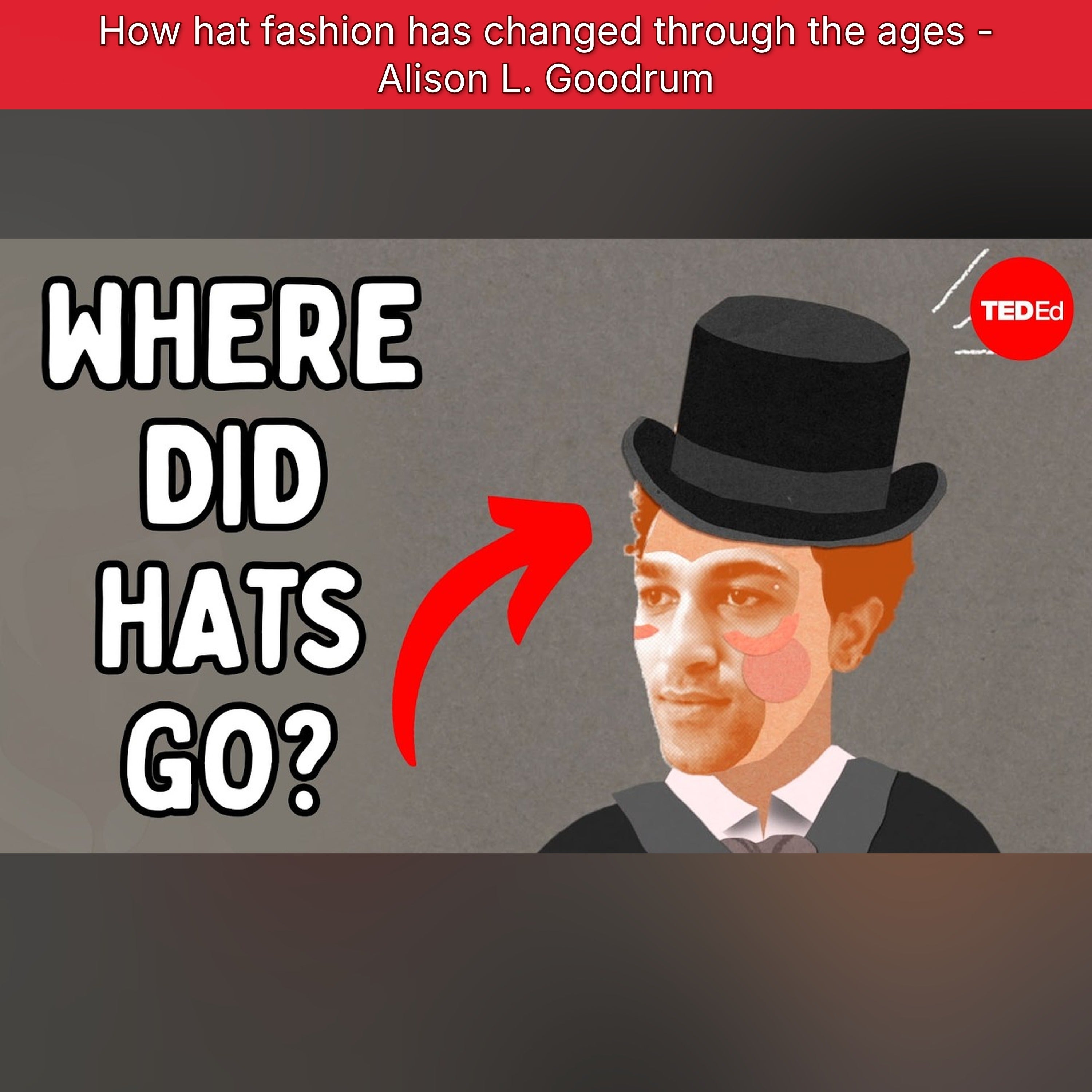
Trace the illustrious history of hats dating back to the Paleolithic Era, and explore how they were used in different periods. -- Humans have been fashioning caps since the dawn of civilization. A bearskin cap from the Bronze Age is one of the earliest surviving hats, discovered alongside Europe’s oldest mummy. Hats aren’t just for keeping heads warm or making a fashion statement— they’ve been used throughout history as a symbol of status, power, and politics. Alison L. Goodrum traces the illustrious history of headwear. Lesson by Alison L. Goodrum, directed by Biljana Labović. Animation by Abby Oullette, https://www.abbyouellette.com (https://www.abbyouellette.com/) Support Our Non-Profit Mission ---------------------------------------------- Support us on Patreon: http://bit.ly/TEDEdPatreon Check out our merch: http://bit.ly/TEDEDShop ---------------------------------------------- Connect With Us ---------------------------------------------- Sign up for our newsletter: http://bit.ly
In which John Green teaches you about the tumultuous 2000s in the United States of America, mainly the 2000s that coincide with the presidency of George W Bush. From the controversial election in 2000 to the events of 9/11 and Bush's prosecution of the War on Terror, the George W. Bush presidency was an eventful one. John will teach you about Bush's domestic policies like tax-cutting and education reform, and he'll get into the wars in Afghanistan and Iraq. The event that came to pass during Bush's presidency are still very much affecting the United States and the world today, so listen up! Hey teachers and students - Check out CommonLit's free collection of reading passages and curriculum resources to learn more about the events of this episode. Much of President Bush's term was defined by the events following the terror attack on September 11, including his support for the Patriot Act: https://www.commonlit.org/texts/president-bush-on-the-patriot-act President Bush also sought to pre
Ten more episodes down and it's time for another breather in which Hank struggles with words. And food. Crash Course A&P Poster: store.dftba.com/products/crashcourse-anatomy-and-physiology-poster Music: "Monkeys Spinning Monkeys" - Kevin MacLeod http://incompetech.com/ *** Crash Course is on Patreon! Thanks to the following Patrons for their generous monthly contributions that help keep Crash Course free for everyone forever: Fatima Iqbal, Penelope Flagg, Eugenia Karlson, Alex S, Jirat, Tim Curwick, Christy Huddleston, Eric Kitchen, Moritz Schmidt, Today I Found Out, Avi Yashchin, Chris Peters, Eric Knight, Jacob Ash, Simun Niclasen, Jan Schmid, Elliot Beter, Sandra Aft, SR Foxley, Ian Dundore, Daniel Baulig, Jason A Saslow, Robert Kunz, Jessica Wode, Steve Marshall, Anna-Ester Volozh, Christian, Caleb Weeks, Jeffrey Thompson, James Craver, and Markus Persson -- Want to find Crash Course elsewhere on the internet? Facebook - http://www.facebook.com/YouTubeCrashCourse Twitter - http://w
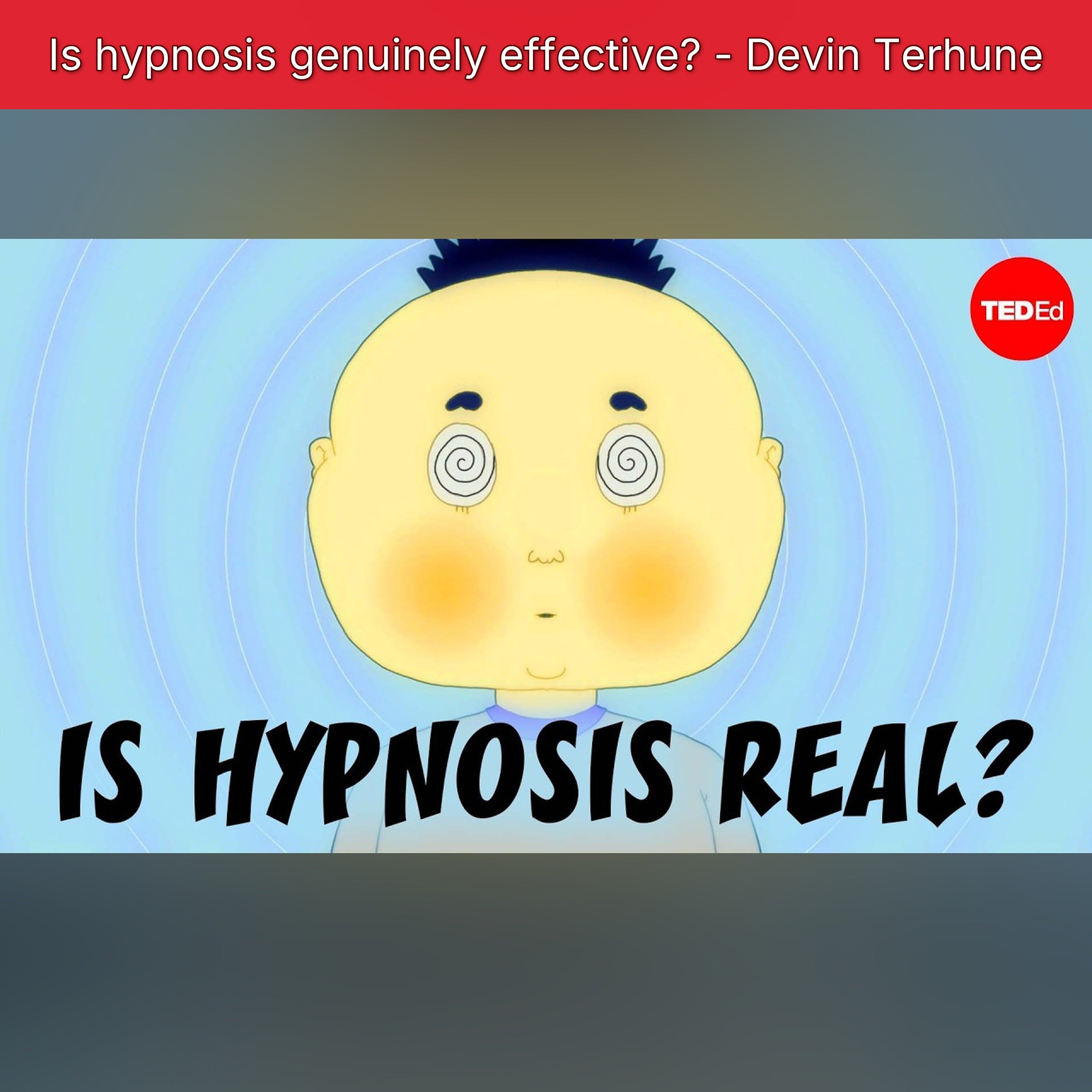
Explore the science of hypnosis, and dig into how the practice can affect your body and brain when hypnotic suggestions work. -- In the 19th century, Scottish surgeon James Braid revolutionized the field of hypnotism, transitioning the practice towards inducing a sleep-like state. Today, hypnosis is used in psychiatry as a helpful medical tool, yet it still holds an entrancing place in popular fantasy. So, is there any truth to what it can accomplish? Or is it just illusion? Devin Terhune explores the power of suggestion. Lesson by Devin Terhune, directed by Leah Putnam. Support Our Non-Profit Mission ---------------------------------------------- Support us on Patreon: http://bit.ly/TEDEdPatreon Check out our merch: http://bit.ly/TEDEDShop ---------------------------------------------- Connect With Us ---------------------------------------------- Sign up for our newsletter: http://bit.ly/TEDEdNewsletter Find us on Twitter: http://bit.ly/TEDEdTwitter Peep us on Instagram: http://bit.l
Losing her mother after years of serious health problems left one woman struggling with grief. She had watched her mother fight to recover from devastating strokes, and although she knew how difficult her final years had been, saying goodbye was still incredibly painful. A couple of weeks after her mother's death, she was attending a medical appointment when something unexpected appeared on her phone. She hadn't searched for it, but what she saw had an unmistakable connection to her mother. Then, almost immediately, another notification appeared, bringing back memories that stirred even more emotions. Individually, the two incidents might have seemed like coincidences. But the timing and their personal significance made her wonder whether her mother was trying to tell her something. Could these have been small signs of comfort from someone who was no longer physically there? #RealGhostStoriesOnline #TrueGhostStories #SignsFromBeyond #AfterDeathCommunication #MessagesFromHeaven #SpiritC
What if some children arrive in this world carrying memories of a life that ended before they were born? For decades, researchers at the University of Virginia have investigated children who describe people, places, and events they seemingly shouldn't know anything about. In some cases, their accounts have been linked to actual people who died years earlier. But new research raises an even more intriguing question. Could the circumstances of someone's death have something to do with how quickly they return? By examining hundreds of reported past-life cases, researchers identified a curious pattern involving sudden or unexpected deaths and the time between one person's death and another child's birth. The findings don't prove reincarnation, but they add another question to an already mysterious subject. Could these children genuinely remember another lifetime? And if so, what happens between one life and the next? #RealGhostStoriesOnline #Reincarnation #PastLifeMemories #PastLives #Life
This week Craig Benzine takes a first look at the judicial branch. It's pretty easy to forget that the courts, and the laws that come out of them, affect our lives on a daily basis. But how exactly these decisions are made and where each law's jurisdiction starts and ends can get pretty complicated. So complicated in fact that you may want to smash something. But don't worry, Craig will clear the way. Produced in collaboration with PBS Digital Studios: http://youtube.com/pbsdigitalstudios Support is provided by Voqal: http://www.voqal.org (http://www.voqal.org/) All Flickr.com images are licensed under Creative Commons by Attribution 2.0 *** Crash Course is on Patreon! Want to find Crash Course elsewhere on the internet? Facebook - http://www.facebook.com/YouTubeCrashCourse Twitter - http://www.twitter.com/TheCrashCourse Instagram - https://www.instagram.com/thecrashcourse/ CC Kids: http://www.youtube.com/crashcoursekids