What do we mean when we say that Native Americans have a strong connection to the land? In this episode of Crash Course Native American History, we’ll explore how Native peoples’ long, deep history on their homelands informs their culture, languages, and identity to this day. Introduction: Deep Connections 00:00 Native Views of Land 0:39 Land-based Traditions 2:15 Land & Language 3:10 The Native-Land Relationship 4:53 Settler Colonialism 7:09 Land Reclamation 8:14 Review & Credits 9:32 Sources: Want to know more about how this series was made? Learn more here: https://docs.google.com/document/d/17yp3u28s40TdjyrJniIf4U9YA8wPtvQ1g1B-HSHQ2Q4/edit?tab=t.0#heading=h.6vtzps565m2 (https://docs.google.com/document/d/17yp3u28s40TdjyrJniIf4U9YA8wPtvQ1g1B-HSHQ2Q4/edit?tab=t.0) *** Support us for $5/month on Patreon to keep Crash Course free for everyone forever! https://www.patreon.com/crashcourse Or support us directly: https://complexly.com/support Join our Crash Course email list to get the la
In which John Green teaches you about capitalism and socialism in a way that is sure to please commenters from both sides of the debate. Learn how capitalism arose from the industrial revolution, and then gave rise to socialism. Learn about how we got from the British East India Company to iPhones and consumer culture in just a couple of hundred years. Stops along the way include the rise of industrial capitalism, mass production, disgruntled workers, Karl Marx, and the Socialist Beard. The socialist reactions to the ills of capitalism are covered as well, and John discusses some of the ideas of Karl Marx, and how they've been implemented or ignored in various socialist states. Plus, there are robots! Chapters: Introduction: Capitalism 00:00 What is Industrial Capitalism? 0:59 How did Industrial Capitalism begin? 3:04 Capitalism Increased Productivity 4:51 Capitalism as a Cultural System 5:41 Criticisms of Capitalism 7:12 Socialism 7:59 An Open Letter to Karl Marx's Beard 9:12 Karl Mar
Sleep better with Pillow: https://pillow.app/bettersleep Experience gentle rainfall and soothing ambient sounds that create the perfect peaceful atmosphere for sleep, meditation, and deep relaxation. Let the calming nature audio help you unwind, focus, and drift into tranquil rest. This episode includes AI-generated content.
View full lesson: http://ed.ted.com/lessons/the-science-of-stage-fright-and-how-to-overcome-it-mikael-cho Uploaded 08-10-13 Heart racing, palms sweating, labored breathing? No, you're not having a heart attack -- it's stage fright! If speaking in public makes you feel like you're fighting for your life, you're not alone. But the better you understand your body's reaction, the more likely you are to overcome it. Mikael Cho advises how to trick your brain and steal the show. Lesson by Mikael Cho, animation by KAWPA Studioworks.
Women with endometriosis often spend years searching for answers. On average, it can take around a decade to get a diagnosis. So could a new generation of tests, which are far less invasive than what's available today, help cut that wait from years to days? Inside Health is looking at what those tests involve and how well they might work in the real world. We'll also hear from one couple about their difficult journey to starting a family - and explore why many queer couples still face huge hurdles when trying to access fertility treatment here in the UK. And as the clocks go back, Laura looks at why a change of just one hour can result in 'social jet lag' or 'first class sleep'. Why are the first few days the hardest - and what we can do to make 'falling back' into autumn and 'springing forward' in March easier on our bodies? Presenter: Laura Foster Producer: Gerry Holt Editor: Ilan Goodman Production coordinator: Stu Laws Sound engineer: Sue Maillot The show was made by the BBC’s Audi
Why and how do we orgasm? In this episode of Crash Course Sex Ed, we’ll break down “the Big O”—its physical aspects, gendered expectations, and misconceptions. Plus, a fun cameo from a penis-camera. Introduction: The Big O 00:00 Orgasms & Erogenous Zones 0:46 Masters & Johnson 2:55 The Dual Control Model 4:20 The Orgasm Gap 5:46 Review & Credits 8:05 Sources: For more information on the topics in this episode, check out this resource from our partners at the Kinsey Institute (https://kinseyinstitute.org/): https://drive.google.com/drive/folders/1mSu0MerCwVUmNpya61JVIE4Wdsdkrgbk Read more about these topics here: Planned Parenthood - https://www.plannedparenthood.org/learn/sex-pleasure-and-sexual-dysfunction/sex-and-pleasure Cleveland Clinic - https://my.clevelandclinic.org/health/articles/9119-sexual-response-cycle *** Support us for $5/month on Patreon to keep Crash Course free for everyone forever! https://www.patreon.com/crashcourse Or support us directly: https://complexly.com/supp
At the end of the Civil War, the United States was still a very divided place. 700,000 people had died in a bitter fight over slavery. Reconstruction was the political process meant to bring the country back together. It was also the mechanism by which the country would extend the rights of citizenship to Black Americans, particularly those who had been recently emancipated. Today we'll learn about the Reconstruction amendments, the Freedman's Bureau, and the election of 1876, among other things. Clint's book, How the Word is Passed is available now! https://bookshop.org/a/3859/9780316492935 Watch our videos and review your learning with the Crash Course App! Download here for Apple Devices: https://apple.co/3d4eyZo Download here for Android Devices: https://bit.ly/2SrDulJ Sources W.E.B. Du Bois, Black Reconstruction in America, 1860-1880 , 3rd. ed.. New York: The Free Press, 1992. Eric Foner, Reconstruction: America’s Unfinished Revolution, 1863- 1877. New York: HarperCollins, 2002. H
Hank tells us about the team of deadly ninja assassins that is tasked with protecting our bodies from all the bad guys that want to kill us - also known as our immune system. Table of Contents 1) Innate Immune System 1:45 a) Mucous Membranes 2:54 b) Inflammatory Response 3:44 c) Leukocytes 4:45 2) Open Letter 6:33 a) Natural Killer Cells 6:56 b) Dendritic Cells 7:57 3) Acquired Immune System 8:36 a) Antibodies 9:08 b) Lymphocytes 9:48 c) Cell-Mediated Response 10:17 d) Humoral Response 13:00 References Campbell Biology, 9th ed. This video uses the following sounds from Freesound.org: "Pigs-01.flac" by Erdie "straw slurp.wav" by dparke4 "Disgusting Slop.wav" by Ighuaran "Sonar Ping.wav" by digifishmusic "Swishes.wav" by Pogotron "swing.mp3" by morgantj Crash Course is on Patreon! Want to find Crash Course elsewhere on the internet? Facebook - http://www.facebook.com/YouTubeCrashCourse Twitter - http://www.twitter.com/TheCrashCourse Instagram - https://www.instagram.com/thecrashcourse/ C
Triquetra Discount: Use code Dave20 at Triquetrahealth.com/dave (https://triquetrahealth.com/pages/dave) Multivitamin Mistakes, MTHFR Genetics, B Vitamins, Creatine & Prescription Drug Risks Host Dave Asprey sits down with Phil Cowley, a pharmacist, founder of Cache Valley Pharmacy, and creator of Phil's My Pharmacist, to explore multivitamins, prescription medications, supplement effectiveness, MTHFR genetics, methylated B vitamins, creatine, and the hidden problems within modern healthcare. After opening his pharmacy in Logan, Utah, in 2001, Phil spent two decades serving patients and dispensing millions of prescriptions. By 2021, declining insurance reimbursements threatened his business despite increasing prescription volume. He turned to social media to share practical, affordable health advice, eventually building an audience of more than six million followers. Now, he explains what his experience behind the pharmacy counter taught him about medication side effects, nutritional d
Finding the wreck of the Titanic would be a career-defining achievement for most people. For oceanographer Robert Ballard, it's just one chapter in a life packed full of extraordinary marine exploration. Bob located the world-famous shipwreck in 1985, but even before that, he’d helped prove the existence of hydrothermal vents: underwater formations surrounded by ecosystems flourishing in the ocean’s depths - without sunlight; a discoveyr that revolutionised our understanding of where and how life can flourish... Over a career spanning six decades, Bob has pioneered revolutionary technologies, discovered some of history's most famous shipwrecks and inspired new generations of explorers. What's more, as he tells Professor Jim Al-Khalili, he's still exploring mysteries of the deep today... Presented by Jim Al-Khalili Produced by Lucy Taylor A BBC Studios production
Just like everyone, all Native Americans are unique. But what do they have in common? In this episode of Crash Course Native American History, we’ll explore similarities in Native worldviews, from harvest traditions to humor. Introduction: Native Toys 00:00 Native Humor 1:05 Representing Native Humor 3:52 Reciprocity 5:37 Generosity 8:49 Review & Credits 10:06 Sources: Want to know more about how this series was made? Learn more here: https://docs.google.com/document/d/17yp3u28s40TdjyrJniIf4U9YA8wPtvQ1g1B-HSHQ2Q4/edit?tab=t.0#heading=h.6vtzps565m2 (https://docs.google.com/document/d/17yp3u28s40TdjyrJniIf4U9YA8wPtvQ1g1B-HSHQ2Q4/edit?tab=t.0) *** Support us for $5/month on Patreon to keep Crash Course free for everyone forever! https://www.patreon.com/crashcourse Or support us directly: https://complexly.com/support Join our Crash Course email list to get the latest news and highlights: https://mailchi.mp/crashcourse/email Get our special Crash Course Educators newsletter: http://eepurl.
In which John Green wraps up revolutions month with what is arguably the most revolutionary of modern revolutions, the Industrial Revolution. While very few leaders were beheaded in the course of this one, it changed the lives of more people more dramatically than any of the political revolutions we've discussed. So, why did the Industrial Revolution happen around 1750 in the United Kingdom? Coal. Easily accessible coal, it turns out. All this, plus you'll finally learn the difference between James Watt and Thomas Newcomen, and will never again be caught telling people that your blender has a 900 Newcomen motor. Chapters: Introduction: The Industrial Revolution 00:00 What Was the Industrial Revolution? 1:48 Innovations in the British Textile Industry 2:38 Why did the Industrial Revolution start in Europe? 4:08 An Open Letter to the Steam Engine 4:57 What was going on in China during the Industrial Revolution? 5:35 European Advantages: High Wages and Low Fuel Costs 7:03 What was going o
Pancreatic cancer has notoriously been hard to detect and treat. Changes in the KRAS gene cause cells to make a protein that make pancreatic cancer grow. And that protein has been notoriously difficult to target. But now, a promising new class of drugs is boldly going where no drug has gone before. In this episode, Dr. Kaylee Byers sits down with medical oncologist Dr. Brandon Huffman to unpack the science behind this breakthrough medication. And, we also meet pancreatic cancer patient and advocate, Stephanie Ramsey, who shares how genetics shaped her own cancer journey, and what these latest advances could mean for the people who need them most. From a once “undruggable” disease finally meeting its match, to questions around accessibility, Kaylee explores what this development could mean for the future of pancreatic cancer care. - Highlights 01:52- Why Is Pancreatic Cancer So Hard to Treat? 06:40- How Genetic Testing Changed Stephanie’s Cancer Journey 22:25- A Breakthrough Drug. But W
Quantum mechanics may impose a fundamental speed limit on how quickly matter reaches thermal equilibrium. Discover the Planckian limit, the role of temperature and fundamental constants, and why this quantum speed limit could offer important insights into the future of quantum computing and advanced technologies. What determines how fast the physical world can change? This episode includes AI-generated content.
Astronomers analyzing data from the Vera C. Rubin Observatory have identified a massive icy object beyond Neptune that could be a new dwarf planet. Provisionally named 2026 ED138, the distant world remained hidden among crowded background stars until advanced search algorithms revealed its movement across a decade of archival images. If future observations confirm its shape, it could become another recognized member of the solar system’s dwarf planet family. This episode includes AI-generated content.
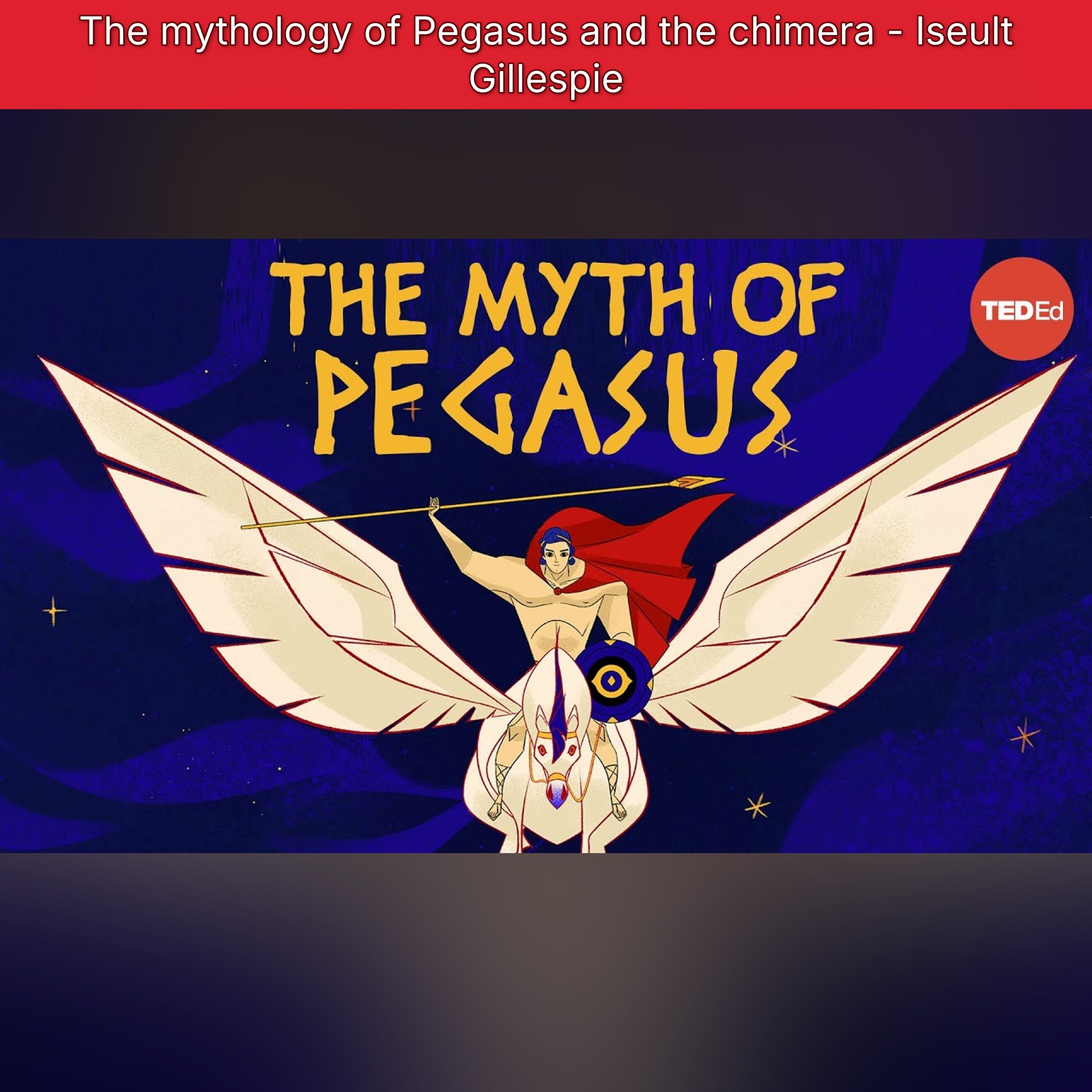
Discover the myth of Bellerophon, the hero who battled and killed the Chimera monster atop the winged horse Pegasus. -- Shielded from the gorgon’s stone gaze, Perseus crept through Medusa’s cave. When he reached her, he drew his sickle and brought it down on her neck. From Medusa's neck sprung two children. One was a giant wielding a golden sword; the other was the magnificent, winged horse, Pegasus. No bridle could contain him— until one fateful day. Iseult Gillespie details the myth of the hero Bellerophon. Lesson by Iseult Gillespie, directed by Karina Forero, Lucy Animation Studio. Support Our Non-Profit Mission ---------------------------------------------- Support us on Patreon: http://bit.ly/TEDEdPatreon Check out our merch: http://bit.ly/TEDEDShop ---------------------------------------------- Connect With Us ---------------------------------------------- Sign up for our newsletter: http://bit.ly/TEDEdNewsletter Find us on Twitter: http://bit.ly/TEDEdTwitter Peep us on Instagra
Food insecurity, or the lack of access to enough nutritious food, is a complex problem. In the 21st century, even with all of our advances in technology, access to food is still uneven. Today we're going to look at the diffusion of food across the globe during the Columbian Exchange and examine how changes in food technology from the Agricultural Revolution to the Green Revolution to the Genetic Revolution have played a significant part in food availability across the globe. SOURCES General For a free and open source option for Intro to Human Geography, see: https://humangeography.pressbooks.com/ For a free and open source option for World Regional Geography, see: https://worldgeography.pressbooks.com/front-matter/introduction/ Cracking the AP Human Geography Exam: 2020 edition. The Princeton Review. Hobbs, Joseph J. Fundamental of World Regional Geography, 4th ed. Cengage. 2017. Miller and Spoolman. Living in the Environment 19th ed. Belmont, CA: Brooks/Cole, Cengage Learning. 2017. I
If almost everybody masturbates, why can’t we talk about it? In this myth-busting episode of Crash Course Sex Ed, we’ll uncover the history of how masturbation became taboo, the person who made sex toys better for everyone, and the ways masturbation can actually be good for you. Introduction: Masturbation Is Normal 00:00 Who Masturbates? 0:28 Gosnell Duncan & Sex Toys 1:22 Benefits of Masturbation 2:48 Masturbation Myths 4:37 Review & Credits 7:05 Sources: For more information on the topics in this episode, check out this resource from our partners at the Kinsey Institute (https://kinseyinstitute.org/): https://drive.google.com/drive/folders/1mSu0MerCwVUmNpya61JVIE4Wdsdkrgbk Read more about these topics here: Planned Parenthood - https://www.plannedparenthood.org/learn/sex-pleasure-and-sexual-dysfunction/masturbation *** Support us for $5/month on Patreon to keep Crash Course free for everyone forever! https://www.patreon.com/crashcourse Or support us directly: https://complexly.com/su
If you enjoy our riddles, we highly recommend reading "The Number Devil": https://amzn.to/2kO7S8P Uploaded 04-06-18 Check out our book rec page to learn more: http://bit.ly/2JqwgLE View full lesson: https://ed.ted.com/lessons/can-you-solve-the-penniless-pilgrim-riddle-daniel-finkel After months of travel, you’ve arrived at Duonia, home to the famous temple that’s the destination of your pilgrimage. The walk from the welcome center to the temple isn't a long one ... but there’s a problem. Can you outsmart the city's imposed tax and make it to the temple without paying a fee? Daniel Finkel shows how. Lesson by Daniel Finkel, animation by Artrake Studio. Thank you so much to our patrons for your support! Without you this video would not be possible! Tan YH, Brittiny Elman, Mayra Urbano, Ruth Fang, Kostadin Mandulov, Alex Schenkman, Sdiep Sriram, Ivan Todorović, Antero Semi, Yanuar Ashari, Mrinalini, Anthony Kudolo, Scott Gass, Querida Owens, Hazel Lam, Manav parmar, Dwight Tevuk, Stephen
Hank tells us the story of the complicated chemical dance that allows our skeletal muscles to contract and relax. Table of Contents 1) Cardiac, Smooth, & Skeletal Muscles 01:09 2) Muscle Anatomy 02:03 a) Muscle Fibers 03:07 b) Myofibrils 04:15:1 c) Sarcomeres 04:19:1 d) Myofilaments 04:37:2 3) Biolography 05:37:1 4) Sliding Filament Model 07:47 Crash Course is on Patreon! Want to find Crash Course elsewhere on the internet? Facebook - http://www.facebook.com/YouTubeCrashCourse Twitter - http://www.twitter.com/TheCrashCourse Instagram - https://www.instagram.com/thecrashcourse/ CC Kids: http://www.youtube.com/crashcoursekids
Chris and Xand van Tulleken continue their conversation about fevers with Dr Catherine Houlihan, consultant in clinical virology and infectious diseases at University College London Hospitals. They find out about her work as a consultant in infection at the Rare and Imported Pathogens Laboratory, UK Health Security Agency and what to do if you develop a fever after travelling abroad. If you'd like to share your thoughts on this or any other topic covered on the podcast, you can email us at [email protected]. Presenters: Drs Chris and Xand van Tulleken Guest: Dr Catherine Houlihan Producer and researcher: Dr Samara Linton Executive Producer: Rami Tzabar Visual Producer: Leon Gower Technical Lead: Reuben Huxtable Digital Lead: Richard Berry Composer: Phoebe McFarlane Sound Design: Melvin Rickarby At the BBC: Assistant Commissioner: Greg Smith Commissioning Editor: Rhian Roberts A Loftus Media production for BBC Radio 4.
Almost everyone carries a list of things they want to do in life, and almost nobody gets to it. Michael speaks with Ravi Gupta, author of The Invisible List, who went all in on one passion a year: powerlifting, screenwriting, surfing, tennis, the MCAT, and Italian cooking. He explains the four steps to develop your "invisible list," how to find the time to tackle it, why your passions make you a better human, why passions protect your health and brain, and why sucking at something has benefits. They cover: (00:00) Cold open (00:56) The wedding that started a quest (03:06) What is the invisible list? (04:49) Why we never tackle our life list (06:32) Hobbies aren't selfish (10:48) What he learned about learning (14:18) Four steps of the invisible list (18:39) Why he started with powerlifting (21:51) All gear, no idea (24:47) Tracking and sticking with it (30:36) Staying focused as a beginner (35:16) Why you have to suck at first (39:55) The friends you make (44:10) The MCAT as a brain ma
Welcome to What's Up Docs?, the podcast where doctors and identical twins Chris and Xand van Tulleken explore the ideas shaping our health and wellbeing. In this episode, they examine fevers. They ask how and why our body sometimes turns up the dial on its internal thermostat, and what, if anything, we should do about it. To help them answer these questions, they are joined by Dr Catherine Houlihan, a consultant in clinical virology and infectious diseases at University College London Hospitals. She is also a consultant in infection at the Rare and Imported Pathogens Laboratory, UK Health Security Agency. If you want to get in touch, you can email us at [email protected] Presenters: Drs Chris and Xand van Tulleken Guest: Dr Catherine Houlihan Producer and researcher: Dr Samara Linton Executive Producer: Rami Tzabar Visual Producer: Leon Gower Technical Lead: Reuben Huxtable Digital Lead: Richard Berry Composer: Phoebe McFarlane Sound Design: Melvin Rickarby At the BBC: Assistant Co
Being a perfectionist sounds like a good thing. You have high standards, pay attention to details, and want to do things right. What's wrong with that? As it turns out, quite a lot. Perfectionism can actually work against you, causing you to procrastinate, obsess over mistakes, avoid taking risks, and feel dissatisfied even when you've accomplished something worthwhile. And ironically, the harder you try to make everything perfect, the less you may actually accomplish. So why are some people perfectionists? Where does that need to get everything just right come from? And how do you know when having high standards has crossed the line into something that's holding you back? Clinical psychologist Dr. Elizabeth Lombardo, author ofBetter Than Perfect: 7 Strategies to Crush Your Inner Critic and Create a Life You Love (https://amzn.to/32tNfDb) (https://amzn.to/32tNfDb), joins me to explain the psychology of perfectionism, why "good enough" is often more than enough, and how to let go of imp