In this episode of Planet Visionaries, a landmark podcast series in partnership with the Rolex Perpetual Planet Initiative, host Alex Honnold speaks with Krithi K. Karanth, 2026 Rolex National Geographic Explorer of the Year, about her work reducing human-animal conflict in India. For nearly a century, Rolex has supported pioneering explorers. Over time, the company has moved from championing exploration for the sake of discovery to protecting the planet. Through the Perpetual Planet Initiative, Rolex stands alongside the inspiring people who are dedicated to building a better future for all life on Earth. Credits: Personal photographs provided by Krithi Karanth. To learn more about the Centre for Wildlife Studies (https://cwsindia.org/chief-executive-officer-dr-krithi-k-karanth/).
Ep 396: A woman married the man of her dreams who turned out to be a monster. But would the system hold him accountable? This is the Kelly Sutliff story More information about Kelly and her work can be found on her website, "Kelly's K9s Tails of Courage" at https://www.kellysk9s.org Kelly Sutliff had built the life she wanted: a master's degree, a thriving psychotherapy practice, her own home in New Jersey, and a rescue dog named Chester. What was missing was love — and in 2018 a dating app match with a charming Army veteran named Chris Mackey seemed to supply it. Within months he had moved in, proposed and married her. Within a year, Kelly was mysteriously, chronically ill, and a December 2019 night in Morris County would turn her marriage into a crime scene. Meghan and Amy trace Kelly's story from her childhood in East Hanover, New Jersey through the 911 calls, the arrest on aggravated assault by strangulation, and the questions that followed: what did New Jersey bail reform mean for
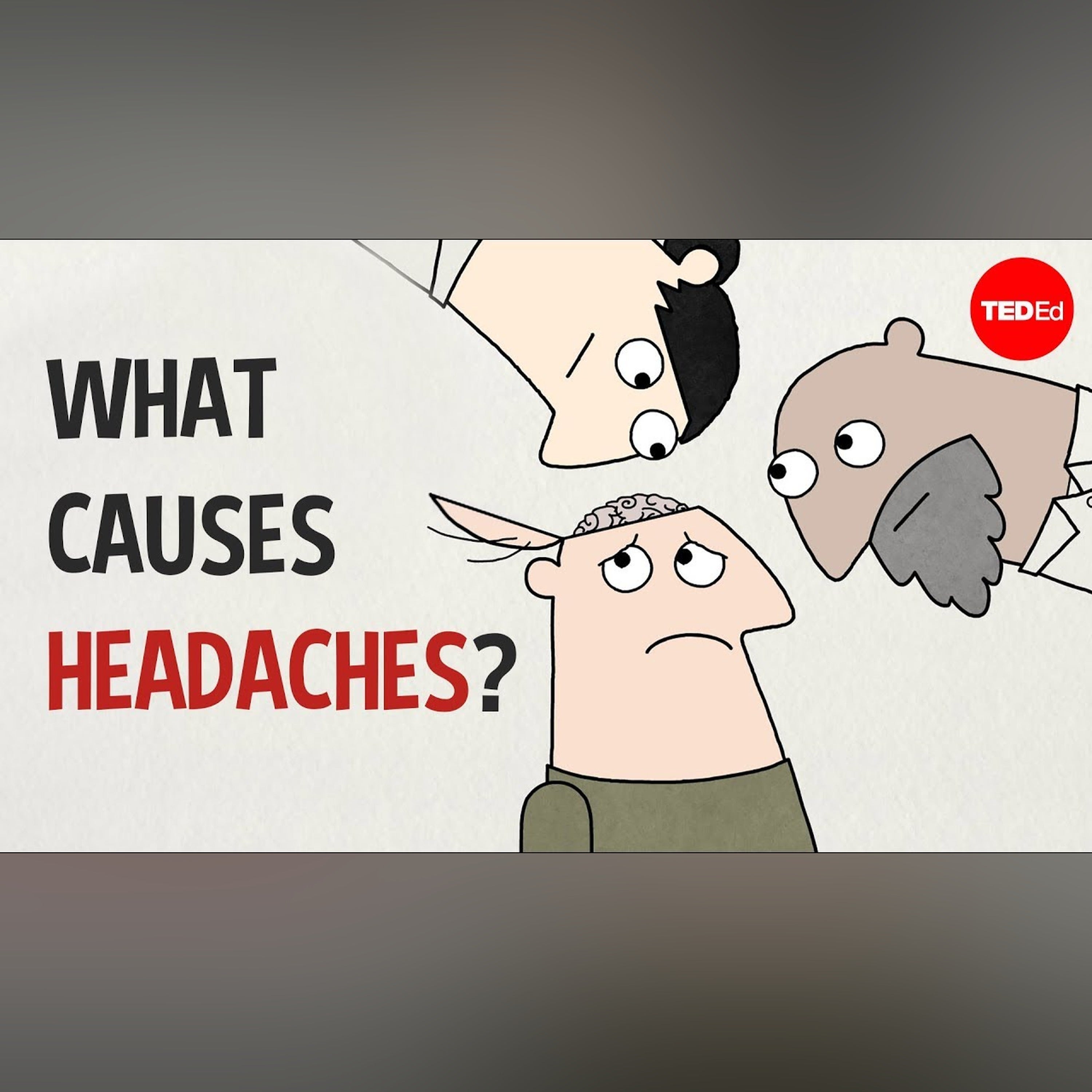
Download a free audiobook and support TED-Ed's nonprofit mission: https://adbl.co/2Hejwql Uploaded 12-04-18 Check out Oliver Sacks's "The Man Who Mistook His Wife for a Hat": http://bit.ly/2Hk8ShM View full lesson: https://ed.ted.com/lessons/what-causes-headaches-dan-kwartler In ancient Greece, the best-known remedy for a long-standing headache was to drill a small hole in the skull to drain supposedly infected blood. Fortunately, doctors today don’t resort to power tools to cure headaches, but we still have a lot to learn about this ancient ailment. Dan Kwartler shares what we know (and don't know) about headaches. Lesson by Dan Kwartler, animation by Sharon Colman. Thank you so much to our patrons for your support! Without you this video would not be possible. Senjo Limbu, Martin Lau, Robson Martinho, Jason Garcia, Cailin Ramsey, Seung Hoon Shin, John Saveland, Nicolle Fieldsend-Roxborough, Venkat Venkatakrishnan, Sandy Nasser, CG Nobles, Yoga Trapeze Wanderlust, Jaron Blackburn, Ale
How can you tell two species apart? It’s not always simple. In this episode of Crash Course Biology, we’ll learn about speciation—a process that can happen over millions of years, or within a single generation. Along the way, we’ll discover how a single species can split into two and how a reptile from New Zealand continues to stump scientists. Chapters: A Living Fossil 00:00 Species & Evolution 2:16 Species Concepts 3:36 What Separates Species 5:40 Allopatric Speciation 6:52 Sympatric Speciation 8:38 Review & Credits 11:48 This series was produced in collaboration with HHMI BioInteractive, committed to empowering educators and inspiring students with engaging, accessible, and quality classroom resources. Visit https://BioInteractive.org/CrashCourse (https://biointeractive.org/CrashCourse) for more information. Are you an educator looking for what NGSS Standards are covered in this episode? Check out our Educator Standards Database for Biology here: https://www.thecrashcourse.com/biolo
You know ‘em, you love ‘em. They’re the powerhouse of the cell: mitochondria. They produce the ATP molecules that we use to do everything from talk to our friends to run a marathon. In this episode of Crash Course Biology, we’re taking a deep dive into cellular respiration, the process that produces the ATP inside of our mitochondria. Chapters: Getting Energy 00:00 Mitochondria & ATP 1:22 Cellular Respiration 2:29 Glycolysis 4:18 The Citric Acid Cycle 6:40 The Electron Transport Chain 8:17 Review & Credits 11:05 This series was produced in collaboration with HHMI BioInteractive, committed to empowering educators and inspiring students with engaging, accessible, and quality classroom resources. Visit https://BioInteractive.org/CrashCourse (https://biointeractive.org/CrashCourse) for more information. Are you an educator looking for what NGSS Standards are covered in this episode? Check out our Educator Standards Database for Biology here: https://www.thecrashcourse.com/biologystandards
In which John Green teaches you about the economic malaise that beset the United States in the 1970s. A sort of perfect storm of events, it combined the continuing decline of America's manufacturing base with the oil shocks of 1973 and 1979 and brought about a stagnant economy, paired with high inflation. Economists with a flair for neologisms and portmanteau words called this "stagflation," and it made people miserable. Two presidential administrations were scuttled at least in part by these economic woes; both Gerald Ford and Jimmy Carter are considered failed presidents for many reasons, but largely because of an inability to improve the economy. (hint: In reality, no one person can materially change something as big as the world economy, even if they are president, but one person sure can make a handy scapegoat!) So, by and large, the 70s were a pretty terrible time in America economically, but at least the decade gave us Mr. Green. Crash Course is no longer available on DVD, sorry
This episode is brought to you by Alma. In this episode, Shane talks with Shalin Carter about intercultural relationships. Shalin Carter, MS, LPC, LCPC, is a licensed psychotherapist practicing across Virginia, Washington, D.C., Maryland, and South Carolina. She is an approved clinical supervisor and the founder of Exploring Compassion, a practice dedicated to honoring the nuances & complexities of biracial/multiracial identity and interracial/intercultural relationships. Hear why it's important to be aware of the biases we have, how to open up about these conversations as couples therapists, how to know if you're being insensitive with a client, how to help a partner slow down and listen, and how to bring up the dynamics of an intercultural relationship. To learn more about Shalin Carter & Exploring Compassion, visit: ExploringCompassion.com (https://www.exploringcompassion.com/)
Dig into the science and superstition behind the myth of vampires, and how it has persisted from ancient Mesopotamia to today. Uploaded 29-10-13 -- The myth of the bloodsucking vampire has stalked humans from ancient Mesopotamia to 18th-century Eastern Europe, but it has differed in the terrifying details. So, how did we arrive at the popular image we know, love and fear today? And what truly makes a vampire...a vampire? Michael Molina digs up the science and the superstition. Lesson by Michael Molina, animation by The Moving Company Animation Studio. Support Our Non-Profit Mission ---------------------------------------------- Support us on Patreon: http://bit.ly/TEDEdPatreon Check out our merch: http://bit.ly/TEDEDShop ---------------------------------------------- Connect With Us ---------------------------------------------- Sign up for our newsletter: http://bit.ly/TEDEdNewsletter Find us on Twitter: http://bit.ly/TEDEdTwitter Peep us on Instagram: http://bit.ly/TEDEdInstagram ---
In fact, quite surprisingly to myself and the wider philosophy community, to become more interesting you don't even need to read Nietzsche! You can become distinctly memorably by simply being yourself. In this episode, we look at why shallow interests rarely make you memorable—and why going deeper into the things you actually care about can change how people see you. I share the surprising maths behind why exploring a topic ten times more deeply can make it a hundred times more interesting, plus why embracing a little harmless weirdness can make you more confident, more relatable, and more fun to be around. We also tackle the other side of the equation: you do not need to stand out in every meeting, comment section, or conversation. Sometimes being ordinary is the smartest use of your energy. Go deeper into one interest instead of collecting surface-level opinions. Try one small thing that feels socially awkward but genuinely excites you. Save your effort for the moments where standing
In which Craig Benzine tells you how we keep bureaucracy in check. So we've spent the last few episodes telling you all about what bureaucracies are and why they are formed. And throughout we've hinted about this ever-expanding power within the executive branch. So today, we're going to finish our discussion of bureaucracy by looking at methods the other branches of government use to manage this power. From watch-dog organizations to reporting requirements there has been quite a bit of legislation passed aimed at taming the bureaucracy. Produced in collaboration with PBS Digital Studios: http://youtube.com/pbsdigitalstudios Support is provided by Voqal: http://www.voqal.org (http://www.voqal.org/) All Flickr.com images are licensed under Creative Commons by Attribution 2.0 -- Want to find Crash Course elsewhere on the internet? Facebook - http://www.facebook.com/YouTubeCrashCourse Twitter - http://www.twitter.com/TheCrashCourse Tumblr - http://thecrashcourse.tumblr.com (http://thecrash
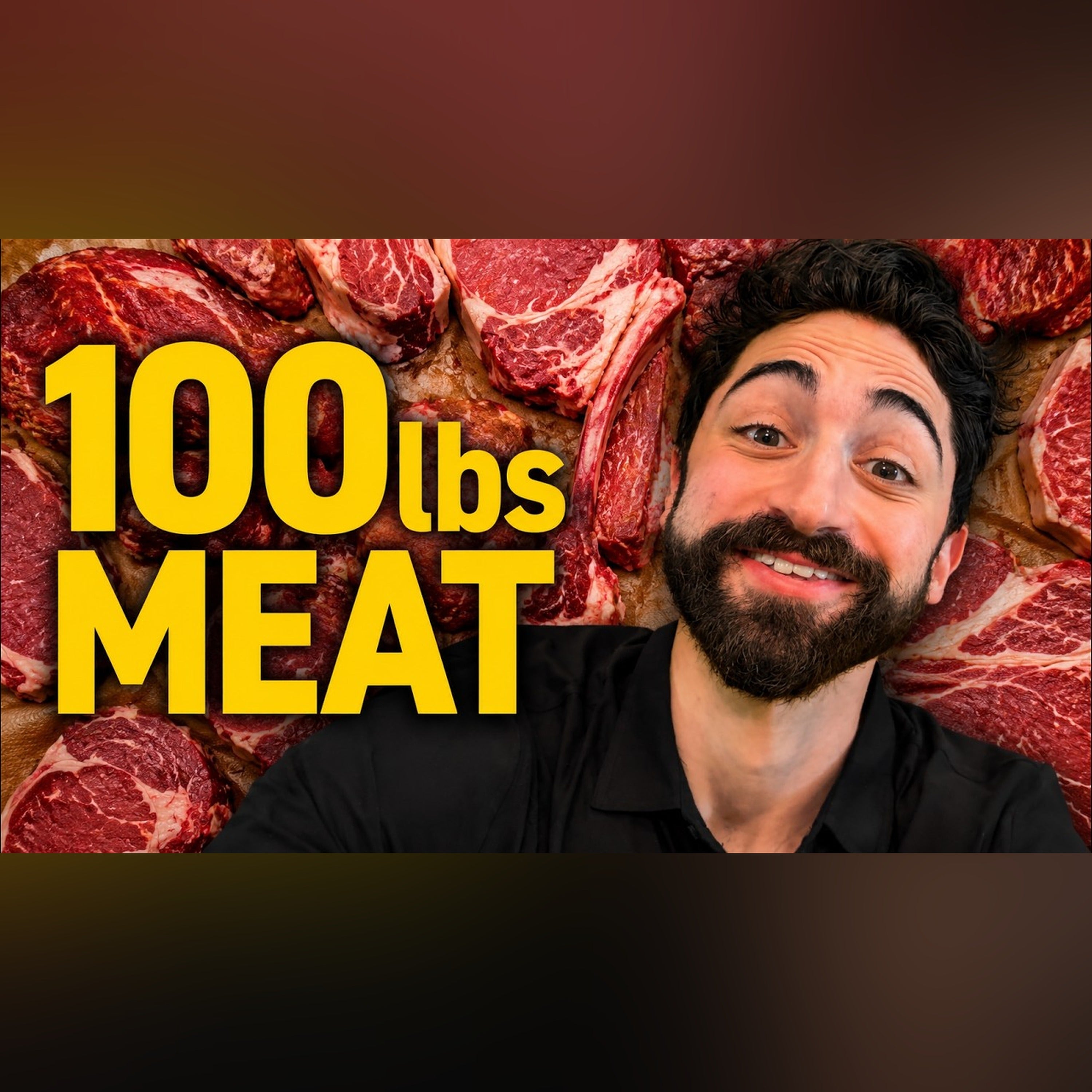
For all the references, additional nuances, and early access to content like this, check out the associated StayCurious Metabolism newsletter: https://staycuriousmetabolism.substack.com/p/i-tried-the-most-extreme-version?r=40ekz2 Carnivore for Inflammatory Bowel Disease Paper (open access): https://www.frontiersin.org/journals/nutrition/articles/10.3389/fnut.2024.1467475/full Masterclass on Gut Health Video: https://youtu.be/ndEfyeoq95w Chapters 0:00 – Why I Ate 100 Pounds of Meat in 30 Days 3:07 – All Matters Gut Health 5:23 – What Patients with Inflammatory Bowel Disease Say 5:48 – How Mechanistically Carnivore Can Health the Gut 8:18 – What About Microbiome Diversity? 9:15 – The Nutrient Deficiency Problem 10:17 – Omega-3: Beef vs Fish 12:02 – The Vitamin C Paradox 15:37 – Carnivore for Autoimmune and Inflammatory Conditions 16:56 – Carnivore for Mental Health Description I ate more than 100 pounds of meat in 30 days while following the Lion Diet: no dairy, eggs, seafood, coffee, su
Human reproduction is complicated and important, and it's going to take a four-part series for us to cover it. Today, we're kicking that off with the female reproductive system, starting with how sex hormones affect oogenesis and ovulation, continuing through how the ovarian and menstrual cycles mature and release oocytes, and creating a comfy uterine environment for a fertilized egg. Pssst... we made flashcards to help you review the content in this episode! Find them on the free Crash Course App! Download it here for Apple Devices: https://apple.co/3d4eyZo Download it here for Android Devices: https://bit.ly/2SrDulJ Chapters: Introduction: Human Reproduction 00:00 External Female Reproductive Organs 1:49 Ovaries Structure & Function 2:28 Ovarian Follicles and Oogenesis 3:15 The Ovarian Cycle 4:05 Fallopian Tubes 6:53 The Uterus 7:10 The Menstrual Cycle 7:45 Review 9:11 *** Crash Course is on Patreon! Thanks to the following Patrons for their generous monthly contributions that help k
Humans may have been around for a long time, but life has existed for way longer. In this episode of Crash Course Biology, we’ll journey through deep time to uncover the history of life on Earth. We’ll explore the big, game-changing leaps where life diversified, changed, and just plain persisted. Introduction: How Life Began 0:00 Macroevolution 1:15 RNA & DNA 2:43 The Timeline of Life 3:42 Stromatolites & Fossils 6:03 Dr. Meeman Chang 8:31 Drivers of Macroevolution 10:00 Review & Credits 11:56 This series was produced in collaboration with HHMI BioInteractive, committed to empowering educators and inspiring students with engaging, accessible, and quality classroom resources. Visit https://BioInteractive.org/CrashCourse (https://biointeractive.org/CrashCourse) for more information. Are you an educator looking for what NGSS Standards are covered in this episode? Check out our Educator Standards Database for Biology here: https://www.thecrashcourse.com/biologystandards Check out our Biolo
Midterm election results in the U.S. have short-circuited plans to install a Senate-confirmed FDA commissioner (https://www.biocentury.com/article/661541) and could open a narrow path to bipartisan drug pricing legislation (https://www.biocentury.com/article/661503). On the latest BioCentury This Week podcast, BioCentury’s analysts assess what the results mean for FDA and HHS leadership, user fee negotiations, vaccine regulation, and the prospect of applying most-favored nation pricing to Medicare drug price negotiation. The analysts also unpack full Phase III data (https://www.biocentury.com/article/661524) showing pelacarsen failed across all subgroups and what it means for Lp(a) as a cardio target, highlight SITC abstracts (https://www.biocentury.com/article/661478) on localizing immunotherapy within solid tumors, and discuss argenx’s $550 million upfront buyout (https://www.biocentury.com/article/661512) of Unnatural Products. This episode of the BioCentury This Week podcast has be
An animated interpretation of Tim Seibles' poem "First Kiss" Uploaded 01-04-19 -- Watch an interview with the poet here: https://www.youtube.com/watch?v=Xiv3kKHpwk4 This animation is part of our series, "There's a Poem for That," which features animated interpretations of poems both old and new that give language to some of life's biggest feelings. Check out the full series here: http://bit.ly/TEDEdTheresAPoemForThat Poem by Tim Seibles, directed by Hannah Jacobs. Sign up for our newsletter: http://bit.ly/TEDEdNewsletter Support us on Patreon: http://bit.ly/TEDEdPatreon Find us on Twitter: http://bit.ly/TEDEdTwitter Peep us on Instagram: http://bit.ly/TEDEdInstagram #poetry
A young woman living in an apartment with a long history of previous occupants began experiencing dreams that felt unusually real. One night, she dreamed she was watching herself sleep on the couch while a mysterious young girl stood nearby. When the girl reached out and touched her, she jolted awake, frightened and unusually cold. A short time later, another strange dream left her questioning what was happening. But this time, she wasn't the only one involved. Her roommate claimed to have seen her walking through the apartment at a time when she knew she hadn't left her bedroom. Combined with the mysterious voice that seemed to call her name, the experience raised some unsettling questions. Was someone else occupying the apartment? And could whatever was there somehow be reaching her through her dreams? #RealGhostStoriesOnline #TrueGhostStories #HauntedApartment #ParanormalDreams #GhostlyApparitions #Doppelganger #SpiritEncounters #UnexplainedActivity #ParanormalExperiences #GhostlyVi
In the late 1980s, a busy mother of two had returned to college and often stayed up late studying after her family went to bed. One night, she heard a little girl's voice calling out from somewhere in the house. Thinking it was her daughter, she went to investigate, but both children were sound asleep. When the voice returned a few nights later, she finally traced it to a talking doll buried in her daughter's closet. Relieved to have an explanation, she removed the batteries to stop the unexpected interruptions. But several nights later, the voice returned. And when she checked the doll, the battery compartment was still empty. Even moving the toy into the garage didn't seem to solve the problem. Was it simply a malfunctioning doll—or was something else using it to communicate? #RealGhostStoriesOnline #TrueGhostStories #HauntedDoll #CreepyDolls #ParanormalActivity #HauntedToys #TalkingDoll #UnexplainedPhenomena #GhostStories #ParanormalEncounters Love real ghost stories? Want even more
As we pay our respects to the fallen on Remembrance Day (11 November), the Plodcast recalls a special visit to Brookwood Military Cemetery in Surrey earlier in the summer to witness a new type of war memorial that truly embraces nature and landscape. Plodcast host Fergus Collins met with David Richardson of the Commonwealth War Graves Commission, which looks after the graves of servicemen and women across the world, to learn more about this beautiful project and how it might change the way we tend to our war dead in future. Find out more about the vital and extraordinary work of the Commonwealth War Graves Commission at www.cwgc.org (http://www.cwgc.org/) Get in touch on Facebook! Search "BBC Countryfile Magazine - Plodcast Community" or join the discussion here: https://www.facebook.com/groups/countryfilemagazineplodcast/?ref=share The BBC Countryfile Magazine Plodcast is the Publishers Podcast Awards Special Interest Podcast of the Year 2024 & 2025 and the PPA Podcast of the Year 202
What's that smell? Smell's like Organic Chemistry! This week Hank talks about Aromatics and Cyclic Compounds, naming their substituents, resonance, and common reactions & uses. Pssst... we made flashcards to help you review the content in this episode! Find them on the free Crash Course App! Download it here for Apple Devices: https://apple.co/3d4eyZo Download it here for Android Devices: https://bit.ly/2SrDulJ -- Table of Contents Cyclic Organic Compounds & Naming Their Constituents 1:06 Aromatic Compounds 3:02 Resonance 3:18 Naming Aromatic Compounds 5:05 Common Reactions & Uses 7:24 -- Crash Course is on Patreon! Want to find Crash Course elsewhere on the internet? Facebook - http://www.facebook.com/YouTubeCrashCourse Twitter - http://www.twitter.com/TheCrashCourse Instagram - https://www.instagram.com/thecrashcourse/ CC Kids: http://www.youtube.com/crashcoursekids
Uprisings of enslaved people in the United States were not uncommon, and they had a big influence on how the institution of slavery evolved. One uprising that gets less attention, historically, is the German Coast Uprising that took place in Louisiana in 1811. A group of enslaved people rebelled, and the after-effects would be felt in Louisiana and throughout the nation for decades. Clint's book, How the Word is Passed is available now! https://bookshop.org/a/3859/9780316492935 Sources -https://www.washingtonpost.com/outlook/2020/07/12/haiti-was-first-nation-permanently-ban-slavery/ -Philippe R. Girard, The Slaves Who Defeated Napolean, (Tuscaloosa: Univ. of Alabama Press, 2011), 343 -Address of George Williamson, Commissioner from Louisiana to the Texas Secession Convention,” Causes of the Civil War website, last modified June 8, 2017, accessed October 23, 2020 -Rasmussen, American Uprising Watch our videos and review your learning with the Crash Course App! Download here for Apple De
Crocodiles, and birds, and dinosaurs—oh my! While classifying organisms is nothing new, phylogeny— or, grouping organisms by their evolutionary relationships—is helping us see life in a whole new light. In this episode of Crash Course Biology, we’ll learn why this kingdom-phylum stuff is going out of style and why phylogenetic trees are in. Chapters: The Platypus & Phylogeny 0:00 Taxonomy 1:33 Systematics 2:44 Phylogeny & Genetics 4:32 Dr. Motoo Kimura 5:31 Phylogenetic Trees 6:56 The Complexities of Evolution 10:49 Review and Credits 12:43 This series was produced in collaboration with HHMI BioInteractive, committed to empowering educators and inspiring students with engaging, accessible, and quality classroom resources. Visit https://BioInteractive.org/CrashCourse (https://biointeractive.org/CrashCourse) for more information. Are you an educator looking for what NGSS Standards are covered in this episode? Check out our Educator Standards Database for Biology here: https://www.thecras
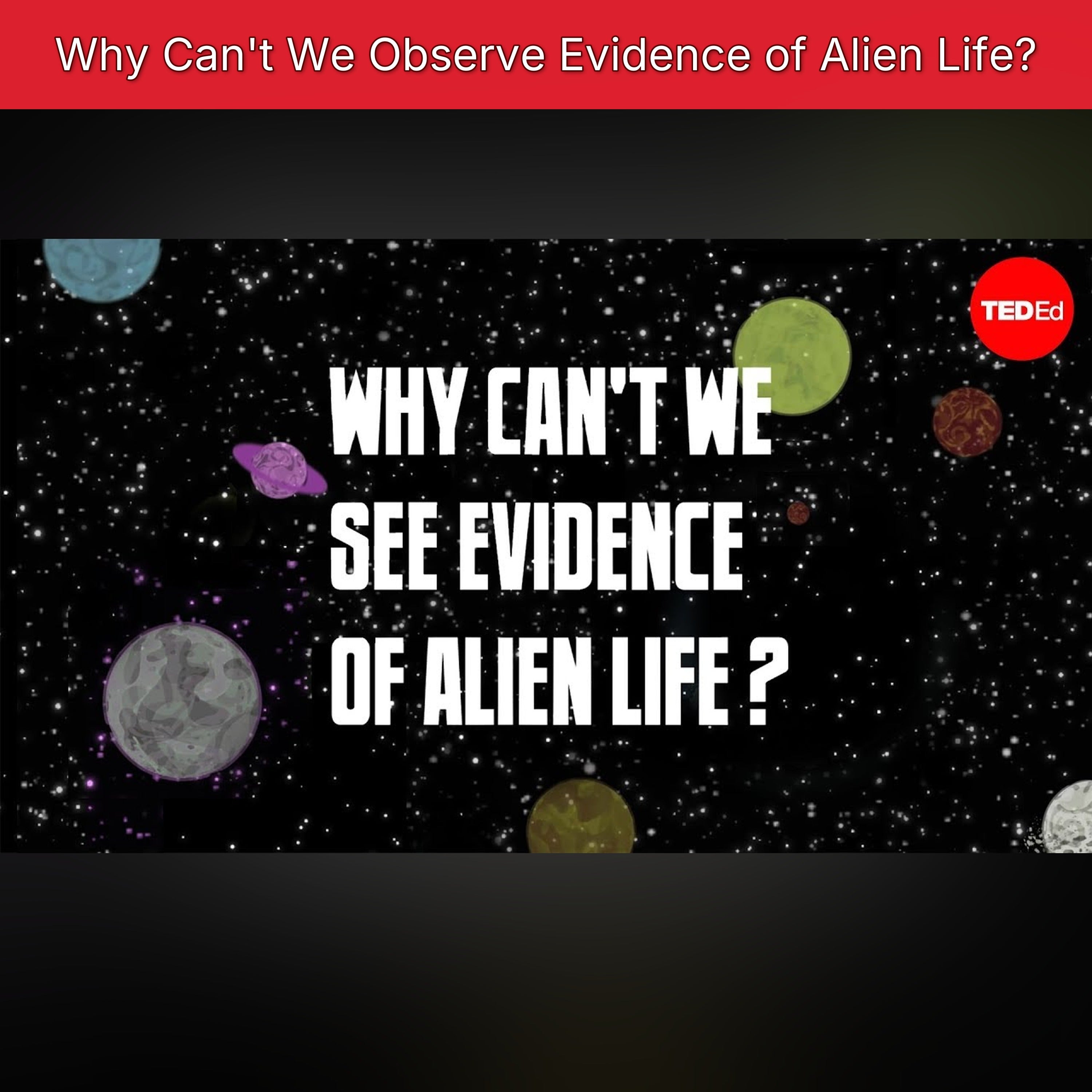
Stand by for an animated exploration of the famous Fermi Paradox. Given the vast number of planets in the universe, many much older than Earth, why haven't we yet seen obvious signs of alien life? The potential answers to this question are numerous and intriguing, alarming and hopeful.
Slavery was inherently cruel and unjust, and it was cruel and unjust to different people in different ways. Today, Clint Smith teaches you about the experience of enslaved women, and how their experience of slavery was different than men. Women had a unique vantage point to understand slavery, and were particularly vulnerable to some terrible abuses under the institution. Clint's book, How the Word is Passed is available now! https://bookshop.org/a/3859/9780316492935 SOURCES - Samuel H. Williamson & Louis Cain, "Measuring Slavery in 2016 dollars," MeasuringWorth, 2020. -"A Prelude to War: The 1850s." African American Lives: The Struggle for Freedom, by Clayborne Carson et al., Pearson Longman, 2005, pp. 221-222. -Modern History Sourcebook: Sojourner Truth: "Ain't I a Woman?", December 1851 -Quoted in Deborah Gray White, Ar' n't I a Woman? Female Slaves in the Plantation South, rev. ed. (New York: Norton, 1999), 102. Watch our videos and review your learning with the Crash Course App! D
How did we get here? Well, in terms of Atomic Chemistry, Hank takes us on a tour of the folks that were part of the long chain of other folks who helped us get to these deeper understandings of the world. From Leucippus to Heisenberg to you - yes, YOU - the story of Atomic Chemistry is all wibbly-wobbly... and amazing. Pssst... we made flashcards to help you review the content in this episode! Find them on the free Crash Course App! Download it here for Apple Devices: https://apple.co/3d4eyZo Download it here for Android Devices: https://bit.ly/2SrDulJ -- Table of Contents Leucippus, Democritus & Atomic Theory 0:09 Discharge Tubes 1:52 Ernest Rutherford & The Nucleus 4:22 Chemistry = Math 7:22 Niels Bohr Model 5:32 Heisenburg & Quantum Theory 6:35 -- Crash Course is on Patreon! Want to find Crash Course elsewhere on the internet? Facebook - http://www.facebook.com/YouTubeCrashCourse Twitter - http://www.twitter.com/TheCrashCourse Instagram - https://www.instagram.com/thecrashcourse/ CC