Now that we know how complex and interwoven climate change is with society globally, we can begin to see it everywhere. But that heightened awareness also means we can begin to see solutions everywhere. In this episode of Crash Course Climate & Energy, we break down what needs to happen in our governments, corporations, and communities to slow the increase of Earth's average temperature. Chapters: Introduction: Slowing Down Climate Change 00:00 Limiting Global Warming 1:02 A Carbon-Neutral Future 3:31 Governments & Corporations 6:16 Young People Leading the Climate Movement 8:04 Climate Change is Everywhere 9:48 People Power Works 11:38 Review & Credits 12:08 Sources: *** Crash Course is on Patreon! Thanks to the following patrons for their generous monthly contributions that help keep Crash Course free for everyone forever: Katie, Tori Thomas, DL Singfield, Ken Davidian, Stephen Akuffo, Toni Miles, Steve Segreto, Kyle & Katherine Callahan, Laurel Stevens, Burt Humburg, Allyson Martin,
So political campaigns are a pretty big deal in the United States. For instance the 2012 presidential election clocked in at the most expensive ever - at around $6 billion dollars! Needless to say, money plays a very big role in American elections. So today, Craig is going to take a look at why we have campaigns in the first place, why the campaign seasons run for so long, and of course why campaigns cost so much. Produced in collaboration with PBS Digital Studios: http://youtube.com/pbsdigitalstudios Support is provided by Voqal: http://www.voqal.org (http://www.voqal.org/) All attributed images are licensed under Creative Commons by Attribution 4.0 Want to find Crash Course elsewhere on the internet? Facebook - http://www.facebook.com/YouTubeCrashCourse Twitter - http://www.twitter.com/TheCrashCourse Tumblr - http://thecrashcourse.tumblr.com (http://thecrashcourse.tumblr.com/) Support Crash Course on Patreon: http://patreon.com/crashcourse CC Kids: http://www.youtube.com/crashcoursek
In which John Green teaches you about Chinua Achebe's 1958 novel, Things Fall Apart. You'll learn about Igboland, a region in modern-day Nigeria, prior to the arrival of the British Empire. Achebe tells the story of Okonkwo, an Igbo villager who has worked his way up from life as a sharecropped and become a respected leader in his community. Okonkwo has a tragic fall and is exiled. And then the trouble starts. British missionaries arrive and change everything. Things Fall Apart has a lot to say about colonization and even something to say about decolonization. Consider supporting local bookstores by purchasing your books through our Bookshop affiliate link https://bookshop.org/shop/complexly or at your local bookseller. Crash Course is on Patreon! Want to find Crash Course elsewhere on the internet? Facebook - http://www.facebook.com/YouTubeCrashCourse Twitter - http://www.twitter.com/TheCrashCourse Instagram - https://www.instagram.com/thecrashcourse/ CC Kids: http://www.youtube.com/c
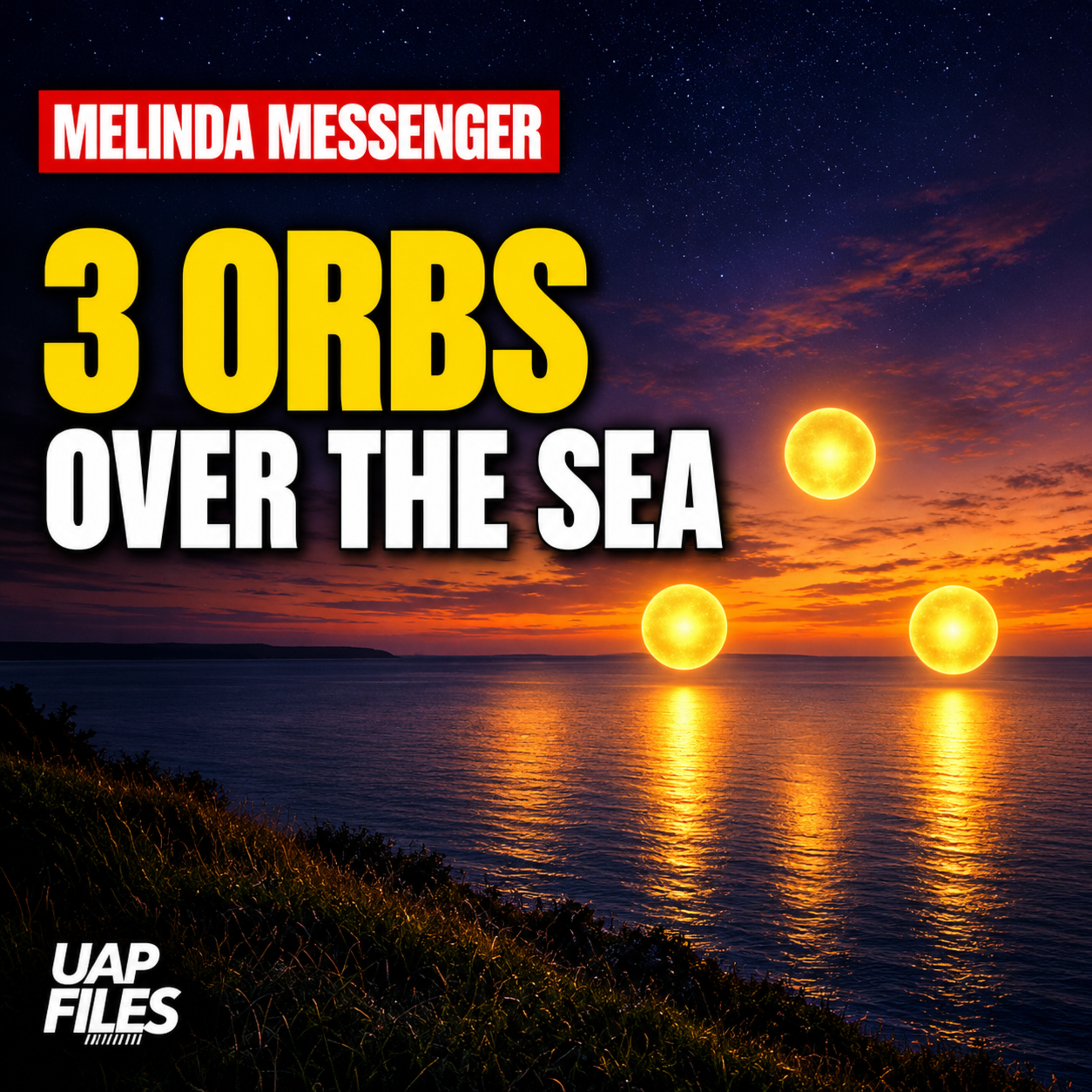
TV presenter turned psychotherapist Melinda Messenger felt so strongly that she had to go to Wales, alone with her two dogs and somewhere with a sea view, that she booked it there and then and left. On her second night, three large, sun-sized golden spheres appeared on the horizon above the sea. So she asked them to come back so she could film them, and she says they did, again and again through the night. In this clip: • The pull to go to three specific places in Wales she had never been to • Three golden, sun-sized orbs over the sea at dusk, and asking them to come back so she could film them • About 10 appearances through the night, in triangle formations, merging and splitting • Orbs splitting into a formation of about 10, with three becoming stars and then crosses, while her camera showed something different • Her dogs reacting with no sound, a pulsing feeling in her chest, and a “scanning” light in the clouds right above her • Waking at 3am, and one last orb at 6am Watch the full
View full lesson: http://ed.ted.com/lessons/the-silk-road-history-s-first-world-wide-web-shannon-harris-castelo Uploaded 03-06-14 With modern technology, a global exchange of goods and ideas can happen at the click of a button. But what about 2,000 years ago? Shannon Harris Castelo unfolds the history of the 5,000-mile Silk Road, a network of multiple routes that used the common language of commerce to connect the world's major settlements, thread by thread. Lesson by Shannon Harris Castelo, animation by Steff Lee.
Welcome to Crash Course Botany! Over the next 15 episodes, Alexis Nikole Nelson will spill plants’ secrets—how they evolved, how they function, and just how vital they are to human societies and all of life on Earth. Episode 1 premieres on May 18. *** Crash Course is on Patreon! Thanks to the following patrons for their generous monthly contributions that help keep Crash Course free for everyone forever: Tawny Whaley, Sean Saunders, Katie, Tori Thomas, DL Singfield, Ken Davidian, Stephen Akuffo, Toni Miles, Steve Segreto, Kyle & Katherine Callahan, Laurel Stevens, Burt Humburg, Aziz Y, Perry Joyce, Scott Harrison, Mark & Susan Billian, Alan Bridgeman, Rachel Creager, Breanna Bosso, Matt Curls, Jennifer Killen, Jon Allen, Sarah & Nathan Catchings, team dorsey, Trevin Beattie, Eric Koslow, Jennifer Dineen, Indija-ka Siriwardena, Jason Rostoker, Ken Penttinen, Nathan Taylor, Les Aker, William McGraw, ClareG, Rizwan Kassim, Constance Urist, Alex Hackman, Pineapples of Solidarity, Katie Dea
Did Charles Darwin settle the question of biological design once and for all? That's certainly the impression given by some of his modern defenders, including Richard Dawkins. But the actual history of Darwin's theory tells a different story about the dominant theory of biological origins and why it fails to explain the complexity and specificity and purpose of life. On this ID The Future, host Andrew McDiarmid continues his conversation with author and scholar Neil Thomas. In his books Taking Leave of Darwin and False Messiah, Thomas examines the intellectual influences behind Darwin's theory, the objections raised by his contemporaries, and the larger philosophical assumptions that have shaped modern evolutionary thinking. Source (https://idthefuture.com/2289/)
Hexagons appear all over the natural world from honeycomb to bubbles, and they even appear in organic chemistry! In this episode of Crash Course Organic Chemistry, we're learning all about cyclohexanes, including how rings pucker to relieve strain, the boat and chair conformations, and how ring flips can switch substituents from axial to equatorial. We'll practice a lot of chair flips, but don't flip an actual chair just yet! Lots of practice is key to understanding organic chemistry's favorite manifestation of the hexagon. Episode Sources: Philip Ball, Why Nature Prefers Hexagons: The geometric rules behind fly eyes, honeycombs and soap bubbles. Nautilus, 2016., Last accessed 1/26/2020. nautil.us/issue/35/boundaries/why-nature-prefers-hexagons References within: Kashyap Vyas, Why is the hexagon everywhere? All about this seemingly common shape. https://interestingengineering.com/why-is-the-hexagon-everywhere-all-about-this-seemingly-common-shape. Last access 1/26/2020. Series Sources:
Now that we’ve finished our tour of the planets, we’re headed back to the asteroid belt. Asteroids are chunks of rock, metal, or both that were once part of smallish planets but were destroyed after collisions. Most orbit the Sun between Mars and Jupiter, but some get near the Earth. The biggest, Ceres, is far smaller than the Moon but still big enough to be round and has undergone differentiation. CORRECTION: In the episode, we say that 2010 TK7 is 800 km away. However, 2010 TK7 stays on average 150 million kilometers from Earth, but that can vary wildly. Sorry about that! Check out the Crash Course Astronomy solar system poster here: http://store.dftba.com/products/crashcourse-astronomy-poster -- Chapters: Introduction: Asteroids 00:00 What are Asteroids? 1:37 Structure of the Main Belt 2:18 Ceres's Structure 3:43 Vesta and other Main Belt Asteroids 4:38 Rubble Piles 5:16 Why did the Asteroid Belt form? 6:20 Mars-crossing, Apollo, and Aten Asteroids 7:16 Trojan Asteroids & Lagrange P
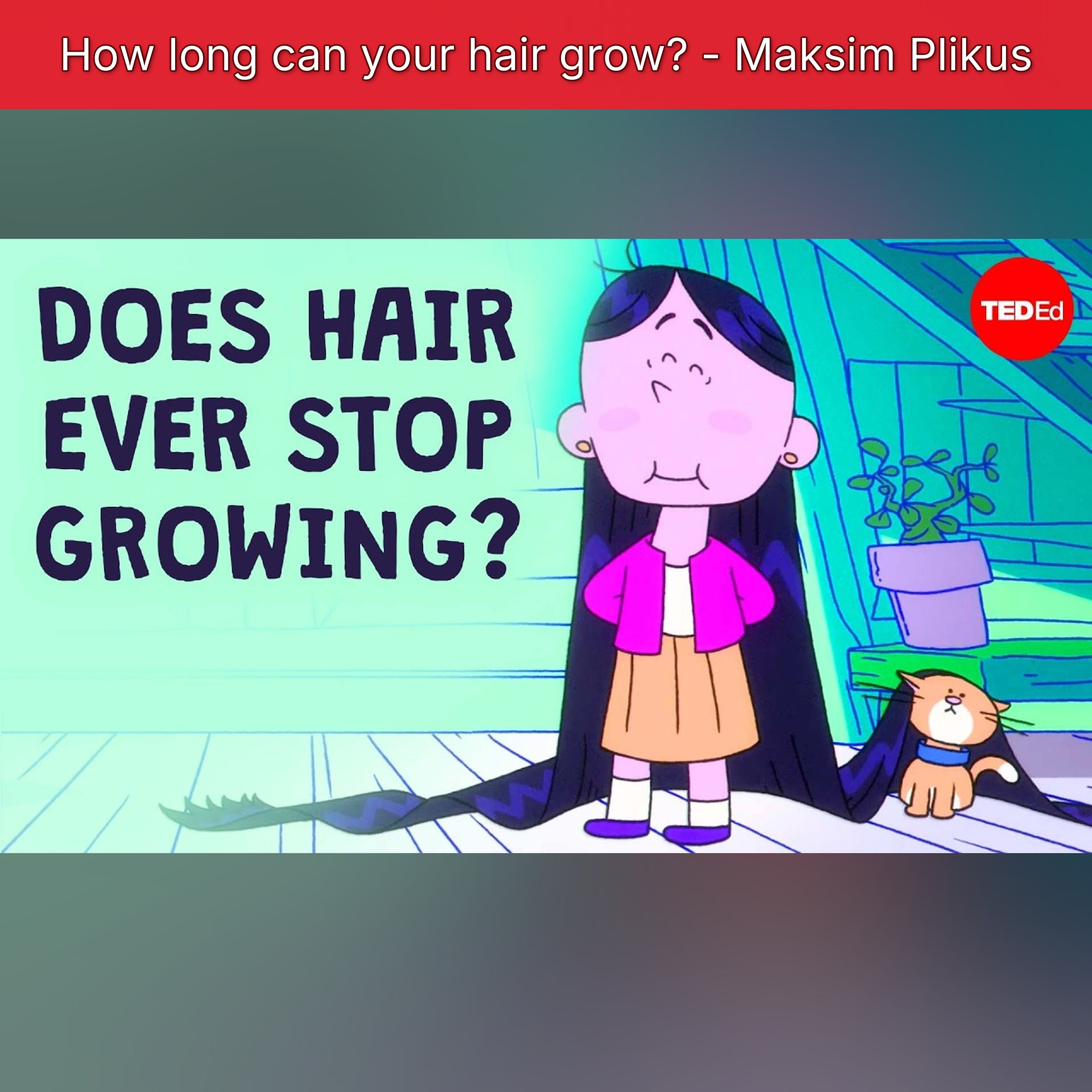
Dig into what biological factors influence hair growth, how it can change as you age, and how to take control of your scalp. -- At age 44, Xie Qiuping cut her hair for the first time in over three decades. Her impressive locks extended over 5 meters — earning the Guinness World Record for the world’s longest hair. But even with this record-setting feat, her hair might not have reached its maximum possible length. So, just how long can human hair actually grow? Maksim Plikus digs into what factors influence hair growth. Lesson by Maksim Plikus, directed by Matt Partridge. Support Our Non-Profit Mission ---------------------------------------------- Support us on Patreon: http://bit.ly/TEDEdPatreon Check out our merch: http://bit.ly/TEDEDShop ---------------------------------------------- Connect With Us ---------------------------------------------- Sign up for our newsletter: http://bit.ly/TEDEdNewsletter Find us on Twitter: http://bit.ly/TEDEdTwitter Peep us on Instagram: http://bit.l
Today Hank kicks off our look around MISSION CONTROL: the nervous system. Pssst... we made flashcards to help you review the content in this episode! Find them on the free Crash Course App! Download it here for Apple Devices: https://apple.co/3d4eyZo Download it here for Android Devices: https://bit.ly/2SrDulJ Chapters: Introduction: Hank's Morning Routine 00:00 Nervous System Functions: Sensory Input, Integration, and Motor Output 1:17 Organization of Central and Peripheral Nervous Systems 2:16 Neurons & Glial Cells 3:42 Central Nervous System Glial Cells: Astrocytes, Microglial, Ependymal, and Oligodendrocytes 4:17 Peripheral Nervous System Glial Cells: Satellite and Schwann 4:56 Cool Neuron Facts! 5:15 Neuron Structure 6:20 Classifying Neuron Structures: Multipolar, Bipolar, and Unipolar 7:00 Classifying Neuron Functionality: Sensory (Afferent), Motor (Efferent), Interneurons (Association) 7:47 Review 9:42 Credits 10:14 Crash Course is on Patreon! Want to find Crash Course elsewhere
M.G. Siegler is the author of Spyglass. Siegler joins Big Technology Podcast in London to discuss whether Apple can keep its distance from the AI spending race. Tune in to hear how the data center boom is driving up the cost of memory and squeezing Apple’s margins even as its rivals foot the bill for new infrastructure. We also cover the foldable iPhone Duo and what happens to apps when AI can build an interface on the fly. Hit play for a show and tell episode, including a debate over whether you’d want Amazon’s Bee Frontier wristband listening to your conversations and telling you what to do next.
What is a trade deficit? Well, it all has to do with imports and exports and, well, trade. This week Jacob and Adriene walk you through the basics of imports, exports, and exchange. So, you remember the specialization and trade thing, right? So, that leads to imports and exports. Economically, in the aggregate, this is usually a good thing. Globalization and free trade do tend to increase overall wealth. But not everybody wins. Crash Course is on Patreon! Thanks to the following Patrons for their generous monthly contributions that help keep Crash Course free for everyone forever: Mark, Eric Kitchen, Jessica Wode, Jeffrey Thompson, Steve Marshall, Moritz Schmidt, Robert Kunz, Tim Curwick, Jason A Saslow, SR Foxley, Elliot Beter, Jacob Ash, Christian, Jan Schmid, Jirat, Christy Huddleston, Daniel Baulig, Chris Peters, Anna-Ester Volozh, Ian Dundore, Caleb Weeks -- Want to find Crash Course elsewhere on the internet? Facebook - http://www.facebook.com/YouTubeCrashCourse Twitter - http://
In today's brief: - Anchorage UFO: A woman says she filmed a black-and-silver shape with moving, tentacle-like limbs over the trees near Joint Base Elmendorf-Richardson. - Borneo light: A viral cone of light over Kota Kinabalu was most likely a Chinese Long March 12 rocket launch. - Japan disclosure: Former defence minister Yasukazu Hamada chairs a parliamentary UAP caucus and calls non-human visitation a strong hypothesis. - UAP contact study: The Institute of Noetic Sciences awards 100,000 dollars to a team that will try to invite UAP contact while instruments record the sky. - Pine Barrens Bigfoot: A new BFRO report describes a jet-black, neckless figure near Lacey Township, New Jersey. - Mothman stamp: The US Postal Service's 2027 Mythical Creatures stamps include Mothman, Sasquatch and Champ. Quick hits: ghost actors at the Korean Folk Village, a triangle of lights filmed from a plane over Utah, and a tarot reader suing a cinema chain. Every story and source: https://believepod.co
In which Hank has to say things... and it's not easy! Want more videos about psychology? Check out our sister channel SciShow Psych at https://www.youtube.com/scishowpsych -- Crash Course is on Patreon! Want to find Crash Course elsewhere on the internet? Facebook - http://www.facebook.com/YouTubeCrashCourse Twitter - http://www.twitter.com/TheCrashCourse Instagram - https://www.instagram.com/thecrashcourse/ CC Kids: http://www.youtube.com/crashcoursekids
Jensen Huang’s weekend scandal didn’t just cost Nvidia. It cost you. After reports that the CEO was targeted by a foreign intelligence effort, and his admission of an extramarital affair, Nvidia shed hundreds of billions in value while the rest of the market rallied. Justin Wolfers follows that money into American households and finds a loss of nearly $2,000 per home, about the size of a COVID stimulus check, running in reverse. But that average hides a twist in who’s really paying, and a bigger question: how did one man’s private life get the power to move American wealth on the scale of an act of Congress? on YouTube on Substack the Podcast Follow on Social Media @PlatypusEconomics and @JustinWolfers
Dig into the pros and cons of annuity and lump sum lottery payouts, and find out the most common mistakes lottery winners make. -- After winning the lottery, one of the first decisions you’d have to make is how you want your winnings to be paid out. You can choose the full jackpot amount, paid out in annual installments over 30 years. Or you can take a much smaller lump sum paid out immediately. So, which is the better option? Explore the financial implications of annuity and lump sum payments. Directed by Anton Bogaty. This video made possible in collaboration with Gifted Savings Learn more about how TED-Ed partnerships work: https://bit.ly/TEDEdPartner Support Our Non-Profit Mission ---------------------------------------------- Support us on Patreon: http://bit.ly/TEDEdPatreon Check out our merch: http://bit.ly/TEDEDShop ---------------------------------------------- Connect With Us ---------------------------------------------- Sign up for our newsletter: http://bit.ly/TEDEdNewslet
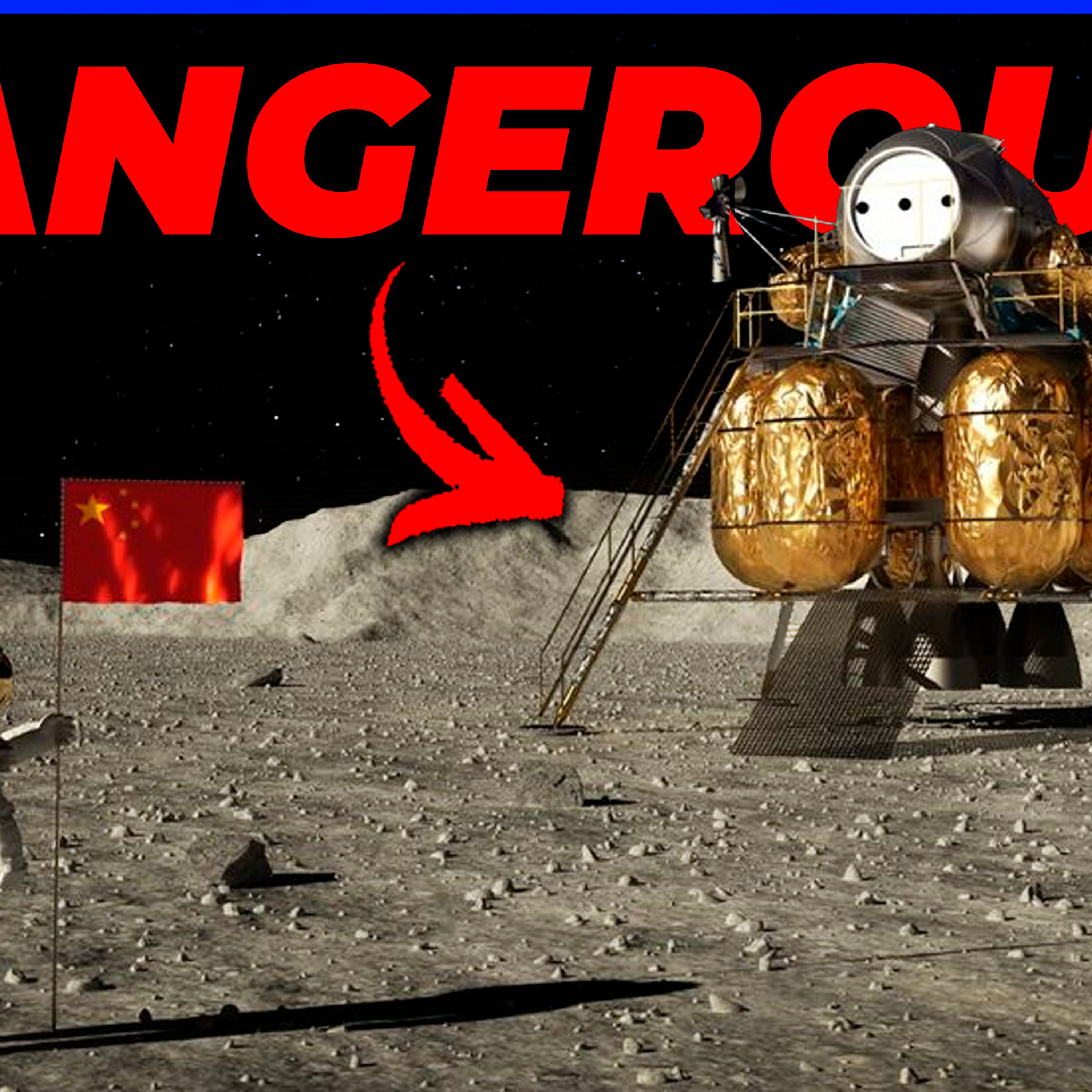
BONUS QUESTION STARTS AT 17:33 Watch the video here (with no ads) or on YouTube: https://youtu.be/AgjqeseL6U4 How bad and dangerous is the Chinese space program? How will they keep the 39-meter telescope mirror clean and dry? Can a star merger harm a human body if you get near it? And in Q&A+, is there an interstellar object yet to be announced? 00:00 Intro 00:32 [@luiscarneiro4123] How bad and dangerous is the Chinese space program? 04:10 [@psilocybe6115] Do Magnetars and Neutron Stars pose a physical threat to human tissue? 05:08 [@churchdiscography] How will they keep the 39-meter telescope mirror clean and dry? 06:29 [@davidgeorge8008] If a combination of infrared and gamma rays or ultra violet and xrays are fired or shown together, does that open up other viewing possibilities? 13:25 [@andrefoisy7310] Can you see a star merger before it happens with gravitational lensing? 17:01 [@Noonyuh] Are neutrinos affected by gravitational lensing? 17:33 [@justinkruger] Has there been an inte
Plants have got you surrounded. They’re in your toothpaste, your bedsheets, and your regular Taco Bell order. In this episode of Crash Course Botany, we’ll find out what botanists study and how knowledge of plants can help you navigate everyday life. Along the way, we’ll uncover plants’ pervasive, civilization-shaping power—and find that they have their own ways of communicating. Chapters: Introduction: The World of Plant Drama 00:00 What Is Botany? 1:46 Plants Are Everywhere 3:39 Agriculture 5:32 Botanical Literacy 6:58 Plant Awareness Disparity 9:48 Review & Credits 12:17 Sources: https://docs.google.com/document/d/1PB6WdUJcABAccO-U-t6ic7WbfP2z0Pr5P9a8HMr6zh4/edit?usp=sharing *** Crash Course is on Patreon! Thanks to the following patrons for their generous monthly contributions that help keep Crash Course free for everyone forever: Tawny Whaley, Sean Saunders, Katie, Tori Thomas, DL Singfield, Ken Davidian, Stephen Akuffo, Toni Miles, Steve Segreto, Kyle & Katherine Callahan, Laurel
Andy Richter joins Kathryn Nicolai for a conversation on Neighbors of Nothing Much. Get to know one of the familiar voices helping us welcome more listeners into the Village. On Neighbors of Nothing Much, guest readers share favorite bedtime stories written by Kathryn, the creator of Nothing Much Happens. Each story is read twice, just as Kathryn reads it, to give you a soft place to land at the end of the day. Find more stories, meditation, and community in the Village of Nothing Much app. village.nothingmuchhappens.com/ (https://village.nothingmuchhappens.com/)
Uploaded 02-04-18 View full lesson: https://ed.ted.com/lessons/the-most-successful-pirate-of-all-time-dian-murray At the height of their power, infamous Caribbean pirates like Blackbeard and Henry Morgan commanded as many as ten ships and several hundred men. But their stories pale next to the most successful pirate of all time, who commanded 1,800 vessels, made enemies of several empires, and still lived to old age. Dian Murray details the life of the fearsome Madame Zheng. Lesson by Dian Murray, animation by Steff Lee. Thank you so much to our patrons for your support! Without you this video would not be possible! Jordan Tang, Christopher Jimenez, Juan , Tracey Tobkin, Sid , emily lam, Elliot Poulin, Noel Situ, Oyuntsengel Tseyen-Oidov, Latora Slydell, Sydney Evans, Victor E Karhel, Bernardo Paulo, Eysteinn Guðnason, Andrea Feliz, Natalia Rico, Josh Engel, Bárbara Nazaré, Gustavo Mendoza, Zhexi Shan, Hugo Legorreta, PnDAA , Marcel Trompeter-Petrovic, Sandra Tersluisen, Ellen Spertus,
The aftermath of the collapse of the Soviet Union and its Warsaw Pact had a huge impact on the countries of Eastern Europe. As the former satellite states turned away from communism and Soviet influence, some of them shifted toward democracy in an orderly way, and some descended into violence and bloodshed and ethnic recrimination. In many ways, this collapse is still playing out today. In this video you'll learn how countries like Czechoslovakia, Yugoslavia, Poland and many others moved into the post-Soviet world. Sources -Alexievich, Svetlana. Secondhand Time: The Last of the Soviets. An Oral History. Bella Shayevich, trans. New York: Random House, 2017. -Hsu, Roland, ed. Ethnic Europe: Mobility, Identity, and Conflict in a Globalized World. Stanford: Stanford University Press, 2010. -James, Harold. Making of the European Monetary Union. Cambridge: Harvard University Press, 2012. -Smith, Bonnie G. Europe in the Contemporary World, 1900 to the Present. 2nd ed. London: Bloomsbury, 2020
In which John Green teaches you about Charlotte Brontë's classic coming of age novel, Jane Eyre. Look, we don't like to make judgment values here, but Jane Eyre is awesome. By which we mean the book is great, and the character is amazing. When Jane Eyre was published in 1847, it was a huge hit. It really hit the controversial balance beautifully, being edgy enough to make news, but still mainstream enough to be widely popular. It was sort of like the Fight Club of its day, but not quite as testosterone-fueled. You'll learn a little about the story, learn about Jane as a feminist heroine, and even get some critical analysis on how Bertha might just be a dark mirror that acts out Jane's emotional reactions. Consider supporting local bookstores by purchasing your books through our Bookshop affiliate link https://bookshop.org/shop/complexly or at your local bookseller. Crash Course is on Patreon! Want to find Crash Course elsewhere on the internet? Facebook - http://www.facebook.com/YouTub
Learn more about AlphaGenome 2: https://deepmind.google/blog/alphagenome-2-deciphering-how-cells-read-dna-to-better-understand-disease/ Please leave us a review on Spotify or Apple Podcasts if you enjoyed this episode. We always want to hear from our audience whether that's in the form of feedback, new idea or a guest recommendation! Hosted by Simplecast, an AdsWizz company. See pcm.adswizz.com (https://pcm.adswizz.com/) for information about our collection and use of personal data for advertising.