Why do we have some of our best ideas in the shower? Do towels dry better in a machine or in the sun? And how do fizzy drinks...get fizzy? Dr Karl answers these questions and more on triple j Mornings with Lucy Smith.
This week we are looking at your parasympathetic division, which is the "resting and digesting" unit. Unfortunately, learning about this de-stressing division also involves a whole lot of memorization. Don't worry, though - we've got some mnemonic devices to help you out! Pssst... we made flashcards to help you review the content in this episode! Find them on the free Crash Course App! Download it here for Apple Devices: https://apple.co/3d4eyZo Download it here for Android Devices: https://bit.ly/2SrDulJ Chapters: Introduction: Parasympathetic Nervous System 00:00 Comparing Structures of the Sympathetic & Parasympathetic Nervous Systems 1:41 What Do Cranial Nerves Do? 2:49 The 12 Cranial Nerves 4:03 Mnemonics & Memory Tips for Studying the 12 Cranial Nerves 5:24 Vagus Nerve 6:40 The Autonomic Nervous System & Sex 8:16 Review 9:13 Credits 9:53 *** Thanks to the following Patrons for their generous monthly contributions that help keep Crash Course free for everyone forever: Mark Brouwer
Social Workers and Librarians... Huh??? Umm, yeah ok! In this episode you'll hear all about how social workers and librarians are making libraries innovative third spaces for diverse, broad and complex communities. Listen along with Mim and Lis as they learn all about opportunities for social workers and librarians to unite in support for our community's most vulnerable and marginalised. What an episode! We'd love for you to join the conversation, so make sure you reach out to us on the socials (see links below), or otherwise by email at [email protected] - we'd love to hear from you! Follow our Facebook Page at: https://www.facebook.com/SocialWorkStoriesPodcast Credits: Hosts - Lis Murphy and Dr. Mim Fox Producers - Dr. Ben Joseph and Justin Stech Music - 'Mama' by Ben Grace (copyright 2018). Find on Spotify (https://open.spotify.com/artist/2zy5oN2FLsEto2iifrhKea?si=ZKmWaVmqQBGFGw1z3c82xw), or at www.bengracemusic.com (https://www.bengracemusic.com/) Social Work Stori
What if a person is a good leader… and a bad person? In this episode of Crash Course Political Theory, we unpack that idea through the lens of Machiavelli’s famous treatise, “The Prince,” and find more questions than answers. Crash Course Political Theory #5 Introduction: "Bad" Politicians 00:00 Machiavelli 1:06 "The Prince" 2:32 Henry Kissinger 6:17 Politics & Morality 9:04 Review & Credits 11:52 *** Support us for $5/month on Patreon to keep Crash Course free for everyone forever! https://www.patreon.com/crashcourse Or support us directly: https://complexly.com/support Join our Crash Course email list to get the latest news and highlights: https://mailchi.mp/crashcourse/email Get our special Crash Course Educators newsletter: http://eepurl.com/iBgMhY Thanks to the following patrons for their generous monthly contributions that help keep Crash Course free for everyone forever: Ryan Lueckenotte, Reed Spilmann, Brandon Thomas, Emily Beazley, Forrest Langseth, Rie Ohta, oranjeez, juliebe
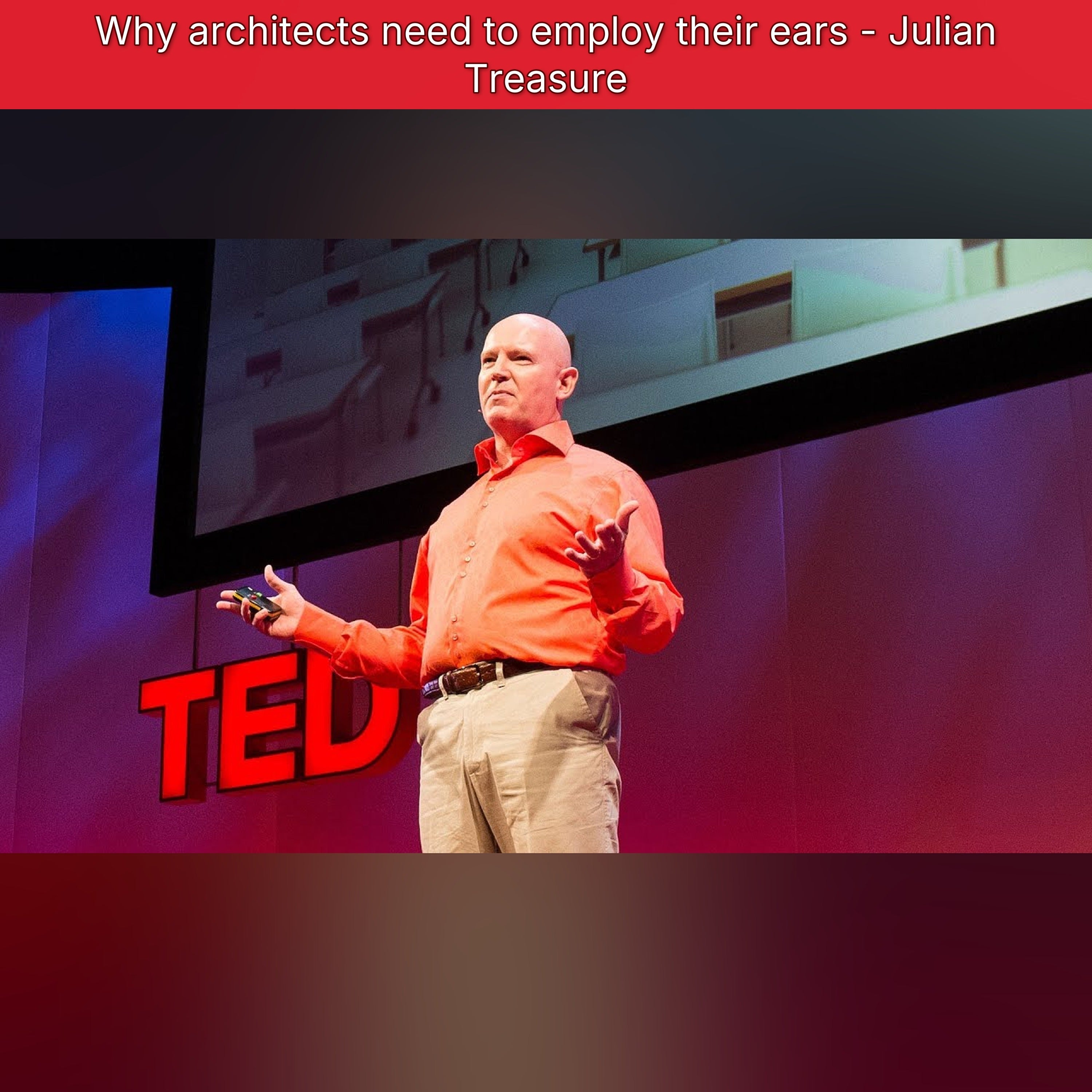
Because of poor acoustics, students in classrooms miss 50 percent of what their teachers say and patients in hospitals have trouble sleeping because they continually feel stressed. Julian Treasure sounds a call to action for designers to pay attention to the "invisible architecture" of sound. Talk by Julian Treasure.
Empire, imperialism, and colonialism are all interrelated tactics of geopolitics that are used to achieve similar goals of one state maintaining economic, political, or even cultural dominance over other territories. Today, we’re going to unravel the impacts of colonialism at different times throughout history from Taiwan to Myanmar as we examine the longstanding impacts of these relationships. We’ll also take a look at how some countries today, like Thailand, have taken the control of the narrative through culinary colonization. SOURCES General: Getis, Bjelland, and Getis. Introduction to Geography, 15 ed. McGraw-Hill Education. 2017. ISBN: 978-1-259-57000-1 Gregory, Derek, Ron Johnston, Geraldine Pratt, Michael Watts, and Sarah Whatmore, eds. 2009. The Dictionary of Human Geography. 5th ed. Willey-Blackwell. ISBN: 978-1-4051-3288-6 For a free and open source option for Intro to Human Geography, see: https://humangeography.pressbooks.com/ For a free and open source option for World Re
BONUS PART STARTS AT 43:53 Watch here (with no ads) or on YouTube: https://youtu.be/jiCigIHzyI8 City on Mars Interview: https://www.youtube.com/watch?v=OQ8sZtg-Kdc Clearly, a journey to Mars and back is the next huge leap for human space flight. We know we need new rockets, new spaceships, new technology, etc. But are the human bodies ready for that? Can humans pull it off? Finding out in this interview. Guest: Mark Shelhamer, ScD Are We Ready for Mars? https://www.press.jhu.edu/books/title/54095/are-we-ready-mars 00:00:00 Intro 00:01:52 SciFi vs reality for space travel 00:08:18 Dangers of going to Mars 00:13:02 Mitigation strategies 00:24:33 Beyond the magnetosphere 00:43:53 Bonus part 00:54:33 Current obsessions 01:03:04 Final thoughts
In which John continues the discussion of JD Salinger's Catcher in the Rye. This week John reads the novel with Salinger's life story in mind. John explores how Salinger's war experience, educational background, and romantic life inform the events of Holden Caulfield's life. How did Holden get to be such a whiny, self-absorbed teen? While it's not a great idea to read novels too biographically, Salinger's life surely informed Holden's. Watch on to get an idea of just how much. Consider supporting local bookstores by purchasing your books through our Bookshop affiliate link https://bookshop.org/shop/complexly or at your local bookseller. Crash Course is on Patreon! Want to find Crash Course elsewhere on the internet? Facebook - http://www.facebook.com/YouTubeCrashCourse Twitter - http://www.twitter.com/TheCrashCourse Instagram - https://www.instagram.com/thecrashcourse/ CC Kids: http://www.youtube.com/crashcoursekids
Dig into Agatha Christie’s writing style to find out how she crafted her mystery novels and how to employ these strategies in your own work. -- With almost 100 mystery novels, each one a cleverly constructed puzzle box of clues, misdirection, and human drama, Agatha Christie is the best-selling novelist of all time. Her eccentric detectives, clever clues, and simplified suspects have stumped countless readers over the last century. So, how did she craft these perfect crimes? Jamie Bernthal dissects the writing of Agatha Christie. Lesson by Jamie Bernthal, directed by Totem Creative. Support Our Non-Profit Mission ---------------------------------------------- Support us on Patreon: http://bit.ly/TEDEdPatreon Check out our merch: http://bit.ly/TEDEDShop ---------------------------------------------- Connect With Us ---------------------------------------------- Sign up for our newsletter: http://bit.ly/TEDEdNewsletter Find us on Twitter: http://bit.ly/TEDEdTwitter Peep us on Instagram:
Rituals aren’t meaningless actions. They can mark time and space, create new identities, and connect people to something bigger than themselves. In this episode of Crash Course Religions, we explore the rituals that shape our lives—whether religious or not. Introduction: Prayer & Public Speaking 00:00 What Is Ritual? 1:10 Why Do Rituals Matter? 3:38 Ritual, Belonging, & Authority 5:02 Ritual as Protest 8:22 Review & Credits 10:30 *** Support us for $5/month on Patreon to keep Crash Course free for everyone forever! https://www.patreon.com/crashcourse Or support us directly: https://complexly.com/support Join our Crash Course email list to get the latest news and highlights: https://mailchi.mp/crashcourse/email Get our special Crash Course Educators newsletter: http://eepurl.com/iBgMhY Thanks to the following patrons for their generous monthly contributions that help keep Crash Course free for everyone forever: Ryan Lueckenotte, Reed Spilmann, Brandon Thomas, Emily Beazley, Forrest Lang
How can the dream of a jaguar - or any dream - help us to overcome our own fears? This week's guest, John Perkins has written a book about this. Touching the Jaguar (https://www.waterstones.com/book/touching-the-jaguar/john-perkins/9781523091980)is a memoir of an extraordinary life, and it's an invitation to walk across what he calls the Bridge of Perception to see the world differently - in his words to remember that we are a part of nature, not apart from nature. Which - with slightly different vocabulary, is exactly what we're about, and what we say every week. But John is not only a shamanic practitioner with many decades of training in Ecuador and elsewhere deep in the Amazon - he's a man of many often divergent parts. If you're in the shamanic world, then you know him as the animating energy behind the Pachamama Alliance - and he describes its founding in Touching the Jaguar. Then again, if you're in the world of heterodox - which is to say not-orthodox - economics, or regenerati
HALLOWEEN'S DARK SECRETS! SILICON SATAN, THE LUCYS & WHY PATRIOTS MUST UNITE! 🇺🇸 MICHAEL JACO, SCOTT MCKAY & CREGG LUND — THREE VOICES, ONE EXPLOSIVE CONVERSATION! What really lies behind Halloween's darker traditions? Who holds influence behind the scenes? And why is unity more important than ever as America faces an uncertain future? Michael Jaco joins Scott McKay of Patriot Streetfighter and Cregg Lund, author of Silicon Satan: A Software Engineer's Descent into Luciferianism, for an intense discussion about secret societies, spiritual warfare, powerful institutions, and the forces they believe are shaping world events. HALLOWEEN, RITUALS & HIDDEN SYMBOLISM! Cregg explores the darker interpretations of Halloween, ancient traditions, and the alleged use of symbolism and ritual practices within secretive organizations. SILICON SATAN & THE LUCYS! Drawing from his book Silicon Satan, Cregg shares his personal experiences and controversial allegations about a secretive network he calls
Hank talks about the last major way humans are impacting the environment in this penultimate episode of Crash Course Ecology. Pollution takes many forms - from the simplest piece of litter to the more complex endocrine disruptors - and ultimately, humans are responsible for it all. Table of Contents 1) Natural Compounds 01:12:1 a) Carbon 01:35 b) Nitrogen and Phosphorous 02:11:2 c) Cyanide 04:05 d) Mercury 05:15 e) Sulfur & Nitrogen Dioxide 05:58 2) Synthetic Compounds 06:51 a) Endocrine Disruptors 07:09 References: Crash Course is on Patreon! Want to find Crash Course elsewhere on the internet? Facebook - http://www.facebook.com/YouTubeCrashCourse Twitter - http://www.twitter.com/TheCrashCourse Instagram - https://www.instagram.com/thecrashcourse/ CC Kids: http://www.youtube.com/crashcoursekids
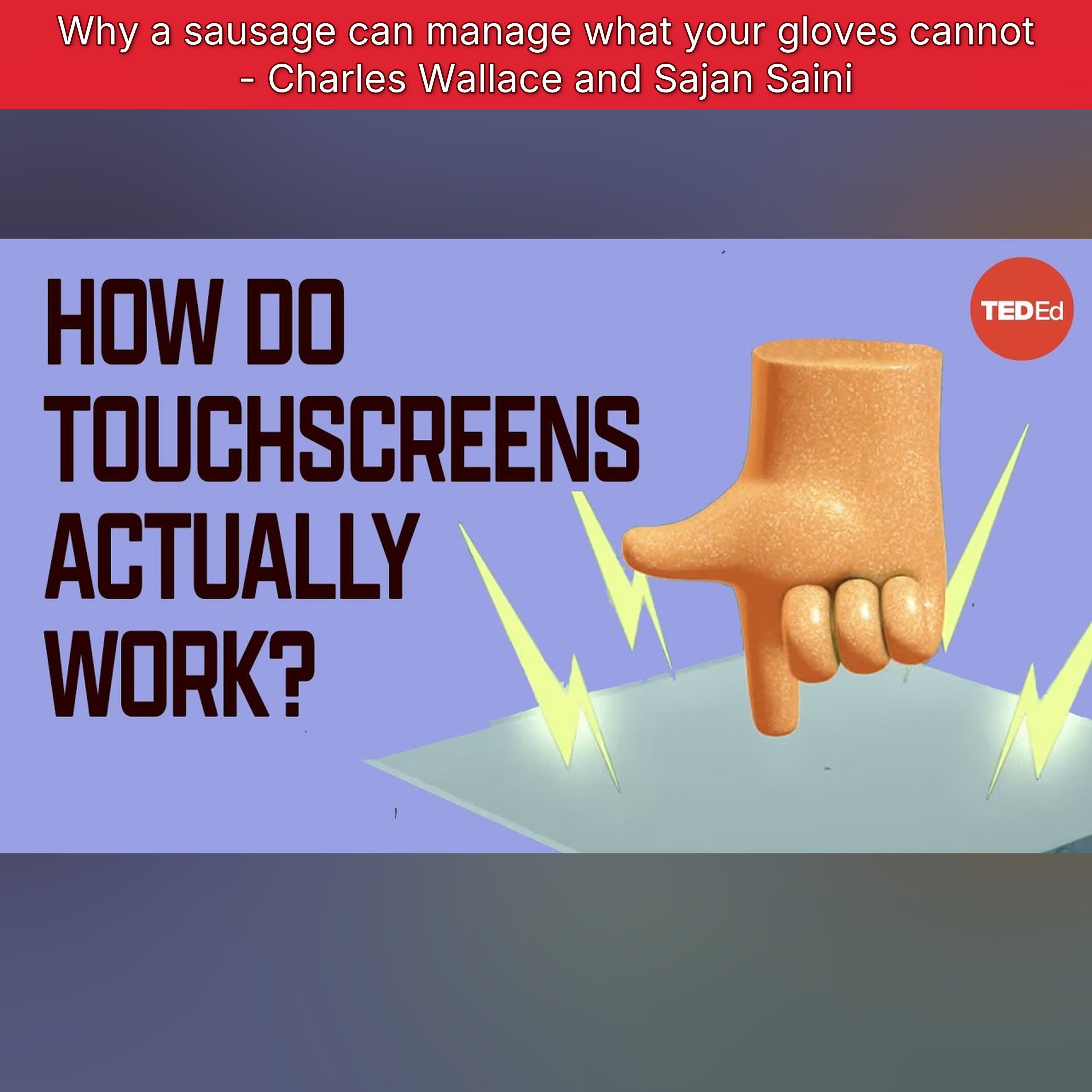
Dig into the science of touchscreens, and find out the difference between the two most common types: capacitive and resistive. -- In 2010, South Korea experienced a particularly cold winter. People couldn’t activate their smartphones while wearing gloves, so they began wielding snack sausages— causing one company to see a 40% rise in sausage sales. So, what could sausages do that gloves couldn’t? In other words, how do touchscreens actually work? Charles Wallace and Sajan Saini dig into the science of touchscreens. Lesson by Charles Wallace and Sajan Saini, directed by Luis Torres, Mr. Flama. Support Our Non-Profit Mission ---------------------------------------------- Support us on Patreon: http://bit.ly/TEDEdPatreon Check out our merch: http://bit.ly/TEDEDShop ---------------------------------------------- Connect With Us ---------------------------------------------- Sign up for our newsletter: http://bit.ly/TEDEdNewsletter Find us on Twitter: http://bit.ly/TEDEdTwitter Peep us on I
To some, Marxism is the solution to all capitalism’s problems. To others, it’s a major threat to democracy. But what did Karl Marx really say about capitalism and communism, and how can that help shape our discussions today? Crash Course Political Theory #6 Introduction: "The Specter of Communism" 00:00 Who Was Marx 0:37 The Problem of Capitalism 4:17 The Mondragon Corporation 6:22 The Proletariat Revolution 8:04 Critiquing Marx 10:04 Review & Credits 11:41 Sources: https://docs.google.com/document/d/1u5zJCbVA0xCurLbQwWzcxXEdlqXAPpAyYVS1quwKIis/edit?usp=sharing *** Support us for $5/month on Patreon to keep Crash Course free for everyone forever! https://www.patreon.com/crashcourse Or support us directly: https://complexly.com/support Join our Crash Course email list to get the latest news and highlights: https://mailchi.mp/crashcourse/email Get our special Crash Course Educators newsletter: http://eepurl.com/iBgMhY Thanks to the following patrons for their generous monthly contributio
Many thanks, as always, to Dennison Joyce, for this interview recorded on October 6, 2026 — the beginning of a difficult month for me. Only now have I had the chance to re-listen to it and to publish it. We got into: * the nature of the Omniwar and the reasons for it; * the digital control grid, most obviously instantiated by CBDC, but also by psychographics, digital ID, etc.; * the deceptive marketing of all this under the banner of “convenience”; * the population’s inability to live without a “smart” phone and what this means in terms of Klaus Schwab’s 2016 vision to get technologies inside the body that connect to an external network; * James Giordano and the battle for the brain, and the potential for syringe-injectable technologies to cross the blood-brain barrier; * the “Covid-19 vaccines” — why try to inject them into everyone?; * why the right to gun ownership will prove ineffective in the context of the Omniwar; * data centres as the hardware needed to power the digital gulag;
View full lesson: http://ed.ted.com/lessons/can-robots-be-creative-gil-weinberg Uploaded 19-03-15 People have been grappling with the question of artificial creativity -- alongside the question of artificial intelligence -- for over 170 years. For instance, could we program machines to create high quality original music? And if we do, is it the machine or the programmer that exhibits creativity? Gil Weinberg investigates this creative conundrum. Lesson by Gil Weinberg, animation by TOGETHER.
In which John Green examines JD Salinger's novel The Catcher in the Rye. John pulls out the old-school literary criticism by examining the text itself rather than paying attention to the biographical or historical context of the novel (that's for next week). Listen, words matter. The Catcher in the Rye has managed to endure without a movie adaptation because a lot of its quality arises from the book's language. Find out how Holden's voice, his language, and his narrative technique combine to make the novel work. Also, Thought Bubble gives us a quick rundown of the plot, in which Ikea Monkey may or may not appear. Consider supporting local bookstores by purchasing your books through our Bookshop affiliate link https://bookshop.org/shop/complexly or at your local bookseller. Crash Course is on Patreon! Want to find Crash Course elsewhere on the internet? Facebook - http://www.facebook.com/YouTubeCrashCourse Twitter - http://www.twitter.com/TheCrashCourse Instagram - https://www.instagram
In this calm and sleepy facts episode, we settle in for a gentle journey through one of nature’s most soothing events, the rolling thunderstorm. We begin on a warm afternoon as moist air rises and builds into towering clouds that can climb more than ten kilometers into the sky. From there we look inside the storm, where tiny pieces of ice collide and build up the electrical charge that becomes lightning, a flash that heats the air to around 30,000 degrees Celsius, about five times hotter than the surface of the Sun. Along the way, we discover why thunder rumbles and rolls, how counting the seconds between flash and sound reveals a storm’s distance, and how thousands of storms are quietly rumbling across the Earth at this very moment. We visit the lake in Venezuela where lightning glows almost every night, learn about the earthy scent of rain called petrichor, and discover the faint glowing sprites that dance high above storm clouds. We end with the softest moments of all, as the thunde
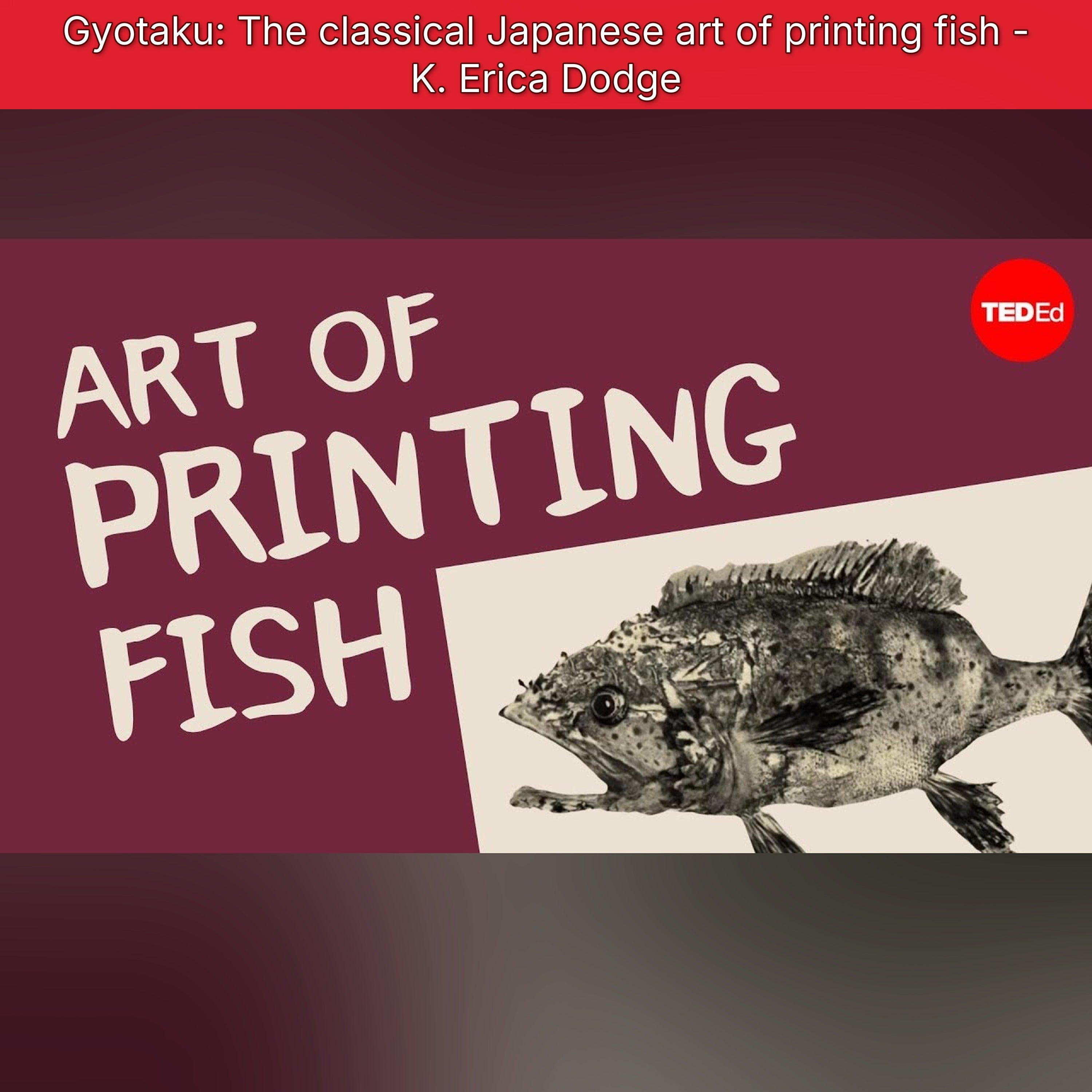
View full lesson: http://ed.ted.com/lessons/gyotaku-the-ancient-japanese-art-of-printing-fish-k-erica-dodge How did fishermen record their trophy catches before the invention of photography? In 19th century Japan, fishing boats were equipped with rice paper, sumi-e ink, and brushes in order to create gyoktaku: elaborate rubbings of freshly caught fish. K. Erica Dodge recounts the story of this competitive fishing culture, plus some tips on how to make your very own etchings. Lesson by K. Erica Dodge, animation by Franco Barroeta.
It started as a joke between friends: a dusty Ouija Board pulled from the back of a closet, a few drinks, and a group of people who didn’t really believe they were talking to anything. Most of the answers were strange enough to be funny, and nobody took the session very seriously. Then the planchette spelled something unexpectedly specific, followed by Angie’s name. She laughed it off and went home convinced one of her friends had been moving it. But over the next few hours, a series of unsettling events made that explanation harder to hold onto. By morning, everything had returned to normal. Whatever happened seemed to begin and end within the space of one very strange night—but it was enough to make Angie wonder whether the Ouija Board had been more than a game after all. #OuijaBoard #GhostStories #Paranormal #Ouija #HauntedHouse #ParanormalEncounter #SpiritBoard #Unexplained #GhostStory #Hauntings #TerrifyingEncounter Love real ghost stories? Want even more? Want even more? Stay con
There are times in life when you know something isn’t right. You might struggle to explain it, find the words to describe it or even convince yourself that what you are feeling is legitimate. However, deep down, you know when something is off. It might be a relationship, a friendship, your workplace, your leadership, your […] The post EP 3886 You know when it is off (https://www.thestronglifeproject.com/the-strong-life-podcast/ep-3886-you-know-when-it-is-off/) appeared first on The Strong Life Project (https://www.thestronglifeproject.com/).
The word anarchy is synonymous with chaos, but what does it mean to political theorists? In this episode of Crash Course Political Theory, we explore the theories and practices of anarchism. Crash Course Political Theory #7 Introduction: 00:00 What Is Anarchy 0:42 Classical Anarchy 3:28 Collectivism 4:54 Anarchist Communism 5:39 Modern Anarchy 6:39 Review & Credits 10:30 Special thanks to Chris Boland for the use of his portrait of Rebecca Solnit / www.chrisboland.com Sources: https://docs.google.com/document/d/1u5zJCbVA0xCurLbQwWzcxXEdlqXAPpAyYVS1quwKIis/edit?usp=sharing *** Support us for $5/month on Patreon to keep Crash Course free for everyone forever! https://www.patreon.com/crashcourse Or support us directly: https://complexly.com/support Join our Crash Course email list to get the latest news and highlights: https://mailchi.mp/crashcourse/email Get our special Crash Course Educators newsletter: http://eepurl.com/iBgMhY Thanks to the following patrons for their generous monthly
Freddie Sayers talks to UnHerd’s Emily Jashinsky about the staggering midterm election results, breaking down how a deeply unpopular war in Iran, skyrocketing gas prices, and systemic voter fatigue shattered Donald Trump’s working-class MAGA coalition and fuelled historic Democratic victories across traditionally red states like Texas, Kansas, and South Carolina. Hosted on Acast. See acast.com/privacy (https://acast.com/privacy) for more information.