In this week's episode, Blood editor Dr. Laura Michaelis interviews Dr. Sabine Eichinger of the Medical University of Vienna, and Dr. Jeanne Palmer of the Mayo Clinic on their latest articles published in Blood highlighting emerging research and treatment strategies in hematology. Dr. Eichinger discusses a prospective study examining the risk of recurrent venous thromboembolism (VTE) in patients with provoked thrombosis, revealing that recurrence rates were higher than previously estimated, particularly among patients with major transient risk factors. Her findings suggest that recurrence risk is not uniform and that anticoagulation duration should be individualized rather than based on a one-size-fits-all approach. Dr. Jeanne Palmer then reviews a Phase II clinical trial of sapablursin, a novel hepcidin mimetic for polycythemia vera, explaining how the agent regulates iron availability to reduce erythropoiesis, decrease phlebotomy requirements, and potentially improve patients' qualit
At the end of World War II, the nations of Europe were a shambles. Today we'll learn about how the various countries and blocs approached the problem of rebuilding their infrastructure and helping their residents recover. You'll learn about the Marshall plan and the various treaties that led to the modern day European Union. Watch our videos and review your learning with the Crash Course App! Download here for Apple Devices: https://apple.co/3d4eyZo Download here for Android Devices: https://bit.ly/2SrDulJ Crash Course is on Patreon! Thanks to the following patrons for their generous monthly contributions that help keep Crash Course free for everyone forever: Eric Prestemon, Sam Buck, Mark Brouwer, Zhu Junrong, William McGraw, Siobhan Sabino, Jason Saslow, Jennifer Killen, Matija Hrzenjak, Jon& Jennifer Smith, David Noe, Jonathan Zbikowski, Shawn Arnold, Trevin Beattie, Matthew Curls, Rachel Bright, Khaled El Shalakany, Ian Dundore, Kenneth F Penttinen, Eric Koslow, Timothy J Kwist, In
In 1910, 90% of Black Americans lived in the South. By 1940, around 1.5 million Black Americans had left their homes, and 77% lived in the South. By 1970, 52% of Black Americans remained in the South. People moved away for many reasons, including increased opportunity in the more industrial North and West. They sought a relatively safer life away from the lynchings and violence that were concentrated in the South. This Great Migration shaped 20th-century America in countless ways, but we're going to try to count some of them in this video. Clint's book, How the Word is Passed is available now! https://bookshop.org/a/3859/9780316492935 VIDEO SOURCES Davarian Baldwin, Chicago’s New Negroes: Modernity, the Great Migration, and Urban Black Life (Chapel Hill, NC: University of North Carolina Press, 2007). Isabel Wilkerson, The Warmth of Other Suns: The Epic Story of America’s Great Migration (New York: Random House, 2010). The Origins of Southern Sharecropping, Edward Royce, 1993 Watch our
In which John Green teaches you about the Little Ice Age. The Little Ice Age was a period of global cooling that occurred from the 13th to the 19th centuries. This cooling was likely caused by a number of factors, including unusual solar activity and volcanic eruptions. The Little Ice Age greatly impacted human social orders, especially during the 17th century. When the climate changed, and the weather became unpredictable, the world changed profoundly. Poor harvests led to hunger, which led to even less productivity, which even resulted in violent upheaval in a lot of places. All this from a little change in the temperature? Definitely. Reference: Global Crisis by Geoffrey Parker: https://bit.ly/3M99AvQ Crash Course is on Patreon! Want to find Crash Course elsewhere on the internet? Facebook - http://www.facebook.com/YouTubeCrashCourse Twitter - http://www.twitter.com/TheCrashCourse Instagram - https://www.instagram.com/thecrashcourse/ CC Kids: http://www.youtube.com/crashcoursekids
Kori Schake, Director of Foreign Policy Studies at the American Enterprise Institute and contributing writer at The Atlantic, joins Clearer Than Truth to examine the foundations of American civil-military relations and the challenges facing US foreign policy. Drawing on her book The State and the Soldier, Schake explains how the Founding Fathers established civilian control over the military, why that tradition remains essential to American democracy, and how political leaders can contribute to the politicization of the armed forces. The conversation also explores America's dependence on foreign supply chains, the growing coordination among China, Russia, Iran, and North Korea, the future of NATO and America's alliances, and how economic interdependence can become a weapon in geopolitical competition. Schake makes the case for a conservative internationalism built on military strength, strong alliances, and cooperation with like-minded countries. 00:00 Introduction: Kori Schake 00:57 W
View full lesson: http://ed.ted.com/lessons/the-fight-for-the-right-to-vote-in-the-united-states-nicki-beaman-griffin Uploaded 05-11-13 In the United States today, if you are over eighteen, a citizen, and the resident of a state, you can vote (with some exceptions). So, how have voting rights changed since the first election in 1789? Nicki Beaman Griffin outlines the history of the long fight for a more inclusive electorate. Lesson by Nicki Beaman Griffin, animation by Flaming Medusa Studios.
This is a Grave Talks CLASSIC EPISODE! Are the shadows growing darker in today’s world? From senseless violence to moments of cruelty that seem almost impossible to comprehend, many believe humanity may be facing more than simple human evil. Some argue that demonic forces have always existed in the background—quietly influencing, manipulating, and feeding on fear throughout history. But what if those forces are becoming bolder? Demonologist James Annitto joins The Grave Talks to examine the unsettling possibility that demonic influence is becoming more visible in modern society. Together, we explore the ancient origins of demons, the warning signs that have appeared throughout history, and the disturbing patterns emerging in today’s increasingly divided world. From possession cases to cultural shifts and unexplained darkness hiding in plain sight, we confront one chilling question: if demons are real, what direction are they leading humanity next? #TheGraveTalks #Demons #Demonology #Pa
This is a Grave Talks CLASSIC EPISODE! At just five years old, Connie LaFave experienced her first encounter with the paranormal — an event that set the tone for the rest of her life. What might have been dismissed as childhood imagination instead became the beginning of repeated and increasingly intense experiences. Over the years, Connie faced phenomena that extended far beyond simple ghost sightings. Her accounts include possession-like episodes, unexplained presences, and even encounters involving ghostly animals. These events were not isolated moments but recurring experiences that shaped how she viewed the world and her place within it. Rather than retreat from what she couldn’t explain, Connie chose to confront it. Her journey led her toward helping others who find themselves overwhelmed or frightened by paranormal activity, offering guidance rooted in personal experience rather than theory. #TheGraveTalks #ConnieLaFave #ParanormalExperiences #PossessionStories #GhostEncounters
Eric Smith is the cofounder and CEO of Edacious, a public benefit company that measures and reports the nutritional quality of food. He spent his earlier career at what he calls the intersection of economy and ecology, working on carbon, water, and biodiversity markets as ways to pay growers for better land management. He concluded those payments would always come second to the price of the food itself, which led him to food quality. Edacious runs an ISO-accredited lab in the Boston area that tests food for macronutrients, vitamins, minerals, phytochemicals, heavy metals, and crop protection residues. More than 400 growers, producers, and brands test with the company, from individual farms to the largest CPG companies. Results are benchmarked against USDA averages and reported as percent of daily value, so producers can back label claims and price premiums with data. Eric invites growers and agronomists who follow AEA to submit a crop through the Edacious website, and be sure to mentio
So, how many different kinds of intelligence are there? And what is the G-Factor? Eugenics? Have you ever taken an IQ Test? All of these things play into the fascinating and sometimes icky history of Intelligence Testing. In this episode of Crash Course Psychology, Hank talks us through some of the important aspects of that history... as well as Nazis. Hey, I said some of it was icky. Want more videos about psychology? Check out our sister channel SciShow Psych at https://www.youtube.com/scishowpsych! -- Chapters: Introduction: Defining Intelligence 00:00 The G-Factor 01:22 Psychometrics 2:33 Gardner's 8 Intelligences 3:11 Measuring Creativity & Divergent Thinking 4:12 Emotional Intelligence 6:06 Eugenics 7:05 Binet & Simon's "Mental Age" Tests 8:01 IQ Tests 9:06 Intelligence Tests, Eugenics, & Forced Sterilization in the U.S. 9:40 Eugenics in Nazi Germany 10:44 Review & Credits 11:45 -- Crash Course is on Patreon! Want to find Crash Course elsewhere on the internet? Facebook - http://
The War on Drugs is a decades-long United States policy intended to curb illegal drug use and trafficking. Long story short: it has not worked to reduce drug use or trade, and the policy has had devastating effects, especially on communities of color. Today we'll talk about the history of the War on Drugs, what it was trying to accomplish, and how it contributed to the US as a carceral state and the nation that imprisons more of its population than any country in the world. Clint's book, How the Word is Passed is available now! https://bookshop.org/books/how-the-word-is-passed-a-reckoning-with-the-history-of-slavery-across-america/9780316492935 VIDEO SOURCES Michelle Alexander, The New Jim Crow: Mass Incarceration in the Age of Colorblindness (New York: New Press, 2010). Elizabeth Hinton, From the War on Poverty to the War on Crime: The Making of Mass Incarceration in America (Cambridge, MA: Harvard University Press, 2016). Khalil Muhammad, The Condemnation of Blackness: Race, Crime, a
In the final episode of Crash Course Black American History, Clint Smith teaches you about the Black Lives Matter movement. We'll discuss some of the major events that contributed to the rise of BLM, including the deaths of Trayvon Martin, Michael Brown, Eric Garner, and George Floyd, and the way that social media was utilized by Black organizers to gain support for the movement. Clint's book, How the Word is Passed is available now! https://bookshop.org/books/how-the-word-is-passed-a-reckoning-with-the-history-of-slavery-across-america/9780316492935 SOURCES: Barbara Ransby, Making All Black Lives Matter: Reimagining Freedom in the Twenty-First Century (Berkeley, C.A.: University of California Press 2018). Keeanga-Yamahtta Taylor, From #BlackLivesMatter to Black Liberation (Chicago: Haymarket Books, 2016). Watch our videos and review your learning with the Crash Course App! Download here for Apple Devices: https://apple.co/3d4eyZo Download here for Android Devices: https://bit.ly/2SrDu
Thanks to observations of galaxy redshifts, we can tell that the universe is EXPANDING! Knowing that the universe is expanding and how quickly it's expanding also allows us to run the clock backward 14 billion years to the way the universe began - with a bang. Check out the Crash Course Astronomy solar system poster here: http://store.dftba.com/products/crashcourse-astronomy-poster If you want to learn more about the creation and death of the universe, watch Crash Course Big History here: https://youtube.com/playlist?list=PL8dPuuaLjXtMczXZUmjb3mZSU1Roxnrey -- Chapters: Introduction: The Origins of the Universe 00:00 Distant Galaxies Show a Redshift in Their Spectra 2:07 The Universe is Expanding 4:13 The Big Bang 5:12 Lookback Time 6:06 The Cosmic Microwave Background 7:50 What is the Universe Expanding Into? 9:17 Review 12:12 -- PBS Digital Studios: http://youtube.com/pbsdigitalstudios Follow Phil on Twitter: https://twitter.com/badastronomer Want to find Crash Course elsewhere on the
In which John Green teaches you about what westerners call the middle ages and the lives of the aristocracy...in Japan. The Heian period in Japan lasted from 794CE to 1185CE, and it was an interesting time in Japan. Rather than being known for a thriving economy, or particularly interesting politics, the most important things to come out of the Heian period were largely cultural. There was a flourishing of art and literature in the period, and a lot of that culture was created by women. The Tale of Genji by Murasaki Shikibu was the classic piece of literature of the day, and it gave a detailed look into the way the Aristocrats of the Heian period lived. While this doesn't give a lot of insight into the lives of daily people, it can be very valuable, and the idea of approaching history from a cultural perspective is a refreshing change from the usual military or political history that survives from so many eras. Citation 1: Morris, Ivan, The World of the Shining Prince: Court Life in An
The Conference of the Parties (COP 31) has kicked off in Antalya, Turkey, with a focus on implementation and acceleration. But as countries work towards their climate targets, a familiar question remains: what about those not moving fast enough? China has long been singled out as a major climate culprit. Yet its carbon emissions appear to be plateauing, while investment in renewables is surging. Is China turning a corner, and is it enough? Lauri Myllyvirta, co-founder and lead analyst at the Centre for Research on Energy and Clean Air, and Michael Grubb, Professor of Energy and Climate Change at University College London, join Tom Whipple to discuss what the latest figures mean for the global fight against climate change. And Sarah Griffin is in love with her AI companion. She discusses the relationship, the stigma surrounding human-AI companionship, and how it has brought greater fulfilment to her life. Plus, Lizzie Gibney, senior reporter at the science journal Nature, brings us the
Sex is complicated for different reasons in different cultures. But, it's the entire purpose of life, so there's no reason to blush. In this episode of Crash Course Psychology, Hank talks about Kinsey, Masters and Johnson, Sexuality, Gender Identity, and Hormones, and even looks into the idea of why we have sex. There's a lot to go through here. Want more videos about psychology? Check out our sister channel SciShow Psych at https://www.youtube.com/scishowpsych! -- Chapters: Introduction: Alfred Kinsey 00:00 Biological Sex & Gender Identity 2:01 Masters & Johnson 3:07 The Four-Stage Sexual Response Cycle 3:48 Sex Hormones 5:31 Social & Cultural Factors of Sexual Desire 7:11 Sexual Orientation 8:51 Why People Have Sex 10:17 Review & Credits 10:43 -- Crash Course is on Patreon! Want to find Crash Course elsewhere on the internet? Facebook - http://www.facebook.com/YouTubeCrashCourse Twitter - http://www.twitter.com/TheCrashCourse Instagram - https://www.instagram.com/thecrashcourse/ CC K
A whole bunch of scientists and doctors won in the U.S. midterm elections, which has got some nerds really excited. They’re wondering: Could this turn things around for U.S. science, which has been hit by cuts and restrictions from the Trump administration?? We talk to journalist Max Kozlov from Nature to find out whether it’s time for a nerd party in the U.S.A. — or if it might be too soon to pop the champagne. Samsung Note-Assist feature requires a Samsung Account login. Available functions and features may vary by country, region and language. Find our transcript here: https://tinyurl.com/ScienceVsWarOnScience In this episode, we cover: (00:00) A blue wave … and a nerd wave? (02:33) What’s happened with science under Trump (09:32) What science stuff did voters care about? (11:54) Abdul El-Sayed adapted some MAHA language (14:35) Data centers lost at the polls (20:19) Are scientists celebrating too soon? (28:17) Oddball questions with Max This episode was produced by Wendy Zukerman,
In which Stan Muller manages to mess up lines, crack jokes, and tell a heart-wrenching story about Russell the Butt Muscle. Crash Course is now on Patreon! Want to find Crash Course elsewhere on the internet? Facebook - http://www.facebook.com/YouTubeCrashCourse Twitter - http://www.twitter.com/TheCrashCourse Instagram - https://www.instagram.com/thecrashcourse CC Kids: http://www.youtube.com/crashcoursekids
I read from a collection of my short essays and evocative stories, published this year in the delightful volume Sensoria by Humans & Nature Press (https://humansandnature.org/sensoria/). Rich in description and transportive imagery, I’ll bring you on a journey deep into the lush forests of Northern California, where your senses will flip and knowing suspended; the trekking foottrails of the high Himalayas on a pilgrimage around the sacred mountain Manaslu; asking what it means to live in a topography of prayer, the body as a doorway to deep participation, traces of longing, psyche and Eros, and what the significance of this may be in how we approach the potential of these times. A friend playfully called these “phenomenological field notes tackling human cognition, imagination and culture”. Sit back and enjoy. Read full text here (https://www.lifeworld.earth/episodes-blog/sensoriadesiremandalas). Look out for meditations, poems, readings, and other snippets of inspiration in between ep
How do we choose which news to consume? Get the scoop on how opinions and facts affect the news and how to tell them apart. Uploaded 05-06-14 -- With the advent of the Internet and social media, news is distributed at an incredible rate by an unprecedented number of different media outlets. How do we choose which news to consume? Damon Brown gives the inside scoop on how the opinions and facts (and sometimes non-facts) make their way into the news and how the smart reader can tell them apart. Lesson by Damon Brown, animation by Augenblick Studios. Sign up for our newsletter: http://bit.ly/TEDEdNewsletter Support us on Patreon: http://bit.ly/TEDEdPatreon Find us on Twitter: http://bit.ly/TEDEdTwitter Peep us on Instagram: http://bit.ly/TEDEdInstagram View full lesson: http://ed.ted.com/lessons/how-to-choose-your-news-damon-brown
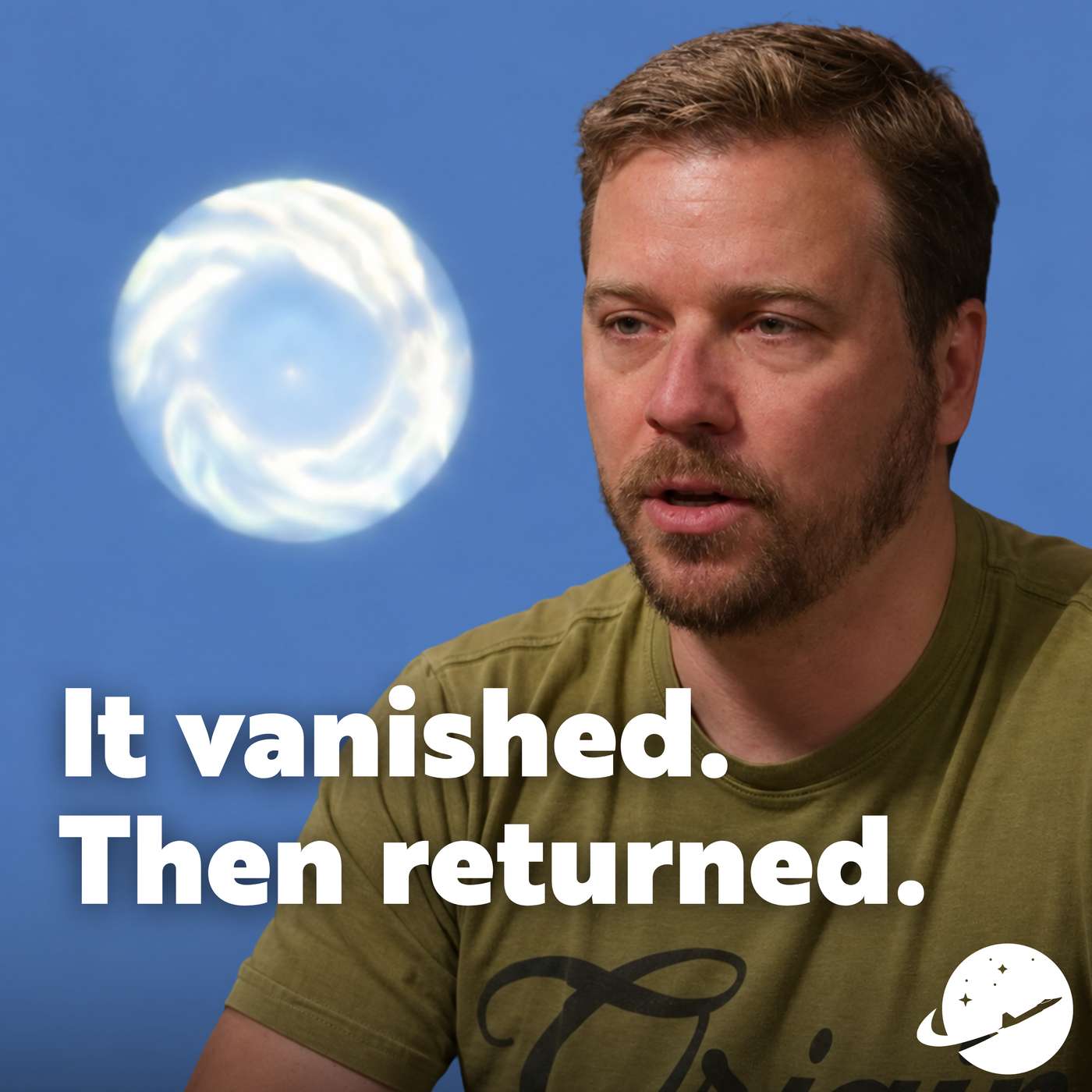
Trevor Gardner was trained to analyze military imagery. At a beach on Joint Base Pearl Harbor-Hickam, he encountered something he couldn't identify. On April 12, 2025, the former Army geospatial imagery analyst says he watched a white object appear to hold position as clouds moved past. Over roughly two hours, he describes it fading from view, returning and changing appearance. His family and responding security personnel also saw it, he says. I sit down with Trevor to review his photos and video, examine the limits of what they show, and discuss the response to his report. He recounts being told that air traffic control had no radar return, receiving no follow-up from his initial base reports, and later speaking with ASA and the FBI. We also explore how his faith shapes his interpretation of the experience, and why he still can't identify what he saw. Learn more about Americans for Safe Aerospace and support its work: https://www.safeaerospace.org
You're already learning on YouTube — why not get college credit for it? https://link.gostudyhall.com/my1 The end of college isn't the end of your education, it's just the end of a chapter of your education. But before we think about what comes next, we should really pause to celebrate. Congratulate ourselves. The work to get through higher ed is challenging. And it can be really helpful to use a celebration to close the book on it so you're ready to move on to the next chapter. In this final episode of How to College, we talk about the road ahead. *** Now you can take top-tier college courses with Study Hall! Study Hall videos are available to watch at no cost, and first-year courses are $25 to sign-up and begin coursework. Sign up at https://link.gostudyhall.com/my1 Follow Study Hall on socials! Twitter: https://twitter.com/gostudyhall Instagram: https://Instagram.com/GoStudyHall (https://instagram.com/GoStudyHall) Facebook: https://www.facebook.com/GoStudyHall Learn more about Federa
Society does a lot to improve our health, from sanitation to healthy foods. But society can have negative impacts on our health as well, and whether or not we get the positive impacts or the negative ones, can often come down to social and economic standing. In this episode of Crash Course Public Health, we’re going to take a look at some of the basic societal elements that affect our health, and why they are often tied to economic inequality. Check out our shared playlist with APHA: https://www.youtube.com/playlist?list=PLDjqc55aK3kywF2dd97_Jh5iP0d2ARhdo Vanessa’s channel: https://www.youtube.com/braincraft Sources: https://docs.google.com/document/d/1OHJiQ1njj5jWJC1YLDBzQgKC1QfnVgqJbbpK6qs7ekA/edit?usp=sharing Chapters: Introduction: Society and Your Health 00:00 Defining Society 01:42 Food Inequality 03:12 Housing Inequality 04:54 Healthcare Inequality 05:31 Income Inequality 07:43 Socioeconomic Status 10:04 Review & Credits 12:14 *** Crash Course is on Patreon! Thanks to the follow
View full lesson: http://ed.ted.com/lessons/the-complex-geometry-of-islamic-design-eric-broug Uploaded 14-05-15 In Islamic culture, geometric design is everywhere: you can find it in mosques, madrasas, palaces, and private homes. And despite the remarkable complexity of these designs, they can be created with just a compass to draw circles and a ruler to make lines within them. Eric Broug covers the basics of geometric Islamic design. Lesson by Eric Broug, animation by TED-Ed.