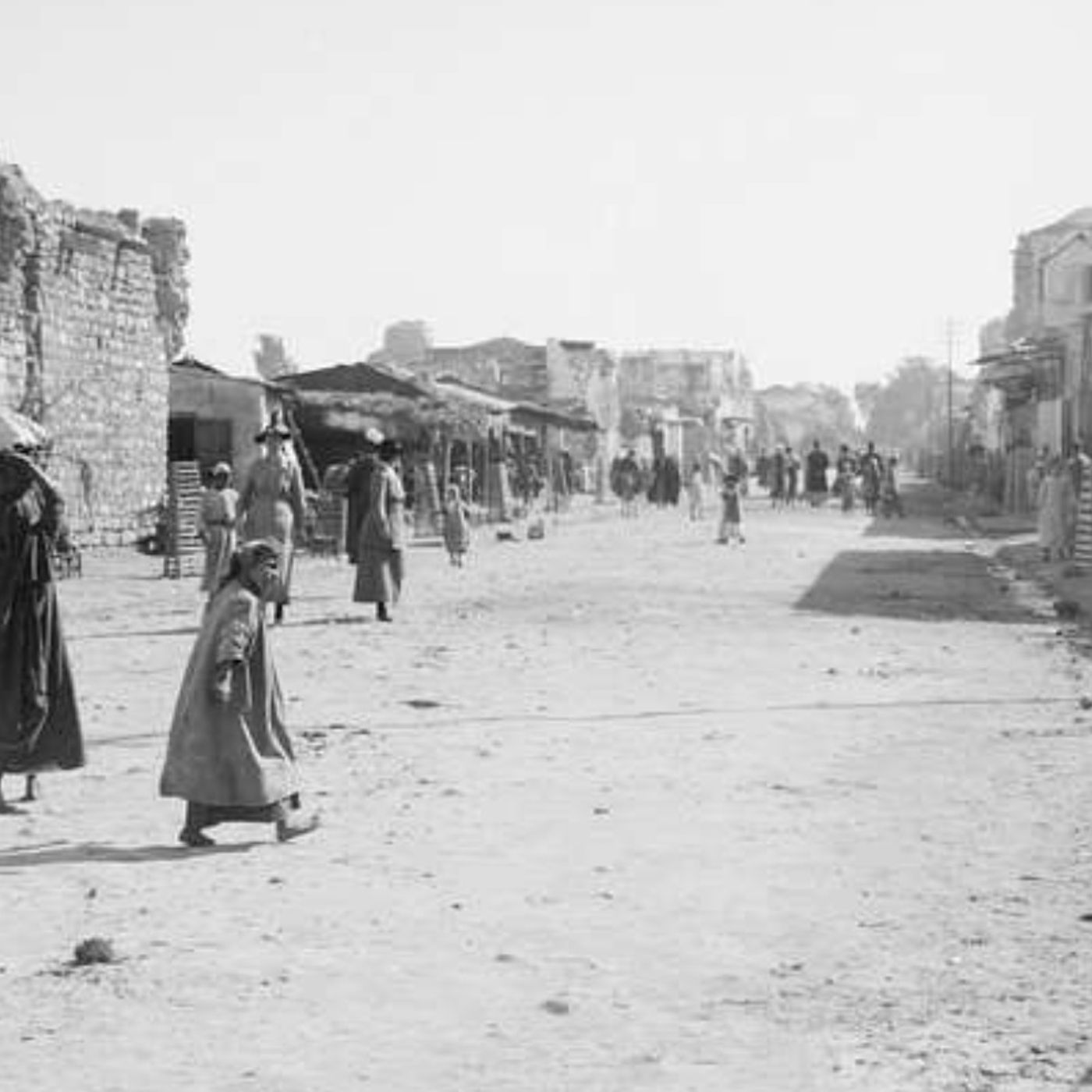
19001 KARACHI Baluch Insurgency Operations and Iranian Influence Janatyn Sayeh and Bill Roggio examine the evolving tactics of Baluch separatists targeting Iranian security forces through precise intelligence and targeted assassinations. They discuss potential financial backing from Saudi Arabia and Israel, alongside the strategic risks facing the US Fifth Fleet headquarters in nearby Bahrain. (11)
Airports across America were thrown into chaos, with thousands of flights cancelled and more than a million passengers affected. But when Donald Trump was asked whether he took responsibility for the nationwide aviation shutdown, his answer was simple: "I don't take any responsibility." Don reacts to Trump's response, his meeting with Hollywood actor and MAGA supporter Jon Voight during the crisis, and his remarks to journalist Yamiche Alcindor that raised questions about racial stereotyping. Meanwhile, Vice President JD Vance struggles to explain what went wrong, and an awkward exchange involving Transportation Secretary Sean Duffy and Markwayne Mullin raises further questions about the government's handling of the shutdown.
1910 CARACAS Venezuela Regime Fractures and Democratic Transition Alejandro Peña Esclusa reports on political developments in Venezuela, highlighting rifts between civilian and military leadership. He explains how dwindling regime control, widespread protests, and international pressure are paving the way for anticipated democratic elections, while noting the extensive investment required to rebuild the nation’s ruined infrastructure. (10)
1944 POPE PIUS XII Pope Pastoral Visit and Amazon Damage Alejandro Peña Esclusa describes Pope Leo XIV’s pastoral visit across South America, emphasizing his spiritual engagement with millions. The conversation contrasts the papal tour with severe environmental damage in the Amazonrainforest, where illegal gold mining and government corruption continue to poison vital waterways and destroy local ecosystems. (9)
1898 GAZA Israeli Politics Maneuvering and Gaza Strikes Samuel Ben-Ur, Bill Roggio, and Edmund Fitton-Brown detail complex Israeli coalition building between Gadi Eisenkot and Benjamin Netanyahu. They also examine targeted IDF strikes against senior Hamas commanders inside Gaza hospital infrastructure, alongside allegations of election interference involving members of the Ra’am party. (8)
Julian Epstein (@JulianEpstein), who served as chief counsel to the House Judiciary Committee and staff director to the House Oversight Committee Democrats from 1996 to 2001, joined The Guy Benson Show today to discuss the Democratic leadership battle between Chuck Schumer and Chris Van Hollen. Benson and Epstein examine how progressive Democrats are pushing potential new policies—including Medicare for All and a Green New Deal revival, while breaking down past Democratic failures, economic policies, and governing philosophies. Additionally, they look ahead at the 2028 outlook for AOC and potential presidential candidates. That and much more. Listen here!
Paul Mauro, Fox News contributor, attorney, and retired NYPD inspector, joined us on the Guy Benson Show today to break down the latest news regarding the recent technical outages, and the Strategic Response Group. Mauro and Benson discussed whether the recent tech outages affecting Microsoft, the FAA, and major banks, were coincidental glitches, or coordinated cyberattacks by adversaries such as Russia, China, Iran, or North Korea. Paul then went into detail about Mamdani’s announcement regarding the disbanding of the Strategic Response Group in NYC, what the specialized unit does, why it was disbanded, and more. Listen to the full interview with Mauro and Benson here!
Cheryl Armstrong was just 16 years old when she became involved in a plot to murder her ex-boyfriend that left two people dead. Although she never pulled the trigger, she served as the getaway driver and was sentenced to 96 years in prison. Cheryl shares her upbringing, the decisions that led to the murders, what it was like growing up inside Colorado's women's prison system, and how she eventually earned parole after serving 26 years behind bars. _____________________________________________ PrizePicks: Visit https://prizepicks.onelink.me/LME0/IANBICK and use code IANBICK to get $50 instantly in Lineups when you play your first $5 Lineup! _____________________________________________ Hims: Ready to be him? Visit https://www.hims.com/lockedin to get personalized, affordable care for weight loss, hair loss, sex, testosterone, and more. _____________________________________________ Connect with Cheryl Armstrong: Instagram: https://www.instagram.com/cheryl.armstrong.2153/ Buy her book: ht
NBC’s Al Roker is shining a light on the important role coral plays in our ecosystem. Also, Oscar winner, Jaime Ray Newman is returning to her role as “Callie” in the Netflix hit “The Hunting Wives” for Season Two releasing on November 26. Plus, “The Office” Star, Brian Baumgartner is turning the show’s fan-favorite moments into real-life lessons in his new book, “The Dunder Mifflin Employee Manual: How to Succeed in Work (and Life) – According to the Office.” And, “Today’s Style” is bringing the latest in this season’s top trends. Hosted by Simplecast, an AdsWizz company.
1900 BRUSSELS European Allies Evaluate Iranian Standoff Dynamics Bill Roggio and Edmund Fitton-Brown assess European anxieties over potential American policy shifts toward Russiaand Iran. They examine Israel’s strategic constraints in attempting to dismantle Iran’s proxy network, noting that temporary tactical damage cannot eliminate the broader threat without sustained, holistic international counterpressure. (7)
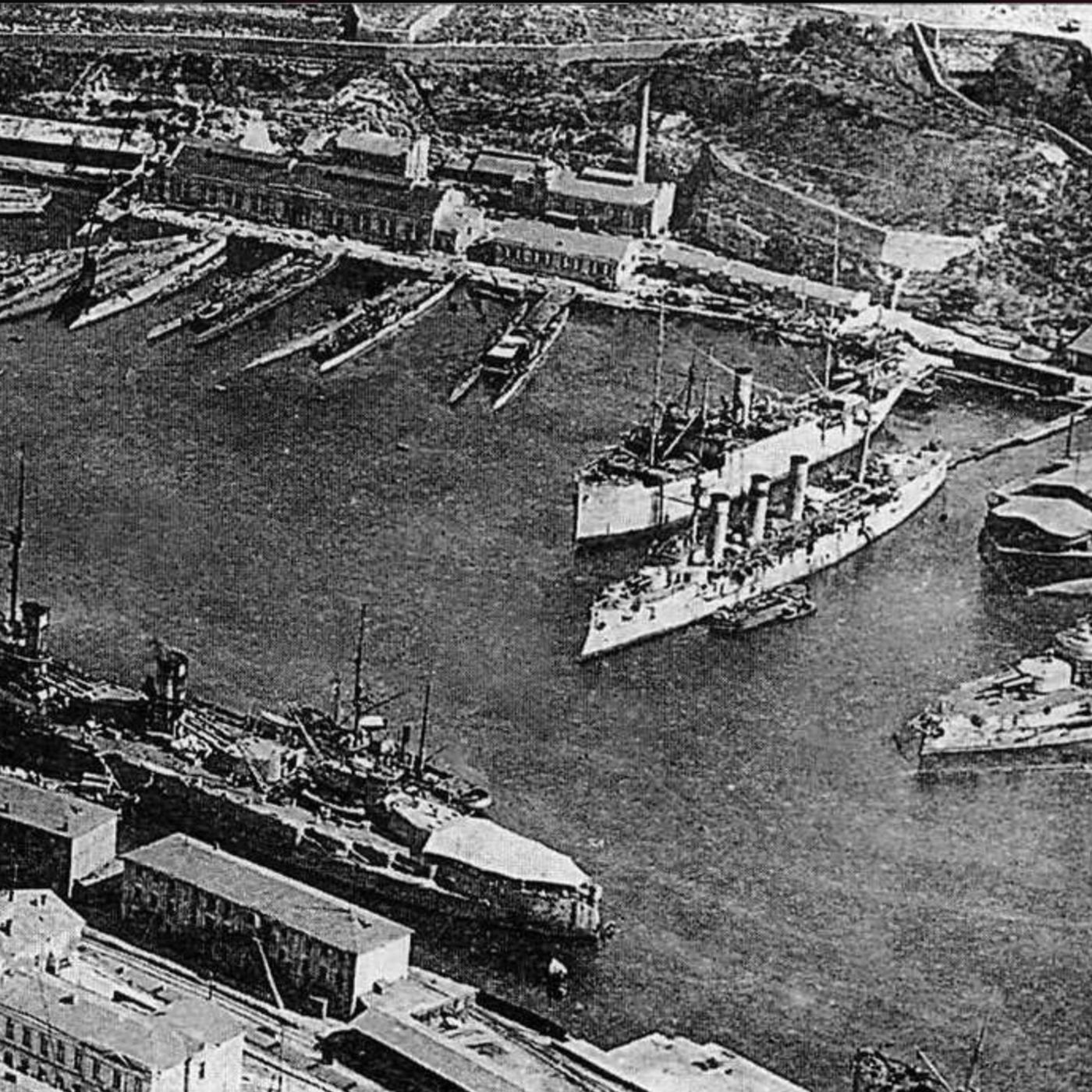
1918 SEVASTAPOL Middle East Battlefronts and Volatile Stalemates Bill Roggio and Edmund Fitton-Brown analyze interconnected Middle Eastern battlefronts spanning Israel, Lebanon, Yemen, and the Persian Gulf. They highlight how tactical Israeli successes against Hezbollah and American maritime strength contrast with Houthi advances in Yemen, concluding that these conflicts remain locked in a volatile, enduring stalemate. (6)
The future of AI is maybe beautiful, maybe scary, and definitely uncertain. But we do have a say in how it rolls out. From lab policies to international treaties, people all over the world are trying to figure out how to build and use AI in safe, responsible ways. But when the stakes are so high, can humanity really come together and keep AI under control? Chapter 1: Sam Altman & OpenAI 00:00 Chapter 2: Lab-level AI governance 1:13 Chapter 3: National AI Governance 5:07 Chapter 4: International AI Governance 8:40 Chapter 5: Review & Credits: 10:48 About This Series: AI is changing FAST so rather than doing a full Crash Course series of 12+ episodes, we’ve prepared a mini-series of just the basics. Crash Course will never tell you what to think and we’re not the type of organization that responds to breaking news in real time. Instead, we’re here to offer a zoomed-out foundation upon which to base your own opinions as you continue to learn from other outlets about the world that’s chang
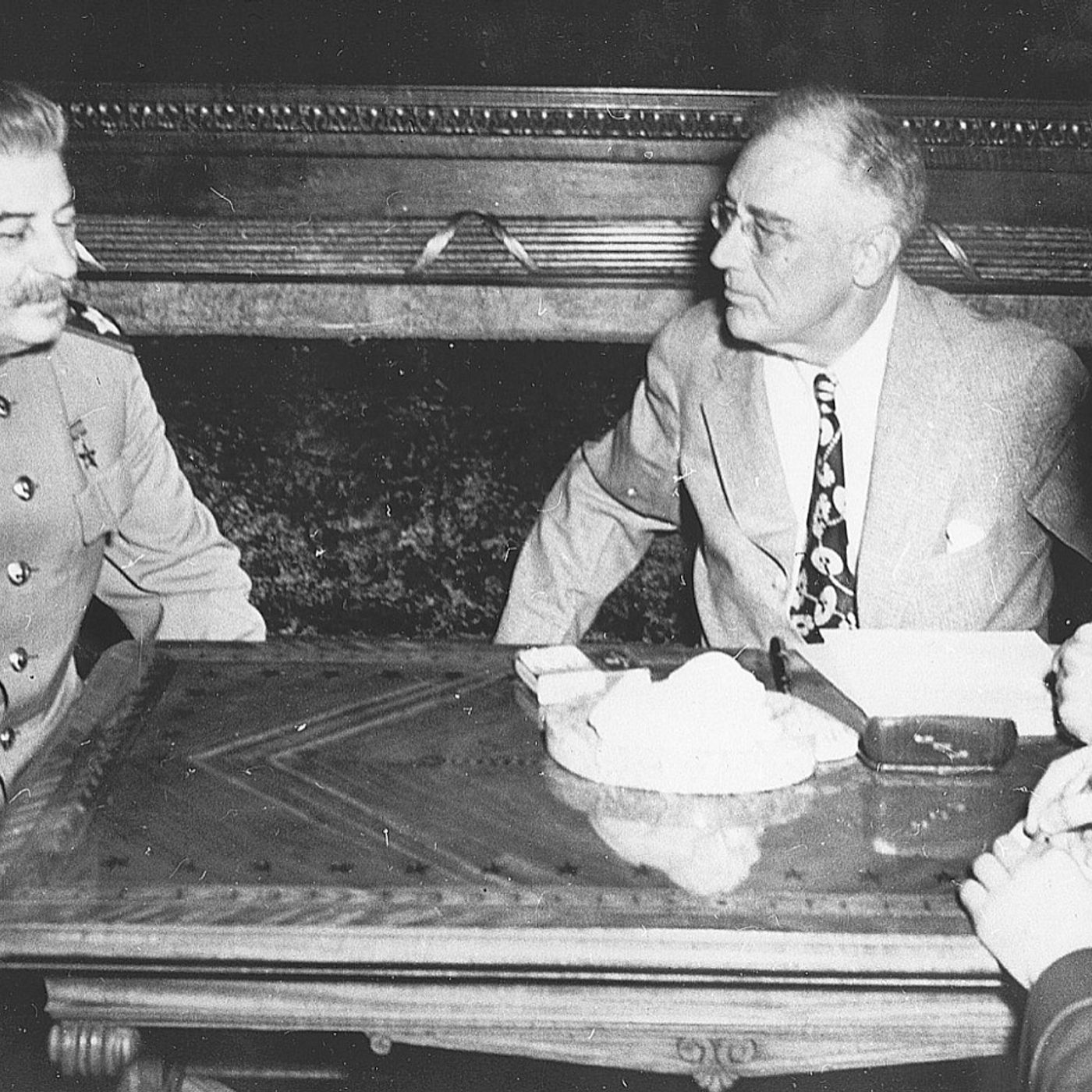
1945 YALTA STALIN, FDR Big Three Summit Comparison to Yalta Bill Roggio and Edmund Fitton-Brown evaluate the prospective summit between the American, Russian, and Chinese leaders, comparing it to the 1945 Yalta Conference. They argue that, unlike Allied cooperation against common adversaries in World War II, today’s geopolitical rivalries and deep ideological divides will prevent meaningful diplomatic breakthroughs. (5)
1906 PEKING NORTHSIDE China Property Collapse and Structural Reforms Andrew Collier and Gordon Chang discuss China’s severe real estate crisis, noting sharp declines in property investment and vast unoccupied housing developments. They explain President Xi Jinping’s reluctance to enact structural economic reforms, preferring state-directed lending into high-technology sectors, and advise Washington to leverage these domestic vulnerabilities. (4)
1890 PEKING US China Trade Disputes and Tariffs Alan Tonelson and Gordon Chang evaluate volatile US-China economic relations amid disclosures surrounding Nvidiasemiconductor smuggling allegations. They critique poorly timed diplomatic meetings while assessing China’s dominance over critical rare earth minerals, unfulfilled Chinese agricultural purchase commitments, and ongoing administration tariff debates over strategic trade leverage. (3)
1936 ETHIOPIA Lebanese Security Paralysis and Horn Tensions Malcolm Hoenlein analyzes the structural paralysis within Lebanon’s leadership over disarming Hezbollah and securing weapons caches near the Litani River. The discussion further explores escalating tensions in the Horn of Africainvolving Ethiopia and Sudan, aloSngside anti-Israel curricula in Syria that promote hostility and religious martyrdom among youth. (2)
1698 JERUSALEM Israeli Coalition Talks and Regional Turmoil Malcolm Hoenlein examines complex Israeli coalition negotiations following the recent elections, noting how Gadi Eisenkot seeks support to build a governing majority while Benjamin Netanyahu pushes for a broad unity government. The conversation also details escalating Houthi advances toward Aden in Yemen and rising security vulnerabilities across Bahrain. (1)
Canadian Prime Minister Mark Carney has stepped into the role of the Leader of the Free World as he embarks on his second historic trade meeting in China. Carney brings a bold vision for the world's future—one that includes a shared goal with Manitoba Premier Wab Kinew: eradicating homelessness within the next decade. This ambitious challenge reflects not just political will, but a deep commitment to our collective values as Canadians. Imagine a Canada where every individual has a place to call home, where poverty is not a permanent condition but a temporary hurdle. This vision is within our reach, and we can help make it happen. Joining us in this vital conversation is Guy Felicella, an esteemed international advocate for ending homelessness and drug addiction. His insights, along with host Laura Babcock’s passionate dialogue, will shed light on the systemic changes needed to create a more equitable society. We cannot ignore the pressing need for action. As citizens, we can influence
To figure out if an idea is as good as we think it is, we have to talk to our customers. We’ve said it over and over again. We have to ask them what they like, dislike, want, or need, and we want honest feedback about our product or service. But… how? *** Crash Course is on Patreon! Thanks to the following patrons for their generous monthly contributions that help keep Crash Course free for everyone forever: Eric Prestemon, Sam Buck, Mark Brouwer, Indika Siriwardena, Avi Yashchin, Timothy J Kwist, Brian Thomas Gossett, Haixiang N/A Liu, Jonathan Zbikowski, Siobhan Sabino, Zach Van Stanley, Jennifer Killen, Nathan Catchings, Brandon Westmoreland, dorsey, Kenneth F Penttinen, Trevin Beattie, Erika & Alexa Saur, Justin Zingsheim, Jessica Wode, Tom Trval, Jason Saslow, Nathan Taylor, Khaled El Shalakany, SR Foxley, Yasenia Cruz, Eric Koslow, Caleb Weeks, Tim Curwick, David Noe, Shawn Arnold, Andrei Krishkevich, Rachel Bright, Jirat, Ian Dundore -- Want to find Crash Course elsewhere on the
When the Democrat Scott Colom clinched the U.S. Senate race in Mississippi last week, Senator Raphael Warnock of Georgia wasn’t surprised. He’d campaigned for Colom, and believed that the state, like Georgia, might be on the verge of turning blue. On this episode of Radio Atlantic, Warnock talks to Adam Harris about his bullishness on the South as a source of Democratic power. He calls voting rights “job one,” criticizes gerrymandering, defends empathy, and talks about which legislation he’ll try to pass when the Democrats take the majority. - - -
Sometimes, diagnosing patients is pretty easy, but other times... not so much. Luckily, in a medical setting we have tools that can help us figure out what's wrong with patients, and how to help them. In this episode of Crash Course Outbreak Science, we'll use clinical symptomatology and diagnostic testing to collect data and test our hypotheses about what may be wrong with some hypothetical patients, and use what we learn to help our patients get better and stop the disease from spreading to more people. This episode of Crash Course Outbreak Science was produced by Complexly in partnership with Operation Outbreak and the Sabeti Lab at the Broad Institute of MIT and Harvard—with generous support from the Gordon and Betty Moore Foundation. Sources: Chapters 5 and 6 from the Operation Outbreak textbook (as provided by Todd Brown) *** Watch our videos and review your learning with the Crash Course App! Download here for Apple Devices: https://apple.co/3d4eyZo Download here for Android Dev
Doomerism, Denialism, and Optimism. Introducing the GATO Framework. AI Avengers... Assemble!! Episode release date: 7 May 2023 Core Ideas: Metamodernism: Narratives and emergence view of reality - Reduce suffering - Increase prosperity - Increase understanding mantra: Seek knowledge. DISCLAIMER: This is a community-driven show. ------------- Keywords: ai safety, machine autonomy, ai education, david shapiro, ai research, prompt engineering, agi, gpt
You expect plenty of noise in a pizza arcade, but not when you're the only person in the building! This week on Jim Harold's Campfire, an employee shares some very strange experiences We also hear about a bizarre childhood encounter. It's the kind of experience that raises more questions than answers, even decades later. A storyteller in Scotland recall a frightening encounter with a mysterious object during an ordinary walk. Plus, a powerful dream involving a beloved horse leaves a family wondering if our departed animal companions might still be trying to communicate with us. These stories and more on another edition of Jim Harold's Campfire! --- CHECK OUT ALL OF JIM'S FREE PODCASTS Est. 2005. VIRTUAL CAMPFIRE GROUP SPOOKY STUDIO PLUS CLUB EVENTS Hope to see you soon at one of Jim's live events! Visit jimharold.com/events (https://jimharold.com/events). YOUTUBE CHANNEL MERCH BOOKS