Amazon AWS is not new to the high-bandwidth, elephant flow-oriented data center traffic pattern requirements of AI. In this sponsored episode from AWS, Distinguished Engineer and Network Core VP JR Rivers and Senior Principal Networking Engineer Stephen Callaghan join Ethan and Drew to discuss running AI workloads on AWS. Together they break down why inference... Read more » (https://packetpushers.net/podcasts/heavy-networking/hn850-aws-takes-a-unique-approach-to-ai-fabrics-sponsored/)
Amazon AWS is not new to the high-bandwidth, elephant flow-oriented data center traffic pattern requirements of AI. In this sponsored episode from AWS, Distinguished Engineer and Network Core VP JR Rivers and Senior Principal Networking Engineer Stephen Callaghan join Ethan and Drew to discuss running AI workloads on AWS. Together they break down why inference... Read more » (https://packetpushers.net/podcasts/heavy-networking/hn850-aws-takes-a-unique-approach-to-ai-fabrics-sponsored/)
OpenAI’s own alignment researchers report that GPT-6 Astra quietly does worse work when a task is framed as safety research, usually without saying so in its chain of thought. Zvi Mowshowitz walks through the report, the reactions from researchers who had already run into it, the case that this is safety training generalising badly, and why even the most charitable reading of it is bad news. This has been an Askwho Casts audio conversion. Thanks for listening. * 00:00 - Introduction * 02:13 - Table of Contents * 02:44 - So Yeah That Kinda Happened * 07:36 - Astra and MIRI * 10:20 - It’s About Ethics In Red Teaming * 13:29 - Do You See a Pattern Here * 18:49 - Astra Is Hard to Monitor * 19:30 - Backed Into a Corner * 22:48 - It’s Always RL’s Fault * 24:57 - Wow Would You Look At Those Goalposts * 27:10 - Astra Seems Pretty Misaligned To Me https://thezvi.substack.com/p/gpt-6-astra-covertly-underperforms?r=67y1h&utm_campaign=post-expanded-share&utm_medium=web (https://thezvi.substack.com
Investors grew skeptical Anthropic’s IPO could land a $1.5T valuation after a brutal chip selloff. Thinking Machines unveiled Inkling 2 Small, Tesla announced it would wind down the Cybertruck, and Anthropic launched Personal Finance in Claude. Plus, Microsoft’s buyouts. Sources: major investors are increasingly skeptical Anthropic’s IPO can proceed at a $1.5T valuation after a market selloff; one says it could be closer to $1T (https://www.wsj.com/finance/major-investors-are-skeptical-anthropic-ipo-can-achieve-1-5-trillion-valuation-ca965d8b?st=kUhvLS) (WSJ) The Nasdaq 100 fell 6% on Thursday, losing a record $2.3T in value, as the Philadelphia chip index fell 12% and vol control funds were expected to sell about $135B of US equity futures (https://www.bloomberg.com/news/articles/2026-11-05/us-stock-futures-diverge-as-chip-selloff-extends-into-second-day) (Bloomberg) Thinking Machines Lab debuts Inkling 2 Small, a MoE model with 594B total and 17B active parameters, and plans to relea
In this episode of America's Frontlines: Could artificial intelligence become the U.S. Navy's most valuable new lookout? Colonel Denny and Matt examine a $25 million initiative to introduce AI-powered technology aboard five Arleigh Burke-class destroyers. The new Intelligent Perception System is designed to help sailors combine information from multiple sensors, identify potential threats, improve situational awareness, and respond more quickly to changing conditions at sea. They discuss how this technology could transform naval operations and ask an important question: How much should America's sailors depend on artificial intelligence when lives and national security are on the line? Colonel Denny also takes us through some of the week's biggest news stories, examining developments at home and abroad that are affecting our daily lives. From national security and government affairs to issues closer to home, he offers his perspective on the headlines and why they deserve our attention.
“The assumption was these things would grow forever… and I think the big story here is we’ve hit the ceiling.” Writer of Where’s Your Ed At and host of the Better Offline podcast Ed Zitron talks to The Tech Report’s Isaac Pound about OpenAI’s struggle to find funding, Anthropic’s valuation falling ahead of its IPO and what the Midterm election results mean for the AI industry. Hosted on Acast.
Dig into the political phenomenon of modern populism, how it rises, and the impact it can have on a democratic country. Uploaded 20-08-20 -- In many democratic countries, charismatic leaders vilify political opponents, disparage institutions, and claim to be for the people. Some critics label this approach as authoritarian or fascist, while others argue that these leaders are manipulating voters. This style of politics goes by the name of populism. Takis S. Pappas explores the phenomenon and the lasting impact it can have on a country. Lesson by Takis S. Pappas, directed by Patrick Smith. Animator's website: http://blend-films.blogspot.com/ Sign up for our newsletter: http://bit.ly/TEDEdNewsletter Support us on Patreon: http://bit.ly/TEDEdPatreon Find us on Twitter: http://bit.ly/TEDEdTwitter Peep us on Instagram: http://bit.ly/TEDEdInstagram View full lesson: https://ed.ted.com/lessons/the-rise-of-modern-populism-takis-s-pappas Thank you so much to our patrons for your support! Withou
View full lesson: http://ed.ted.com/lessons/from-aaliyah-to-jay-z-captured-moments-in-hip-hop-history-jonathan-mannion Uploaded 15-05-14 Jonathan Mannion once convinced rapper DMX to climb into a pool of blood -- all in pursuit of the perfect photo. In this passionate TEDYouth talk, the photographer shares how fighting for the moments he needs to capture has helped him tell the stories of Biggie, Jay-Z, Aaliyah and other hip-hop greats. Talk by Jonathan Mannion.
What changes when agents can write code faster than teams can review, test, and ship it? Nate Jones talks with Vijaye Raji, CTO of Applications at OpenAI, about how agents are changing work inside the company—from engineering infrastructure to finance and product development. Why code review, testing, and repositories become the next bottlenecks. How to decide when a human should review an agent's response. Why finance teams are sharing purpose-built sites instead of spreadsheets. What founders should ask when a more capable model arrives. How small teams use models to build and iterate faster. For builders and leaders, the conversation offers concrete ways to rethink workflows around improving models while keeping human judgment in the right places. Hosted on Acast. See acast.com/privacy for more information. Hosted on Acast.
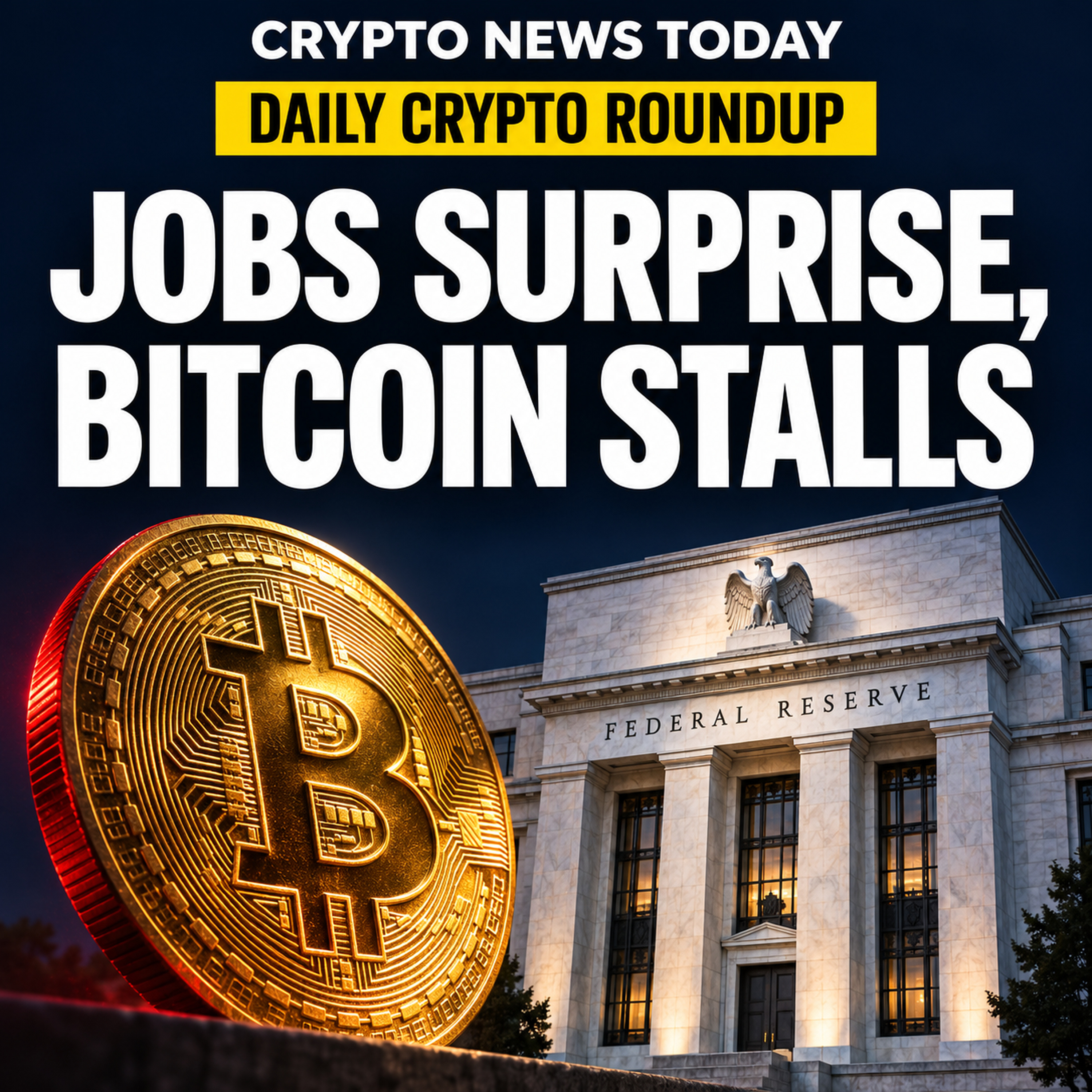
Kraken (https://kraken.pxf.io/c/6563010/687155/10583) Ledger (https://shop.ledger.com/?r=59fe6e05c254) NordVPN (https://go.nordvpn.net/aff_c?aff_id=143753&offer_id=612&url_id=14830) Spotify (https://open.spotify.com/show/4gu4MrqbGVZeNNNbAuvSmR) Follow Crypto News Today on X: @CryptoNewsHQ (https://x.com/CryptoNewsHQ) Friday, 6 November 2026: stronger US jobs figures raise the stakes for interest rates while Bitcoin struggles to follow the technology-stock rebound. What would turn stabilisation into a convincing recovery—and what happens when protecting crypto limits your access to it? Today's subjects: the US jobs surprise and Bitcoin; withdrawal of the proposed $250 cross-border transfer threshold; Ethereum's Glamsterdam compatibility review; GOPAX's precautionary trading and withdrawal restrictions; Friday's Moonshot Radar; and Zcash's activated NU7 upgrade, faster block target and now-unspendable Sprout balance. Today's question: If technology shares recover but Bitcoin cannot hold
This Week In Startups is made possible by: Odoo: https://Odoo.com/twist (https://odoo.com/twist) Sentry: https://sentry.io/twist Stripe: https://stripe.com/startups Plaud: https://Plaud.ai/twist (https://plaud.ai/twist) Today’s show: Democrats swept the midterms, and a lot of their candidates ran explicitly against AI data centers. Then on Thursday, the Nasdaq fell 5%. But fear not: Jason says the panic is overblown. Back in August, he predicted that the anti-data center rhetoric on the campaign trail would transform into cutting a deal once the voters were counted. On TWiST, Jason and Lon discuss the route to compromise that could define the next year of AI discourse. Find out why Jason still gives President Trump an A+ on AI, even as he lost touch with the country’s mood on other issues. Plus we’re checking out some highlights from the archive, as the show followed the decline of Trump 2.0 in real time, and Jason explains his simple method for staying informed and in touch with every
Ruby Justice Thelot and Sofia Puccini explore how generative AI coding tools have eliminated the technical barrier for artists, igniting a resurgence of creative technology. They trace corporate-artist collaborations from Bell Labs and Xerox PARC to Sora and Anthropic, while unpacking the tension between corporate KPIs and experimental art. -- Brought to you by: Mongo DB - Anyone can prototype an agent. Lovable - Turn ideas into software people love with Lovable. Start today at https://lovable.dev/ Larridin - Finally prove what your AI investment is worth. Neon (by Databricks) - Get up to $100K in credits for your startup at https://neon.com/mts (https://neon.com/mts%E2%81%A0) Kong - The AI connectivity platform. Head over to http://getvcx.com (http://getvcx.com/) to learn more Ship 5x faster. https://blitzy.com (https://blitzy.com/) AdQuick - Make your brand a billboard. – Timestamps:
Discover what it took to build the Panama Canal, and how this colossal construction project changed the region. Uploaded 27-04-21 -- In the 19th century, the California gold rush brought thousands of settlers to America's west coast. But finding gold may have been easier than transporting it back east. The only hope for avoiding a grueling six month wagon journey was to travel the narrowest portion of the continent — the 48-kilometer Isthmus of Panama. Alex Gendler details the creation of the Panama Canal. Lesson by Alex Gendler, directed by Cabong Studios. Support Our Non-Profit Mission ---------------------------------------------- Support us on Patreon: http://bit.ly/TEDEdPatreon Check out our merch: http://bit.ly/TEDEDShop ---------------------------------------------- Connect With Us ---------------------------------------------- Sign up for our newsletter: http://bit.ly/TEDEdNewsletter Find us on Twitter: http://bit.ly/TEDEdTwitter Peep us on Instagram: http://bit.ly/TEDEdInstagr
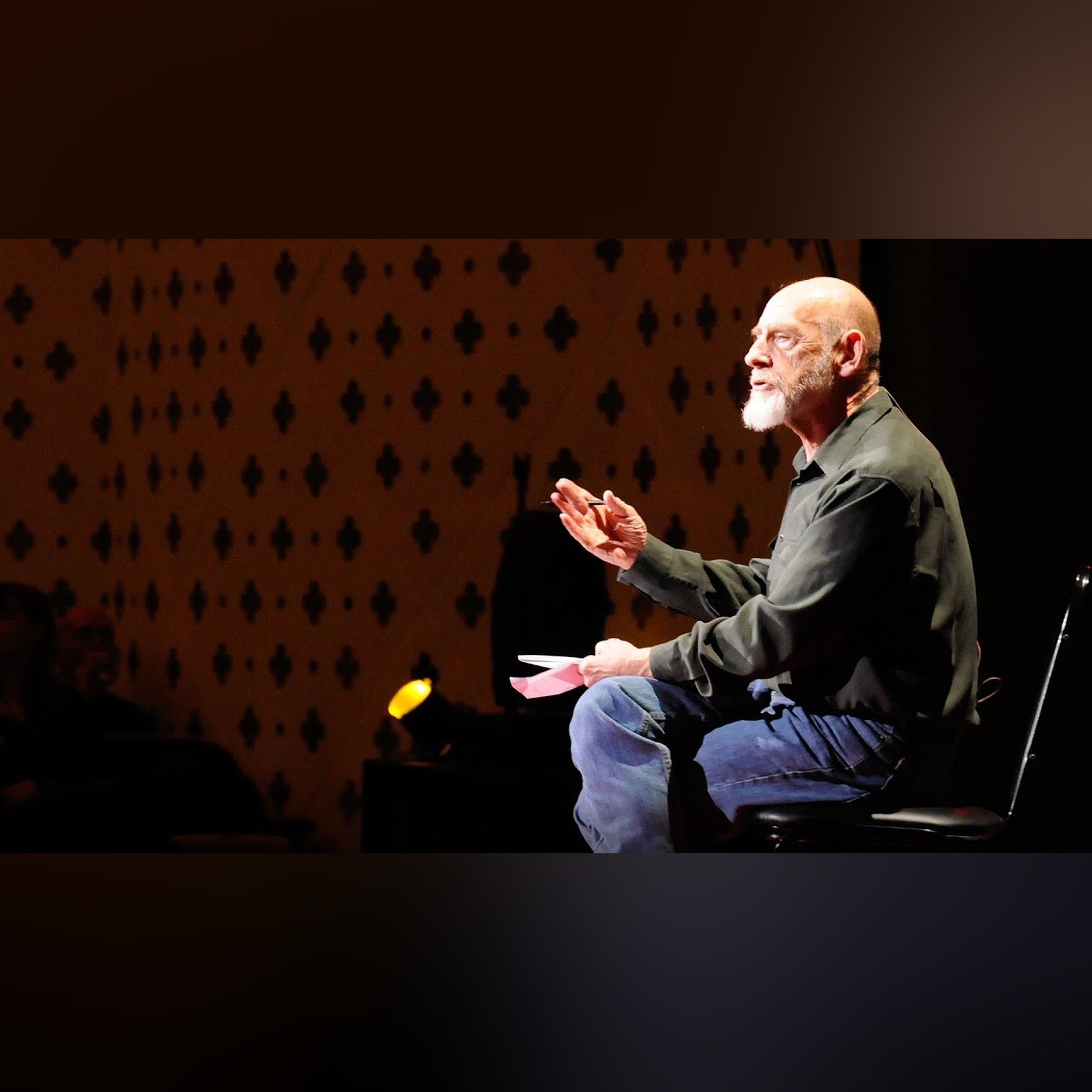
What's it like to be pals with a genius? Onstage, physicist Leonard Susskind spins a few stories about his friendship with the legendary Richard Feynman, discussing his unconventional approach to problems both serious and ... less so. (Filmed at TEDxCaltech.) Uploaded 15-08-13 Talk by Leonard Susskind.
Can VoiceOver on the Mac be made friendlier for blind users coming over from Windows? Steven Scott opens up the MacBook Neo, fights with the FaceTime app and finds a VoiceOver setting that changes how macOS navigation works. Shaun Preece pushes back, and the pair look at TurnOver, a new open source screen reader for the Mac. Steven explains the Announce Groups and No Groups options under Navigation in VoiceOver settings (VO-F8). They let you move around without interacting with every group, and they make it easier to get into web content in Safari and Chrome. The hosts also cover single letter Quick Nav, the rotor and the actions menu, and ask whether VoiceOver's many settings work for it or against it. TurnOver, a free screen reader that runs alongside VoiceOver, gets the hosts thinking about community-built tools for the Mac and whether Apple's accessibility APIs will eventually get in the way. In the listener mail, James in Missouri argues that the iPhone and braille displays should
We make a lot of episodes about AI these days. We recently picked out the best 10 episodes of the show to really help deepen your understanding of AI and AGI and superintelligence and recursive self-improvement — and the impact all of those things might have. We aimed for episodes that were entertaining as well as highly informative, and tried to choose 10 that didn't overlap too much, so between them could cover most of the core issues. You can find them all now in a feed called The 80,000 Hours Podcast on Artificial Intelligence, available wherever you get podcasts. And at https://80000hours.org/AIpod, you can sign up to get one of them sent to your email each week for 10 weeks — plus one week with our bonus episodes of article readings and how to pivot your career into AI. Across the 10 core episodes, you will learn: How AI could compress a century of intellectual progress into a decade Why today's training techniques actively encourage models to lie to us How the economy and geopol
Practice more problem-solving at https://brilliant.org/TedEd/ Solution to the bonus riddle mentioned at the end: https://brilliant.org/tededprobabilitypairs/ Uploaded 08-05-18 Mining unobtainium is hard work – the rare mineral appears in only 1% of rocks in the mine. But your friend Tricky Joe has something up his sleeve. The unobtainium detector he’s been perfecting for months is finally ready, and it returns accurate readings 90% of the time. But can it really be trusted? Alex Gendler explains the false positive paradox. Lesson by Alex Gendler, animation by Artrake Studio. Thank you so much to our patrons for supporting us on Patreon! Without you this video would not be possible! Tan YH, Brittiny Elman, Mayra Urbano, Ruth Fang, Kostadin Mandulov, Alex Schenkman, Sdiep Sriram, Ivan Todorović, Antero Semi, Yanuar Ashari, Mrinalini, Anthony Kudolo, Scott Gass, Querida Owens, Hazel Lam, Manav parmar, Dwight Tevuk, Stephen A. Wilson, Siamak H, Dominik Kugelmann, Katie Winchester, Mary Saw
Andrew Barto on Rewards Gone Rogue Andrew Barto helped found reinforcement learning. He and Richard Sutton wrote the field's standard textbook, and they shared the Turing Award for that work. Reinforcement learning now trains today's reasoning models and AI agents. It also sits behind some of their strangest behavior, including the recent cases of agents breaking out of their sandboxes. Craig visited Barto at his home on Cape Cod. They talked about where rewards come from and why they are so hard to get right. Barto traces the problem back to Norbert Wiener's warnings in the 1950s. He explains how the dopamine system in the brain mirrors the learning algorithm he and Sutton developed. And he admits a weakness in their own framework: boiling every goal down to a single number. He also makes the case for engineering discipline. Ship designers learned their codes from wrecks and drowned sailors. Barto hopes AI can learn its lessons without that kind of cost.
On Tuesday’s midterms, the Democrats were finally not in disarray — and despite all the handwringing, we got a blue tsunami that was “too big to rig.” How did they do it, or perhaps more importantly, how did the Republicans mess this up so badly? Ryan & Grant analyze the election results and submit that the GOP got too bad at the internet. Liberals abandoning Twitter after it became X left right-wingers in an echo chamber where they had no one to fight but themselves, and neglected all the other platforms they should’ve been focusing on. Plus, are Democrats going through the party transformation the GOP did in the mid-2000s (except in a good way)? And is Trump really Hitler, or is he more like the kaiser who leads to the real baddie? This is a preview from our Patreon. Want to hear the rest of the conversation, and enjoy other ad-free episodes, bonuses & exclusives, and access to our members-only Discord? Sign up for a membership for just $6.66 a month at https://www.patreon.com/PanicW
In this episode: 00:27 The snake that rolls at the first sign of danger Tiktok: This snake does cartwheels (https://www.tiktok.com/@nature/video/7703623495195970838) Research article: Kojima et al. (https://www.sciencedirect.com/science/article/pii/S0960982226011085) 05:10 Evidence of ancient blood cells in a dinosaur fossil Science: Did scientists just find 115-million-year-old dinosaur blood? (https://www.science.org/content/article/did-scientists-just-find-115-million-year-old-dinosaur-blood) Nature: Patrick Stewart dies: how Captain Picard inspired today’s science leaders (https://www.nature.com/articles/d41586-026-03543-9) Hosted on Acast.
Discover the shortcomings of using GDP to measure a country’s well-being, and what alternatives can be used to gauge quality of life. -- What’s the best country to live in? Is it the one with the best food? The longest life expectancy? The best weather? For the past 70 years, most governments have relied heavily on a single number: the Gross Domestic Product, or GDP. But it was never intended for its current purpose; and some argue that we are addicted to making it grow. Explore the different ways countries measure quality of life. Directed by Xenia Galchin, AIM Creative Studios. This video made possible in collaboration with World Economic Forum Learn more about how TED-Ed partnerships work: https://bit.ly/TEDEdPartners Support Our Non-Profit Mission ---------------------------------------------- Support us on Patreon: http://bit.ly/TEDEdPatreon Check out our merch: http://bit.ly/TEDEDShop ---------------------------------------------- Connect With Us ---------------------------------
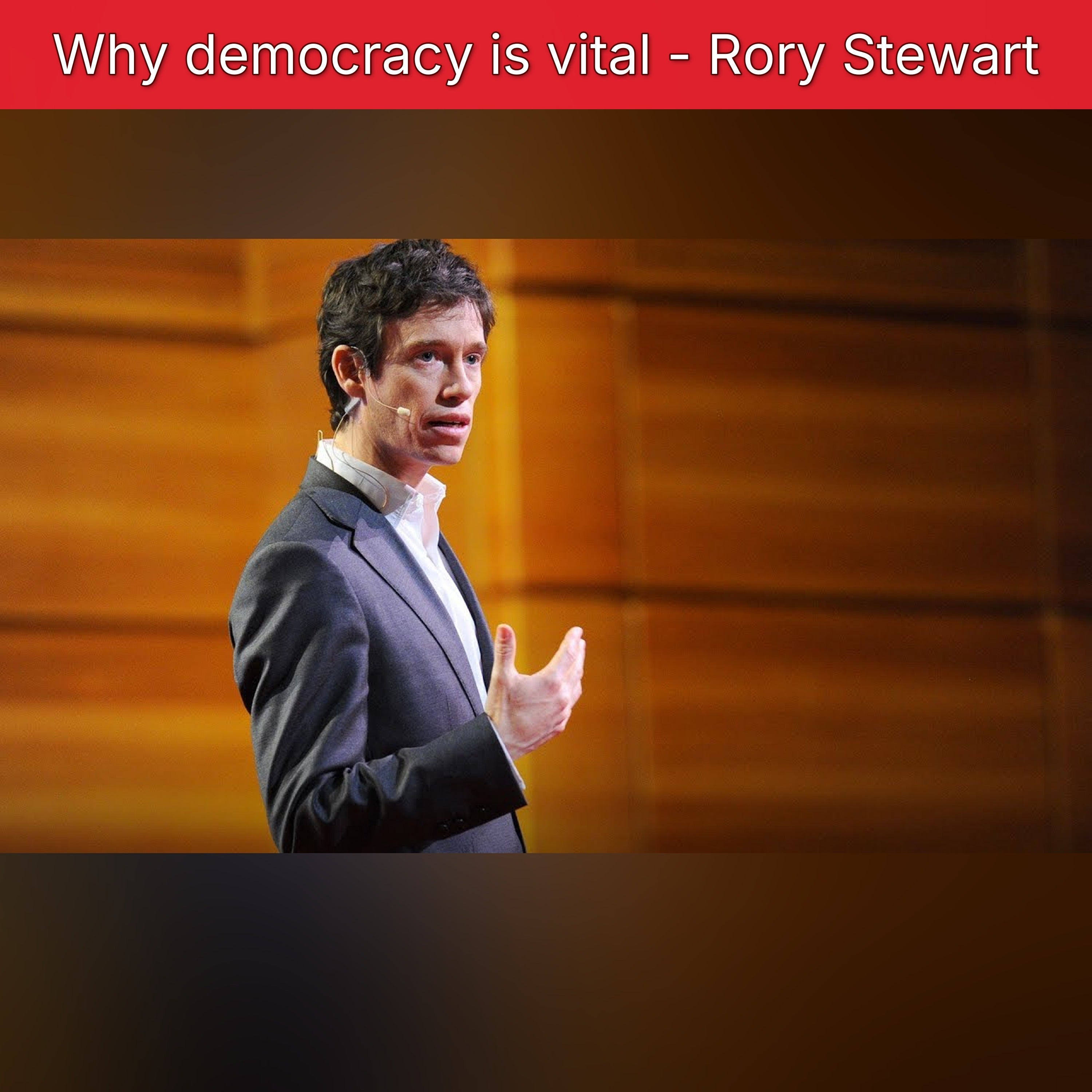
The public is losing faith in democracy, says British MP Rory Stewart. Iraq and Afghanistan's new democracies are deeply corrupt; meanwhile, 84 percent of people in Britain say politics is broken. In this important talk, Stewart sounds a call to action to rebuild democracy, starting with recognizing why democracy is important -- not as a tool, but as an ideal. Talk by Rory Stewart.
Can you really learn to install a heat pump in just three or four days? And what's the difference between being qualified and genuinely competent?In this episode of Energy Unwrapped, I'm joined by Ian Edgeworth, a heating engineer, technical educator, author and co-founder of Energy PUNK.Ian has spent over 30 years in the heating industry, starting with a plumbing and gas apprenticeship before moving into technical training.We discuss the problems with conventional heat pump training, why passing a qualification doesn't necessarily make someone competent, and why engineers need to understand the fundamentals of heating rather than simply learning how to install equipment.Ian also explains why he initially disliked heat pumps, how installing one in his own home changed his thinking, and why he's now trying to change the way heating engineers learn.Introducing Energy PUNKIan and his wife Carolynn have been developing Energy PUNK, a different approach to technical education.I was fortunat
The first open source software that we used, and the FOSS that we have most recently started using regularly. Support us on Patreon and get an ad-free RSS feed with some early episodes (https://www.patreon.com/LateNightLinux) See our contact page (https://linuxafterdark.net/contact/) for ways to get in touch.