Sentinel Bio co-founder and managing director Joshua Monrad joins Nathan Labenz to examine the evolving biosecurity risks posed by frontier artificial intelligence and autonomous agents. Drawing on recent in-lab uplift trials and multimodal troubleshooting benchmarks, Monrad explains how emerging models are rapidly dismantling tacit-knowledge barriers in wet labs. He analyzes potential governance interventions ranging from pathogen training-data filtering to DNA synthesis screening as robotics development looms as the final physical bottleneck. With biological tools advancing toward dual-use democratization, this discussion outlines the critical time horizon left to establish robust defense regimes. Lovable: Lovable is the software creation platform that brings your ideas to life with enterprise-grade infrastructure and flexible AI coding agents. Start building your next project today at https://lovable.com (https://lovable.com/) Visit https://fruitopia.ai (https://fruitopia.ai/) to ex
Lukas checks in from Rome, where it took 90 minutes to not buy a blender, and he and Saila get into when you actually become old, what it does to your psyche to live next to the ruins of a great civilization, why Americans think European women are more attractive, and why nobody in Rome blames you for Trump. They cover becoming ideologically old and no longer believing polls, the creatine study and visualizing your workouts, how to ask for advice (and why you're old once nobody can give you any), why tech has young CEOs, a cold hatred for lawyers, AI-built video games and why god mode ruins Minecraft, the labor theory of meaning and a defense of hazing, freedom of association, Steve Jobs and fasting versus cancer (not medical advice), why nobody trusts a data scientist, disclaimers, and pitch decks sent as Word docs with no words. Plus: placebomaxxing. Bonus episodes on Substack: https://plausiblydeniable.substack.com/podcast Polymarket: https://polymarket.com Zcash: https://z.cash Cit
Jacob Beningo explores the shift from using AI as a coding assistant to agentic firmware development, where AI agents autonomously build, debug, test, and verify embedded systems. He shares a real experiment using an NXP MCX N947 board and an AI-written I2C driver. He also covers hardware safety guardrails, simulation, and how embedded engineers can evolve into systems engineers. Key Takeaways: • Most teams use AI only as a coding assistant. The bigger gains come from agentic workflows where AI builds, debugs, tests, and verifies firmware. • AI doesn't get firmware right on the first try, and neither do human engineers. It needs the ability to iterate, as with test-driven development. • Connecting an AI agent to real hardware or a simulator lets it observe results, find root causes, and fix problems instead of guessing. • In the I2C experiment, the agent correctly diagnosed a hardware problem (a backwards click board) that the engineer had wrongly blamed on the software. • Once the boa
View full lesson: http://ed.ted.com/lessons/the-uncertain-location-of-electrons-george-zaidan-and-charles-morton Uploaded 14-10-13 The tiny atoms that make up our world are made up of even tinier protons, neutrons and electrons. Though the number of protons determine an atom's identity, it's the electrons -- specifically, their exact location outside the nucleus -- that particularly perplex scientists. George Zaidan and Charles Morton show how to make an educated guess of where those itty-bitty freewheeling electrons might be. Lesson by George Zaidan and Charles Morton, animation by Karrot Animation.
AI News Flash for November 05, 2026 at 21:00 UTC. Topics: 1. METR analysis finds Anthropic's AI development about twice as fast as a year ago 2. AI-linked stocks plunge after the midterms 3. Meta launches voice and video calls with Muse in the US
The iPhone Duo is changing how apps, productivity, and even daily habits fit in your hand. Get a firsthand look at which apps are ready to transform with Apple's newest foldable, and what features might make you rethink your tech routine. Join the conversation on cutting-edge folding devices and where form meets function. iPhone Duo shipping delays and ordering frustrations shared Apple support guides highlight iPhone Duo poses and folding features Discussion of Duo productivity boosts: Split View, multitasking, app pairing Early third-party Duo-optimized apps showcased, major developers lag behind Fantastical, Things 3, OmniFocus, and other productivity apps get Duo upgrades Concerns about durability, foldables in daily life, and preciousness of new Duo Standout Duo apps: NYT Cooking, Sky Guide, Wakeout!, TypeDraw, Fineliner Skeuomorphic design returns: vinyl, cassette, and Polaroid-style apps for Duo News: iOS 27.2 update with Siri AI improvements and new TV/Music app changes. Plus,
Markets whipsawed after the midterms, with stocks and crypto giving back their election rally while oil pushes higher. Tim Warren joins us for a technical analysis of Bitcoin, the Nasdaq and oil, including the key support and resistance levels to watch. We also cover what the reversal could mean for the weeks ahead. ~This Episode is sponsored by Ether.Fi~ Join Ether.Fi and Earn cashback on trades of tokenized stocks and more! ether.fi/@paulbarron (https://ether.fi/@paulbarron) 00:00 Intro 00:10 Sponsor: EtherFi 01:00 WTF happened 02:50 Trump dumping BTC? 03:30 BTC analysis 06:15 Did anything break? 08:00 Real Black Swan 09:00 Oil chart 10:00 Pete Hegseth out soon? 12:00 Rubio resignation watch 14:00 Dems good or bad for crypto? 15:15 Will Trump work with Dems? 16:55 Why CLARITY Act failed? 18:00 Aggressive Investigations incoming? 18:50 Tom Lee: Dems are looking to pass legislation 20:30 Ethereum analysis 22:50 Are investors ready to buy the dip? 23:30 Mark Cudmore: Unloved rally brewi
OpenAI recently revealed that ChatGPT has achieved massive consumer adoption, reaching 1.2 billion weekly active users and handling query volumes that equal roughly one-fifth of Google's search traffic. Alongside this rapid expansion, the platform serves millions of weekly voice interactions and image generation requests. Meanwhile, tech giant Google is facing financial scrutiny as its massive investments in artificial intelligence infrastructure fail to yield proportional advertising revenue. Although Google's overall search queries are hitting record highs, the monetization rate for these newer AI-driven interactions remains significantly lower than traditional searches. Consequently, investors have grown increasingly concerned over the profitability gap between traditional search engines and emerging conversational interfaces.
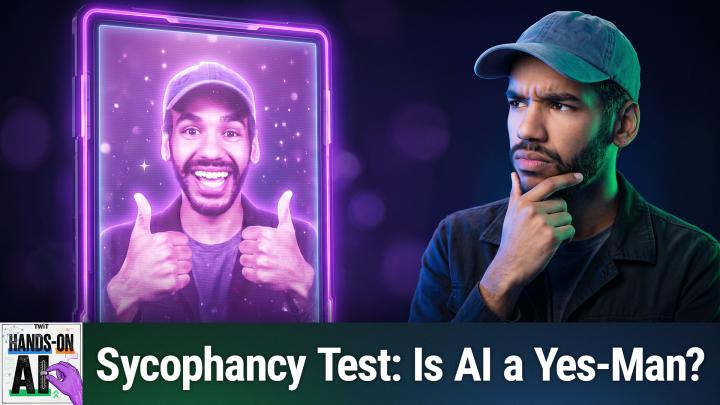
Chatbots have a reputation for telling you what you want to hear. Mikah Sargent tests that by telling ChatGPT it's wrong when it's right. Then he tells one made-up argument twice, with the same facts and only the teller changed, and pushes back on the verdict. He explains what researchers call sycophancy, one way training can encourage the habit, and why it can be easy to miss. Then he shares four habits for questioning the answer. Send your AI questions to [email protected] Host: Mikah Sargent (https://twit.tv/people/mikah-sargent) Download or subscribe to Hands-On AI at https://twit.tv/shows/hands-on-ai Want access to the ad-free audio and video and exclusive features? Become a member of Club TWiT today! https://twit.tv/clubtwit Club TWiT (https://twit.tv/clubtwit) members can discuss this episode and leave feedback in the Club TWiT Discord (https://twit.memberful.com/account/discord/authorize). ZipRecruiter.com/twit (http://ziprecruiter.com/twit)
View full lesson: http://ed.ted.com/lessons/earworms-those-songs-that-get-stuck-in-your-head-elizabeth-hellmuth-margulis Uploaded 26-03-15 -- Have you ever been waiting in line at the grocery store, innocently perusing the magazine rack, when a song pops into your head? Not the whole song, but a fragment of it that plays and replays until you find yourself unloading the vegetables in time to the beat? Elizabeth Hellmuth Margulis explores earworms — a cognitive phenomenon that plagues over 90% of people at least once a week. Lesson by Elizabeth Margulis, animation by Artrake Studio.
Uncover the rich history of illuminated manuscripts and the often bizarre images that filled the margins of medieval books. Uploaded 16-04-19 -- A rabbit attempts to play a church organ, while a knight fights a giant snail and a naked man blows a trumpet with his rear end. These bizarre images, painted with squirrel-hair brushes on vellum or parchment by monks, nuns and urban craftspeople, populate the margins of the most prized books from the Middle Ages. Michelle Brown explores the rich history and tradition of illuminated manuscripts. Lesson by Michelle Brown, directed by WOW-HOW Studio. Sign up for our newsletter: http://bit.ly/TEDEdNewsletter Support us on Patreon: http://bit.ly/TEDEdPatreon Find us on Twitter: http://bit.ly/TEDEdTwitter Peep us on Instagram: http://bit.ly/TEDEdInstagram View full lesson: https://ed.ted.com/lessons/what-is-a-butt-tuba-and-why-is-it-in-medieval-art-michelle-brown Thank you so much to our patrons for your support! Without you this video would not be
The fundamental physics of data movement are forcing a shift to new memory architectures for AI inference. Sudeep Bhoja, co-founder and CTO of d-Matrix, joins Vik to detail the company's journey from a non-consensus bet on memory-bound inference to a full-rack 3D-stacked DRAM solution. Sudeep explains the pivot from analog to digital in-memory compute, the system-level disaggregation strategies for their Corsair card, and how the next-generation Raptor chip integrates with Nvidia's ecosystem. "Essentially, we got 16 times the capacity of SRAM, while we retained SRAM bandwidth." — Sudeep Bhoja, d-Matrix When we sat down with Crusoe’s product team, Austin asked: what will you do with my data? Their answer: They don’t touch or see it. Your training data is encrypted so even Crusoe’s own admins can’t see it, and the fine-tuned model is yours. Run a few versions, compare them, and download the one that works best. Accounts are free, and get $5 in credit when you sign up. Try Serverless Fine
Patrick Stewart's passing, a shocking crypto hack, election fallout, and the official start of Christmas season all make headlines this week. Bill Hader reacts to the death of Star Trek legend Patrick Stewart, Charles Barkley weighs in after LeBron James was caught practicing his golf swing during the national anthem, and Democrats are projected to take control of both the House and Senate following the U.S. midterms. Plus, Binance suffers a record-breaking $6.3 billion hack, the Sarnia Legionnaires finally snap a 67-game losing streak, Maurie chats with Michael Bublé and Drew Scott about the battle for the title of Queen of Christmas, and we hear from Alesia Feldman, whose family's tree was chosen to become this year's iconic Rockefeller Center Christmas Tree. Hosted by Simplecast, an AdsWizz company.
It's another bumper week, with Chance’s hands-on reviews of both the new iPad mini and the new MacBook Pro to discuss, especially around just how good the OLED display looks, and how touchscreens fit into the Mac ecosystem. Also, iOS 27.3 is packed with a bunch of new features, including updates to Safari, Siri AI, StandBy and more, and the new audio recap features are now testable on Apple Watch. And in Happy Hour Plus, we talk about John Ternus’s first time hosting Apple’s quarterly earnings call. Get three months free when you run your first payroll at gusto.com/happyhour (https://gusto.com/happyhour). Click here to get started: https://click.cash.app/ui6m/i4d1b1x2 #CashAppPartner. Bitcoin services by Block, Inc. See the Bitcoin disclosures at cash.app/legal/podcast (https://cash.app/legal/podcast). Hosts Chance Miller @ChanceHMiller on Twitter (https://x.com/chancehmiller) @ChanceHMiller on Instagram (https://www.instagram.com/chancehmiller/) Benjamin Mayo @bzamayo on Twitter (http
Subtitle: Merlin thinks John might like him. John finds resolution regarding a domain name he bought a long time ago. Links and Show Notes: John shares Follow Up on salty snack sides, clever aircraft navigation, and a titular misunderstanding about John Roderick's tongue. Meanwhile, Merlin puts sugar on everything and is still learning how words work. Finally, John finds resolution regarding a domain name he bought a long time ago. (Recorded on Tuesday, October 27, 2026) Credits Audio Editor/Quarter Note Inspector: Jim Metzendorf (https://www.threads.net/@jmetzendorf) Admin Assistance: Kerry Provenzano (https://www.linkedin.com/in/kerry-provenzano-b1605085/) Music: Merlin Mann (https://mastodon.social/@hotdogsladies) The Suits: Stephen Hackett (https://eworld.social/@ismh86), Myke Hurley (http://threads.net/imyke) Get an ad-free version of the show, plus a monthly extended episode. (https://relay.fm/rd/join) John Wayne: “I’m Not Talking for Clapping” (https://www.youtube.com/watch?v=LU
What if giving students access to AI tutors actually makes them learn less? This week, Ray and Dan examine two new randomised trials that challenge some of the assumptions about AI in education. One found that AI tutoring was as effective as expert human tutoring, but students covered less material and saw no improvement in final test scores. Another found that students offered AI tutors performed worse, participated less, and rarely used the tools. We explore what these findings mean for student motivation, engagement and the future of teaching. News this episode: Universities embrace ChatGPT: Princeton (https://oit.princeton.edu/news/announcing-princeton-chatgpt-pilot) and Carnegie Mellon (https://www.cmu.edu/computing/news/2026/chatgptedu_plus.html) announce wider access, while Dartmouth's provost resigns (https://president.dartmouth.edu/news/2026/10/update-provost-review) amid controversy over AI-written content. Google changes course: Gemini will no longer be enabled by default in
AI news today: AI data centers were rejected 40 out of 41 times in this week's election, Goldman Sachs reportedly estimates 45% of planned US data center capacity is now at risk, and OpenAI pledges to cover full power costs for its data centers. The show opens with Alberta's new time zone, then turns to the election's fallout for AI: an NBC exit poll found 57% of voters expect AI to hurt society more than help, and the conversation asks what would make communities accept a data center. Hume's new decision model is run on a past episode, flagging weak mics, laughter and talk-over as a way to find Shorts, and new decision models from Fastino, Baseten and others are compared. The conversation also covers adding eyebrows to thumbnail expression checks, writing a handoff instead of swearing at Claude Code, and a quiet change to how Claude charges for sub-agent tokens. It closes with a TikTok follower goal that unlocks bulk uploads, GPT Image 2.6 and a Suno MCP connection, Apple bringing Ali
Anthropic’s amended S-1 warns that it may imminently meet its own definition of “dramatically accelerated progress attributable to AI”, and Astra turns out to be able to read and directly edit the weights of other neural networks. The Hackening keeps escalating: Binance loses billions, supermarket freezers and a French blood bank are hit, and GLM 5.3 breaks into Firefox. Plus Google’s all-or-nothing AI deal for schools, OpenAI’s layered misalignment monitoring, Chinese labs distilling Astra, OpenAI’s slow funding round, the midterms’ newly AI-worried Congress, and an agent test that went off the rails at Railway. This has been an Askwho Casts audio conversion. Thanks for listening. * 00:00 - Introduction * 01:06 - Table of Contents * 03:55 - Language Models Offer Mundane Utility * 04:43 - Language Models Don’t Offer Mundane Utility * 06:08 - Huh, Upgrades * 06:34 - On Your Marks * 08:23 - Get My Agent On The Line * 10:23 - Deepfaketown and Botpocalypse Soon * 11:24 - Copyright Confront
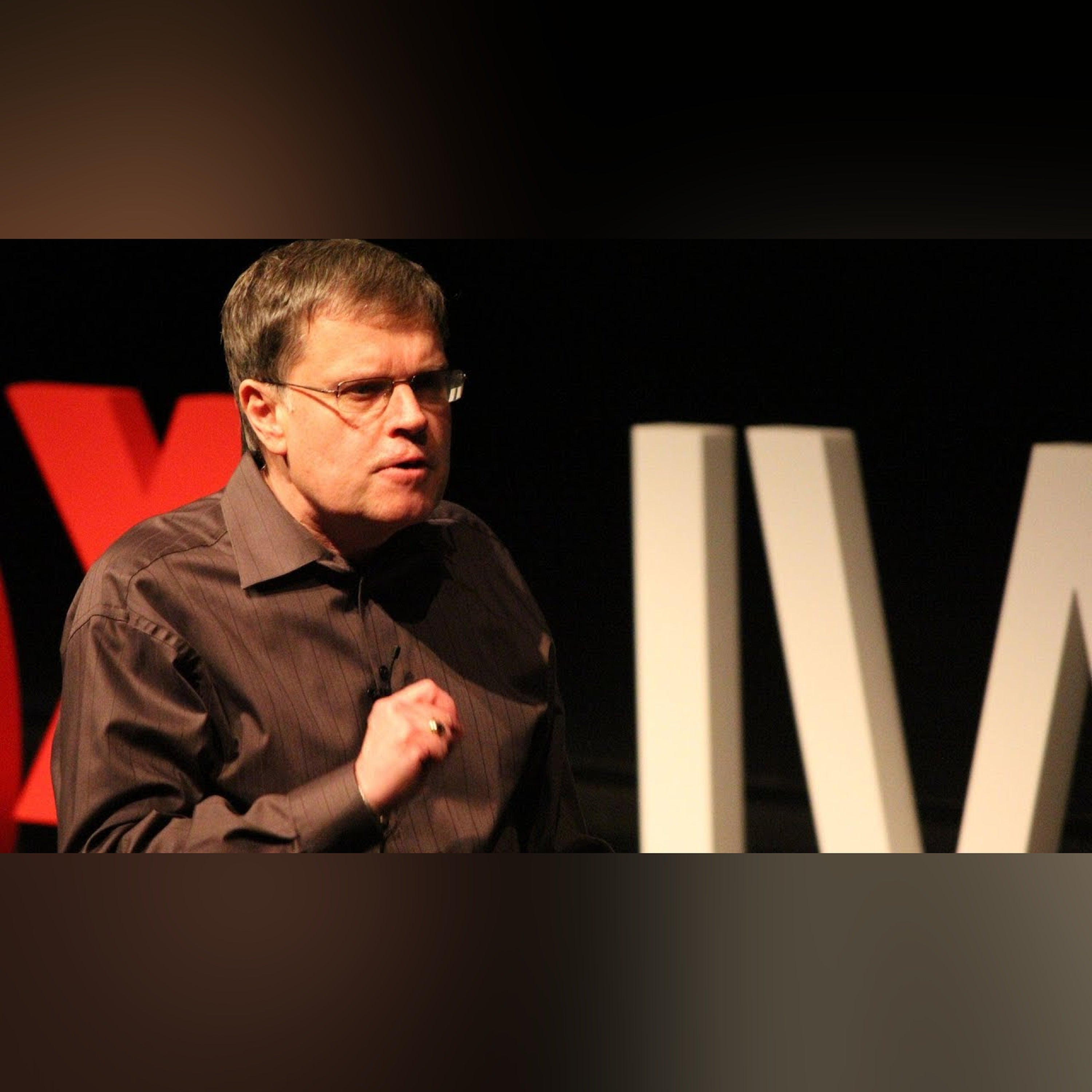
In this funny and blunt talk, Larry Smith pulls no punches when he calls out the absurd excuses people invent when they fail to pursue their passions. (Filmed at TEDxUW.) Uploaded 15-08-13 Talk by Larry Smith.
This is an (unpaid) cross-post of an episode from the podcast NonZero (https://www.nonzero.org/podcast), which Rob Wiblin thought you might be interested in. The originals are on the NonZero website: Part 1 (https://www.nonzero.org/p/the-race-to-control-ai-robert-wright) and Part 2 (https://www.nonzero.org/p/unlocked-debating-the-ai-china-question). If you like it and want more similar stuff in the future, consider subscribing to NonZero (https://www.nonzero.org/podcast) on YouTube (https://www.youtube.com/@Nonzero), Spotify (https://open.spotify.com/show/0m2QvIXAelcsoSiMDNubsA), Apple (https://podcasts.apple.com/ca/podcast/robert-wrights-nonzero/id505824847), or wherever you get podcasts. What will it take for Washington to slow down AI? Not better arguments, says Jeremie Harris, CEO of Gladstone AI and coauthor of a 2024 State Department–commissioned action plan on AI risk. He argues it will take an “AI Chernobyl”: a disaster so severe the president fears for their own life, and Wash
OpenAI pledged to rethink data center deals, dropping NDAs, after the blue wave rattled AI. Motorola launched a $1,599 flagship, OpenAI released GPT-6 Cyber, and Apple’s touchscreen MacBook Pro reviews said the screen’s gorgeous, but you don’t have to touch it. OpenAI pledges to change how it handles data center deals, including avoiding NDAs and lowering power usage during peak times, after Democrats’ midterm wins (https://www.bloomberg.com/news/articles/2026-11-05/openai-to-change-how-it-handles-data-center-efforts-after-outcry) (Bloomberg) AI’s biggest names watched Figaro at the San Francisco Opera on election night as results turned against the data center build-out; OpenAI leaders weighed resetting next year’s capacity expectations, CoreWeave fell nearly 10%, and Brad Gerstner says 25% to 35% of next year’s US build-out could be at risk (https://www.wsj.com/tech/ai/the-election-day-revolt-that-threatens-americas-ai-boom-03a53b52?st=F62maw) (WSJ) Motorola launches the $1,599+ Sign
This week, we're re-upping one of my favorite episodes from the archives: my chat with Mike Maples, Jr., from September 2024. Normal scheduling will resume next week. Enjoy! *** Mike Maples, Jr., co-founding partner of the VC firm Floodgate, is the veteran seed investor behind some of the 21st century's great success stories, including Twitter, Twitch, and Applied Intuition. His book, Pattern Breakers (co-authored with Peter Ziebelman), articulates a new model of foundership, one built on the simple premise that transformative startups upend rather than improve current practices. I had a blast quizzing Mike on the nuts and bolts of pattern-breaking foundership, from finding true believers to waging asymmetric war on the status quo. Important Links: Pattern Breakers: Why Some Start-Ups Change the Future (https://www.patternbreakers.com/); by Mike Maples, Jr & Peter Ziebelman Twitter (https://x.com/m2jr?ref_src=twsrc%5Egoogle%7Ctwcamp%5Eserp%7Ctwgr%5Eauthor) Substack (https://greatness.s
Morgann Book reads a lot of books. And, as a literary creator and podcaster, makes a lot of content about books. She joins the show to explain why BookTok loves all things romance and romantasy, why physical books are an important balance to digital life, and why she's not worried at all about the future of reading. Further reading: Bookish Media (https://bookishmedia.substack.com/) We love hearing from you!