Listen through the publisher, then discuss the episode here or arrange an in-person Roundtable. Your city determines where to meet.
Roundtables are designed for groups of four, with a shared subject and room for everyone to speak. Come for discussion, with no dating expectation.
1 Kings 22 warns believers to beware of false prophets who prioritize pleasing the crowd over speaking God's truth, challenging the church to develop spiritual discernment, examine the fruit of those who claim to speak for God, and have the courage to stand with the truth even when it means standing alone.
Episode information is provided by the publisher. Listening takes place on the publisher’s service.
Why does Allah allow good people to suffer? When hardship enters your life, does it mean Allah is displeased with you, or could your struggles be bringing you closer to Him? Every believer experiences moments of pain, loss, uncertainty, and heartbreak. But in Islam, suffering is not necessarily a sign of Allah's anger, and experiencing sadness does not mean your faith is weak. In this powerful and comforting Islamic lecture, Ustadh Reece explores the deeper wisdom behind life's difficulties, the true meaning of Sabr, and how Muslims can remain connected to Allah ﷻ during their hardest moments. Through lessons from the Qur'an, authentic Hadith, and the lives of the Prophets, this reminder explores: - Why Allah tests those who believe in Him - How hardship can become a means of spiritual growth - What Prophet Muhammad ﷺ taught us about grief and sadness - The patience and beautiful du'a of Prophet Ayyub (AS) - How the story of Prophet Yusuf (AS) reveals Allah's wisdom - Why both blessing
Friday 20 November 2026 Today is Friday the 20th of November, in the 33rd week of Ordinary Time. Continuum Choir sings, ‘Upon Your Heart’ by Eleanor Daley: Set me as a seal upon your heart, As a seal upon your arm, For love is strong as death. Many waters cannot quench love, Neither can the floods drown it. If you keep my commandments, You shall abide in my love, Love one another as I have loved you, Then shall your joy be complete. As you hear these words sung, let them carry you into prayer... Today’s reading is from the Book of Revelation. Revelation 10:8-11 Then the voice that I had heard from heaven spoke to me again, saying, ‘Go, take the scroll that is open in the hand of the angel who is standing on the sea and on the land.’ So I went to the angel and told him to give me the little scroll; and he said to me, ‘Take it, and eat; it will be bitter to your stomach, but sweet as honey in your mouth.’ So I took the little scroll from the hand of the angel and ate it; it was sweet as
If meditation never worked for you, Amy Strauss has some good news: nothing is wrong with you. Your intuition just speaks a different language. Amy is a practicing psychic, the creator of Your Resident Intuitive, and the author of The Six Intuitive Archetypes. She grew up in Hinsdale, Illinois, found her way to Washington, D.C., and recently stepped back from client readings to focus on teaching. The archetypes came to her, fully formed, on a day she was sitting around incredibly bored. We walk through all six: the Mystic, the Black Cat, the Butterfly, the House Witch, the Healer and the Emperor, and why the daily practice for each one looks completely different. For one person it's silent meditation. For another it's channeling into a voice memo. For a House Witch, it might be baking cookies. Amy explains why forcing yourself to sit for 20 minutes can make things worse, why the biggest block to intuition is the voice in your head that says "who do you think you are?", and the rule she
What if God's love for you isn't merely an abstract theology, but the relentless, heartbreaking devotion of a faithful spouse refusing to walk away from an unfaithful partner? In Hosea and Joel, we meet two prophets whose words cut through the noise of superficial religion. Through an astonishing marriage that mirrors the covenant and apocalyptic visions of swarming locusts, the Lord reveals how He transforms our "No Mercy" into everlasting lovingkindness. Summary: In this poignant study of Hosea and Joel, we launch into the Minor Prophets, discovering why the Lord raises up prophetic witnesses during seasons of acute political, social, and spiritual collapse. While Isaiah spoke in majestic poetry and Jeremiah endured public stocks, Hosea's very home became the message. Paired with Joel's piercing trumpet blasts toward the Day of the Lord, these books offer a roadmap back to intimate covenant connection. An Emodied Parable of Mercy: In Hosea 1–3, Hosea is commanded to marry Gomer and t
The Bible clearly says what is—and is not—sin. Still, many decisions confront you daily, and so often they fall into what some might call gray areas—situations Scripture does not address specifically. How do you navigate those circumstances? John MacArthur helps you with that as he continues his study called Discernment: Spiritual Survival for a Church in Crises. Click the icon below to listen.https://feeds.gty.org/-/973496378/0/gtyradiobroadcast.mp3
Your identity isn't found in self-esteem, success, or the approval of others. It's found in Jesus Christ. In this powerful message, Dr. Michael Youssef shows how knowing who you are in Christ changes how you live. Drawing from 1 Peter 3, Dr. Youssef explains that believers can face opposition with courage because Jesus has already defeated sin, death, and Satan. Through His death and resurrection, Christians have an eternal hope that no circumstance can take away. True faith is more than words. It produces compassion, humility, courage, and a willingness to share the Gospel—even when following Christ comes at a cost. This episode calls believers to: Find lasting confidence in their identity in Christ, Treat others with compassion and humility, Respond to opposition with gentleness and Truth, Trust God's justice during suffering, Share the Gospel with courage and confidence, Stand firm in the victory of the Risen Christ. You don't have to live in fear or seek the world's approval. Your
2 Kings 8 tells the story of the Shunammite woman, who learns that God's provision sometimes requires more than prayer—it requires action. When famine comes, she must leave her home and seek provision in another land. Later, when she needs her property restored, God orchestrates an unexpected meeting with the king. Her story reminds us that faith means trusting God while taking the necessary steps of obedience. Sometimes the miracle is waiting on the other side of the journey. Keep praying, but keep running.
2 Kings 7 tells the story of four lepers who discover that the Aramean army has abandoned its camp, leaving behind the food and resources needed to rescue Israel from a devastating famine. What began with an angelic army protecting one prophet became God's provision for an entire nation. But the lepers' greatest lesson came when they realized they couldn't keep the good news to themselves. Like them, we have been given the Bread of Life, and we are called to take the good news of Jesus into a world experiencing spiritual famine.
2 Kings 6 tells the story of Elisha, a prophet surrounded by an enemy army but protected by an unseen army of angels. When his servant could only see the enemy, Elisha prayed for God to open his eyes to the greater army surrounding them. This chapter reminds us that what we see in the natural is never the whole picture, and that God's protection is greater than the opposition we face.
A tradition can remain authentic while changing with the community that practices it.
Share your view, then see how readers voted. No sign-in required. This poll is shared across stories.
Do you agree or disagree?
Common Quandary
A Common Quandary to discuss
Another conversation to explore, separate from this news story.
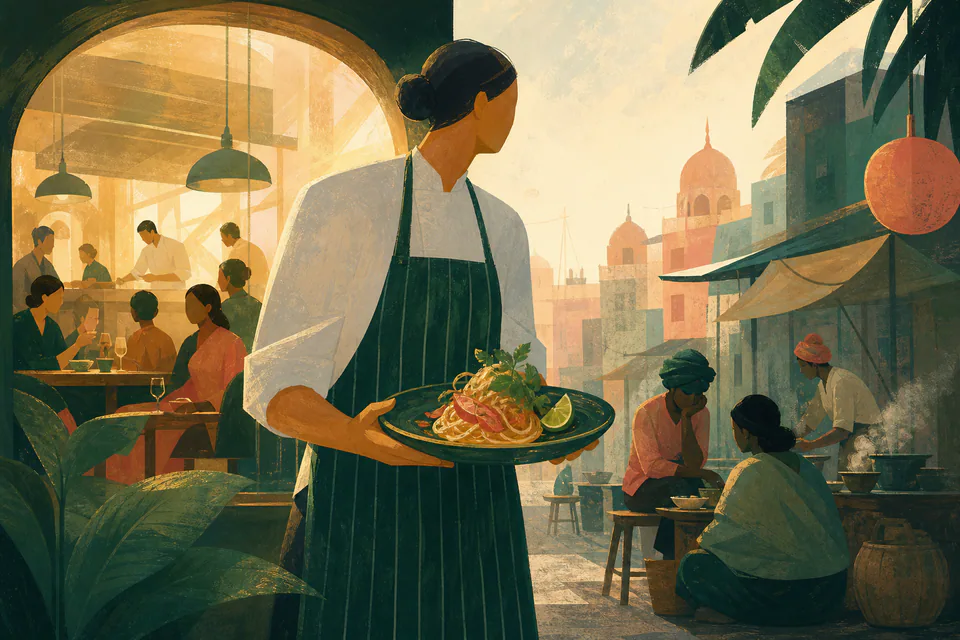
An outsider becomes famous cooking another culture's food. Appreciation or taking over?
A chef becomes known for food from a culture outside their own after years of study with respected cooks. The restaurant is successful, while small businesses run by people from that culture struggle for attention.
When does appreciation become taking opportunity from the people who created a tradition?