Listen through the publisher, then discuss the episode here or arrange an in-person Roundtable. Your city determines where to meet.
Roundtables are designed for groups of four, with a shared subject and room for everyone to speak. Come for discussion, with no dating expectation.
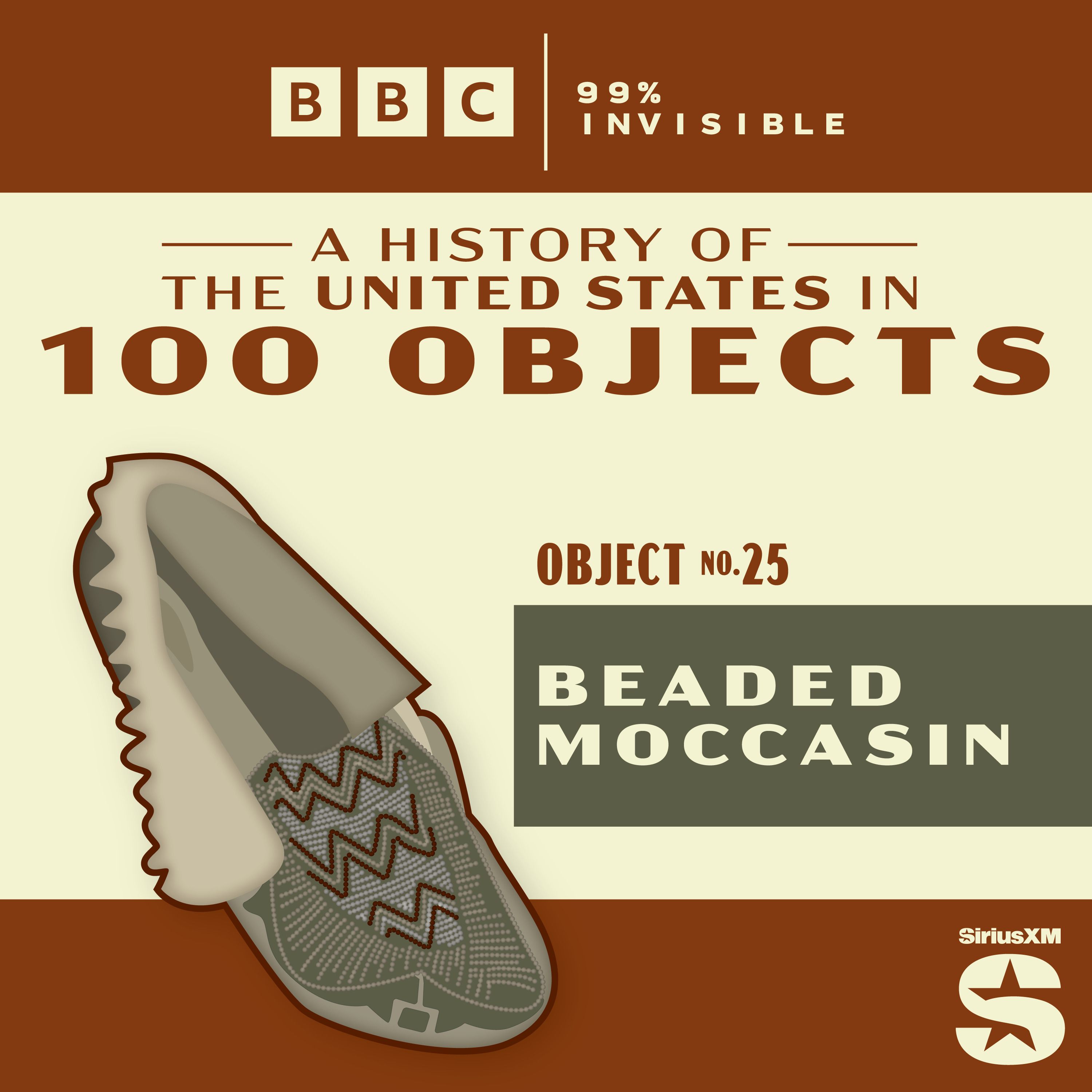
Poet Sarah Kay grew up with a pair of moccasins framed on the dining room wall. She didn’t know much about the beautiful, soft leather shoes with intricate beadwork, except that they had been a gift to her grandmother, June Suzuki, from a student when she taught at a boarding school for Native American children back in the 1940s. June worked there soon after she was released from an internment camp for Japanese-Americans during WWII. Sarah thought this was just a strange, but unrelated series of events. But when Sarah started delving deeper into her grandmother’s story, she discovered a dark current in US history connecting the two events… and a surprising revelation about her grandmother. A History of the United States in 100 Objects (https://99pi.org/100) is a production of 99% Invisible (https://99percentinvisible.org/) and BBC Studios (https://www.bbcstudios.com/). Hosted by Simplecast, an AdsWizz company.
Episode information is provided by the publisher. Listening takes place on the publisher’s service.
The Gilded Age is back! I’m not just talking about the billionaires of today, or the hit HBO series (https://news.artnet.com/art-world/john-singer-sargent-the-gilded-age-hbo-2660432), but a new exhibition (https://www.metmuseum.org/exhibitions/designing-the-gilded-age-drawings-from-the-studios-of-louis-c-tiffany) at the Metropolitan Museum of Art dedicated to the spectacular designs of Louis Comfort Tiffany (https://news.artnet.com/art-world/louis-comfort-tiffany-met-nassau-market-2799918). That name will ring a bell for anyone with a passion for decorative arts. Around the turn of the 20th century, Tiffany and his studio revolutionized the field, creating dazzling stained-glass windows, lamps, and other decorative objects. These works were marvels of their time, transforming private homes and public buildings. Today, they’re touchstones of American decorative arts and remain highly sought-after by collectors. The Met's exhibition takes us behind the scenes of these enduring designs. I
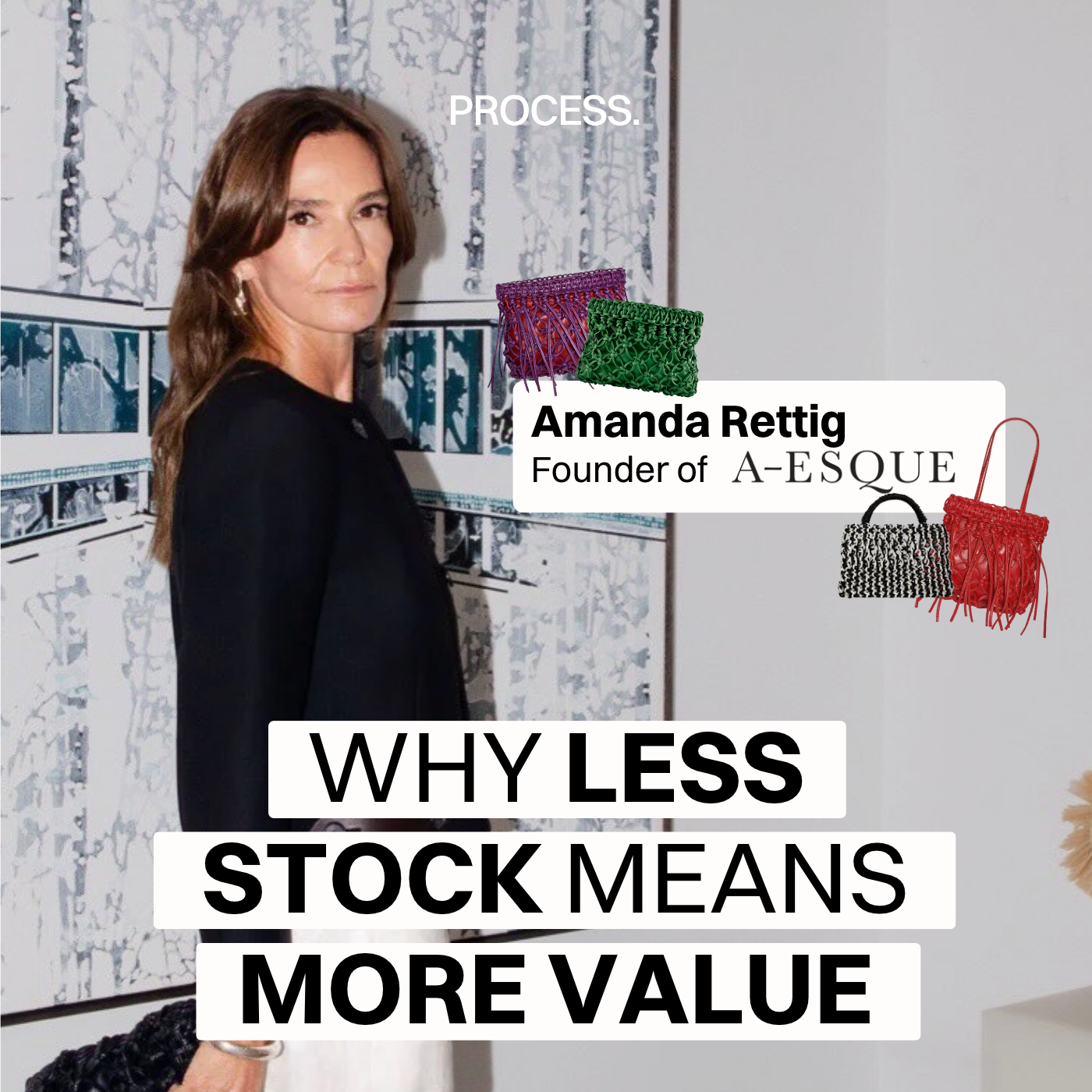
“The only time I would get scared is if I didn’t really believe in something.” - Amanda Rettig Australian designer and founder Amanda Briskin-Rettig has spent 30 years building fashion brands. She founded Mimco in 1996, sold it in 2007, and 13 years ago started A-esque, a self-funded leather goods brand handmade in small batches in Melbourne. Its philosophy is simple: build slowly, create intentionally, and make things that last. In this episode, Amanda shares how to start a fashion brand and grow it sustainably. She covers product development and product architecture, small-batch manufacturing inspired by Toyota’s lean model, and how to avoid excess inventory, deadstock and discounting. She also talks about local manufacturing, building a direct-to-consumer business, brand storytelling, collaborations, and what she learned from building and selling a business. If you want to start a handbag or accessories brand, build a sustainable fashion business, or grow a brand without compromisin
What happens when you spend your working life confronting death? Does it change the way you think about home and the objects inside it? Lucy Easthope is the UK’s leading authority on recovering from disaster, and the bestselling author of When the Dust Settles and Come What May. She tells me about growing up in a house that was constantly being renovated, and how witnessing the aftermath of the Herald of Free Enterprise disaster and the tragedy at Hillsborough shaped her life's work. We explore why the most ordinary possessions can become our most precious, from chewed biros to burnt debit cards, and what happens to our sense of home when everything familiar is suddenly taken away. We also discuss how Lucy has created a sanctuary for her own family, the box of irreplaceable possessions she keeps, and the letters she secretly writes to her daughters. This is a conversation about the objects that carry our memories, the fragility of life, and why home, in the end, is about the people we
From spoiled 18th-century sausages to modern off-label injections in the scrotum, scalp, and fingertips, botulinum toxin has come a long way since its cosmetic debut. In this episode, Dr Emma Craythorne and Dr Ellie Rashid pull back the curtain on the most unexpected medical and aesthetic applications of Botox and reveal the one place you should never let anyone inject you. Emma and Ellie trace how a paralytic foodborne toxin became medicine's most versatile neuromodulator, acting on pain receptors, blood vessels, and oil glands far beyond surface wrinkles. Plus, they examine the clinical reality of "Scrotox" and "Barbie Tox," share surprising trial data linking frown-line injections to improved depression symptoms, and break down a recent UK hospital emergency involving counterfeit, unlicensed Korean toxin. Let us know your thoughts in the comments Send us your questions [email protected] Episode Highlights: The Origins of Botulinum Toxin: How 18th-century sausage poisoning and 1980s
Consigned by Quincy Lee Starring Michelle Weiser Jarret Griffis Laura Lockwood Kirsty Campbell Featuring Stephen Knowles as The Antique Dealer **Many thanks for patronizing our curious little establishment through the Aura Frames link below. Your continued support helps keep the lamps lit and the shelves full of peculiar treasures. We are most grateful. For a limited time, visit auraframes.com and get yourself up to 50 bucks off Select Frames, plus an additional $5 off your order with the promo code HAPPENINGS. That's auraframes.com promo code HAPPENINGS. https://auraframes.com Theme music by The Newton Brothers Produced by Kevin Seaman Additional music by CO.AG (http://co.ag/) ([email protected]) Clement Panchout Vivek Abhishek LIKE them on FACEBOOK: https://rb.gy/nhgn0i Hosted by Simplecast, an AdsWizz company.
Anthony opens with a crash course on the Booker Prize before welcoming poet and novelist Luke Kennard to discuss his novel on the Booker Prize short list, ‘Black Bag,’ the story of a struggling actor hired to sit silently inside a leather bag during university lectures. The guys explore what it’s like to be short-listed for the Booker, the case for taking comedy seriously, and the real-life experiment that inspired the novel. They also discuss the history of the male loneliness epidemic, the indignities of acting, and whether men should try sitting in a bag before starting a podcast. (00:00) - Open: The Booker Prize 101 (09:23) - Introduction: Poetry, Prose, and Finding Success (18:55) - Chapter 1: Being Short-Listed for the Booker Prize (29:35) - Chapter 2: ‘Black Bag,’ the Mere-Exposure Effect, and Tasteful Comedy (54:03) - Chapter 3: Jeselnik Book Club Gauntlet (1:02:48) - Chapter 4: One Additional Question—Are Leather Pants Cool? (1:06:04) - Acknowledgments: Luke’s gift and book re
A credit score is essentially a three digit number that here in the US usually ranges from 300-850. It's a metric that lenders can use to predict your ability to pay back a loan. The higher the number, the more likely you are to be approved for lines of credit. In the United States, your credit score decides where you can live, what car you can drive and whether you can get a loan. It’s supposed to be objective—a precise, omniscient accounting of your financial health, but what started as a simple tool for lenders ended up embedding itself in the lives of most Americans, and feeding the same bias it claimed to solve. Hosted by Simplecast, an AdsWizz company.
In 1979, President Jimmy Carter took to the roof of the White House to announce the installation of 32 solar panels. In that speech, he outlined all the things that they could become: a curiosity, a museum piece, one of our nation's most potent and enduring symbols of a road not taken, or the start of a great adventure. They would become all but the last of those things…but why? Journalist and environmental activist Bill McKibben (https://billmckibben.com/) takes Roman Mars through the story of how a president showed the American people a powerful new technology promising abundant cheap energy and why Americans shrugged. A History of the United States in 100 Objects (https://99pi.org/100) is a production of 99% Invisible (https://99percentinvisible.org/) and BBC Studios (https://www.bbcstudios.com/). Hosted by Simplecast, an AdsWizz company.
Jan Todd was considered by many to be the strongest woman in the world back in the 1970s. She set world records, lifted the Dinnie Stones in Scotland, and wrote the first rulebook for women's powerlifting. Then she became a historian, and uncovered a lost generation of strong women who came before her. For more, check out Bonnie Tsui (https://www.bonnietsui.com/)'s book, On Muscle (https://bookshop.org/p/books/on-muscle-the-stuff-that-moves-us-and-why-it-matters-bonnie-tsui/f4c7ee52390cb056?affiliate=1882&ean=9781643753089). Hosted by Simplecast, an AdsWizz company.
Residents should help decide which activities are allowed in shared public spaces.
Share your view, then see how readers voted. No sign-in required. This poll is shared across stories.
Do you agree or disagree?
Common Quandary
A Common Quandary to discuss
Another conversation to explore, separate from this news story.
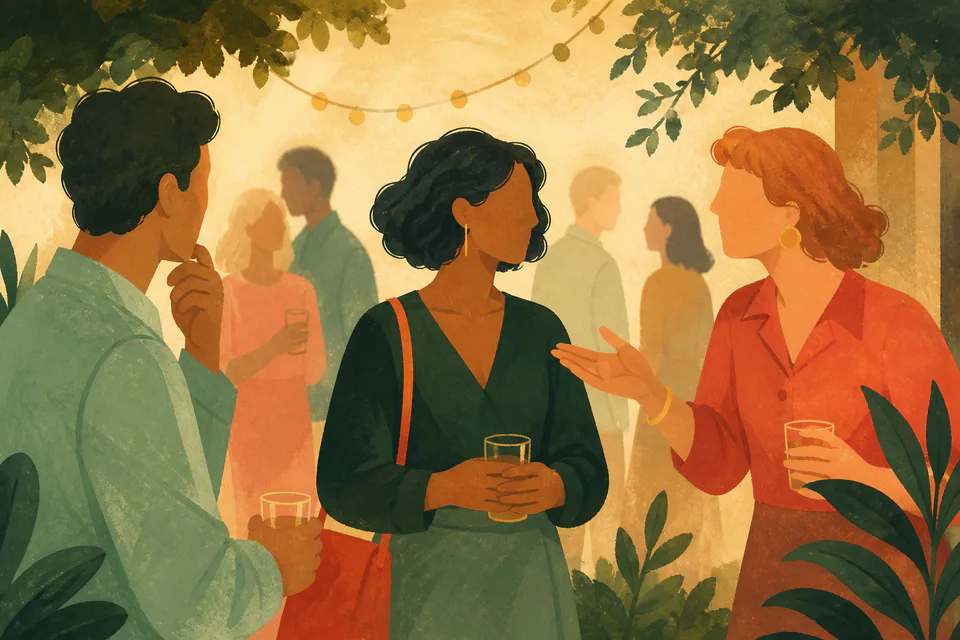
An old friend refuses to use someone's new name. Do you correct them at the reunion?
At a reunion, an old friend repeatedly uses the name a former classmate had years ago. They say shared history gives the old name affectionate meaning; the classmate has clearly introduced themselves with a different name.
When does preserving your shared past deny who someone is now?