Listen through the publisher, then discuss the episode here or arrange an in-person Roundtable. Your city determines where to meet.
Roundtables are designed for groups of four, with a shared subject and room for everyone to speak. Come for discussion, with no dating expectation.
A credit score is essentially a three digit number that here in the US usually ranges from 300-850. It's a metric that lenders can use to predict your ability to pay back a loan. The higher the number, the more likely you are to be approved for lines of credit. In the United States, your credit score decides where you can live, what car you can drive and whether you can get a loan. It’s supposed to be objective—a precise, omniscient accounting of your financial health, but what started as a simple tool for lenders ended up embedding itself in the lives of most Americans, and feeding the same bias it claimed to solve. Hosted by Simplecast, an AdsWizz company.
Episode information is provided by the publisher. Listening takes place on the publisher’s service.
Merriam-Webster's Word of the Day for November 19, 2026 is: upbraid • \up-BRAYD\ • verb To upbraid someone is to speak to them in an angry or critical way in response to something they have done wrong—in other words, to scold them. // The teacher upbraided the class after discovering the chalkboard erasers had been clapped all over the walls. See the entry > (https://www.merriam-webster.com/dictionary/upbraid) Examples: “An industrious ant spends all summer gathering food for the cold months, while a lazy grasshopper dances and sings. Once winter hits, the grasshopper is cold and hungry, and goes begging for food from the ant, who refuses to share any of its bounty, upbraiding the grasshopper for failing to plan.” — David A. Graham, The Atlantic, 17 Apr. 2026 Did you know? First things first: do not confuse upbraid with topknot lest you be upbraided for it. Topknot is a noun referring to a hairstyle, while upbraid is a verb (and an ancient one at that) meaning “to criticize or scold se
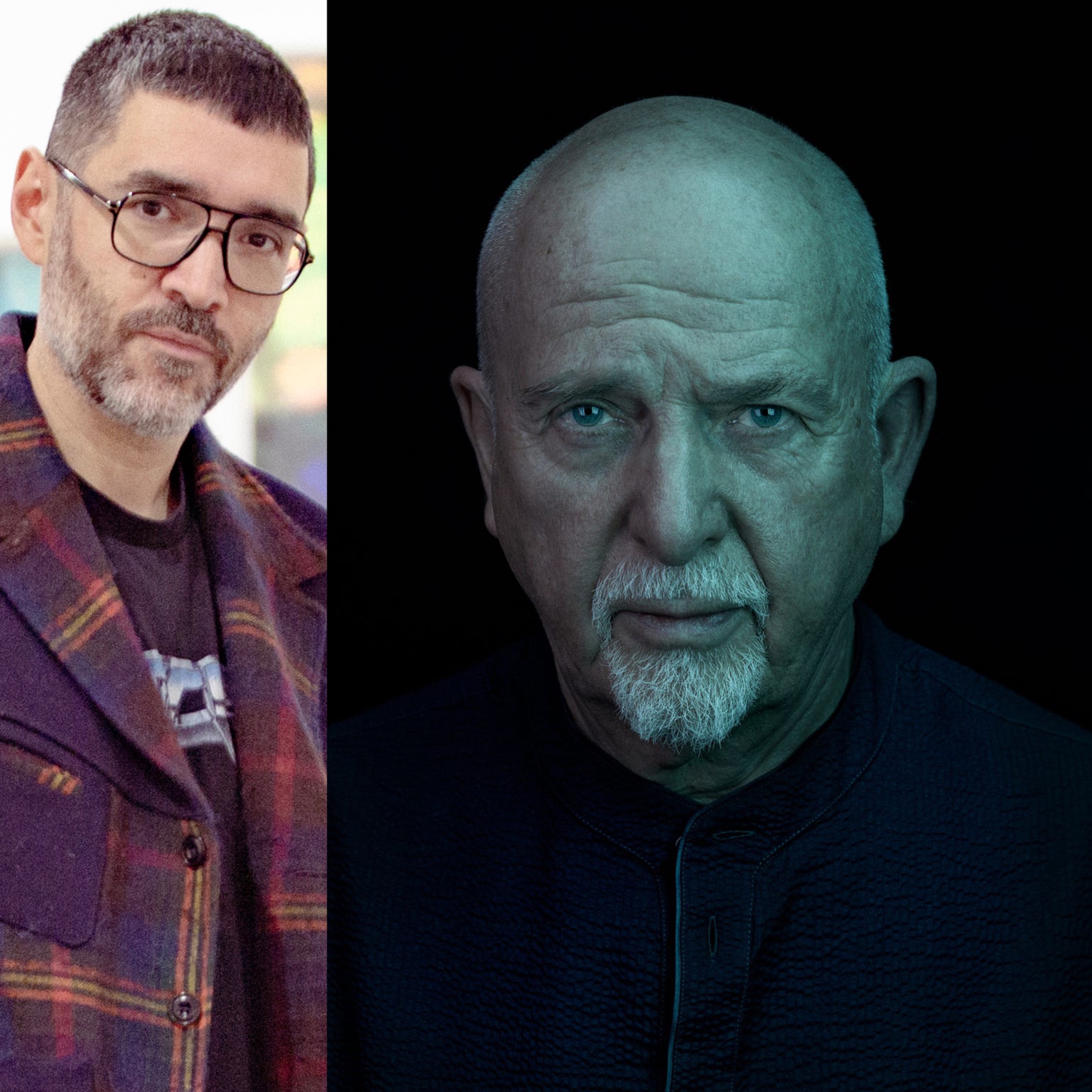
It’s episode 400 of @TalkArt podcast! To celebrate Robert meets PETER GABRIEL, singer, songwriter, producer, musician… ICON! We discuss his inspiring new album o\i and his lifelong passion for art and collaborating with visual artists across six decades including Helen Chadwick, Cathy de Monchaux, Nadav Kander, Ai Weiwei, Cornelia Parker and more. Following a year in which Peter Gabriel has released a new song on every full moon, the 27 November sees the release of his new studio album, o\i, the follow up to his critically acclaimed album of 2023, i/o, a number 1 in the UK album chart. Peter Gabriel returns with a brand-new collection of songs after a mere three years – his shortest gap between studio albums since the early 1980s. o\i is a companion piece to its reflected name-sake i/o expanding on many of the same themes: our relationship with nature, the passing of time, the increasing influence of technology in our lives and our place in the world; “Trying to get a handle on where y
This week on the podcast, Zach Kazan welcomes Cait Bazemore back to the show for another conversation about collecting. This time, they’re discussing the importance of the people behind the brands, and how that informs (or does not inform) how we feel about the watches themselves. We’re very fortunate in the watch industry to be able to get to know brand founders and the people who work at the brands we love, and that naturally has an impact on how we see the watches, rightly or wrongly. But with the rise of shows like Windup and other watch industry events, and of course the shrinking of all of our lives thanks to social media, more and more enthusiasts are getting to know these people on a personal level. How much does that matter? Is it possible to separate the watch from its maker? Let us know in the comments if getting to know someone behind a brand has had an impact on the watches you’ve chosen to collect, we’d love to hear your thoughts. Show Notes [VIDEO] Review: the echo/neutr
News out of Santa Fe, New Mexico -- On September 2022, 38 year old Daniel Reyes had dinner with friends downtown, left Carmen's restaurant alone that night, and wouldn’t be seen again for six months. But what started as a tragic, perplexing missing persons case turned into a homicide investigation — an investigation that would be solved because of a clue that had been sitting there all along, for six months, like the tell tale heart in digital form. Crime Adjacent Live Episode 598: The Venmo Murder, told live in Charlotte during our tour. OK, profilers. Can you solve an unsolvable murder? Join host and serial killer survivor Chase Patrick live on stage for Crime Adjacent, the world’s biggest true crime podcast. Every week, at shows across the country, Chase reopens the most haunting, enduring mysteries from the grim underbelly of American true crime and challenges you to solve them. “An atmospheric and immersive podcast where true crime and psychological thrillers intersect.” — Earwort
From spoiled 18th-century sausages to modern off-label injections in the scrotum, scalp, and fingertips, botulinum toxin has come a long way since its cosmetic debut. In this episode, Dr Emma Craythorne and Dr Ellie Rashid pull back the curtain on the most unexpected medical and aesthetic applications of Botox and reveal the one place you should never let anyone inject you. Emma and Ellie trace how a paralytic foodborne toxin became medicine's most versatile neuromodulator, acting on pain receptors, blood vessels, and oil glands far beyond surface wrinkles. Plus, they examine the clinical reality of "Scrotox" and "Barbie Tox," share surprising trial data linking frown-line injections to improved depression symptoms, and break down a recent UK hospital emergency involving counterfeit, unlicensed Korean toxin. Let us know your thoughts in the comments Send us your questions [email protected] Episode Highlights: The Origins of Botulinum Toxin: How 18th-century sausage poisoning and 1980s
2014 GANYMEDE CONTENTS JOHN BATCHELOR SHOW 11-20-2026 California Storms Train Robberies City Politics — Part One Jeff Bliss reports that severe Pacific storms are dumping heavy snow across Lake Tahoe while driving massive coastal surges against the sand berms protecting beaches. Meanwhile, Los Angeles Mayor-elect Nithya Raman faces mounting criticism over thousands of missed votes, and police have apprehended a gang that stole twenty million dollars in goods from moving freight trains. (1) Beatles Vegas Historic Atomic Tests Formula — Part Two Jeff Bliss recalls how, in August 1964, the Beatles transformed Las Vegas entertainment by moving from the small Congo Room to the Convention Center for sixteen thousand fans. Archival footage from 1957 shows unwitting spectators on Fremont Street watching atmospheric nuclear tests, while today's Las Vegas hosts thrilling Formula Oneraces. (2) Iranian Conflict Regime Change War Powers — Part One Richard Epstein analyzes the military clashes betwe
In 1979, President Jimmy Carter took to the roof of the White House to announce the installation of 32 solar panels. In that speech, he outlined all the things that they could become: a curiosity, a museum piece, one of our nation's most potent and enduring symbols of a road not taken, or the start of a great adventure. They would become all but the last of those things…but why? Journalist and environmental activist Bill McKibben (https://billmckibben.com/) takes Roman Mars through the story of how a president showed the American people a powerful new technology promising abundant cheap energy and why Americans shrugged. A History of the United States in 100 Objects (https://99pi.org/100) is a production of 99% Invisible (https://99percentinvisible.org/) and BBC Studios (https://www.bbcstudios.com/). Hosted by Simplecast, an AdsWizz company.
Jan Todd was considered by many to be the strongest woman in the world back in the 1970s. She set world records, lifted the Dinnie Stones in Scotland, and wrote the first rulebook for women's powerlifting. Then she became a historian, and uncovered a lost generation of strong women who came before her. For more, check out Bonnie Tsui (https://www.bonnietsui.com/)'s book, On Muscle (https://bookshop.org/p/books/on-muscle-the-stuff-that-moves-us-and-why-it-matters-bonnie-tsui/f4c7ee52390cb056?affiliate=1882&ean=9781643753089). Hosted by Simplecast, an AdsWizz company.
On August 20th, 1857 a ship set sail from the Port of San Francisco with 600 people and thousands of pounds of gold. That gold was destined for the vaults of New York City banks, but it never made it. Instead, the ship sank to the bottom of the ocean, taking all that gold with it. Executive Producer Annie Brown sits down with Roman Mars to tell the story of the sinking of the SS Central America and the gold that sparked the first global financial panic, helped fuel the Civil War, and—over a century later—ruined one man’s life. A History of the United States in 100 Objects (https://99pi.org/100) is a production of 99% Invisible (https://99percentinvisible.org/) and BBC Studios (https://www.bbcstudios.com/). Hosted by Simplecast, an AdsWizz company.
Retraining programs should provide financial support as well as new skills.
Share your view, then see how readers voted. No sign-in required. This poll is shared across stories.
Do you agree or disagree?
Common Quandary
A Common Quandary to discuss
Another conversation to explore, separate from this news story.
You have outgrown a lonely friend. Do you keep inviting them anyway?
An old friend keeps asking to join your newer social circle. They have done nothing wrong, but you no longer enjoy spending time together and suspect they have few other close relationships.
Can compassion require maintaining a friendship you no longer choose?