Listen through the publisher, then discuss the episode here or arrange an in-person Roundtable. Your city determines where to meet.
Roundtables are designed for groups of four, with a shared subject and room for everyone to speak. Come for discussion, with no dating expectation.
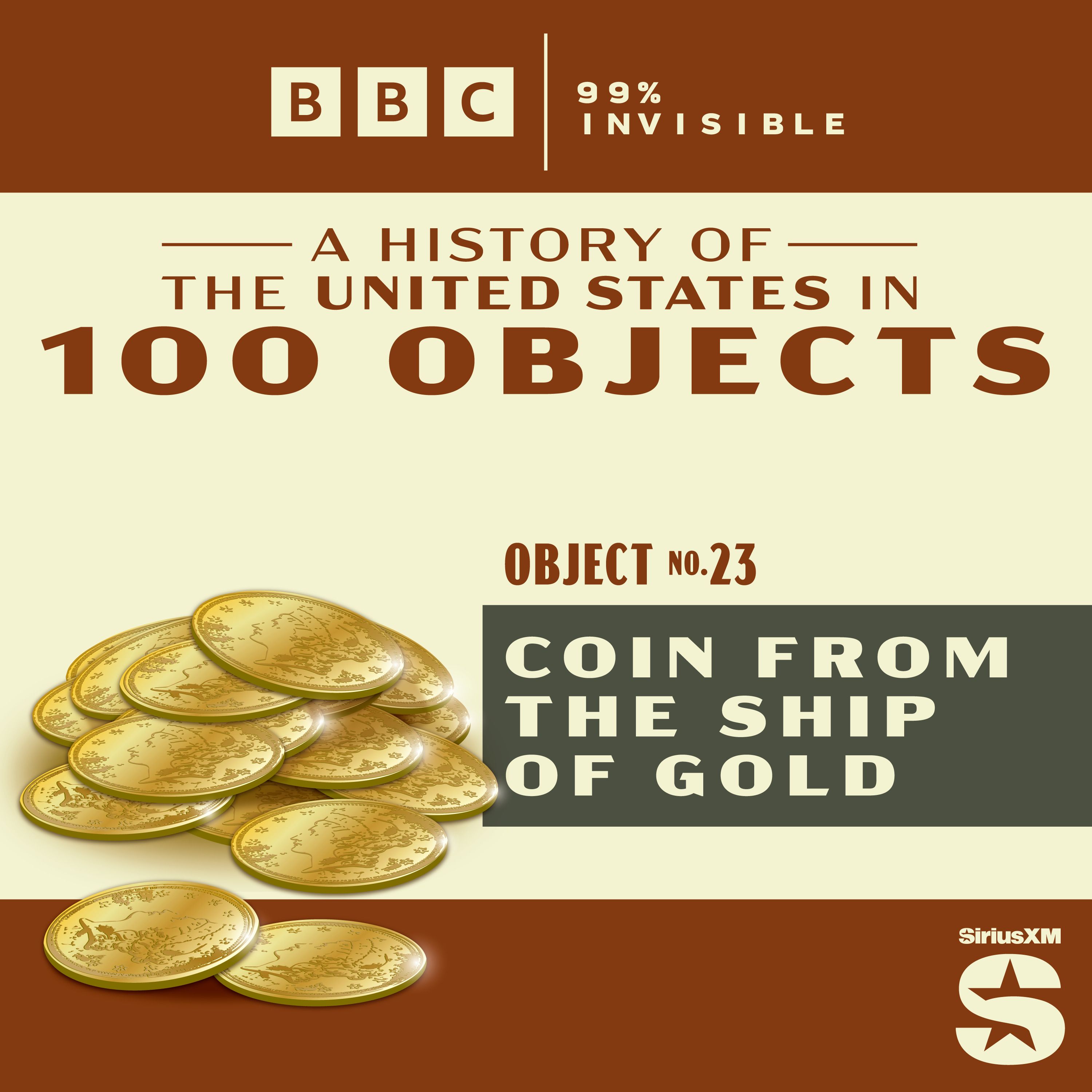
On August 20th, 1857 a ship set sail from the Port of San Francisco with 600 people and thousands of pounds of gold. That gold was destined for the vaults of New York City banks, but it never made it. Instead, the ship sank to the bottom of the ocean, taking all that gold with it. Executive Producer Annie Brown sits down with Roman Mars to tell the story of the sinking of the SS Central America and the gold that sparked the first global financial panic, helped fuel the Civil War, and—over a century later—ruined one man’s life. A History of the United States in 100 Objects (https://99pi.org/100) is a production of 99% Invisible (https://99percentinvisible.org/) and BBC Studios (https://www.bbcstudios.com/). Hosted by Simplecast, an AdsWizz company.
Episode information is provided by the publisher. Listening takes place on the publisher’s service.
The Gilded Age is back! I’m not just talking about the billionaires of today, or the hit HBO series (https://news.artnet.com/art-world/john-singer-sargent-the-gilded-age-hbo-2660432), but a new exhibition (https://www.metmuseum.org/exhibitions/designing-the-gilded-age-drawings-from-the-studios-of-louis-c-tiffany) at the Metropolitan Museum of Art dedicated to the spectacular designs of Louis Comfort Tiffany (https://news.artnet.com/art-world/louis-comfort-tiffany-met-nassau-market-2799918). That name will ring a bell for anyone with a passion for decorative arts. Around the turn of the 20th century, Tiffany and his studio revolutionized the field, creating dazzling stained-glass windows, lamps, and other decorative objects. These works were marvels of their time, transforming private homes and public buildings. Today, they’re touchstones of American decorative arts and remain highly sought-after by collectors. The Met's exhibition takes us behind the scenes of these enduring designs. I
We're back from London and sharing highlights from our trip, including why The Real Housewives of London is reality TV gold and deserves a spot on your watchlist! Plus, we're diving into the latest Real Housewives of Salt Lake City drama as tensions between Angie Katsanevas and Mary Cosby reach a boiling point, while Bronwyn Newport calls out Todd. Visit Seagrass Co. (https://seagrassco.com/) Watch Up and Adam! (https://youtube.com/@UpandAdamLive) Socials Instagram: https://instagram.com/upandadamlive/ Facebook: https://facebook.com/upandadamlive Twitter: https://twitter.com/upandadamlive TikTok: https://www.tiktok.com/@upandadamlive Merch https://shop.upandadamlive.com (https://shop.upandadamlive.com/) Inquiries [email protected] Disclaimer All content is protected under Fair Use (Copyright Act 1976).
A vanish with no coin, no sound and no gimmick should feel impossible, yet Chris James swears it’s one of the strongest things he does. Chris runs Alakazam USA, ships orders at warp speed and still finds time to create brutally practical close-up magic. When we finally get him on Desert Island Tricks, he brings a pocket-first philosophy: carry less, know it better and hit people with effects that look like real magic in the wild. We walk through the material Chris actually relies on, starting with a slop shuffle Triumph that weaponises messiness for clarity, then jumping into worker favourites like NFW (Ace) for fast packet magic and David Regal’s All Alone for an invisible deck style miracle with a blank-deck kicker. If you love coin magic, Chris breaks down why coin sets matter as utility engines, not one-off props, highlighting the Mirage Coin Set and Spitfire for visual, in-the-hands object changes. Then we get honest about the thing that sabotages more performances than bad techni
Now this is a story all about how my life got flipped, turned upside down, and I'd like to take a minute, just sit right there, I'll tell you how I became Heidi: Girl of the Alps. For this episode, Eleanor and Alasdair read Johanna Spyri’s best-selling children’s classic and asked some tough questions. Can a manic pixie dream girl survive on a diet of bread rolls and goats’ milk? And if Heidi is such a big Swiss cheese, why does everyone think she’s blonde? Content Description: References to ableism. Some Nazi gold.
This week the Deadpod returns to the Providence Civic Center for the second set of the November 4, 1979 show. Last week's first set had four songs that were only a few months old, and set two opens with one that was brand new. This is the first Alabama Getaway the Dead ever played. It already sounds finished on its first night, and it went on to be a regular rocker through most of the 1980s. Greatest Story Ever Told follows. The band had just brought it back in 1979 after more than four years away, and the two songs were often paired after this. Ship of Fools slows things down before Estimated Prophet leads into He's Gone. Instead of the usual opening, Jerry, Brent and Bobby trade licks on the riff that normally comes near the end of He's Gone, then settle into the song. The jam that follows goes in several directions, with a few sudden bursts of speed, before Space and Drums. The Other One and Wharf Rat carry the late part of the set, and Around and Around and U.S. Blues close the nig
What happens when you spend your working life confronting death? Does it change the way you think about home and the objects inside it? Lucy Easthope is the UK’s leading authority on recovering from disaster, and the bestselling author of When the Dust Settles and Come What May. She tells me about growing up in a house that was constantly being renovated, and how witnessing the aftermath of the Herald of Free Enterprise disaster and the tragedy at Hillsborough shaped her life's work. We explore why the most ordinary possessions can become our most precious, from chewed biros to burnt debit cards, and what happens to our sense of home when everything familiar is suddenly taken away. We also discuss how Lucy has created a sanctuary for her own family, the box of irreplaceable possessions she keeps, and the letters she secretly writes to her daughters. This is a conversation about the objects that carry our memories, the fragility of life, and why home, in the end, is about the people we
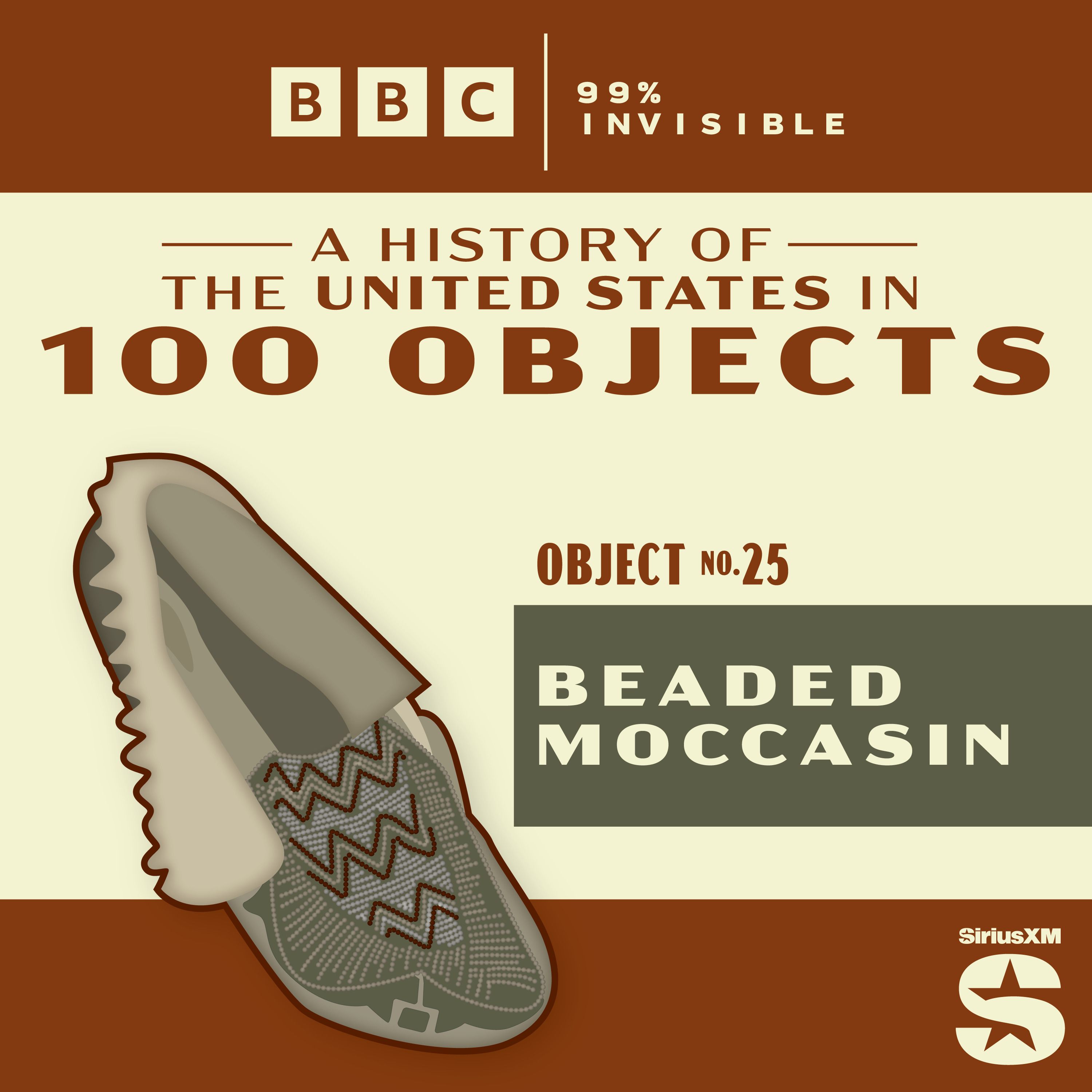
Poet Sarah Kay grew up with a pair of moccasins framed on the dining room wall. She didn’t know much about the beautiful, soft leather shoes with intricate beadwork, except that they had been a gift to her grandmother, June Suzuki, from a student when she taught at a boarding school for Native American children back in the 1940s. June worked there soon after she was released from an internment camp for Japanese-Americans during WWII. Sarah thought this was just a strange, but unrelated series of events. But when Sarah started delving deeper into her grandmother’s story, she discovered a dark current in US history connecting the two events… and a surprising revelation about her grandmother. A History of the United States in 100 Objects (https://99pi.org/100) is a production of 99% Invisible (https://99percentinvisible.org/) and BBC Studios (https://www.bbcstudios.com/). Hosted by Simplecast, an AdsWizz company.
A credit score is essentially a three digit number that here in the US usually ranges from 300-850. It's a metric that lenders can use to predict your ability to pay back a loan. The higher the number, the more likely you are to be approved for lines of credit. In the United States, your credit score decides where you can live, what car you can drive and whether you can get a loan. It’s supposed to be objective—a precise, omniscient accounting of your financial health, but what started as a simple tool for lenders ended up embedding itself in the lives of most Americans, and feeding the same bias it claimed to solve. Hosted by Simplecast, an AdsWizz company.
In 1979, President Jimmy Carter took to the roof of the White House to announce the installation of 32 solar panels. In that speech, he outlined all the things that they could become: a curiosity, a museum piece, one of our nation's most potent and enduring symbols of a road not taken, or the start of a great adventure. They would become all but the last of those things…but why? Journalist and environmental activist Bill McKibben (https://billmckibben.com/) takes Roman Mars through the story of how a president showed the American people a powerful new technology promising abundant cheap energy and why Americans shrugged. A History of the United States in 100 Objects (https://99pi.org/100) is a production of 99% Invisible (https://99percentinvisible.org/) and BBC Studios (https://www.bbcstudios.com/). Hosted by Simplecast, an AdsWizz company.
Financial products should present potential losses as prominently as potential gains.
Share your view, then see how readers voted. No sign-in required. This poll is shared across stories.
Do you agree or disagree?
Common Quandary
A Common Quandary to discuss
Another conversation to explore, separate from this news story.
Everyone clicks through mandatory training without reading it. May you do the same?
Your employer requires an hour-long annual course whose answers have not changed in years. Coworkers run it in the background and share the quiz answers. Completing it carefully would make you late for actual work with a deadline.
When does pointless compliance excuse pretending to comply?