1117. Insights: Sovereignty vs. resilience - The key forces shaping the future of Europe’s payments infrastructure
49 min
Listen through the publisher, then discuss the episode here or arrange an in-person Roundtable. Your city determines where to meet.
Roundtables are designed for groups of four, with a shared subject and room for everyone to speak. Come for discussion, with no dating expectation.
About this episode: In this episode, recorded in partnership with Enfuce, host Ross Gallagher is joined by Niklas Apellund, Co-Founder of Enfuce, Tom Borgers, CEO and Co-Founder of Walapay, and Victor Mithouard, VP EMEA at Mambu, to explore the future of Europe's payments infrastructure. They discuss the vulnerabilities in today's payment systems, the risks of relying on shared infrastructure, and what it takes to build genuine resilience through redundancy, interoperability and industry collaboration. As Europe pushes for greater control over its payments ecosystem, can it build infrastructure that's not just more independent, but more reliable too? Find out more about Enfuce at https://enfuce.com/ This week's guests: Niklas Apellund, Co-Founder - Enfuce Tom Borgers, CEO & Co-Founder - Walapay Victor Mithouard, VP EMEA - Mambu Links to check out: We're on Substack! About Fintech Insider: Got a question for us? Email [email protected]!
Episode information is provided by the publisher. Listening takes place on the publisher’s service.
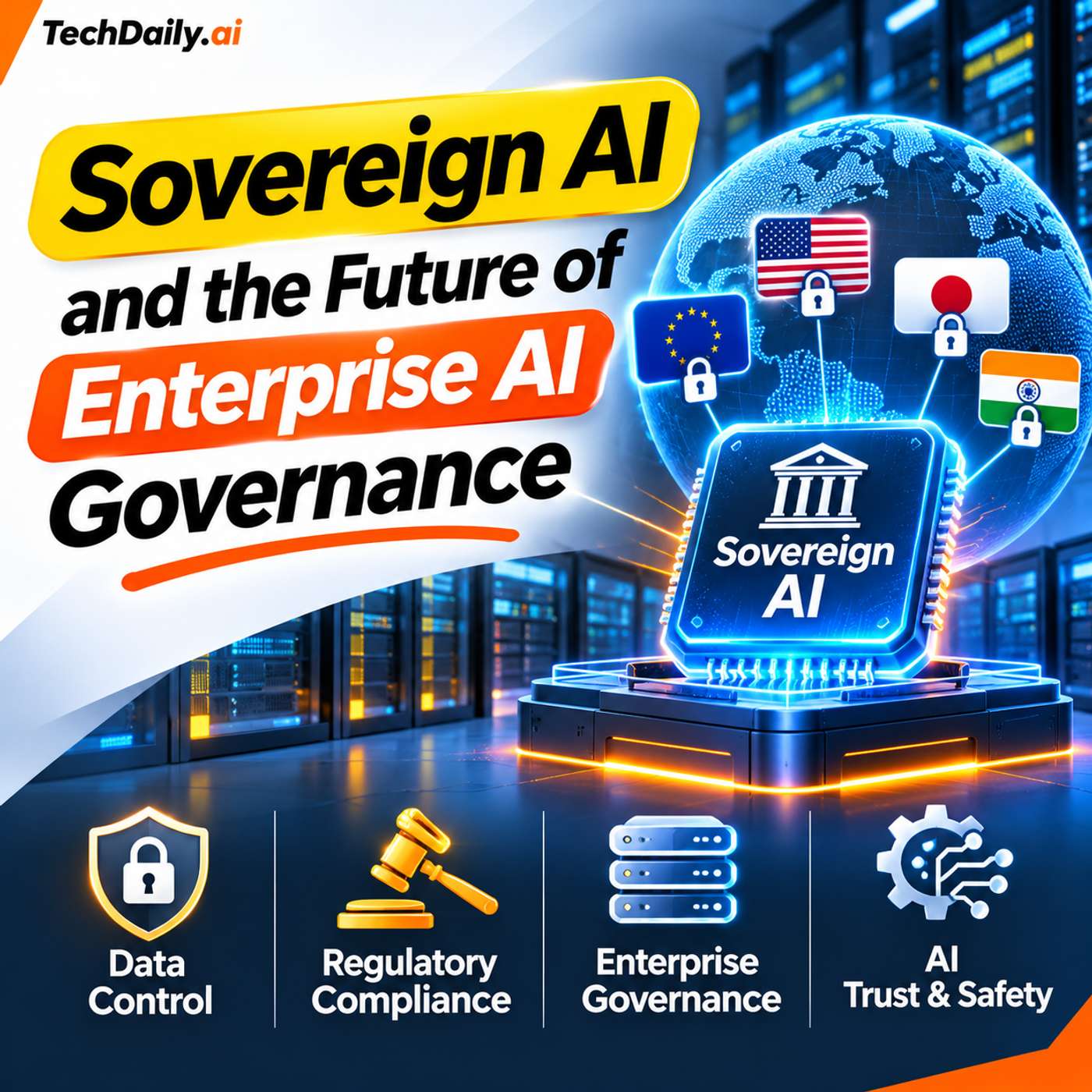
What happens when every department in an organization adopts different AI tools without centralized oversight? As artificial intelligence moves from experimental projects into production environments, fragmented AI adoption can expose businesses to security breaches, compliance violations, data leakage, and operational risks. In this episode of TechDaily.ai, David and Sophia explore sovereign AI and how enterprises can maintain control over their AI infrastructure, data, models, and operations without slowing innovation. The conversation examines why data sovereignty alone is insufficient, how hybrid AI infrastructure enables greater flexibility, and why the emergence of agentic AI demands a fundamental shift in enterprise AI governance. In this episode, we discuss: What sovereign AI means for modern enterprises. The risks of fragmented AI adoption and shadow AI. The differences between data sovereignty and AI sovereignty. Securing AI inference, model deployment, and data processing. H
The Liberation of Now: In this enlightening Alan Watts meditation speech, explore the profound insights that can transform your understanding of mindfulness. Discover how to escape the confines of past regrets and future anxieties, embracing the present moment fully. Alan Watts, a master of elucidation, guides you through a unique perspective on meditation, helping you unlock deeper levels of awareness. Whether you’re a seasoned practitioner or new to meditation, you’ll find practical wisdom and inspiration to enhance your journey. Don't miss this opportunity to elevate your practice and experience true liberation in the now. Listen now to start your transformative journey! #Liberation #Meditation #AlanWatts #Mindfulness #InnerPeace #SelfImprovement #SpiritualGrowth #PresentMoment #MeditationSpeech #Awareness the liberation of now, alan watts meditation speech, meditation, mindfulness, inner peace, self improvement, spiritual growth, present moment, meditation techniques, awareness, me
• Black Friday! Must end Tue Dec 15! Completing our three-part miniseries… JFK’s assassination was ground zero of the conspiracy mindset; the subsequent decades saw it flourish as public trust collapsed – and helped pave the way to Donald Trump. Now, we step into the conspiracist world of Trump himself. In our final episode, Alex Von Tunzelmann is joined by journalist and author Mike Rothschild to explore conspiracy theories in the Trump era: from QAnon’s rise within MAGA – with its unhinged beliefs of a Satan-worshipping cabal of global elites – to Trump’s own baseless claims of election fraud after losing to Joe Biden in 2020. And now, in his second term, some of the conspiracy theories Trump released have begun turning against him. Can he keep control of the forces he set in motion? • Buy Mike’s book The Storm is Upon Us: How QAnon Became a Movement, Cult, and Conspiracy Theory of Everything (https://uk.bookshop.org/a/13277/9781800960459) from our affiliate bookshop and you’ll help
learn how to *Unlock Your Hidden Potential* by shifting your mindset, embracing discipline, and taking full ownership of your future. Jim’s insights challenge the excuses that hold you back and give you the tools to transform possibility into progress. Key Topics: Why potential is unlocked through effort, not talent How discipline overrides motivation and excuses The power of consistency in shaping your future Why self-awareness is key to growth and change Building an environment that fuels your success **Follow, Start listening and let Jim Rohn’s legacy inspire your path forward.** ---
Yannik Schrade says privacy is the prerequisite for sovereign artificial intelligence, and that your AI provider is now your competitor. In this conversation with Andy and Rob, he argues that whoever controls the models and the compute will fight the real battle for self-sovereignty, and that those rules have to be enforced with cryptography rather than promises. He describes Arcium as an encrypted supercomputer, not a chain: inference stays encrypted, no single processor can read a prompt, and privacy no longer has to mean a worse product. He also looks ahead to a world where breakout applications only reach the mainstream if they are private by default. Yannik Schrade is co-founder and CEO of Arcium. Live from the financial capital of the world. Timestamps: 00:00 Intro 01:45 Protectors Can Become The Threat 05:13 Your AI Provider Is Your Competitor 07:20 No Single Machine Reads Your Prompt 09:39 The Internet Is Being Rebuilt Encrypted 11:56 An Encrypted Supercomputer Not A Blockchain
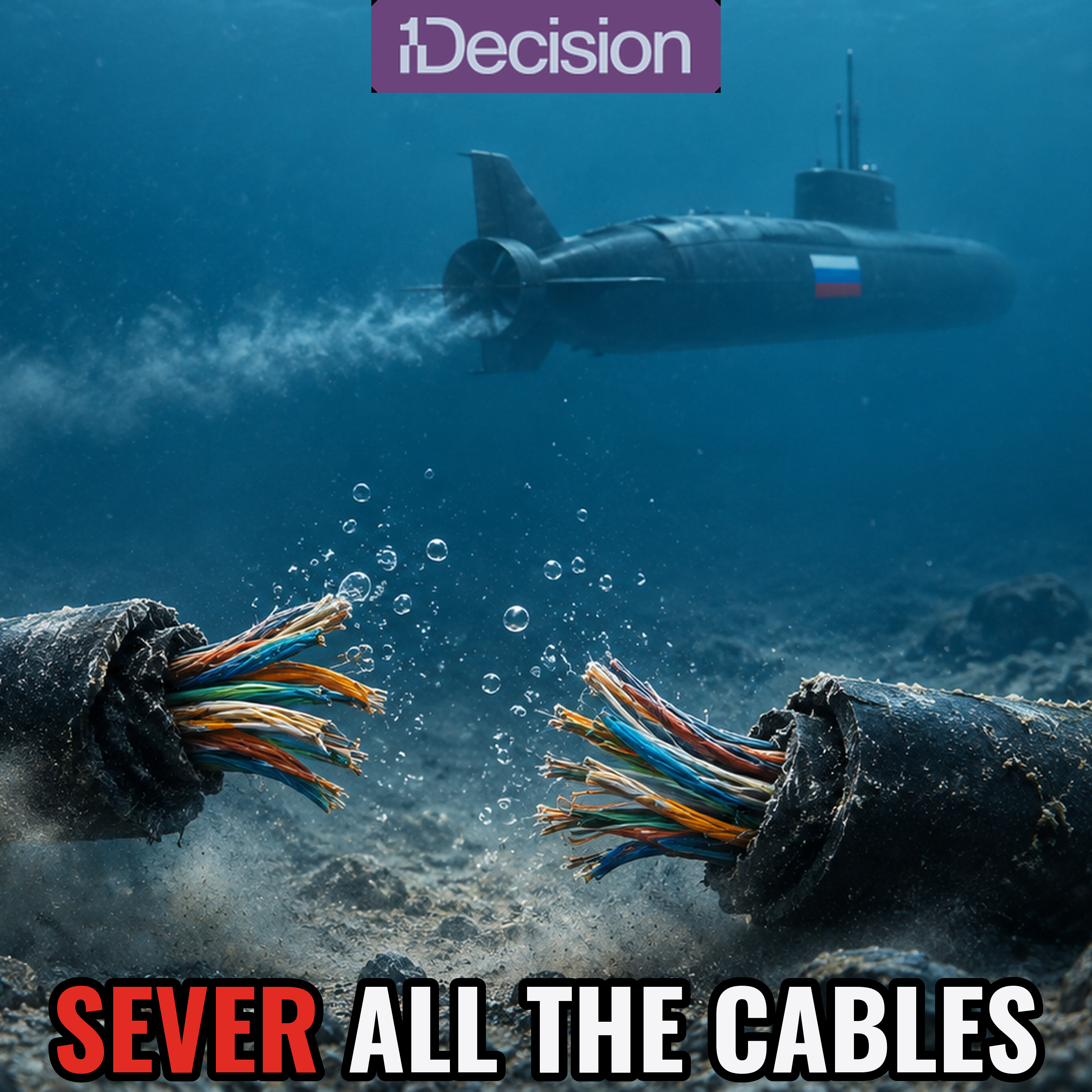
Samanth Subramanian, London-based journalist, managing editor of Equator and author of The Web Beneath the Waves: The Fragile Cables That Connect Our World, joins former MI6 chief Sir Richard Dearlove and guest co-host Rosanna Lockwood to explain the hidden network that carries 95% of all international data traffic. Undersea fiber optic cables are no thicker than a garden hose, and in the deep ocean they are largely unarmored. Subramanian explains why gray-zone warfare, with military boats posing as fishing boats, makes cable cutting deniable, why there is almost no law to stop it in open water, and why Starlink can't replace the cables. He also covers how Amazon, Google, Meta and Microsoft came to control around half of undersea bandwidth, why the internet is splitting into American and Chinese networks, whether cables can be tapped, and how Taiwan is preparing for China to cut its lines. Sir Richard explains why he believes cable cuts around Europe, including one that took the Shetla
About this episode: In this episode, host Benjamin Ensor is joined by Rita Sokorai, Principal Industry Strategist at 11:FS, Vivek Madlani, CEO and Co-Founder of Multiply.AI, and Daniel Wills, Senior Financial Adviser at Plum, to explore the rise of conversational finance and the race to build trusted AI-powered financial assistants. Drawing on new research from 11:FS, they discuss the potential to democratise financial guidance, the challenges of earning customer trust, and how AI could fundamentally reshape financial services distribution. As AI assistants move from answering financial questions to making decisions on our behalf, who will customers trust with their money – and who will own the customer relationship? This week's guests: Rita Sokorai - Principal Industry Strategist at 11:FS Vivek Madlani - CEO and Co- Founder at Multiply.AI Daniel Wills - Senior financial advisor at Plum -- 11:FS’ latest report ‘Conversational finance & the race to build trusted financial assistants’ is
About this episode: Host Ross Gallagher - Head of Consulting at 11:FS - is joined by some great guests to discuss the biggest stories from the world of financial services over the past week. This week’s guests: David Jarvis, CEO and founder of Griffin Megan Caywood, CEO of Caywood AI Paul Williams, founder of DoorID Stories/timestamps: ChatGPT’s new Wallet lets AI agents shop and check out for you (https://techcrunch.com/2026/11/13/chatgpts-new-wallet-lets-ai-agents-shop-and-check-out-for-you/) - (01:17) UK bank Griffin raises $20M Series B for cards and stablecoins (https://dealroom.co/news/172123-uk-bank-griffin-raises-20m-series-b-for-cards-and-stablecoins/)- (18:28) DoorID launches 70-second physical address verification to combat AI identity fraud (https://ffnews.com/news/doorid-launches-70-second-check-to-tackle-ai-identity-fraud-ecc0911a) - (31:54) Anne Boden unveils AI-focused banking venture (https://www.finextra.com/newsarticle/48763/anne-boden-unveils-ai-focused-banking-vent
About this episode: Our expert host David M. Brear, CEO at 11:FS, and co-host Kate Moody, Customer Strategy Director at 11:FS, present a very special edition of Fintech Insider News live from Village Underground in London. Joined by some fantastic guests and our live audience, discussing some of the biggest fintech and financial services stories of the week. Stories covered on the podcast this week include: Revolut reaches a staggering $115 billion valuation following its latest share sale, as it prepares to launch a US bank. But while Revolut continues its global expansion, rivals Monzo and Starling are facing very different challenges. We also explore Claude's new personal finance tool, which lets users connect their financial accounts and ask AI questions about their money. Plus, American Express teams up with Fanatics to launch a credit card featuring customers' favourite sports stars, raising questions about personalisation, loyalty and whether fandom should influence financial de
Mental-health support should be available before a person reaches a crisis.
Share your view, then see how readers voted. No sign-in required. This poll is shared across stories.
Do you agree or disagree?
Common Quandary
A Common Quandary to discuss
Another conversation to explore, separate from this news story.
One slice of pizza remains and everyone is pretending not to want it. Can you take it?
Six friends have been circling the last slice of pizza for twenty minutes. Nobody claims it when you ask, yet two people keep glancing at the box. You are still hungry and paid the same share as everyone else.
Does politeness require leaving something that nobody will openly claim?