English-language podcasts

TechDaily.ai

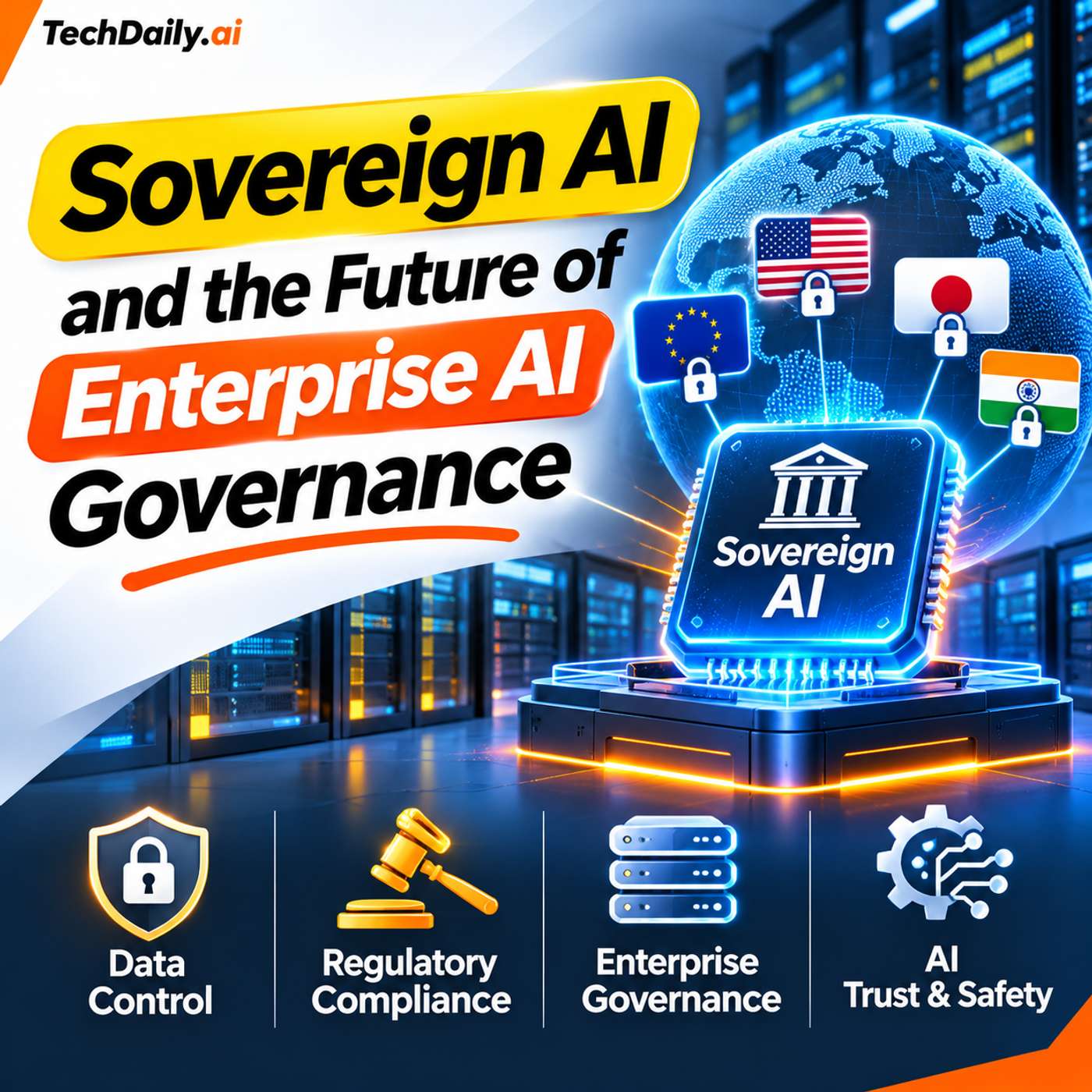
Sovereign AI and the Future of Enterprise AI Governance
21 min

Listen through the publisher, then discuss the episode here or arrange an in-person Roundtable. Your city determines where to meet.

Roundtables are designed for groups of four, with a shared subject and room for everyone to speak. Come for discussion, with no dating expectation.

What happens when every department in an organization adopts different AI tools without centralized oversight? As artificial intelligence moves from experimental projects into production environments, fragmented AI adoption can expose businesses to security breaches, compliance violations, data leakage, and operational risks. In this episode of TechDaily.ai, David and Sophia explore sovereign AI and how enterprises can maintain control over their AI infrastructure, data, models, and operations without slowing innovation. The conversation examines why data sovereignty alone is insufficient, how hybrid AI infrastructure enables greater flexibility, and why the emergence of agentic AI demands a fundamental shift in enterprise AI governance. In this episode, we discuss: What sovereign AI means for modern enterprises. The risks of fragmented AI adoption and shadow AI. The differences between data sovereignty and AI sovereignty. Securing AI inference, model deployment, and data processing. Hybrid AI infrastructure across on-premises and public cloud environments. Kubernetes, containerization, workload portability, and vendor lock-in. Agentic AI and the risks of autonomous decision-making. Role-based access control, API gateways, and AI auditability. Replacing restrictive approval processes with automated governance controls. Building centralized AI platforms with preapproved models and security guardrails. Balancing enterprise AI security, regulatory compliance, and innovation. The future of machine-to-machine AI governance. Sovereign AI isn't about owning every piece of hardware or isolating your organization from the public cloud. It's about retaining the authority to decide where AI workloads run, how sensitive data is processed, which models are deployed, and what autonomous AI agents are permitted to do. As AI agents begin interacting with external organizations, negotiating contracts, and exchanging business-critical information, an important question emerges: How will autonomous AI systems reconcile conflicting governance policies across organizational boundaries? Tune in to TechDaily.ai to discover how businesses can build secure, scalable, and governed AI environments while preserving the freedom to innovate. Want to reach a technology-focused audience? Sponsor this podcast for just $25 and get featured across Apple Podcasts, Spotify, Amazon Music, and more. Visit https://techdaily.ai (https://techdaily.ai/) to get started.

Episode information is provided by the publisher. Listening takes place on the publisher’s service.

Listen at the source ↗

Featured places to meet in Palo Alto, CA

Explore these places and arrange a conversation through ThinkMatch.

City guide for Palo Alto, CA

More from TechDaily.ai

TechDaily.ai

SpaceX’s Million-Satellite AI Plan and Nvidia’s Chip Crisis

14 min

What if the future of artificial intelligence isn't being built in Silicon Valley but in low Earth orbit? And what happens when the semiconductor supply chain powering that future becomes vulnerable to international chip smuggling? In this episode of TechDaily.ai, David and Sophia explore SpaceX’s ambitious vision for a million-satellite orbital AI data center network, the engineering challenges of computing in space, and the growing concerns surrounding Nvidia, semiconductor export controls, and global AI competition. From laser-powered satellite communications to advanced AI chip restrictions, this episode examines the technological, economic, regulatory, and ethical challenges shaping the future of artificial intelligence. In this episode, we discuss: SpaceX’s Star Mind project and its proposed million-satellite constellation. Orbital AI data centers and the future of computing infrastructure. Laser-based satellite communications and Starlink connectivity. Thermal management and coo

Discuss this episode

TechDaily.ai

1Password Security Breach: What Happened and What Was Exposed?

19 min

What happens when cybercriminals can't break through a password manager's encryption, so they target the infrastructure behind it instead? Can sensitive customer data remain secure even when attackers compromise backend systems? In this episode of TechDaily.ai, David and Sophia examine the reported 1Password security incident, exploring how a compromised corporate GitHub account allegedly enabled attackers to infiltrate the company's CI/CD pipeline and access administrative customer data. The conversation examines what information was reportedly exposed, how zero-knowledge encryption protected customer vaults, and why defense-in-depth architecture is critical to minimizing the impact of sophisticated cyberattacks. In this episode, we discuss: The reported 1Password security breach and its attack timeline. How compromised GitHub accounts can threaten enterprise security. CI/CD pipeline vulnerabilities and software supply chain attacks. The administrative customer data reportedly exposed

Discuss this episode

TechDaily.ai

Claude Ship: The Future of Autonomous AI Software Development

21 min

What happens when AI doesn't just write your code but also reviews it, fixes broken builds, resolves merge conflicts, and approves changes without waiting for a human developer? In this episode of TechDaily.ai, host David and AI expert Sophia explore Anthropic's Claude Ship, an AI-powered tool suite designed to automate critical stages of the software development lifecycle. From intelligent code reviews and automated pull request fixes to AI-driven approvals, this conversation examines how autonomous AI agents could transform software engineering, developer productivity, and enterprise code governance. AI coding assistants are already generating thousands of lines of code in minutes. But traditional development pipelines still depend on human reviewers to inspect pull requests, troubleshoot failed CI checks, resolve merge conflicts, and approve deployments. That creates a growing bottleneck between AI-powered code generation and production delivery. Claude Ship aims to address that cha

Discuss this episode

Community Poll

News reports should clearly separate verified facts from the writer's interpretation.

Share your view, then see how readers voted. No sign-in required. This poll is shared across stories.

Do you agree or disagree?

Choose one answer

Common Quandary

A Common Quandary to discuss

Another conversation to explore, separate from this news story.

Everyone exaggerates on dating apps. Are two imaginary inches harmless?

A friend adds two inches to their listed height because they believe filters exclude them before personality has a chance. They plan to be charming enough that a date will not care once they meet in person.

Can deception be a fair response to superficial gatekeeping?

Explore this quandary