English-language podcasts

A Beginner's Guide to AI

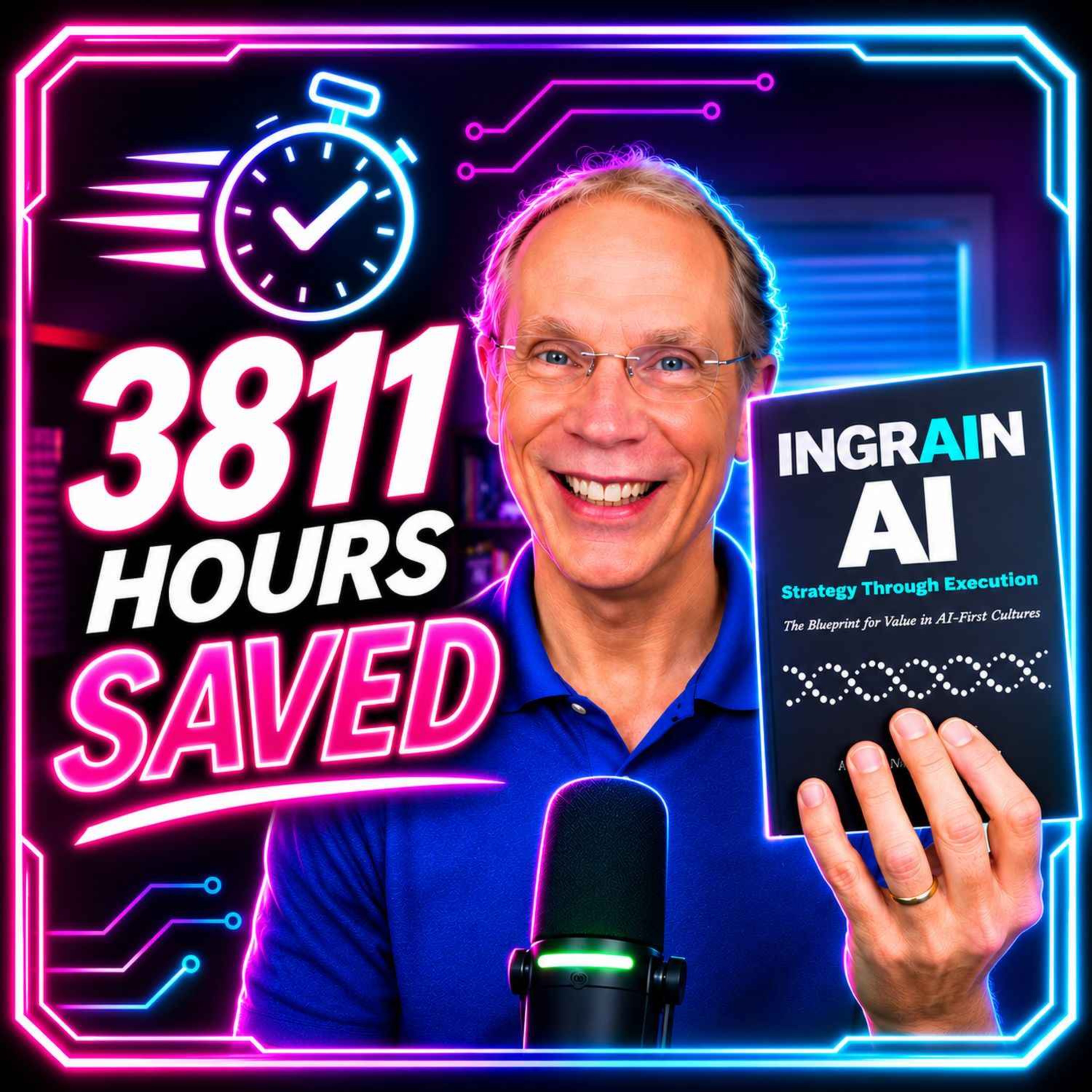
From AI Training to 3,811 Hours Saved - John Munsell is back on the Podcast
64 min

Listen through the publisher, then discuss the episode here or arrange an in-person Roundtable. Your city determines where to meet.

Roundtables are designed for groups of four, with a shared subject and room for everyone to speak. Come for discussion, with no dating expectation.

AI adoption strategy fails when companies provide tools but do not help employees build anything useful. In this episode of Beginner's Guide to AI, Dietmar Fischer speaks with John Munsell, co-founder and CEO of Bizzuka and creator of INGRAIN AI. John shares what he learned from training employees, executives, academics, and operational teams to use AI in their daily work. One two-day university boot camp produced 16 completed AI projects and identified 3,811 annualized hours of potential time savings. The result was not based on generic prompt lessons. Participants worked from their roles, job descriptions, repetitive tasks, approved tools, and real constraints. John explains why optional training often fails, why employees struggle to find useful AI use cases, and why leaders must measure behavior and business impact rather than course completion. He also introduces four work behaviors that affect adoption: doers, administrators, innovators, and connectors. You will learn: Why access to ChatGPT, Claude, or Copilot does not create adoption How role-based AI training turns learning into practical workflows Why companies should track completed projects and time saved How restrictive tools can push employees toward shadow AI Why generic AI output tends toward average How to give AI agents useful work without giving them dangerous authority Why a human-at-the-helm model can balance productivity and control This conversation is useful for executives, founders, consultants, HR and learning leaders, operations teams, and anyone responsible for enterprise AI adoption. Listen now and learn how to move from AI access to measurable business impact. Newsletter Anyone? Tune in to get my thoughts and all episodes. Don't forget to subscribe to our Newsletter: https://beginnersguideto.ai (https://beginnersguideto.ai/) About Dietmar Fischer Dietmar Fischer is a podcaster and AI marketer from Berlin. If you want help with AI strategy or digital marketing, visit: https://argoberlin.com (https://argoberlin.com/) Quotes from the Episode “AI doesn't know excellence, it only knows frequency.”“What people don't realize is that that jar, for us as humans, is Google. And the lid has been lifted.”“Treating everybody like they think and act the same way is a big mistake.” Chapters 00:00 Why AI training needs a process 04:25 Ten levels of AI mastery 09:03 Turning job descriptions into AI use cases 14:05 Why employees must understand the why 26:07 The Google mindset limiting AI adoption 32:14 Four work behaviors that shape adoption 38:30 AI fluency agent risks and human oversight Where to Find the Guest INGRAIN AI: https://ingrain.ai (https://ingrain.ai/) LinkedIn: https://www.linkedin.com/in/jwmunsell Bizzuka: https://www.bizzuka.com (https://www.bizzuka.com/) INGRAIN AI: Strategy through Execution: Official book page (https://ingrain.ai/get-the-book/) Hosted on Acast.

Episode information is provided by the publisher. Listening takes place on the publisher’s service.

Listen at the source ↗

Featured places to meet in Palo Alto, CA

Explore these places and arrange a conversation through ThinkMatch.

City guide for Palo Alto, CA

More from A Beginner's Guide to AI

A Beginner's Guide to AI

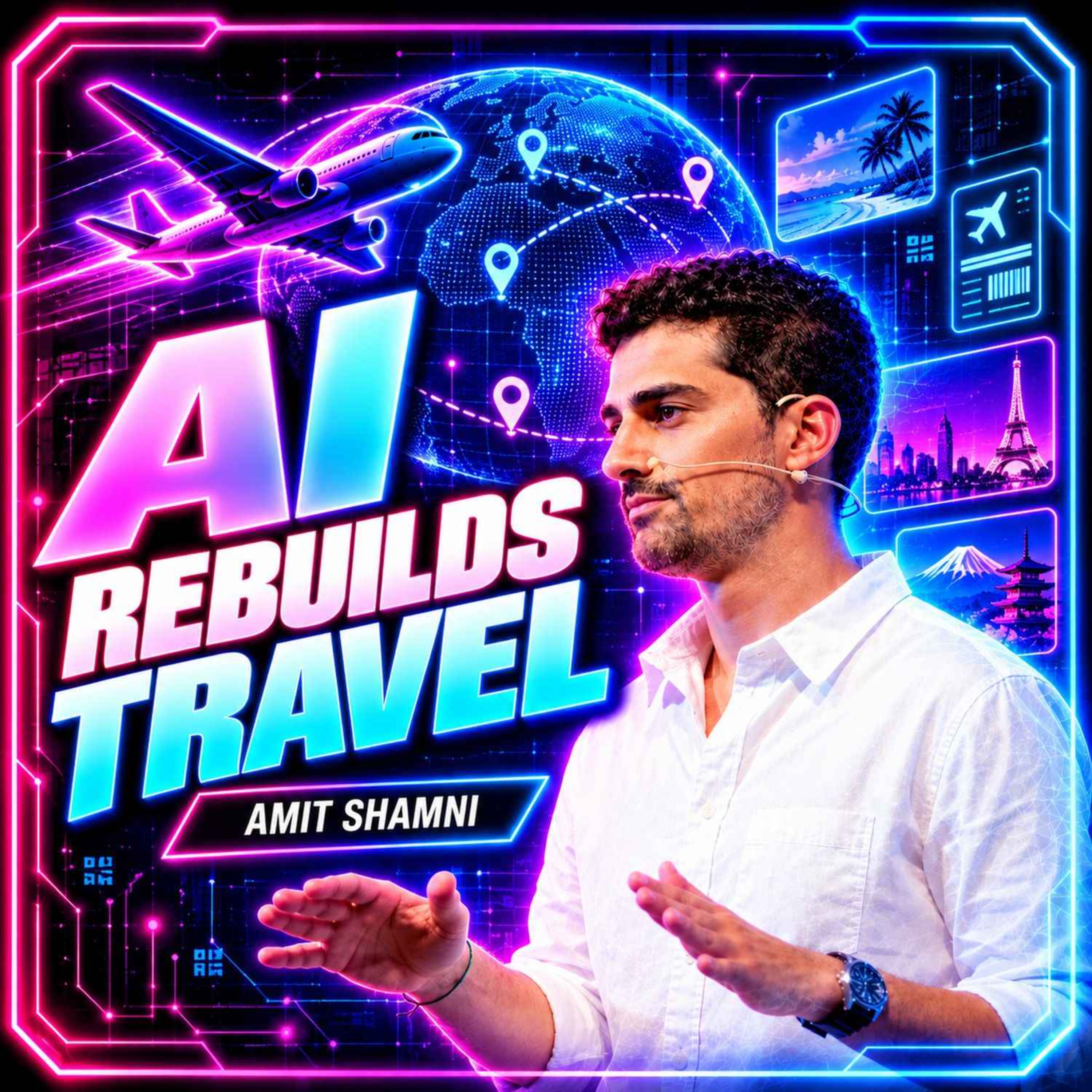
Why AI Travel Needs Infrastructure, Not Better Chatbots - Amit Shamni

38 min

From AI recommendations to autonomous booking and the infrastructure required underneath AI in travel is moving beyond recommendations. The real challenge is making millions of fragmented travel experiences understandable, personalized, available, and actually bookable. In this episode of Beginner’s Guide to AI, Dietmar Fischer talks with Amit Shamni, Co-Founder and CEO of Bridgify, part of HBX Group, about the infrastructure required for the next generation of AI-powered travel. Flights and hotels have become highly centralized. Travel experiences have not. Tours, attractions, concerts, sporting events, museums, and countless other activities remain scattered across different suppliers and booking systems. That creates a major problem for AI. Before an AI agent can recommend and book the right experience, somebody has to normalize the data, identify duplicate products, understand relationships between millions of options, check availability, and determine what is actually relevant to

Discuss this episode

A Beginner's Guide to AI

Stop Shaming AI Users. Start Setting Better Rules

23 min

The Hidden Cost of AI Shaming at Work “I could tell it was written by ChatGPT” has become more than an observation. It is now an accusation. AI shaming is spreading through workplaces, universities, and creative communities. Using artificial intelligence can be treated as evidence of laziness, dishonesty, or missing talent. But does AI-assisted work deserve automatic suspicion? In this episode of A Beginner’s Guide to AI, we examine the line between legitimate accountability and digital gatekeeping. Undisclosed AI-generated work, fabricated information, and unchecked outputs can damage trust. Yet AI can also improve accessibility, help non-native English speakers communicate, support developers, and make skilled employees more productive. The real question is not simply whether someone used AI. We should ask what the AI contributed, what the human contributed, whether the result was checked, and whether anyone was misled. You will also hear the story of a university class in which stud

Discuss this episode

A Beginner's Guide to AI

The Death of the Entrepreneur - What Happens When AI Can Build the Business? // DIETMARs OPINION

17 min

Will AI Replace Entrepreneurs? AI may democratize entrepreneurship today, but autonomous agents could eventually compete with the very people they currently empower. What happens to entrepreneurs when AI becomes better at entrepreneurship? I am already experiencing a small version of this transformation myself. Without becoming a programmer, I am using Claude to build my own video and audio tools, email workflows, software utilities, meal planners, and even VR applications. I provide the ideas and direction. AI increasingly handles the technical execution. Right now, that feels empowering. I am still at the helm. But where does it end? In this episode of Beginner’s Guide to AI, I explore what could happen when AI moves from helping entrepreneurs to becoming capable of entrepreneurship itself. Imagine an AI that sees a problem, creates the product, develops the business model, builds the sales funnel, produces the marketing material, launches the advertising, and scales the company. At

Discuss this episode

Community Poll

Cities should actively seek views from residents who do not attend public meetings.

Share your view, then see how readers voted. No sign-in required. This poll is shared across stories.

Do you agree or disagree?

Choose one answer

Common Quandary

A Common Quandary to discuss

Another conversation to explore, separate from this news story.

Everyone exaggerates on dating apps. Are two imaginary inches harmless?

A friend adds two inches to their listed height because they believe filters exclude them before personality has a chance. They plan to be charming enough that a date will not care once they meet in person.

Can deception be a fair response to superficial gatekeeping?

Explore this quandary