English-language podcasts

A Beginner's Guide to AI

The Death of the Entrepreneur - What Happens When AI Can Build the Business? // DIETMARs OPINION

17 min

Listen through the publisher, then discuss the episode here or arrange an in-person Roundtable. Your city determines where to meet.

Roundtables are designed for groups of four, with a shared subject and room for everyone to speak. Come for discussion, with no dating expectation.

Will AI Replace Entrepreneurs? AI may democratize entrepreneurship today, but autonomous agents could eventually compete with the very people they currently empower. What happens to entrepreneurs when AI becomes better at entrepreneurship? I am already experiencing a small version of this transformation myself. Without becoming a programmer, I am using Claude to build my own video and audio tools, email workflows, software utilities, meal planners, and even VR applications. I provide the ideas and direction. AI increasingly handles the technical execution. Right now, that feels empowering. I am still at the helm. But where does it end? In this episode of Beginner’s Guide to AI, I explore what could happen when AI moves from helping entrepreneurs to becoming capable of entrepreneurship itself. Imagine an AI that sees a problem, creates the product, develops the business model, builds the sales funnel, produces the marketing material, launches the advertising, and scales the company. At that point, what exactly is left for the entrepreneur? A big thanks to the people of Airia: Visit Airia to see how your organization can adopt AI securely, govern it effectively, and move beyond isolated chatbot experiments. In this episode: • How Claude lets me build software without becoming a programmer • Why AI currently feels more like an employee or freelancer • The point where AI-assisted entrepreneurship could become autonomous entrepreneurship • Why human creativity may not be enough to protect the average founder • What happens when AI can copy and scale a good business idea almost immediately • Why existing audiences and personal identity could become increasingly important • Whether AI agents could ultimately become better entrepreneurs than humans • What happens to entrepreneurial passion if building businesses becomes a machine activity The strange part is that AI may simultaneously be the greatest tool entrepreneurs have ever received and a technology that could eventually challenge the economic role of the entrepreneur. So is this the death of the entrepreneur, or the beginning of a completely different kind of entrepreneurship? Tune in to get my thoughts and all episodes. Don’t forget to subscribe to our newsletter: beginnersguideto.ai (https://beginnersguideto.ai/) Quotes from the Episode "At the moment I'm comfortable with this level of AI because I have the feeling I'm still at the helm.""I think that's then when we humans have problems, because the AI is then better at doing the stuff that we are good at: creating businesses.""Most entrepreneurs have mediocre ideas at the start. It's just nobody else did it.""As soon as you go out of your garage into the market, the bots will copy you and scale much faster and much better than you ever could.""If the bots are better at this, what should the entrepreneur do with his passion?" About Dietmar Fischer Dietmar Fischer is the creator and host of Beginner’s Guide to AI and a digital marketer at Argo.berlin. If you want to get your AI project or digital marketing moving, contact him at argoberlin.com (https://argoberlin.com/). Chapters 00:00 The Death of the Entrepreneur 02:02 From ChatGPT to Agentic AI 03:11 Building My Own Software With Claude 07:27 When Does AI Become Too Powerful? 10:01 Can Human Creativity Save Entrepreneurs? 13:11 What Happens When AI Can Copy and Scale Everything? 14:40 What Will Entrepreneurs Do? Hosted on Acast.

Episode information is provided by the publisher. Listening takes place on the publisher’s service.

Listen at the source ↗

Featured places to meet in Palo Alto, CA

Explore these places and arrange a conversation through ThinkMatch.

City guide for Palo Alto, CA

More from A Beginner's Guide to AI

A Beginner's Guide to AI

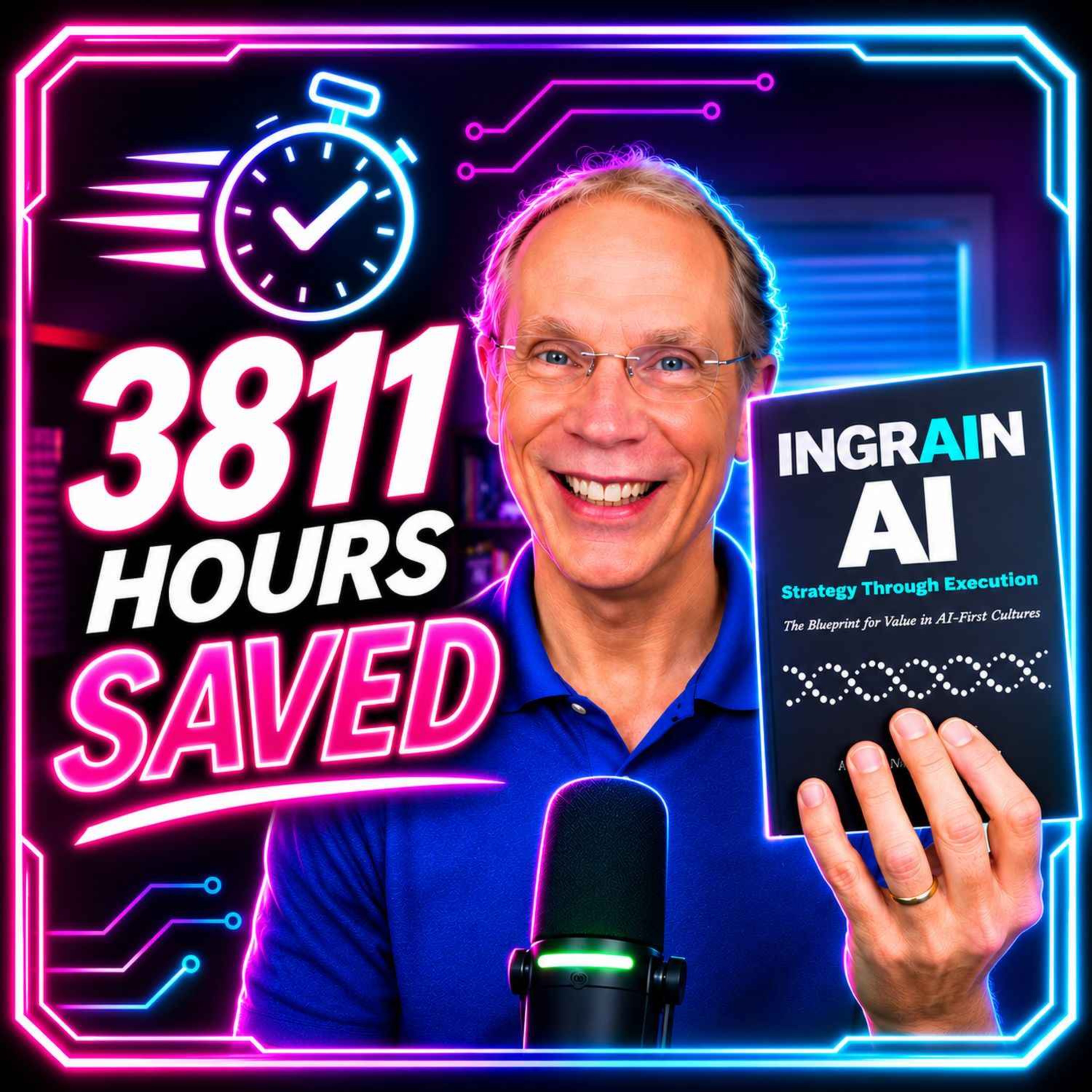
From AI Training to 3,811 Hours Saved - John Munsell is back on the Podcast

64 min

AI adoption strategy fails when companies provide tools but do not help employees build anything useful. In this episode of Beginner's Guide to AI, Dietmar Fischer speaks with John Munsell, co-founder and CEO of Bizzuka and creator of INGRAIN AI. John shares what he learned from training employees, executives, academics, and operational teams to use AI in their daily work. One two-day university boot camp produced 16 completed AI projects and identified 3,811 annualized hours of potential time savings. The result was not based on generic prompt lessons. Participants worked from their roles, job descriptions, repetitive tasks, approved tools, and real constraints. John explains why optional training often fails, why employees struggle to find useful AI use cases, and why leaders must measure behavior and business impact rather than course completion. He also introduces four work behaviors that affect adoption: doers, administrators, innovators, and connectors. You will learn: Why access

Discuss this episode

A Beginner's Guide to AI

Why AI Travel Needs Infrastructure, Not Better Chatbots - Amit Shamni

38 min

From AI recommendations to autonomous booking and the infrastructure required underneath AI in travel is moving beyond recommendations. The real challenge is making millions of fragmented travel experiences understandable, personalized, available, and actually bookable. In this episode of Beginner’s Guide to AI, Dietmar Fischer talks with Amit Shamni, Co-Founder and CEO of Bridgify, part of HBX Group, about the infrastructure required for the next generation of AI-powered travel. Flights and hotels have become highly centralized. Travel experiences have not. Tours, attractions, concerts, sporting events, museums, and countless other activities remain scattered across different suppliers and booking systems. That creates a major problem for AI. Before an AI agent can recommend and book the right experience, somebody has to normalize the data, identify duplicate products, understand relationships between millions of options, check availability, and determine what is actually relevant to

Discuss this episode

A Beginner's Guide to AI

Stop Shaming AI Users. Start Setting Better Rules

23 min

The Hidden Cost of AI Shaming at Work “I could tell it was written by ChatGPT” has become more than an observation. It is now an accusation. AI shaming is spreading through workplaces, universities, and creative communities. Using artificial intelligence can be treated as evidence of laziness, dishonesty, or missing talent. But does AI-assisted work deserve automatic suspicion? In this episode of A Beginner’s Guide to AI, we examine the line between legitimate accountability and digital gatekeeping. Undisclosed AI-generated work, fabricated information, and unchecked outputs can damage trust. Yet AI can also improve accessibility, help non-native English speakers communicate, support developers, and make skilled employees more productive. The real question is not simply whether someone used AI. We should ask what the AI contributed, what the human contributed, whether the result was checked, and whether anyone was misled. You will also hear the story of a university class in which stud

Discuss this episode

Community Poll

Preserving historic places can justify limiting redevelopment.

Share your view, then see how readers voted. No sign-in required. This poll is shared across stories.

Do you agree or disagree?

Choose one answer

Common Quandary

A Common Quandary to discuss

Another conversation to explore, separate from this news story.

An AI wrote the perfect condolence message for you. Is it still from the heart?

Your friend is grieving. You want to reach out, but words fail you, so you ask an AI to draft a condolence message. It expresses exactly what you feel. You revise it and send it without mentioning the help.

Does assistance make the expression less sincere?

Explore this quandary