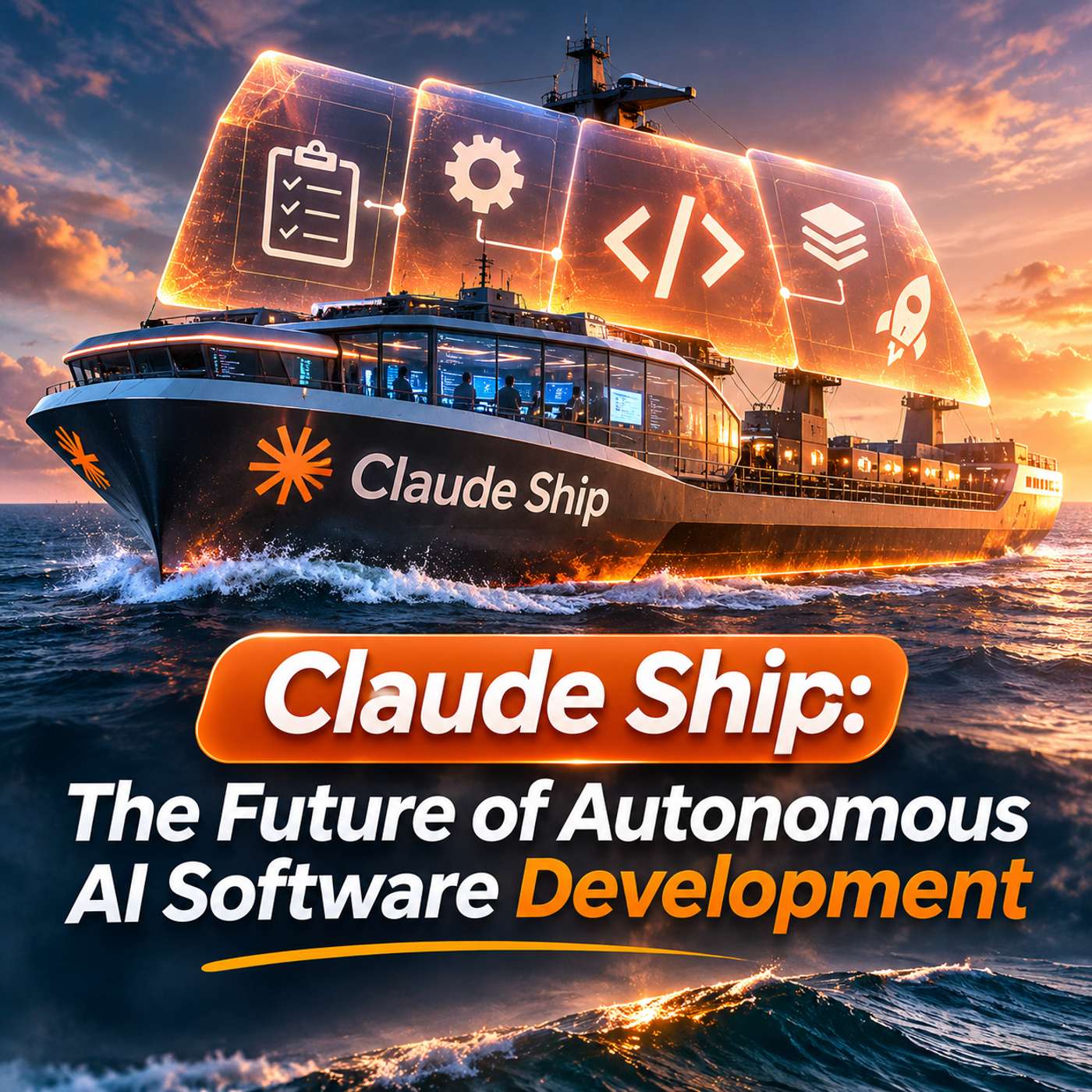
Claude Ship: The Future of Autonomous AI Software Development
Listen through the publisher, then discuss the episode here or arrange an in-person Roundtable. Your city determines where to meet.
Roundtables are designed for groups of four, with a shared subject and room for everyone to speak. Come for discussion, with no dating expectation.
What happens when AI doesn't just write your code but also reviews it, fixes broken builds, resolves merge conflicts, and approves changes without waiting for a human developer? In this episode of TechDaily.ai, host David and AI expert Sophia explore Anthropic's Claude Ship, an AI-powered tool suite designed to automate critical stages of the software development lifecycle. From intelligent code reviews and automated pull request fixes to AI-driven approvals, this conversation examines how autonomous AI agents could transform software engineering, developer productivity, and enterprise code governance. AI coding assistants are already generating thousands of lines of code in minutes. But traditional development pipelines still depend on human reviewers to inspect pull requests, troubleshoot failed CI checks, resolve merge conflicts, and approve deployments. That creates a growing bottleneck between AI-powered code generation and production delivery. Claude Ship aims to address that challenge by extending AI automation beyond writing code into reviewing, repairing, and approving it. In this episode, David and Sophia explore: Claude Ship Explained: Discover how Anthropic's AI development tools aim to automate code reviews, pull request maintenance, and approval workflows. AI Code Review: Explore how automated reviews identify potential bugs, flag issues, and help engineering teams manage increasing volumes of AI-generated code. PR Steward and Automated Code Fixes: Learn how the beta tool is described as analyzing failed CI checks, interpreting error logs, resolving dependency problems, and fixing merge conflicts. Claude Approvals: Examine how AI agents can evaluate pull requests against repository-specific policies and make automated approval decisions. Natural Language Approval Policies: Discover how engineering teams can define code approval rules in plain English, including requirements for human review of sensitive changes. The Risk of Semantic Bugs: Explore why vague instructions can create dangerous approval decisions even when an AI follows its policies as written. Observe-Only Mode: Learn how teams can test AI approval decisions, review hypothetical outcomes, and refine policies before enabling automated approvals. AI Governance and Safety Controls: Examine spending limits, adjustable review depth, repository restrictions, rollback guidance, and human escalation procedures. GitHub and Enterprise Integration: Discuss the rollout described in the episode for Claude Team and Enterprise users and its integration with GitHub repositories. The Future of Software Engineers: Consider how developers' responsibilities may shift from writing and reviewing individual lines of code toward system architecture, policy design, risk management, and AI governance. One of the episode's most important questions is whether AI-generated code should be reviewed and approved by other AI agents. David and Sophia examine the trade-off between faster software delivery and the risks of automated decision-making. While AI can reduce repetitive development work and review fatigue, poorly defined approval policies could introduce security vulnerabilities that traditional code checks might miss. The conversation also explores a fundamental shift in software engineering skills. As AI agents take on more coding, debugging, and review responsibilities, developers may increasingly focus on defining business requirements, establishing security boundaries, and designing the rules that govern autonomous systems. But there's a bigger question. If AI can write code, fix its own mistakes, review pull requests, and approve deployments, what happens when it becomes capable of writing its own approval policies? Could human oversight eventually become little more than a formality? Join David and Sophia for a thought-provoking discussion about Claude Ship, AI code reviews, autonomous software development, and the changing role of human engineers. Enjoyed this episode? Share it with a software developer, engineering manager, or AI enthusiast interested in the future of coding. Want to reach a technology-focused audience? Sponsor TechDaily.ai for just $25 and feature your message across major podcast platforms. Visit techdaily.ai to learn more about sponsorship opportunities and upcoming episodes.
Episode information is provided by the publisher. Listening takes place on the publisher’s service.
Listen at the source ↗