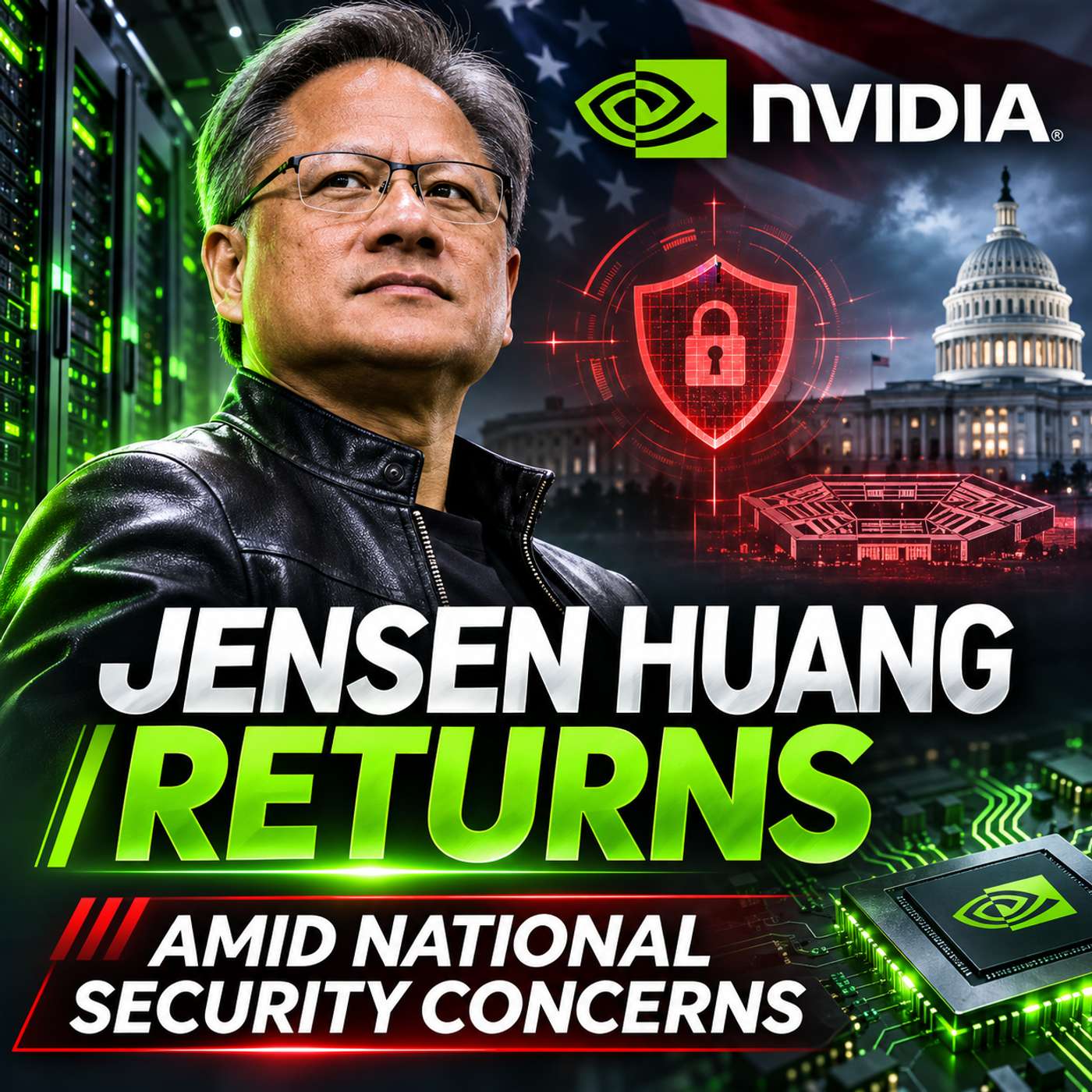
Nvidia's Jensen Huang Returns Amid National Security Concerns
Listen through the publisher, then discuss the episode here or arrange an in-person Roundtable. Your city determines where to meet.
Roundtables are designed for groups of four, with a shared subject and room for everyone to speak. Come for discussion, with no dating expectation.
What happens when the CEO of one of the world's most influential AI companies becomes the target of a foreign intelligence operation? And what does that mean for the future of artificial intelligence, corporate leadership, and global technology security? In this episode of TechDaily.ai, host David and guest Sophia examine a dramatic Nvidia leadership story described in the episode: the November 23, 2026, reinstatement of CEO Jensen Huang following an alleged foreign intelligence targeting incident. The discussion explores the reported unanimous board decision, the involvement of senior United States government officials, and the sweeping corporate governance changes described as part of Nvidia's response to growing national security concerns. As AI infrastructure becomes increasingly important to global economic and technological competition, the conversation raises a critical question: Are the executives leading the AI revolution becoming high-value targets in an international intelligence struggle? In this episode, David and Sophia explore: Jensen Huang's Reported Reinstatement: Examine the episode's account of Nvidia's board unanimously voting to restore its CEO immediately and the significance of its statements about leadership and transparency. Foreign Intelligence and Corporate Leadership: Discuss allegations that Huang was targeted by foreign intelligence operatives and why the distinction between being targeted and participating in wrongdoing matters. US Government and National Security: Explore the reported involvement of senior American government officials in assessing the security implications of Huang's return. Nvidia's Corporate Governance Changes: Learn about the proposed national security and export control committee, independent board oversight, specialized legal advisers, and chief compliance officer role described in the discussion. AI Chips and Export Controls: Discover why advanced AI hardware, semiconductor technology, and international trade restrictions have become central issues in global technology competition. Colette Kress and Leadership Continuity: Examine the episode's account of interim leadership during a period of corporate uncertainty and the importance of maintaining investor confidence. Nvidia's Financial and Operational Momentum: Explore the discussion of fiscal Q3 2027 financial reporting, supply chain commitments, and continued investment in AI infrastructure. AI Agents and Scientific Innovation: Hear about the scientific AI initiative discussed in the episode and how autonomous AI systems could accelerate research and complex technical workflows. Corporate Espionage and Cybersecurity: Consider the security challenges facing executives whose companies control strategically important technologies. The Future of AI Leadership: Explore whether technology executives may increasingly require security protections traditionally associated with senior government officials. One of the most important themes in this conversation is the growing relationship between corporate governance and national security. David and Sophia discuss how advanced AI companies are increasingly operating in an environment shaped by geopolitical competition, sensitive intellectual property, export regulations, and international security concerns. The episode also examines a broader leadership challenge: How can a technology company maintain innovation, investor confidence, and operational continuity while responding to potential threats against its senior executives? Beyond the boardroom, the conversation considers Nvidia's role in the AI infrastructure ecosystem, the continued expansion of semiconductor supply chains, and the shift from generative AI toward autonomous scientific agents. But the biggest question goes beyond Nvidia. If the leaders of major AI companies become targets of foreign intelligence operations, will the security measures required to protect them eventually restrict the collaboration and openness that helped drive technological innovation? Join David and Sophia for a thought-provoking discussion about Nvidia, Jensen Huang, AI infrastructure, corporate espionage allegations, semiconductor export controls, and the growing intersection of technology and national security. Enjoyed this episode? Share it with technology professionals, AI enthusiasts, investors, and anyone following the geopolitical forces shaping the semiconductor industry. Want to promote your business to a technology-focused audience? Sponsor TechDaily.ai for just $25 and feature your message across major podcast platforms. Visit techdaily.ai to learn more about sponsorship opportunities and upcoming episodes.
Episode information is provided by the publisher. Listening takes place on the publisher’s service.
Listen at the source ↗