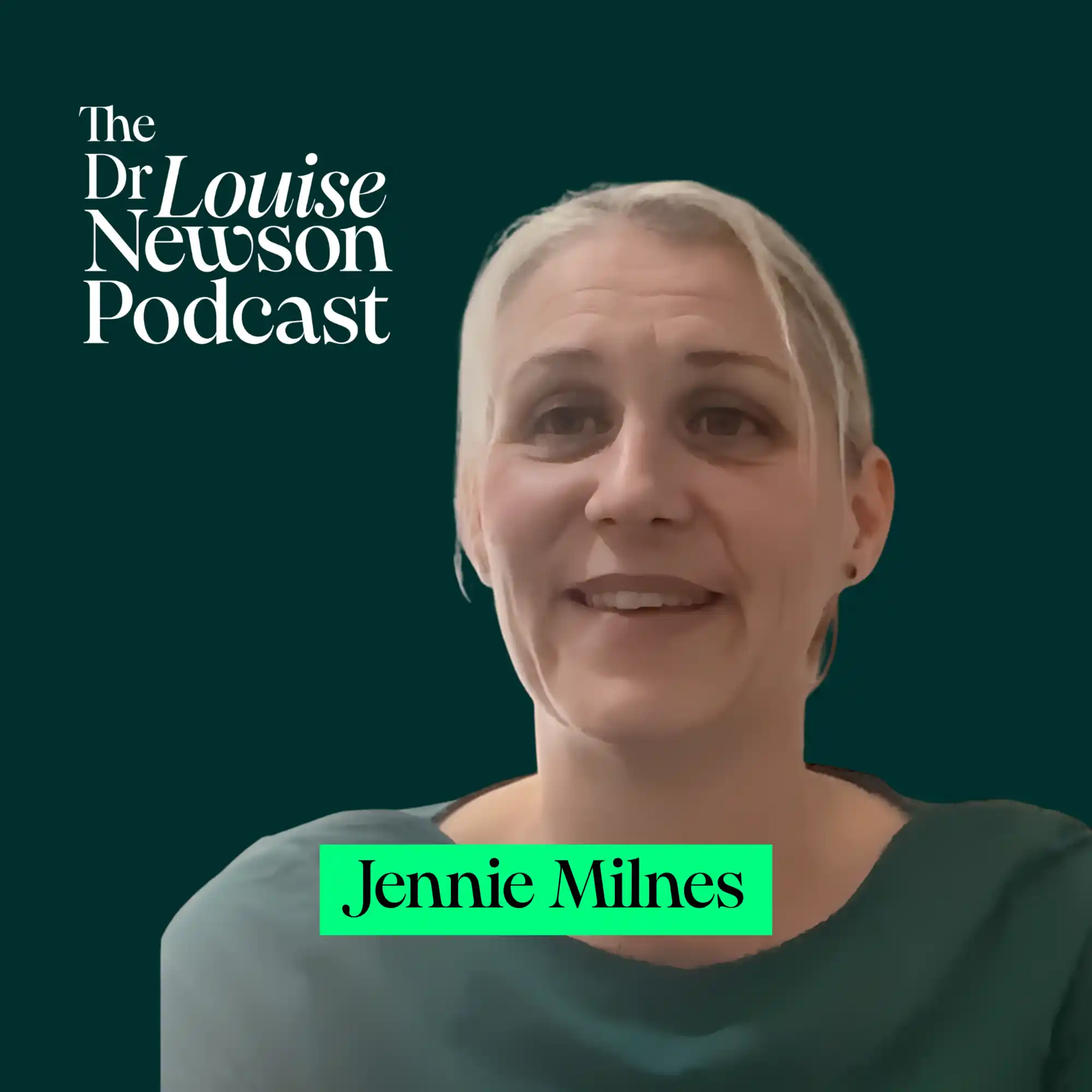
122 – 15 years on mental health drugs: could hormone treatments have helped?
30 min
Listen through the publisher, then discuss the episode here or arrange an in-person Roundtable. Your city determines where to meet.
Roundtables are designed for groups of four, with a shared subject and room for everyone to speak. Come for discussion, with no dating expectation.
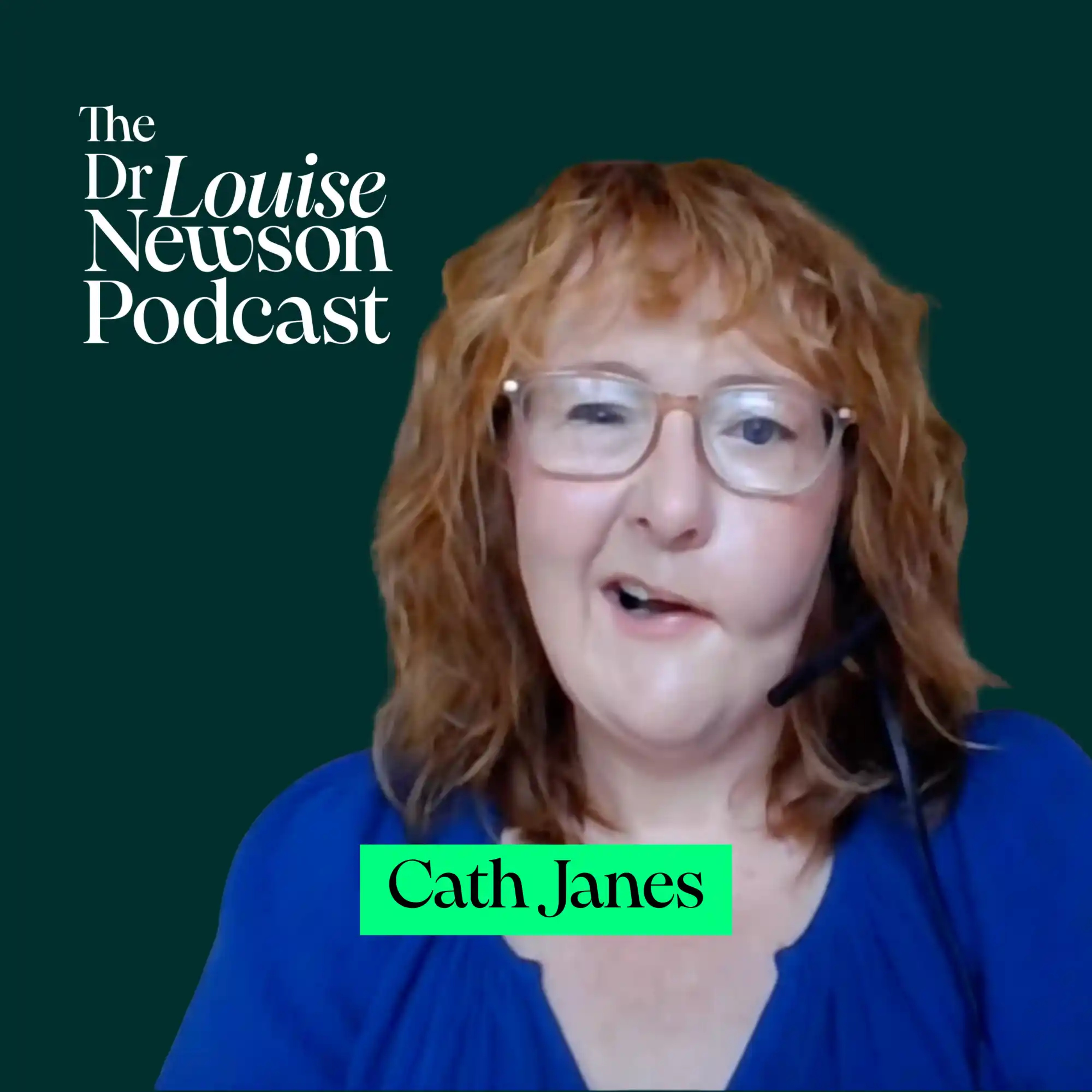
Cath Janes spent 15 years on mental health medication, yet no one ever checked her hormones. Could they have helped? Cath, an award-winning anatomical embroidery artist, was on and off antidepressants after severe postnatal depression and was then prescribed quetiapine to help her sleep. Since starting estrogen and progesterone in perimenopause, the racing thoughts that once kept her awake for 48 hours have quietened, and she now questions her ADHD diagnosis. She joins hormone health expert, Dr Louise Newson, to ask why hormones are so rarely considered in mental health care, how drugs such as quetiapine can lower estrogen, progesterone and testosterone, and how low progesterone can fuel overthinking. Louise explains why she treats the hormone imbalance first, how some women can then reduce other medicines, and why any change must be gradual and agreed with your doctor. Cath ends with three changes she wants to see, including psychiatric services looking at hormones. Follow Cath: @cathjanesanatomy If you're struggling with your mental health, please speak to your GP and don't stop or change any medication without their advice. If you're in crisis, you can call Samaritans free on 116 123. CHAPTERS 00:00 Why weren't doctors taught about hormones and the brain? 01:24 How did endometriosis treatment lead to pregnancy? 02:29 What happened to Cath's mental health after birth? 03:51 Did anyone mention her hormones? 05:33 What happens to your hormones after birth? 06:35 Can quetiapine lower your hormone levels? 08:37 Why do women fall between psychiatry and gynaecology? 11:06 Why won't mother and baby units prescribe hormones? 12:16 Can doctors prescribe outside the guidelines? 14:33 Can progesterone calm racing thoughts? 16:11 How do hormones affect ADHD? 17:29 Could low hormones look like ADHD? 18:42 Why treat the underlying cause first? 19:35 What changed when Cath started progesterone? 20:50 Can hormones help you come off other medicines? 22:42 Why do we fear HRT but not antipsychotics? 24:34 How can a symptom questionnaire help? 25:56 How do you go to your GP prepared? 28:03 How is Cath using art to talk about maternal mental health? 28:37 Three changes Cath wants to see LET'S CONNECT Track your symptoms before your next appointment with the symptom questionnaire in my balance app: DrLN.co.uk/balance Follow the podcast so you never miss an episode: https://drln.co.uk/podcast More from Dr Louise Newson: https://linkin.bio/drlouisenewson
Episode information is provided by the publisher. Listening takes place on the publisher’s service.
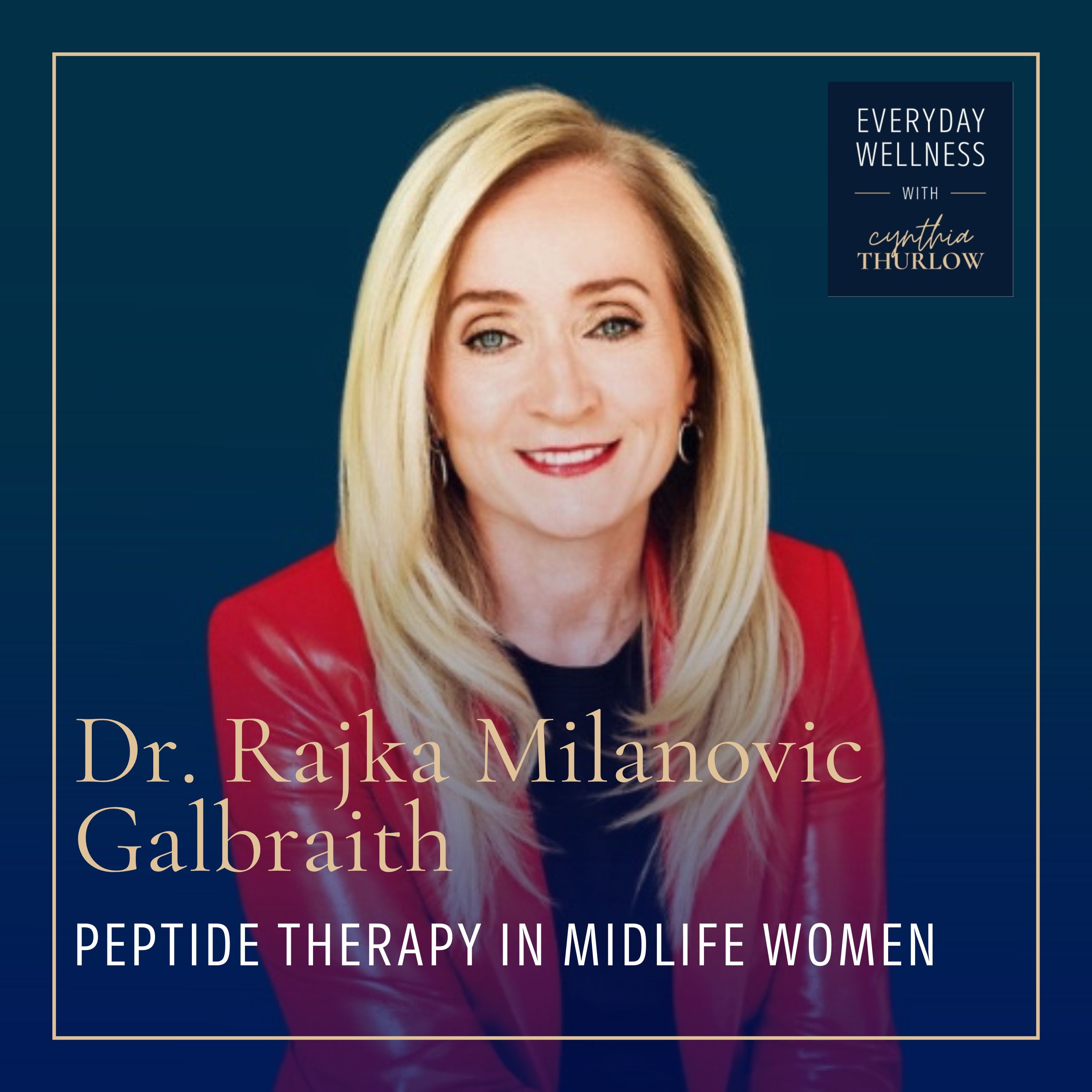
Today, I am delighted to welcome Dr. Rajka Milanovic Galbraith, a functional medicine physician with more than 30 years of clinical experience. She specializes in perimenopause, menopause, longevity, nutrigenetics, and peptide therapy. Dr. Rajka treats midlife women at Simply Health Institute outside Chicago and trains clinicians nationwide through her Peptide Practice Mastery program. She also authored Energized, published in October 2023. In our conversation, we explore the rapidly evolving world of peptide therapy and why a personalized, foundational approach is essential for midlife women. Dr. Rajka shares the deeply personal experience of caring for her mother through severe osteoporosis and declining mobility, which strengthened her commitment to helping women preserve their health, independence, and quality of life as they age. We discuss responsible peptide prescribing, the risks of gray-market products, and four often-overlooked factors that influence treatment outcomes: nutri
Episode 2885: Vinnie Tortorich and Wendy Strgar discuss why vaginal health matters for women's overall health and removing shame from the conversation. https://vinnietortorich.com/2026/11/vaginal-health-matters-episode-2885 PLEASE SUPPORT OUR SPONSORS Pure Vitamin Club VILLA CAPPELLI EAT HAPPY KITCHEN YOU CAN WATCH THIS EPISODE ON YOUTUBE: @FitnessConfidential Podcast Vinnie's workout videos are available to purchase! TO PURCHASE VINNIE'S WORKOUT VIDEOS, CLICK THIS LINK: https://vinnietortorich.com/workout Vaginal Health Matters Today's topic is vaginal health. The conversation may be too sensitive for younger listeners, so parental discretion is advised. Vaginal health is part of overall health. It's okay to talk about it openly. There's no need for shame or embarrassment. The vagina has its own balance of bacteria. When that balance changes, someone may notice an unusual smell or discharge. Itching, pain, or discomfort can also be a sign that something is off. pH is one part of that
Lena went from being a sexually repressed Jehovah Witness to having the best sex after taking hrt and she called in to talk all about it. Tune in to hear all the details including her childhood experience in as a Jehovah witness, the abuse she went through and how it effected her, the specific rules of the religion that she had to follow and how she felt about it all, how she got in trouble once and had to confess to the elders and how that conversation went down, how and why she never masturbated until recently, how and why she had never felt pleasure during sex and never felt horny and rarely had orgasms, how she met her first husband and how and why they eventually got divorced, how she met and married second husband and why they got divorced, how she met her third husband and the ED issues that came up for him and how he cured it, how his issue led to her going on HRT, why she started hormones and how fast they started to work for her, the types of hormones she takes and how she us
Big News! Clicking Here (https://meditationsounds.supercast.com/) Email List (https://bit.ly/3T010m4) Experience deep relaxation with this powerful blend of 432 Hz healing frequency and Brown Noise, designed to calm strong anxiety, stop racing thoughts, and reset your nervous system. This sound mix helps reduce inner pressure in the chest, quiet mental overwhelm, and bring your mind back to a peaceful state. 432 Hz promotes mental clarity, emotional balance, and a sense of inner harmony, while Brown Noise lowers hyperactivity in the brain, creating a grounding and stabilizing effect. Together, they offer a natural, effective therapy for anxiety attacks, stress relief, insomnia, and emotional overload. Put on your headphones, close your eyes, and allow this frequency combination to guide you into deep calm and inner peace. Perfect for meditation, sleep, studying, relaxation, and anxiety recovery. #432Hz #BrownNoise #AnxietyRelief #CalmingSounds #DeepRelaxation #StopOverthinking #Healing
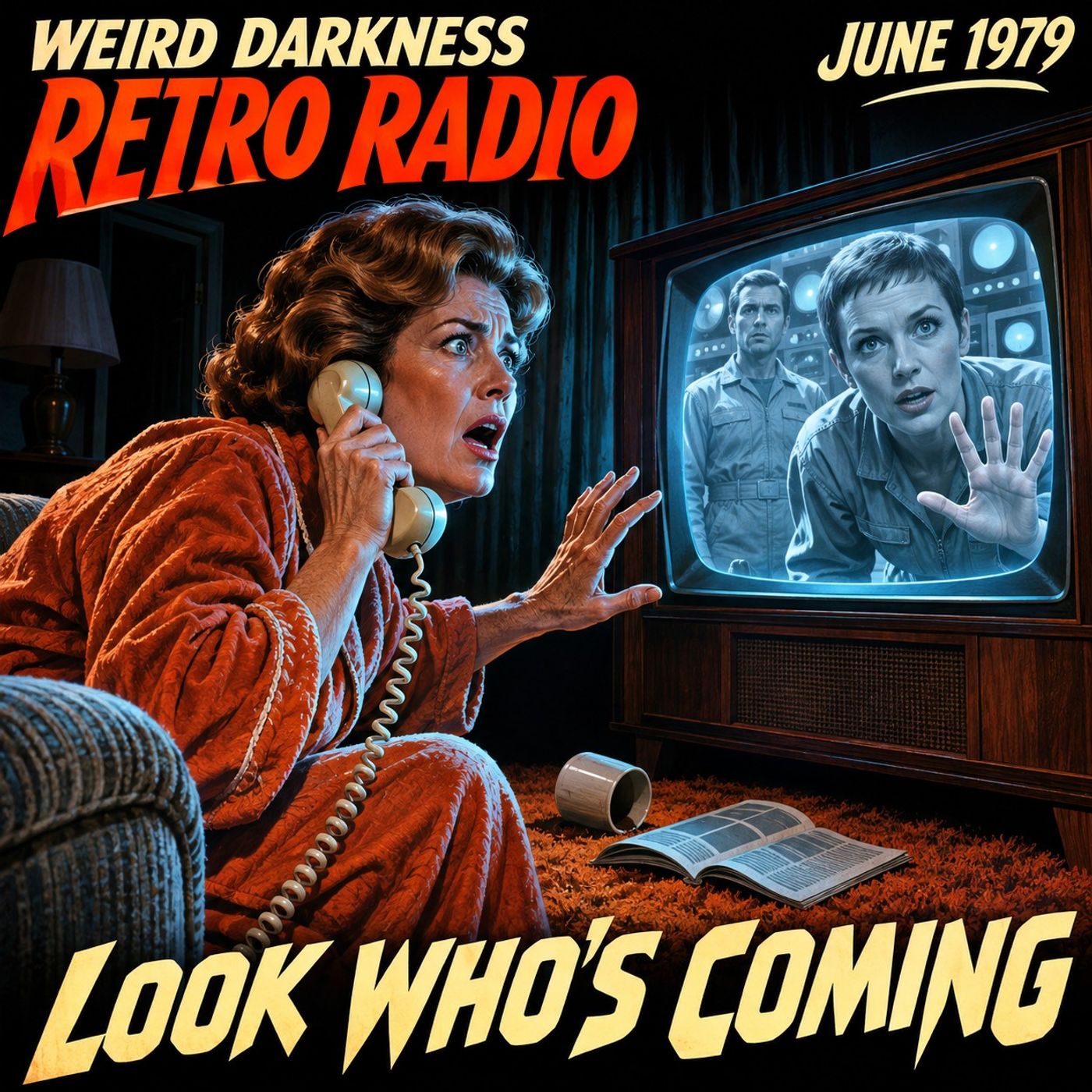
Harry and Flo Betts have been married twenty-three years and have argued for most of them, lately over television: he can't get enough science fiction, she can't get enough of her soap operas, and each is sure the other has started to believe what's on the screen. Then one Friday afternoon, with her friend Grace called away to a crisis at the school, Flo sits down alone for the big episode of Five In The Family and gets, instead, two figures in gray in a room full of instruments, one of them saying into the camera that Earth must be warned before it's too late. The station says nothing went wrong, Grace never sees it, her husband's psychiatrist friend starts asking about her marriage, and the two strangers return again and again, only ever when Flo is watching by herself. CHAPTERS & TIME STAMPS (All Times Approximate)… 00:00:00.000 = Show Open 00:01:30.028 = CBS Radio Mystery Theater, “Look Who’s Coming” (June 11, 1979) ***WD 00:48:21.405 = Lights Out, “The Signalman” (August 24, 1946)
Harry and Flo Betts have been married twenty-three years and have argued for most of them, lately over television: he can't get enough science fiction, she can't get enough of her soap operas, and each is sure the other has started to believe what's on the screen. Then one Friday afternoon, with her friend Grace called away to a crisis at the school, Flo sits down alone for the big episode of Five In The Family and gets, instead, two figures in gray in a room full of instruments, one of them saying into the camera that Earth must be warned before it's too late. The station says nothing went wrong, Grace never sees it, her husband's psychiatrist friend starts asking about her marriage, and the two strangers return again and again, only ever when Flo is watching by herself. CHAPTERS & TIME STAMPS (All Times Approximate)… 00:00:00.000 = Show Open 00:01:30.028 = CBS Radio Mystery Theater, “Look Who’s Coming” (June 11, 1979) ***WD 00:48:21.405 = Lights Out, “The Signalman” (August 24, 1946)
Does your metabolism really slow down with age? JJ Virginexplains why losing muscle, not age, is usually the cause. JJ is an exercise physiologist and nutritionist who wasamong the first personal trainers in the US, and her latest book, TheMetabolism Fix, sets out a simple plan: build muscle, burn fat, then restorebalance. She joins Dr Louise Newson to cut through the noise around protein,weight-loss jabs and exercise. They talk about why the scale rewards the wrong thing, howmuch protein you need and why eating it before fibre keeps you full for longer.JJ explains how two strength sessions per muscle group each week can be enough,and why HIIT is good for your brain. Louise explains how oestrogen (estrogen),progesterone and testosterone support BDNF, the brain's own growth factor. JJ ends with three facts about muscle that will change howyou think about exercise, including why it's never too late to start. Follow JJ: @jjvirgin CHAPTERS 00:00 Why does healthcare focus on disease, not he
Postnatal depression follows a sudden drop in estradiol and progesterone after birth, yet hormone treatments are rarely offered during this time. Jennie Milnes knows this first-hand. She had postnatal depression after her first son, and in her early 40s, while switching her HRT for perimenopause symptoms, she found out she was pregnant again. After her daughter’s birth the hormone crash was even worse, and despite being on HRT before her pregnancy, she was told to wait for her hormones to settle. Dr Louise Newson explains why postnatal depression is more likely the second time, why antidepressants work better alongside estradiol, why hormones are safe while breastfeeding, and why so few psychiatrists prescribe them. She also shares the history of Dr Katharina Dalton, who used progesterone to support fertility and pregnancy. Chapters 00:00 Why is postnatal mental health so overlooked? 00:32 How did fertility treatment lead to her first son? 01:32 Was it postnatal depression the first ti
Why are so many doctors still scared of HRT? A medical student explains where that fear comes from and how it spreads. Toby first saw the problem as a teenager, when his mum, a biology teacher, went to her GP for HRT and was given an outdated FSH test instead. Now in his second year of medical school, he says hormone problems come up on GP placements more than anything else, and the risks of hormone treatment are raised in almost every consultation, often as defensive medicine. Louise explains why NICE guidance mentions risk far more often than benefit, why grouping synthetic and bioidentical hormones together confuses busy doctors, and why the WHI study still shapes prescribing. They also talk about how hard it is for junior doctors to question a senior, and why a 19-year old with endometriosis was told pregnancy would fix it. Toby closes with three take-home tips for changing how every doctor learns about hormones. Chapters 00:00 Why would Louise go back to medical school? 00:46 Why
Communities should usually repair existing infrastructure before building replacements.
Share your view, then see how readers voted. No sign-in required. This poll is shared across stories.
Do you agree or disagree?
Common Quandary
A Common Quandary to discuss
Another conversation to explore, separate from this news story.
Your boss offers lessons to make you sound “more professional.” Do you take them?
Clients sometimes ask an employee to repeat themselves during calls. Their manager offers company-paid speech coaching framed as clearer communication, but the employee experiences the request as pressure to hide part of their identity.
When does improving communication become demanding conformity?