14 Habits Keeping You Poor (and you probably have at least 3)
19 min
Listen through the publisher, then discuss the episode here or arrange an in-person Roundtable. Your city determines where to meet.
Roundtables are designed for groups of four, with a shared subject and room for everyone to speak. Come for discussion, with no dating expectation.
Somewhere between your first pay rise and your third unnecessary gadget, your bank balance quietly gave up. Fear not: the human brain, is both the cause and the cure. Evolution built us to grab the biscuit now and worry about the famine later. That served us splendidly on the savannah and rather less so with credit cards charging 22% interest. This episode examines 14 financial habits, from lifestyle inflation and keeping up with the Joneses to the curious belief that tomorrow is a reliable place to start. There is good news, though. Habits are learned, so they can be unlearned, and the fixes are almost embarrassingly small. Even £5 a week beats waiting for perfect conditions, which, like the unicorn, have never been spotted. The maths is unkind, but the remedies are gentle. Automate savings before you can spend them. Check your credit card interest rate this week. Start with a small, imperfect amount today. Listen now, and find out which habits your inner caveman is running. SPONSORS ️ Base44 (https://base44.com/psychology) Uncommon Goods (https://www.uncommongoods.com/psychology) Extraordinary Gifts for Everyone on your list Unique idea that have people ask "Where did you find this" Alex Honnold interviews people reshaping what's possible Part of the Rolex Perpetual Plant Initiative Found on all major podcast players: Spotify - https://open.spotify.com/show/1Fj3eFjEoAEKF5lWQxPJyT YouTube - https://www.youtube.com/@HowToChangeTheWorldPodcast UPGRADE to Premium (https://bit.ly/GrowthMindsetPremium): ️ Ad-free listening Exclusive AMAs and bonus content Growth Mindset Psychology: Watch - YouTube (Growth Mindset) (https://bit.ly/GrowthMindsetYT) Website - Growth Mindset (https://bit.ly/GrowthMindsetSite) Email - GrowthMindsetPodcast (@) gmail.com Chapters 00:00 Intro 00:24 Starting Tomorrow, Unfinished Projects and Paying Yourself Last 02:51 Investing in Yourself Without Over-Reading 04:27 Knowing Your Numbers and Avoiding Bad Debt 07:28 Emergency Funds and Lifestyle Inflation 10:17 The Wrong Crowd and Blaming Circumstances 12:35 Saving Too Much and Investing Without a Strategy 14:38 Waiting for Perfect Conditions and Outro Topics Why procrastination and "starting tomorrow" undermine financial progress Paying yourself first, inspired by Rich Dad Poor Dad Learning versus doing: when self-education becomes procrastination Tracking income and expenses to understand your real spending habits Good debt versus bad debt, and credit card interest Building an emergency fund to protect your long-term wealth Lifestyle inflation and the influence of peer spending Taking ownership instead of blaming your circumstances Why waiting for perfect conditions stops you from starting Investing with a diversified strategy, beyond savings accounts
Episode information is provided by the publisher. Listening takes place on the publisher’s service.
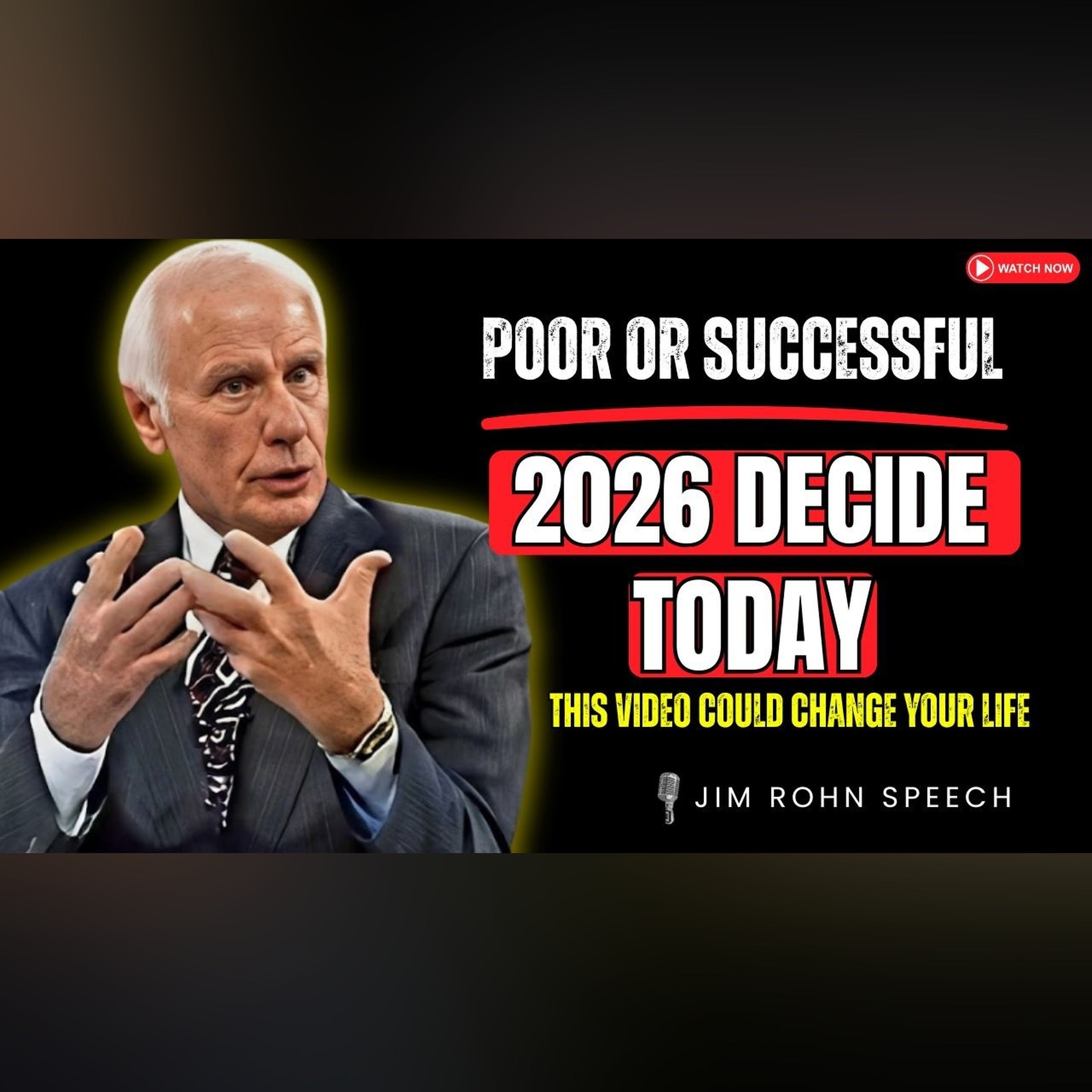
#JimRohn, #Motivation, #Success2027, #SelfDiscipline, #MotivationalSpeech, In this powerful 34-minute motivational speech inspired by Jim Rohn’s timeless wisdom, you’ll discover the 10 life-changing daily habits that separate successful people from everyone else. This speech goes deep into discipline, self-growth, mindset, consistency, purpose, personal responsibility, success psychology, habits, regret, fear, and transforming your future one day at a time. Uploaded 18-05-26 If you're tired of procrastination, excuses, lack of motivation, feeling stuck, or wondering why success feels far away — this speech will wake something powerful inside you. Because success is not luck. Success is built. One habit. One decision. One disciplined day at a time. This motivational speech will challenge your mindset, help you break bad habits, and inspire you to stop delaying your future. Watch till the end if you are serious about changing your life before 2027. WHY SHOULD YOU WATCH THIS VIDEO? If you
Happy Sunday! Welcome to Heal Squad’s The Sunday Set Up. Life lessons to help you start the week. How much of success comes down to simply showing up? This week, we talk keeping an open mind, taking chances, and recognizing the doors that open along the way. From Olympic athletes appearing on national television alongside Mercedes Moné to performers who keep showing up week after week hoping for their big break, we explore why success isn't always about talent or luck. Sometimes it's about making connections, putting in the effort, and being willing to try without knowing what we'll get in return. We talk knowing when to stop investing time in people who aren't willing to help themselves, and why even experiences that don't work out can teach us something valuable. The takeaway: don't wait for the perfect moment or expect someone else to make things happen. Be willing to take a chance, walk through the doors that open, and remember that half of life is just showing up. Plus, a little b
This is a PREVIEW of the upcoming episode of Change Agents. The full episode drops tomorrow at 5pm EST Uploaded 18-06-26 On this week's episode of Change Agents, Andy travels to Chase Hughes' new studio to break down how human behavior is manipulated at scale, from bot farms manufacturing fake consensus to the psychological framework Chase calls WOUND that explains why outrage, fear, and loneliness keep us glued to our phones. They dig into why Chase believes the algorithm is less a sinister mastermind and more an engine optimized purely for ad revenue, how think tanks may shape policy more than most people realize, and why Walter Cronkite and Julia Child both have far stranger backstories than anyone learned in school. Andy also gets a tour of Chase's new independent news studio, Station One, built to show audiences the psyops behind the headlines rather than just the headlines themselves. Change Agents is an IRONCLAD Original Firecracker Farm Norwood Sawmills: Learn more about Norwoo
Two members of this family knelt beside wounded strangers this week. Only one was seen doing it. Mark Francis on the week India went perfectly for William and Kate — street cricket with Sachin Tendulkar, sixty rupees on the Metro, five Earthshot winners, and Kate alone at a Mumbai maternity hospital on the final day, holding the hand of a mother who had just lost one of her newborn twins. And on Harry in Lviv, meeting the newest members of Ukraine’s Invictus community, in a visit that landed on the one weekend nobody could look — followed by a Telegraph interview in which he said that if asked to sign up again, “I will 100 per cent be there to serve my country”. Plus Camilla’s private letter, Charles and the Butlin’s holiday he never got, and the royal accounts welcoming Robert Pattinson: “Welcome to His Majesty’s Secret Service, Mr Bond.” One subscription, the whole family, no ads. Try it free for 30 days: tap Try Free in Apple Podcasts. Got an App Store gift card? This is a good use
Merriam-Webster's Word of the Day for November 22, 2026 is: copacetic • \koh-puh-SET-ik\ • adjective Copacetic (less commonly spelled copasetic or copesetic) describes things that are very satisfactory. // Worry not: I assure you that everything’s copacetic. See the entry > (https://www.merriam-webster.com/dictionary/copacetic) Examples: “We will be blessed with a second lunar eclipse on this night, but it won’t quite be total: at maximum, a little more than 90 percent of the moon will fall into Earth’s shadow. The event will start at 10:35 P.M. EDT, and the maximum eclipse will occur just after midnight. It won’t be as cool as the March eclipse, but the timing will be a lot more copacetic.” — Phil Plait, Scientific American, 9 Jan. 2026 Did you know? Copacetic (with many variant spellings) is probably better known for competing theories of its origin than for any record of unconscious everyday use in American English. The first written occurrence of the word thus far detected (as copa
This week on The Necessary Conversation, it's Chad, Haley, and Mary Lou. Bob is still recovering but sent in a video message about Trump calling Putin his friend that we watch together. 🇷🇺 Trump held the first-ever three-way talks with Putin and Xi, called it a "12 out of 10," and produced nothing. Then at a press conference he called Putin his friend — and when asked if Putin is a friend to America, the president of the United States said, "I can't speak to America." That same day, Trump's friend Putin launched massive strikes into Ukraine, hit Poland with two missiles — an act of war against a NATO ally — then struck near a Ukrainian restaurant and drone-bombed the first responders, killing a 7-year-old child and a 20-year-old paramedic. We watch Bob's video and ask Mary Lou: is Russia our friend? 🇨🇳 The House Foreign Affairs Committee revealed Trump's Commerce Department approved nearly 880,000 advanced AI chips for Chinese military-linked companies including Alibaba, Tencent, a
The psychology of desire, envy, and the ever present hedonic treadmill. You can live in an age of hot showers, antibiotics, abundant food, and instant entertainment... yet still feel vaguely cheated by existence. This episode examines why. We adapt astonishingly quickly to comfort, a process known as hedonic adaptation, and then measure ourselves against people whose lives appear shinier, richer, and more effortless than our own. Jimmy Carr calls the result “life dysmorphia”: a persistent sense that life is worse than it is, even when it is historically extraordinary. The episode offers a small corrective: not forced gratitude, but a more accurate view of what you already possess. Notice ways you make yourself feel bad for no reason Compare your life with the past, not with a stranger’s curated present. Identify one desire you can consciously stop feeding this week. If life has never been objectively better, perhaps the real challenge is learning to see it that way. SPONSORS ️ Base44 (
A deep dive on the psychology of impulse, scarcity, and the hidden forces shaping your choices. Using Black Friday as a case study Every purchase begins with a story. Sometimes it is a story about convenience. Sometimes it is a story about who we hope to become. And sometimes (especially when a red countdown timer appears) it is a story about fear. This episode asks: who is shaping the story before you decide? From Black Friday queues to endless online aisles, we examine how scarcity, social proof, competition, and frictionless technology can quietly move us from intention to impulse. The point is not to reject desire, comfort, or beautiful things. It is to distinguish between a choice that reflects your values and one that merely responds to pressure. When we see the system clearly, we regain the ability to participate in it differently. Identify the story: what future self, status, or feeling is this purchase promising? Name the trigger: scarcity, urgency, comparison, or social proof
In fact, quite surprisingly to myself and the wider philosophy community, to become more interesting you don't even need to read Nietzsche! You can become distinctly memorably by simply being yourself. In this episode, we look at why shallow interests rarely make you memorable—and why going deeper into the things you actually care about can change how people see you. I share the surprising maths behind why exploring a topic ten times more deeply can make it a hundred times more interesting, plus why embracing a little harmless weirdness can make you more confident, more relatable, and more fun to be around. We also tackle the other side of the equation: you do not need to stand out in every meeting, comment section, or conversation. Sometimes being ordinary is the smartest use of your energy. Go deeper into one interest instead of collecting surface-level opinions. Try one small thing that feels socially awkward but genuinely excites you. Save your effort for the moments where standing
Governments should remove practical barriers to voting, even when doing so costs more.
Share your view, then see how readers voted. No sign-in required. This poll is shared across stories.
Do you agree or disagree?
Common Quandary
A Common Quandary to discuss
Another conversation to explore, separate from this news story.
Everyone clicks through mandatory training without reading it. May you do the same?
Your employer requires an hour-long annual course whose answers have not changed in years. Coworkers run it in the background and share the quiz answers. Completing it carefully would make you late for actual work with a deadline.
When does pointless compliance excuse pretending to comply?