188 - Paul Bloom: The Psychology of Everything (RE-AIR)
54 min
Listen through the publisher, then discuss the episode here or arrange an in-person Roundtable. Your city determines where to meet.
Roundtables are designed for groups of four, with a shared subject and room for everyone to speak. Come for discussion, with no dating expectation.
In this re-air episode, Eric chats with Paul Bloom, Professor of Psychology at the University of Toronto. He is the author of seven books, including his latest “Psych: The Story of the Human Mind.” Countless people around the world have been introduced to psychology through his online courses “Introduction to Psychology” and “Moralities of Everyday Life.” In this chat, Eric and Paul discuss to what extent knowing about psychology actually helps us navigate everyday life with other people. Should psychology students still learn about Freud? Why would Paul never write a psychology textbook? Why is he writing a next book on perversity and something called “reactance?” How did he manage to become a successful professor while researching such a diverse range of topics? How to use Twitter without becoming a troll? Finally, Paul faces some surprisingly tough questions generated by ChatGPT. JOIN OUR SUBSTACK! Stay up to date with the pod and become part of the ever-growing community :) https://stanfordpsypod.substack.com/ If you found this episode interesting at all, consider leaving us a good rating! It just takes a second but will allow us to reach more people and make them excited about psychology. Links: Paul's latest book Psych (https://www.harpercollins.com/products/psych-paul-bloom?variant=40489123807266) Paul's online classes (https://www.coursera.org/instructor/paulbloom) Paul's website (https://paulbloom.net/) Eric's website (https://ericneumann96.wixsite.com/mysite) Eric's Twitter @EricNeumannPsy (https://twitter.com/EricNeumannPsy) Podcast Twitter @StanfordPsyPod (https://twitter.com/StanfordPsyPod) Podcast Substack https://stanfordpsypod.substack.com/ Let us know what you think of this episode, or of the podcast! :) [email protected]
Episode information is provided by the publisher. Listening takes place on the publisher’s service.
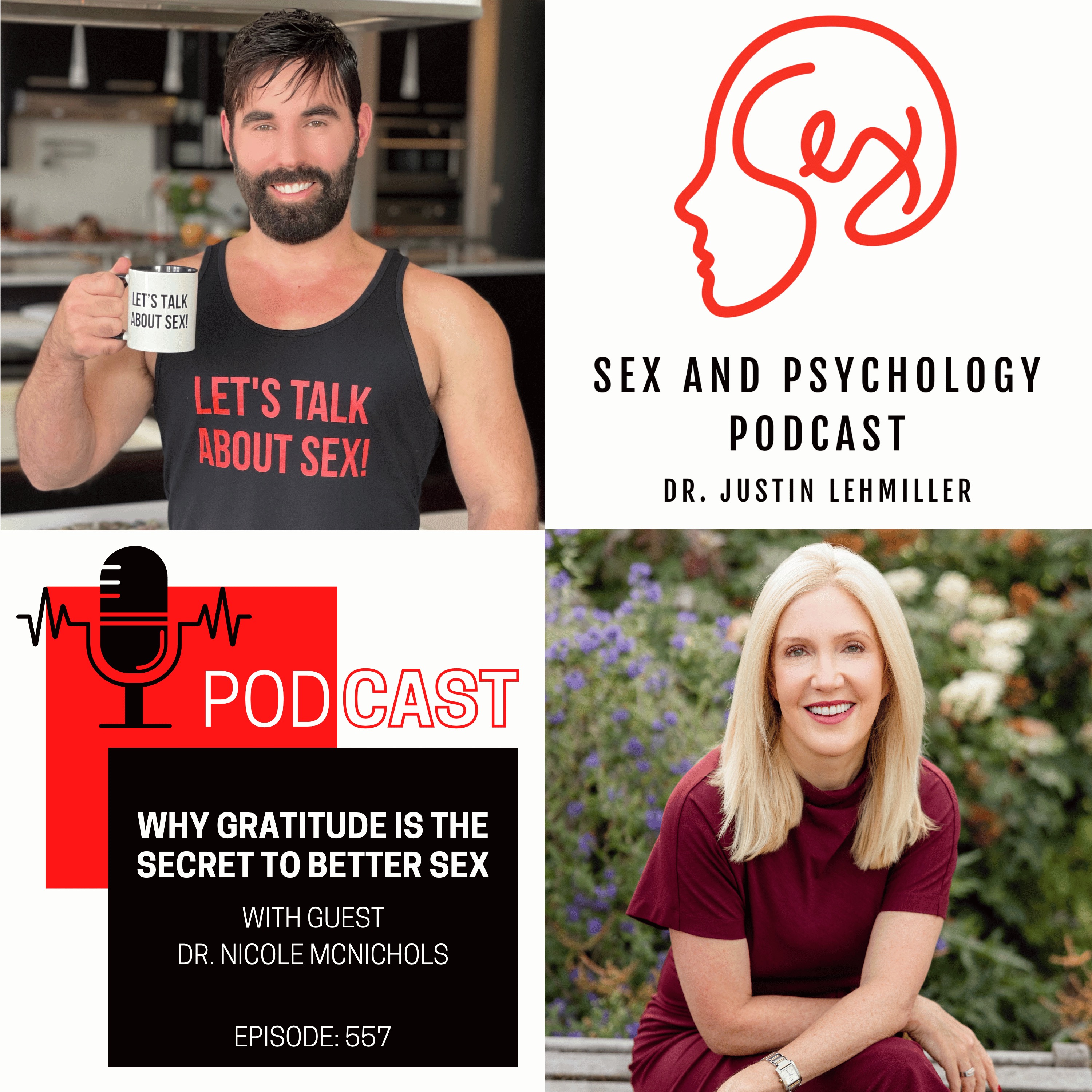
Thanksgiving is a time to reflect on the things we're grateful for, but when was the last time you stopped to appreciate your sex life? In this episode, we're exploring the surprising connection between gratitude and sexual desire. We'll discuss how feeling appreciated can strengthen intimacy, why gratitude can motivate us to be more attentive to our partners' needs, and simple ways to bring more appreciation into our sex lives without turning it into another obligation. I am joined once again by Dr. Nicole McNichols (https://nicolethesexprofessor.com/about-nicole/), an Associate Teaching Professor in the Department of Psychology at the University of Washington. Nicole's course, "The Diversity of Human Sexuality," is the largest and most popular course in the university's history with four thousand enrolled students each year. Nicole is author of the book You Could Be Having Better Sex. (https://link.amazon/B0iYWx0Q4) Some of the specific topics we cover include: What does it mean to p
Sometimes the most thoughtful gifts are the ones you know will be used—especially if they actually fit the needs and desires of the person receiving them. Mari Uyehara from Wirecutter’s gifting team explains how to find the sweet spot between useful and delightful, with ideas for all kinds of people, budgets, and situations. From food and drinks that won't clutter a small apartment to clever gifts for tech lovers and frequent travelers, Mari shares how to give people things they'll genuinely appreciate. She also makes a compelling case for cash, repeat gifts, and how a bidet can make a life-changing gift for the right person. This episode covers: How to find the gaps in someone's everyday life. The best practical gifts come from knowing someone well enough to identify something that would make their routine easier or better. Why it's okay to give someone the same gift every year. If a person loves a particular kind of sock, bourbon, maple syrup, or chocolate, gifting them these items c
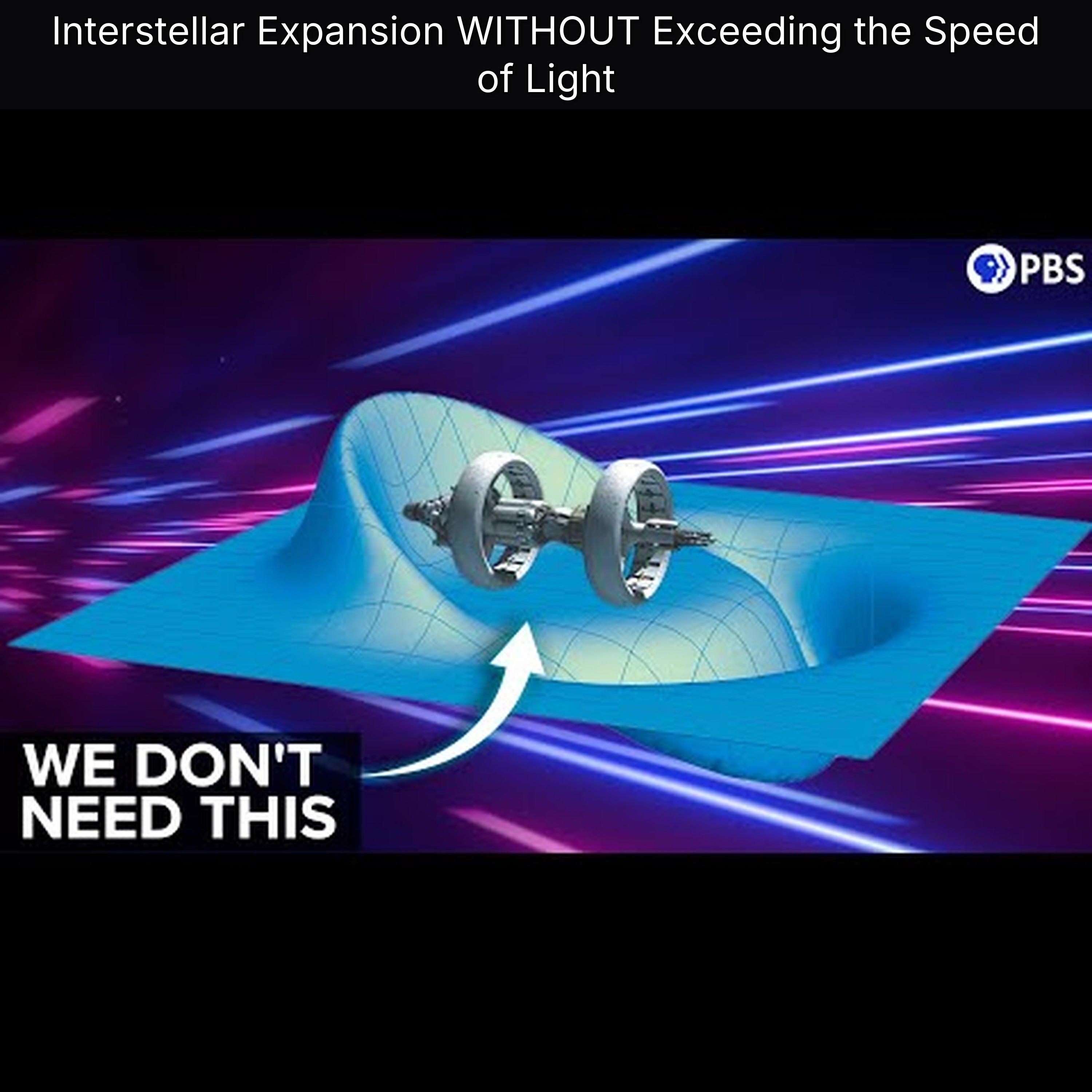
Watch Space: The Longest Goodbye on Independent Lens: https://pbs.org/longestgoodbye In the far future we may have advanced propulsion technologies like matter-antimatter engines and compact fusion drives that allow humans to travel to other stars on timescales shorter than their own lives. But what if those technologies never materialize? Are we imprisoned by the vastness of space—doomed to remain in the solar system of our origin? Perhaps not. A possible path to a contemporary cosmic dream may just be to build a ship which can support human life for several generations; a so-called generation ship. Sign Up on Patreon to get access to the Space Time Discord! Check out the Space Time Merch Store Sign up for the mailing list to get episode notifications and hear special announcements! Search the Entire Space Time Library Here: https://search.pbsspacetime.com/ Senior Creative Producer (ITVS): Andrea Bloom Creative Director (ITVS): Carol Paik Executive Producers (ITVS): Carrie Lozano, Loi
Happy Friday EIChicken Nuggets… Whether you’re listening at dawn, dusk, twilight, or golden hour… we’re back with another episode of your favourite pop culture and society podcast. Beth and Ruchira have been gamer girls this week, we’re diving into a million-dollar podcasting betrayal and Oenone is finally borrowing Ruchira’s Hayu login! Are we living in a simulation? Are the aliens playing a prank on us? TikTok creator Max Balegde has been discussed in Parliament this week after filming a lip-sync outside Number 10. Does the story actually warrant the coverage? Florence Pugh has spoken out against speculation around her getting cosmetic surgery. What did you make of her statement and could she have gone further for the greater good? Courtesy of The New Yorker, we’re wading back into the heteropessimism discourse. Is there any real merit in relationship advice? And what even is memetic desire? Finally, we’re talking about The Body Netflix’s new sapphic Catholic psychological drama. Wit
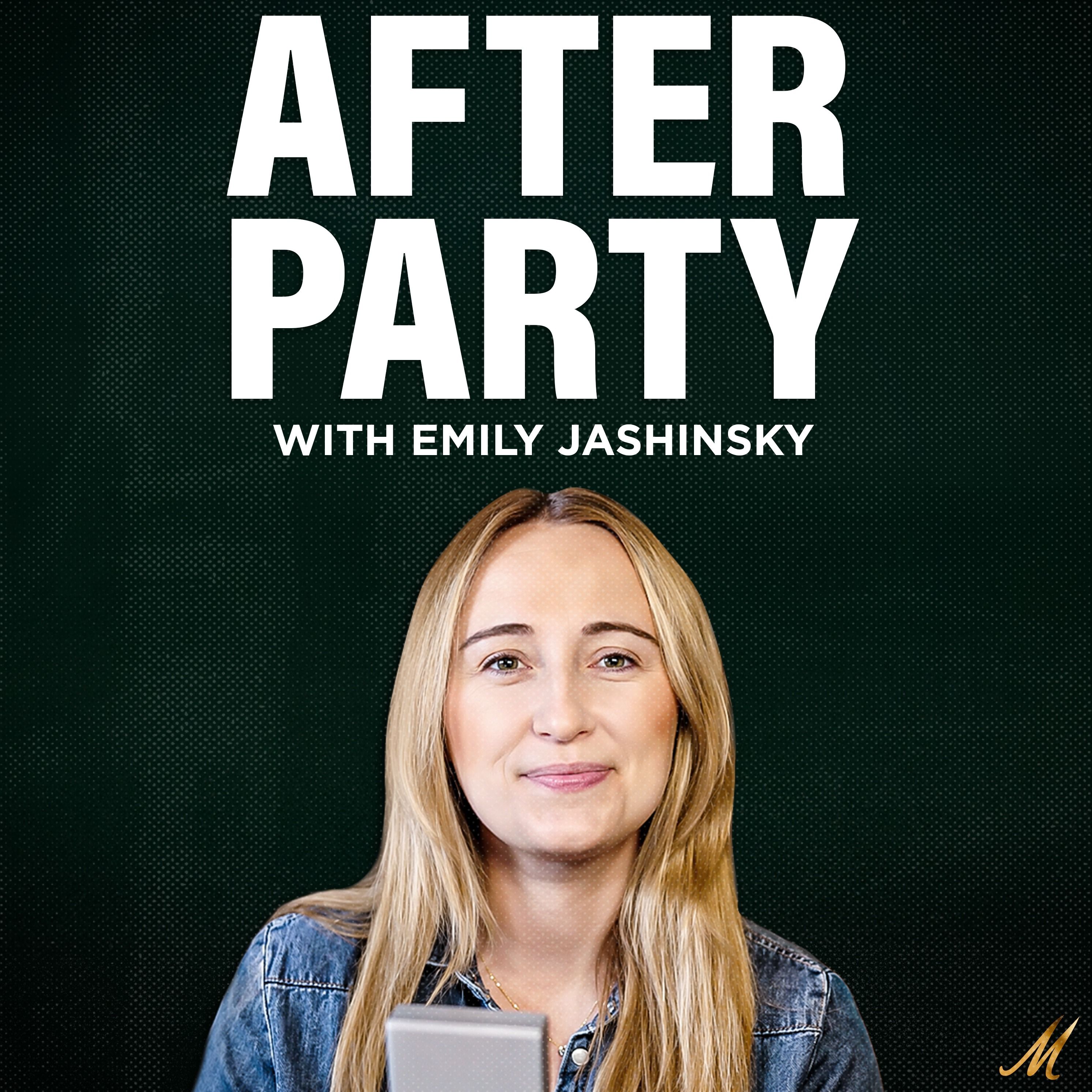
On this week’s edition of “Happy Hour,” Emily Jashinsky examines America’s affordability crisis, the growing divide between generations, and whether the constant barrage of bad news is discouraging young Americans from having children. She weighs in on the Wes Huff plagiarism controversy, the media’s responsibility when reporting damaging allegations, and where people can turn to reclaim their reputations. Emily also addresses a listener’s question about her own potential conflicts of interest, President Trump’s investments in Nvidia, the debate over American sovereignty and Israel, and Hakeem Jeffries’ leadership. Plus, why Hugh Hewitt’s proposal for partial amnesty alarms her, concerns surrounding the lead detonation in Iowa, and her response to criticism of her “Grand Theft Auto VI” commentary. Emily discusses Breaking Points’ skepticism of artificial intelligence insiders, the challenges facing workers in the tech age, the possibility of journalists being debanked, and whose electi
New podcast episode between Ege Erdil and Daniel Kokotajlo. I thought this was going to be a debate, but they ended up agreeing on a lot more than I expected. Their main point of disagreement is how likely it is that we get some intelligence explosion that gives us AIs more competent than any human expert before 2029. Ege puts this possibility at around 20%, whereas Daniel thinks it’s higher than 50%. They agree that there is not a huge difference in probability, and that, in either case, the situation is crazy enough that our civilization really needs to grapple with how the world might be transformed, and we need a plan that actually makes sense. In particular, we should stop antagonizing China if we think some kind of global treaty will be needed to make superintelligence go well. There was another important crux about how well we should expect future AIs (that swamp humans in population size and cognitive power) to treat us, and how relevant it is that current AIs, by and large, se
This re-air episode features Eric's chat with 2024 Nobel Laureate Geoffrey Hinton and Stanford Professor Jay McClelland, two pioneers who have spent nearly half a century laying the groundwork for modern-day AI, advancing research on neural networks long before it captured the world's imagination. In fact, their early work faced significant skepticism from the scientific community - an experience they candidly discuss in this episode. This wide-ranging conversation covers everything from the capabilities of recent breakthrough LLMS like DeepSeek to AI agents, the nature of memory and confabulation, the challenges to aligning AI with human values when we humans don’t even agree on our values, and Geoff's fascinating new theory of language, featuring an analogy of words as thousand-dimensional, shape-shifting Lego blocks with hands. Geoff, who retired in 2023, divided his time between the University of Toronto and Google DeepMind. With numerous accolades including the 2018 Turing Award a
People should receive a clear explanation before consenting to personal-data use.
Share your view, then see how readers voted. No sign-in required. This poll is shared across stories.
Do you agree or disagree?
Common Quandary
A Common Quandary to discuss
Another conversation to explore, separate from this news story.
A likable but unreliable former employee lists you as a reference. How honest are you?
A former employee who was unreliable but personally likable lists you as a reference without asking. Their prospective manager calls and asks only whether you would hire them again.
How much truth do you owe a stranger when it may cost someone a fresh start?