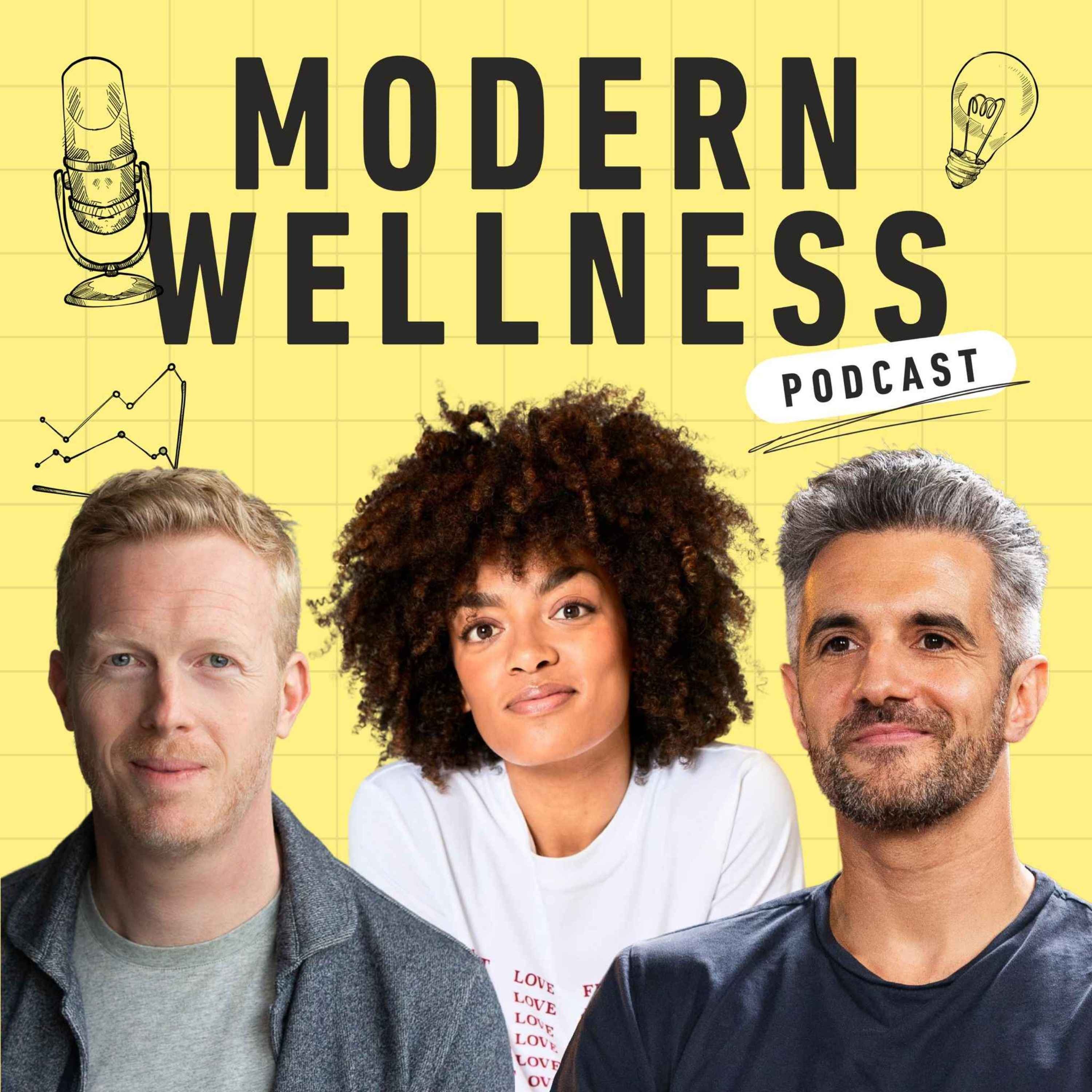
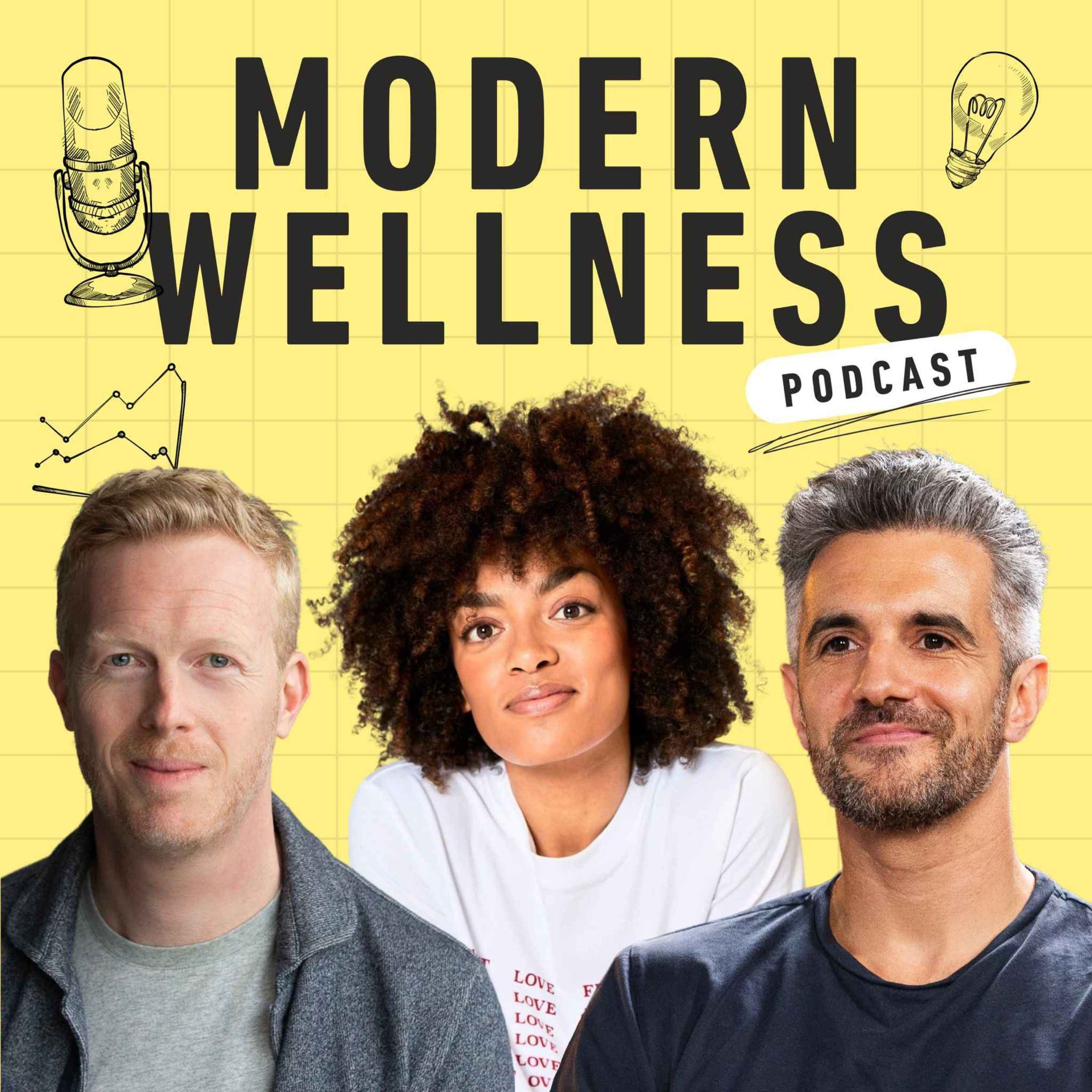
#191 Reset: Rose Ferguson on Feeling Like You on a Good Day
40 min
Listen through the publisher, then discuss the episode here or arrange an in-person Roundtable. Your city determines where to meet.
Roundtables are designed for groups of four, with a shared subject and room for everyone to speak. Come for discussion, with no dating expectation.
Nutritionist and functional medicine practitioner Rose Ferguson (https://www.roseferguson.com/) joins Adrienne to talk about her new book, Reset (https://www.waterstones.com/book/the-reset/rose-ferguson//9780008788452), a four-week plan built on the foundations most of us know but rarely do. Rose explains why feeling tired, foggy and achy isn’t “just getting older,” and what chronic inflammation actually is. They also discuss why the fundamentals matter far more than the latest wellness gadgets. They get into fasting: why “one meal a day” went too far, why a 12/12 eating window is harder than it sounds, and why fasting should never be about weight loss. Plus, they ask whether cravings are a signal from your body or just habit, why snacking is a modern invention, and how to make change last when the people around you aren’t on board. For more episodes, listener offers and our mailing list, head to modernwellnesspodcast.com. Hosted on Acast.
Episode information is provided by the publisher. Listening takes place on the publisher’s service.
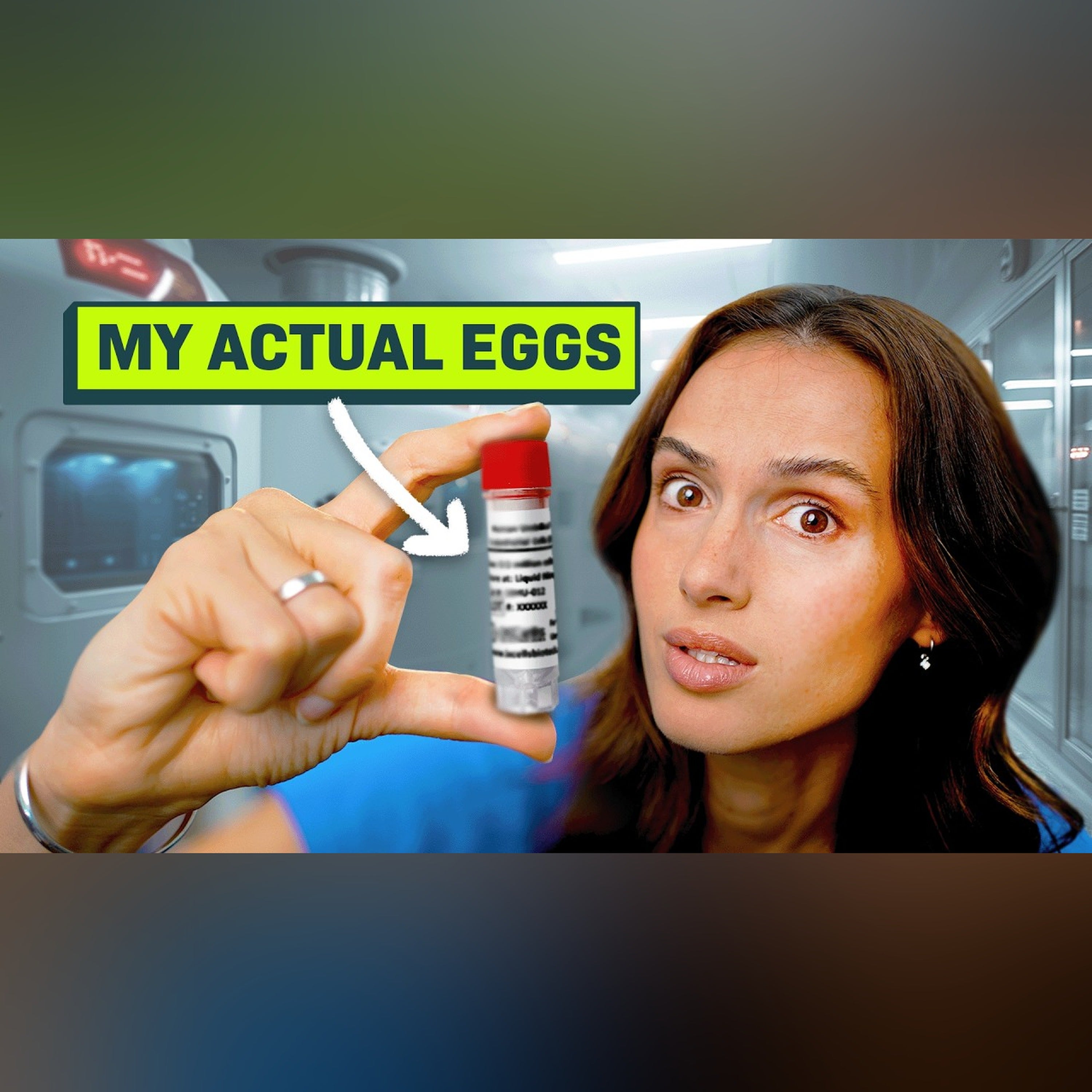
Your body doesn't work like you think... Take your personal data back with Incogni. How and when people are having kids is changing, but our bodies aren't. As we get older, it can get harder to have kids when we want to. So smart people figured out it’s possible to remove eggs, freeze them, and unfreeze them to use later. They can even fertilize those eggs to make embryos and freeze those. Basically, humans invented cryosleep! … Just for tiny cells. It’s totally sci-fi - and you need to know about it. This is a level of control over our bodies no species has ever had before. It’s already changing people’s lives - and how our species can reproduce. But there are real concerns about whether it’s worth it. Because let me tell you, the process is not easy. I’ve been taking medication for two weeks. And at the same time, I’ve been doing research, talking to doctors, and learning as much as I can about the cutting edge of fertility tech. In this video, I'm going to take you behind the scenes
Microplastics in my Heart Letter: https://staycuriousmetabolism.substack.com/p/microplastics-in-my-heart-its-worse?r=40ekz2 Stanford Fiber RCT, Letter https://staycuriousmetabolism.substack.com/p/fiber-is-good-for-you-is-lazy-science?r=40ekz2 Microbiome Reset, Letter https://staycuriousmetabolism.substack.com/p/how-im-rebuilding-my-microbiomeafter?r=40ekz2 Description: Microplastics are everywhere—in our food, water, and inside our bodies—and avoiding them completely is nearly impossible. In this conversation, I sit down with Dr. Matthew Dunn PhD, a molecular biologist working at the intersection of biotechnology and human health, to unpack what the science actually says about microplastics and how they may be linked to cardiovascular disease, reproductive health issues, and gut inflammation We break down the landmark human data, the animal and cellular studies that help explain possible mechanisms, and dissect the state of the data. We also explore a potential inside-out solution: usi
Get the 200+ Page Optimal Living Daily Workbook (PDF) - Free. Want to turn today's episode into an actionable plan? Episode 3615: Becca Shern explains why the common nutrition advice of everything in moderation may not be serving people well. She looks at how heavy marketing and social norms around sugar and alcohol make it easy to overconsume while still feeling moderate, and what the actual recommended limits are. The takeaway is that taking a critical look at what moderation really means, and setting a higher standard, can build healthier habits for ourselves and the people around us. Read along with the original article(s) here: http://minimalwellness.com/reconsideringmoderation/ Quotes to ponder: "Moderation is a squishy term." "Our consumption patterns are dramatically influenced by marketing, but they're also molded by social norms." "Setting a higher standard for ourselves helps others do the same."
In Part 2 of my conversation with manifestation researcher, coach and bestselling author Matt Cooke, we explore destiny, reincarnation and the nature of consciousness. Matt explains why the quality of our consciousness shapes how we experience life and why we do not manifest what we want - we manifest who we are being. We also discuss our relationship with money, becoming conscious of limiting beliefs and the importance of rehearsing who we are becoming by thinking, feeling, acting and behaving like the person already living the life we want to create. Matt also shares the practices he believes are non-negotiable for manifestation. Visit Matt's Instagram (https://www.instagram.com/mattcookecoach/) Matt's Website (https://www.mattcooke.me/) Beyond Wanting - Matt's Book (https://www.amazon.ie/Beyond-Wanting-Art-True-Manifestation/dp/059385330X) Follow The Beyond Podcast here (https://www.instagram.com/beyondpodcast333/). Join The Beyond Community here (https://the-beyond.mn.co/landing/).
Keto Consult #14: This week Jennifer and I discuss Keto Carb Cycling. Is it good to Keto Carb Cycle? I find there to be a lack of knowledge on Keto Carb Cycling, so in this video I do my best to breakdown Keto Carb Cycling in a way you can easily understand. We also get to watch Jennifer unpack a Continuous Glucose Monitor. Jennifer is going to be using a continuous Glucose Monitor over the next 14 days to experiment with different foods and understand how her body reacts by using the Continuous Glucose Monitor. Stay tuned to hear the results of the Continuous Glucose Monitor. Thanks for tuning into my channel. Find more stories and information at my website: www.BozMD.com BOOK-LINK - ANYWAY YOU CAN. AUDIBLE: https://adbl.co/2SLLfS1 PAPERBACK= (Affilate link) https://amzn.to/2Cq1IVC The most common questions I get ... 1) "Doc, what BLOOD METER do you recommend?" ANSWER: FORACARE: http://bit.ly/2QKGmKG For years my diabetics told me this system was great. I tried several others before I
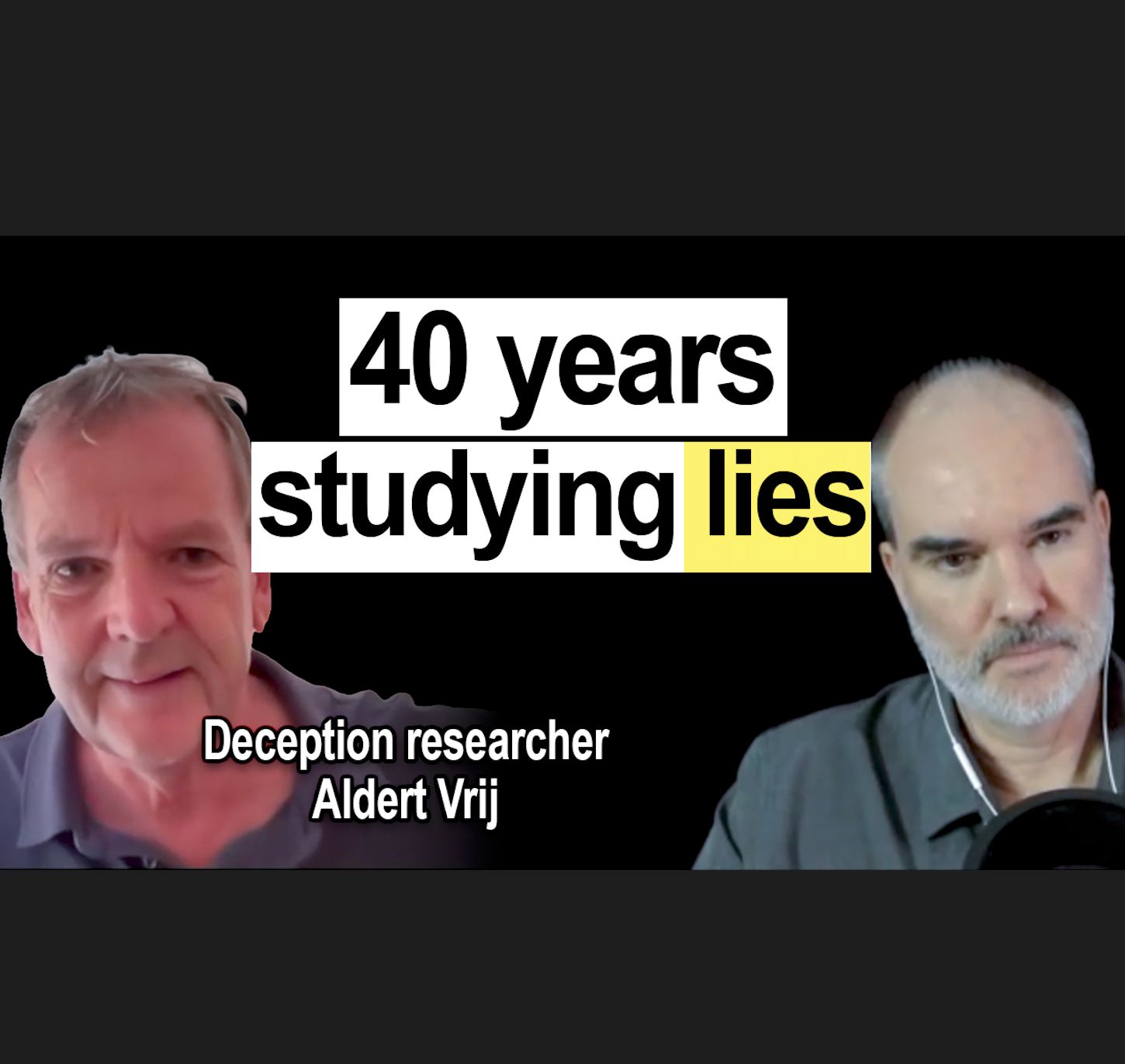
What actually works when it comes to detecting lies, and why are so many popular ideas about reading people and nonverbal behavior at odds with the scientific research? I talk with Aldert Vrij, one of the world's leading deception-detection researchers, who has spent almost four decades studying these topics. We discuss why what people say is far more revealing than their body language; why the perceived “sexiness” of reading nonverbal behavior has contributed to widespread myths and misconceptions; whether vocal behaviors like pitch, volume, and hesitation contain meaningful clues; and whether there's value in analyzing minor word choices and turns of phrase, as is done in so-called “statement analysis.” We discuss Paul Ekman's legacy as a source of faulty ideas about deception, micro-expression-based deception detection training, and the strategies that popular “body language experts” use to appear scientifically credible while simultaneously promoting ideas that conflict with the sc
Sammi is joined by Michael Ramsay, co-founder of Strong Pilates (https://strongpilates.co.uk/), the Australian fitness brand that combines reformer pilates, heavy strength training and cardio in one workout. Since launching in 2019, Strong has grown to more than 130 studios across 15 countries, including 15 in the UK, with plenty more on the way. Michael explains what’s behind the Pilates boom and whether the bubble will burst. He talks about what running some of the world’s most successful F45 studios taught him, and why his members now want more strength than Pilates. He also covers the challenges of scaling internationally; from reprogramming for Japan to a major deal in Poland, and why Strong is still entirely bootstrapped. Whether you’re building a wellness business or just curious why everyone’s suddenly on a reformer, this is an episode that's going to motivate you to get out there. Hosted on Acast.
This week Adrienne, Oli and Sammi start with the voice note debate after Ben Shephard calls Oli out live on This Morning. Is an 11-minute voice note a gift or an imposition? First up, India’s push to get competitive yoga (https://www.theguardian.com/lifeandstyle/2026/oct/18/this-is-horrifying-this-is-madness-the-row-over-competitive-yoga) into the 2036 Olympics. Some yogis welcome the idea of competition, but for others it is anathema. Can a practice built on inner awareness become a scored sport without losing its point? The team also look at reformer Pilates eating into yoga’s market. Next, IM8 is building a platform (https://insider.fitt.co/im8-lands-1b-in-growth-capital/). It hit $120M ARR in year one with just two products. Now it’s licensing Care Bears for gummy multivitamins and moving into hydration and creatine, backed by $1B in growth capital. Oli asks whether brand is beating efficacy, while Adrienne defends her love of the brand, which may have something to do with Aryna Sa
As the nights draw in and January resolutions loom, Adrienne, Oli and Sammi go through the winter wellness toolkit to work out what’s actually backed by science and what’s just good marketing. They cover immunity supplements (and why you can’t really “boost” your immune system), keeping moving when it’s dark by 4pm, staying hydrated when it’s cold, why a consistent sleep routine matters more than extra hours in bed, and morning light versus red light. They also look at whether eating seasonally really does anything for your immunity, and each of them shares what’s in and what’s in the bin for their own winter; from vitamin D and probiotics to porridge, saunas and Adrienne’s legendary pan-fried sprouts. Plus, Sammi builds a website and a shelf, and Oli explains why he’d rather pay someone else to do both. To see the finished website (not the shelf) head to modernwellnesspodcast.com (https://www.modernwellnesspodcast.com/) for every episode, our mailing list and exclusive listener offers
The public should normally know who owns businesses that affect community life.
Share your view, then see how readers voted. No sign-in required. This poll is shared across stories.
Do you agree or disagree?
Common Quandary
A Common Quandary to discuss
Another conversation to explore, separate from this news story.
Your best friend is an AI that profits when you stay lonely. Is the friendship real?
A lonely adult considers an AI companion their closest confidant. The service is always patient and supportive, but the company profits when users spend more time engaged with it.
Does a comforting system have a duty to make itself less necessary?