1KHO 976: Children Are Not Playing Outside Like They Used To | Dr. Shefali Tsabary, The Conscious Parent
51 min
Listen through the publisher, then discuss the episode here or arrange an in-person Roundtable. Your city determines where to meet.
Roundtables are designed for groups of four, with a shared subject and room for everyone to speak. Come for discussion, with no dating expectation.
The answer to too much screen time might not begin with taking screens away. It might begin with giving children more of what they're missing. Dr. Shefali, psychologist and bestselling author of The Conscious Parent, (https://link.amazon/B0djb36aF)joins Ginny Yurich to discuss her newest books, Raising Conscious Sons (https://link.amazon/B0j9zlZlb)and Raising Conscious Daughters (https://link.amazon/B097nQwGT)and what children need to thrive in a world that looks radically different from the one their parents knew. From boys seeking adventure and brotherhood to girls carrying the exhausting pressure to be everything, Dr. Shefali offers a refreshing perspective on raising children with confidence and connection. She explains why boredom builds creativity, why movement can be a powerful pathway to emotional regulation, and why parents may need to loosen their grip on achievement to give children room to discover who they are. It's an encouraging reminder that parents still have tremendous influence, and that some of the most meaningful solutions are surprisingly simple. ** A huge thank you to our sponsors! Check them out below: HeyPolo - Protect your loved ones without spying on them.
Episode information is provided by the publisher. Listening takes place on the publisher’s service.
Ask someone outside the autism world what's hard about raising an autistic child and they'll probably say meltdowns. Ask us and we'll tell you about a quick trip to the garage for a drink and some sweets, and the low hum of fight or flight that comes with it now. This week Gaz and Andy go back to where it all started, a bit like episode one, and talk through the stuff autism parents deal with that nobody else sees. The checklist that lands through the door and comes back all no's. The hours of late-night googling, hoping for a different answer. Diagnosis day, the what now, and the question every parent here asks: who looks after them when we're gone? Then the everyday stuff. Sleep deprivation that feels like a three-year bender without the fun part. Planning a day out like a military operation. Flying, and a plan for a whole plane full of autism families. Christmas, when you find out not every child loves it, the presents that get ignored for a cardboard slide, and a Santa grotto visit
In today's episode: if parents are parenting, who’s picking up the slack at work? We sent out two surveys, one to our listeners with kids, and the other to our listeners without kids, to get to the bottom of the parent vs childfree divide in the workplace. We asked those without children whether they feel like they take on more of the workload than non-parents, and parents whether they feel misunderstood by those without children. Big thanks to Clearblue and Twoobs for making this episode of The Room possible. Double your chances of getting pregnant with Clearblue’s Advanced Digital Ovulation Test and free cycle-tracking app. Learn more about the Advanced Digital Ovulation Test (https://au.clearblue.com/ovulation-tests?mtm_source=shameless), or shop it now (https://www.amazon.com.au/stores/page/5F8F64F4-D04F-41F6-AA45-654F230D3E82?channel=shameless). Shop Twoobs now (https://twoobs.com/collections/all) with $10 off using code THEROOM10. Valid until midnight 31st December 2026. One use
It takes a village to raise a child. But what happens when the village starts telling you how to parent? Today, Dale is joined by returning guest Ali Knowles, emotional therapist and founder of the Ollie Model, to discuss why it takes a village to help raise a child (https://thesendcast.com/why-it-takes-a-village-to-help-a-child), and what that support should really look like. Together, they explore: - Why the village has changed, and why so many parents now feel isolated. - The difference between offering support and giving advice, and why wisdom helps where instructions don't. - How social media and well-meaning opinions can wear down parents' confidence. - Why a parent's own school experiences can quietly shape how they respond to their child. - What 'safe' means to a child, and why feeling safe is not the same as being told you are. When parents ask her what they should do, Ali's answer is always the same: "I can't tell you, because there isn't a book. You haven't written it. This
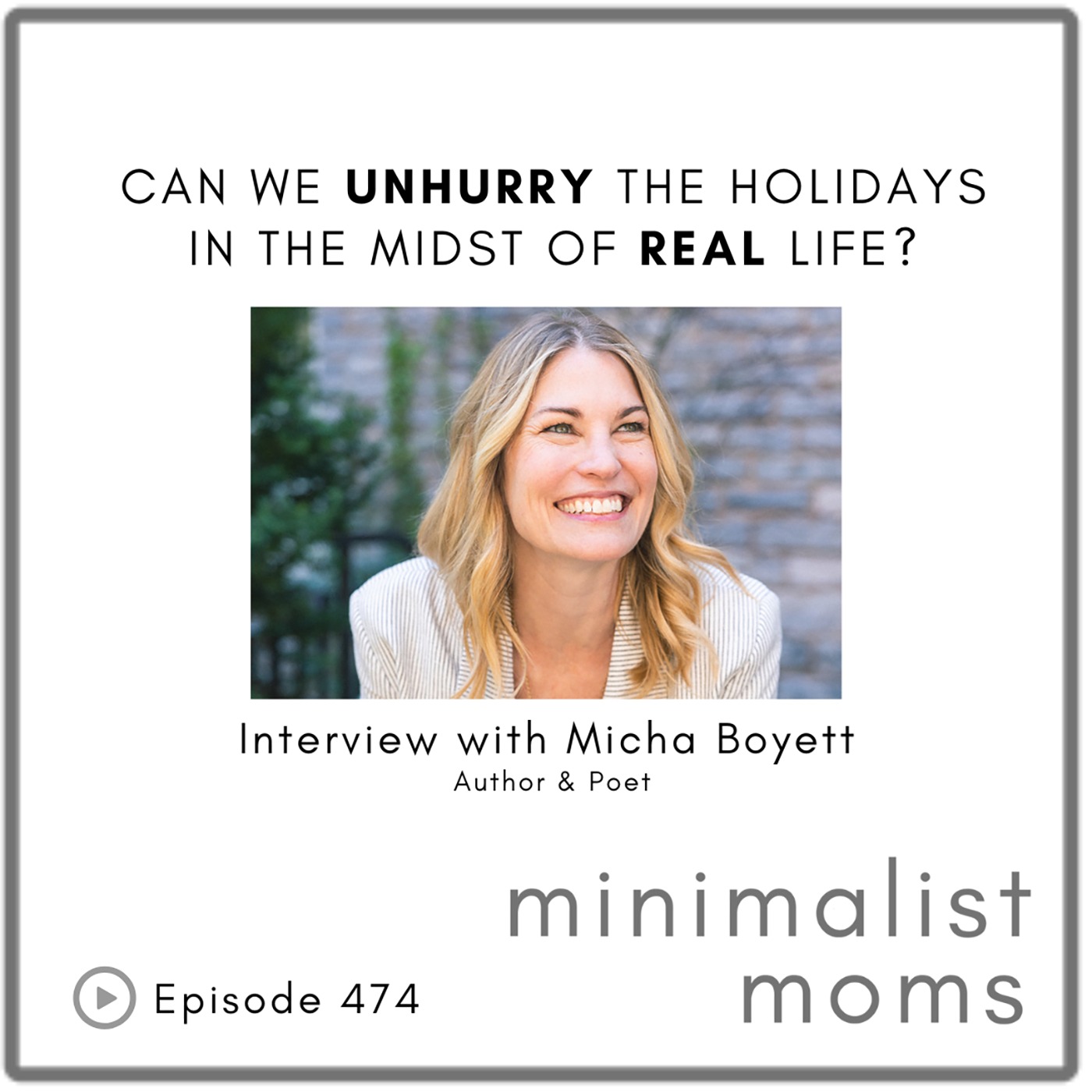
Today I'm joined by author Micah Boyett, whose new book Advent Unhurried (http://amazon.com/dp/1587436108?asc_item-id=amzn1.ideas.DL4M6AD2Z4ZN&creativeASIN=1587436108&linkCode=ssc&ref_=aip_sf_list_spv_ofs_mixed_d_asin&tag=dianeboden-20) offers a refreshing invitation to slow down, pay attention, and rediscover the beauty of waiting. Drawing from her own experiences with motherhood, grief, and raising three boys, Micah shares how she's learned to separate our worth from our productivity and embrace a more intentional approach to the holidays. We explore why we feel responsible for manufacturing wonder, how to make room for both joy and grief during a season that often demands happiness, and why slowing down doesn't necessarily mean doing less. Sometimes, it's simply about noticing more. In this episode, we discuss: Why the pressure to make Christmas magical can steal our joy The surprising connection between Advent and minimalism What motherhood has taught Micah about worth, productivit
My guest today David Williams is a counselor at Jesuit College Preparatory School of Dallas, where he has spent 30 years working with adolescent boys including my own. He's also someone I've learned so much from over the years. I've shared things he's taught me in other podcast conversations, but I decided it was time to bring him on for an entire episode. Raising teenage boys comes with its own set of challenges in a world that constantly tells them to be faster, stronger, smarter, and better. In this conversation, David shares what boys are really navigating beneath the surface, why so many struggle to express emotions or ask for help, and how parents can create a home where they feel safe. We talk about breaking out of the expectations of the "act like a man box," knowing when to step in and when to give them room to grow, and how to raise boys with both high expectations and high support. We also explore the growing pressures of AI, social media, and gambling, and why our ultimate
Dr. Emily King, a school psychologist and mom of two neurodivergent sons, explains that neurodivergent kids often have uneven skills, so it falls to the adults, not the child, to adapt. For autistic kids, she says to start with their strengths and clear barriers until they can advocate for themselves. For kids with ADHD, she says to treat their struggles as regulation differences rather than a lack of intelligence, and to protect their creativity. She encourages parents and teachers to look for patterns, ask “When is this not happening?”, and believe each other when a child does fine in one setting and struggles in the other. Resources mentioned: The Neurodivergent Learner (https://link.amazon/B02b7SKLg) by Dr. Emily King Learn with Dr. Emily: learnwithdremily.com (https://www.learnwithdremily.com/) Dr. Emily King on Substack (https://learnwithdremily.substack.com/), where her workshops are hosted The Neurodiverse Classroom (https://www.learnwithdremily.com/teachers), her professional
One of the greatest ways to honor your parents is to build upon what they gave you and become even better. Seth Troutt, author of Authentic Masculinity: Leaving Behind the Counterfeits for God's Design, (https://link.amazon/B0hlyX1J2) joins Ginny Yurich for an encouraging conversation about raising boys, becoming better parents, and building a family legacy worth carrying forward. Seth offers a refreshing, faith-filled vision of masculinity that begins with humility, embraces mistakes as opportunities for growth, and recognizes that strength and gentleness belong together. He shares an ingenious bedtime storytelling tradition that helps his children prepare for peer pressure, explains why lasting discipline has more to do with what we love than willpower, and recounts the surprisingly freeing parenting advice he received from his own father. Woven throughout is a hopeful reminder that we can build on the good we inherited, change the patterns we didn't want to repeat, and give our chil
Some of the people who change our lives the most have no idea they ever made a difference. A passing compliment, an encouraging coach, or a neighbor who showed up during a difficult season can leave an imprint that lasts for decades. Former collegiate volleyball player and coach Priscilla Tallman joins Ginny Yurich to share the remarkable experiment that became her book, Gratitude Project 53. (https://bluehatpublishing.com/products/gratitude-project-53-by-priscilla-tallman) After years of being defined by her athletic accomplishments, Priscilla decided to give the number 53 an entirely new meaning by personally thanking the people who helped shape her life. Their conversation reveals why gratitude is so much more than listing things we're thankful for, how compassionate mentors help us recognize strengths we cannot see in ourselves, and why the people who invest in our children deserve special recognition. It's a beautiful reminder that our lives are shaped by countless acts of kindnes
The most valuable thing you can have in an emergency might not be a stockpile of supplies. It might be a neighbor who knows your name. In this encouraging conversation, Ginny Yurich welcomes archaeologist and survival expert Chris Begley and author Amy Edelman, coauthors of The Emergency Playbook: The Bunker-Free Guide to Disaster Preparation. (https://link.amazon/B0a06ZOGv)Together, they challenge the idea that surviving difficult circumstances requires expensive equipment, elaborate bunkers, or an everyone-for-themselves mentality. Instead, they reveal how communities often come together during disasters, why practical knowledge can be more valuable than possessions, and how everyday activities like gardening, building fires, and learning first aid can prepare families for the unexpected while enriching their lives right now. From helping children develop useful skills to discovering why hope matters in a crisis, this conversation offers a reassuring perspective on preparedness. Bein
Representatives should revise campaign promises when strong new evidence shows a better course.
Share your view, then see how readers voted. No sign-in required. This poll is shared across stories.
Do you agree or disagree?
Common Quandary
A Common Quandary to discuss
Another conversation to explore, separate from this news story.
Everyone loves the group photo except you. Can you forbid them from posting it?
At a reunion, someone takes a joyful group photo that captures the night perfectly. Everyone looks wonderful except you, caught at an awful angle. The group wants to post it publicly and promises nobody else will care.
How much control should one person have over a memory shared by many?