Episode 429: How to Support the Neurodivergent Learner with Dr. Emily King
41 min
Listen through the publisher, then discuss the episode here or arrange an in-person Roundtable. Your city determines where to meet.
Roundtables are designed for groups of four, with a shared subject and room for everyone to speak. Come for discussion, with no dating expectation.
Dr. Emily King, a school psychologist and mom of two neurodivergent sons, explains that neurodivergent kids often have uneven skills, so it falls to the adults, not the child, to adapt. For autistic kids, she says to start with their strengths and clear barriers until they can advocate for themselves. For kids with ADHD, she says to treat their struggles as regulation differences rather than a lack of intelligence, and to protect their creativity. She encourages parents and teachers to look for patterns, ask “When is this not happening?”, and believe each other when a child does fine in one setting and struggles in the other. Resources mentioned: The Neurodivergent Learner (https://link.amazon/B02b7SKLg) by Dr. Emily King Learn with Dr. Emily: learnwithdremily.com (https://www.learnwithdremily.com/) Dr. Emily King on Substack (https://learnwithdremily.substack.com/), where her workshops are hosted The Neurodiverse Classroom (https://www.learnwithdremily.com/teachers), her professional development curriculum for K–12 educators . . . . . . Exclusions apply. MERCY SHIPS: Please donate today at MercyShips.org/podcast (https://tinyurl.com/RONMercyShips). JOLIE: Jolie will give you your best skin & hair guaranteed. Head tojolieskinco.com/RBG (https://tinyurl.com/RBGJolie) to try it out for yourself with FREE shipping.
Episode information is provided by the publisher. Listening takes place on the publisher’s service.
For the days you got through and nobody saw what it took. A quiet place this evening where it counts. About 12 minutes with Steven Webb's calm voice and music underneath. Perfect for the evening. We let the body soften, from the jaw and the eyes down to the belly, because it's been on alert all day. Then we look at what today really cost. Getting up when your body said no. Being kind to someone while you were falling apart inside. Saying "yeah, fine" because where would you even start? There's an old Zen idea I keep coming back to: a thing doesn't need to be seen to be real. The rain falls on an empty field, nobody watches, and it still soaks in. We put the day down for a minute, not away, just down, and finish with three gentle wishes. May the hard days I got through be counted. I've been paralysed a long time, and I know what it can take just to get through the day. You're not doing this on your own. Treat me to a coffee, keep the podcast free, and get my Weekly Calm every Sunday. It
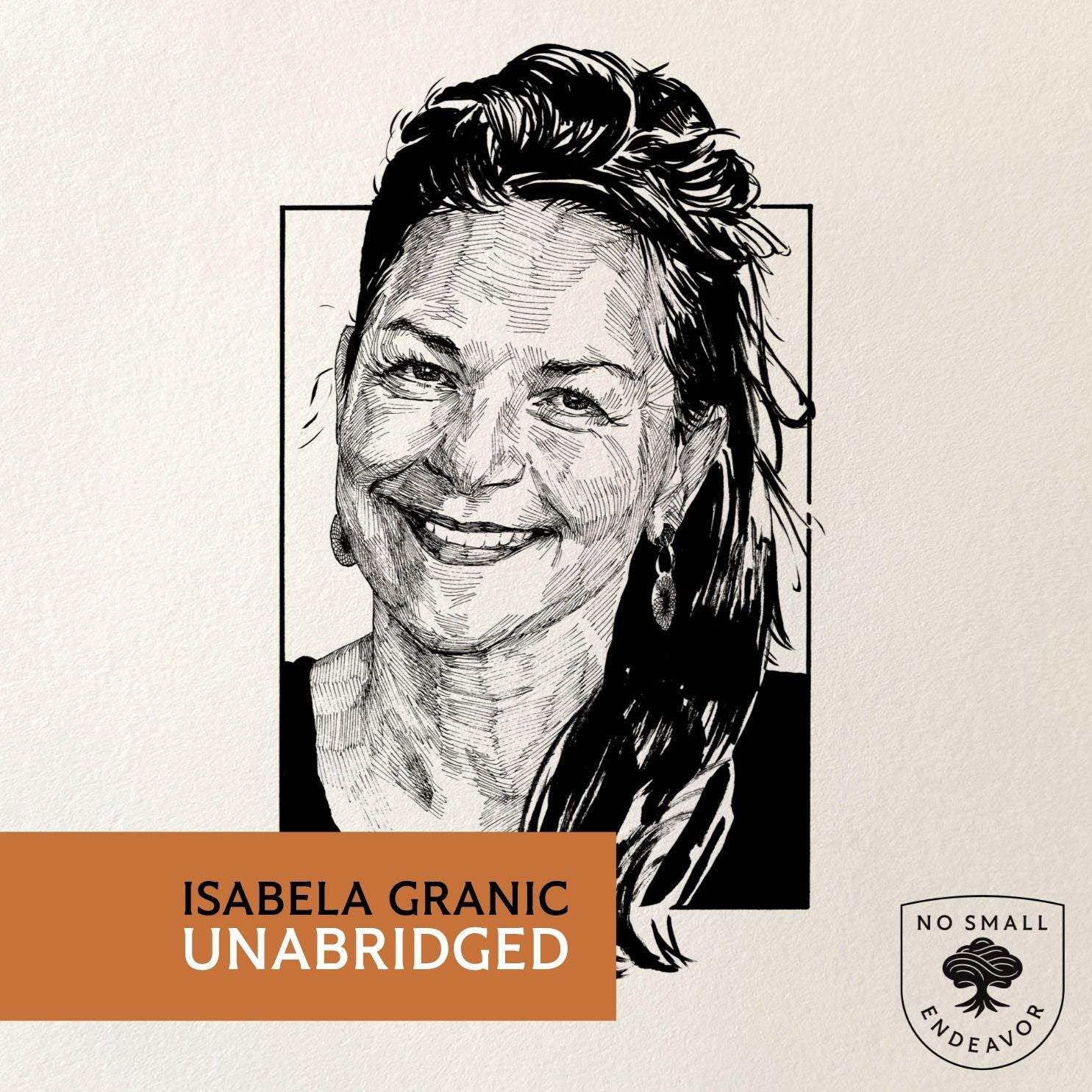
This is our unabridged interview with Isabela Granic. Developmental psychologist Isabela Granic is no technophobe. In the middle of a moral panic over kids and video games, she helped pioneer MindLight (https://playmindlight.com/), a biofeedback video game shown in clinical trials to significantly reduce anxiety symptoms in children ages 8 to 12. But as technology continues to evolve, and AI moves into every corner of childhood development, she’s worried. Isabela joins Lee C. Camp to explore what children need to grow into resilient, flourishing adults, and why a “frictionless” future may take away the very struggles that form us. This is part 2 of our 2-part series: The Cost of Outsourcing Your Humanity to Tech. This project was made possible through the support of a grant from Templeton World Charity Foundation, Inc funder DOI 501100011730) through grant https://doi.org/10.54224/35684https://doi.org/10.54224/35684. (https://doi.org/10.54224/35684%E2%81%A0%E2%81%A0%E2%81%A0.) The opin
Matthew 25: 31-46 - 'I was naked and you clothed me; sick, and you visited me.' Catechism of the Catholic Church Paragraphs: - 544 (In 'The Kingdom of God is at hand') - Jesus identifies himself with the poor of every kind and makes active love toward them the condition for entering his kingdom (abbreviated) - 1033-1034 (in 'I Believe in Life Everlasting') - Our Lord warns us that we shall be separated from him if we fail to meet the serious needs of the poor and the little ones who are his brethren...Jesus often speaks of "Gehenna" of "the unquenchable fire" reserved for those who to the end of their lives refuse to believe and be converted, where both soul and body can be lost. Jesus solemnly proclaims that he "will send his angels, and they will gather . . . all evil doers, and throw them into the furnace of fire," and that he will pronounce the condemnation: "Depart from me, you cursed, into the eternal fire!" - 2447 (in 'Love for the Poor') - The works of mercy are charitable acti
What if the behavior that frustrates you most about your child is actually connected to one of their greatest God-given strengths? In this special Q&A episode of the Celebrate Kids Podcast, Dr. Kathy Koch and Wayne Stender answer real questions from parents and leaders they recently met in San Antonio. They explore how to help children develop genuine belonging, why the 8 Great Smarts can change how we understand misbehavior, and how Christian families can navigate difficult relationships during the holidays with biblical conviction, unconditional love, and thoughtful hospitality. Dr. Kathy explains why knowing how God made our children changes the way we correct them, encourage them, and prepare them for healthy relationships. Wayne also shares how understanding his own children's strengths has helped him become a father whose kids know they are seen, understood, and loved. As Celebrate Kids prepares to expand its ministry in 2027, we're also exploring new ways to bring Dr. Kathy's te
2027 KICKSTARTER https://nla.to/KS (http://nla.to/KS) What if the most important changes arrive not as a crash, but as a tide you slowly learn to read? In this podcast episode, I explore the historic Uranus Pluto trine as it returns between Uranus in Gemini and Pluto in Aquarius. ———— 2027 KICKSTARTER Tools for a deeper astrological practice await. Support Our 2027 Campaign: You may notice a process rather than a single event: new ideas, social shifts, personal patterns, and the strange ways technology and psyche meet. SHARE THIS WITH A FRIEND ️: https://youtu.be/6BznKIeTT-Y I walk through what this astrological transit may ask of you collectively and personally. You might feel a familiar restlessness, or perhaps a quiet urge to change your mind about something you once trusted. This is not a horoscope episode; it is a longer look at how outer-planet transits shape the background of our lives. If this resonates, subscribe for consistent podcast episodes that meet you where you are. You
Sunday 22 November 2026 Today is Sunday the 22nd of November, the solemnity of Our Lord Jesus Christ, King of the Universe, beginning the 34th week of Ordinary Time. In the scripture we will pray with today, we hear of Jesus’ deep desire for us to love and serve those in need. As you hear Madison Cunningham with The Porter’s Gate singing, ‘Little Things with Great Love’, how does this song speak to you? In the garden of our Savior, no flower grows unseen; His kindness rains like water on every humble seed. No simple act of mercy escapes His watchful eye — for there is One who loves me: His hand is over mine. In the kingdom of the heavens, no suffering is unknown; each tear that falls is holy, each breaking heart a throne. There is a song of beauty on every weeping eye — for there is One who loves me: His heart, it breaks with mine. Oh, the deeds forgotten; oh, the works unseen, every drink of water flowing graciously, every tender mercy, You’re making glorious. This You have asked us:
David opens with a story about asking his son’s league for a “losing team,” so his very competitive son could practice being a good teammate when results didn’t go his way. Sissy and David explain that kids need to be taught the behaviors underneath teamwork, and research shows cooperative learning supports academic success instead of taking away from it. They walk through practices from the chapter: competition with compassion, repair after harsh words, reset plans for big emotions, and shared tasks with clear goals and rotating roles. They also offer help for both the child who takes over and the child who stays quiet. The episode wraps with the funny end of the basketball story and a Capable Lab. Families pick one shared task, practice one teamwork behavior and then talk about what each person contributed. Resources mentioned: CDC’s 2023 national survey of high school students. (https://www.cdc.gov/yrbs/results/2023-yrbs-results.html) About 55% said they feel close to people at scho
Sadie talks about the identity struggles she faced as a teen on Duck Dynasty and Dancing with the Stars, and how the story of the woman at the well inspired her new book: real change happens when things get personal. She shares practices from her own home, like “We will always rejoice in the truth,” her parents’ advice to “be the first to tell them” about your struggles, and “Even the best miss,” a phrase she and her daughter took from watching Serena Williams. She also explains how conviction says “God has more for you,” while shame says “I am something wrong.” She closes by encouraging parents to live their faith in a way their kids can see working. Resources mentioned: It’s Not Personal (https://link.amazon/B02GIywe7) by Sadie Robertson Huff Sadie on Instagram: @legitSadieRob (https://www.instagram.com/legitsadierob/?hl=en) WHOA That’s Good podcast (https://podcasts.apple.com/us/podcast/whoa-thats-good-podcast/id1433974017) Episode 40: Growing God Confidence in Kids with Sadie Rober
The episode opens with a quick “first instinct” test for parents and Sissy’s story of not making the sixth-grade cheerleading squad. Her mom let her be sad instead of fixing it, and that disappointment led Sissy to the leadership and mentoring that shaped her career. Drawing on growth-mindset and productive-failure research, Sissy and David explain that struggle helps kids learn, but only when we engage with the mistake instead of rescuing them too early. They suggest two questions for parents: “Is my child unsafe or just uncomfortable?” and “Whose disappointment is this?” They also share practical steps: show empathy before teaching the lesson, praise the process, help kids “fail forward,” and let your kids see you fail. The episode ends on “the power of yet,” including the “yet” of Lamentations 3. They give parents a simple framework to try this week (feel, reflect, move) and a set of questions to ask kids at dinner or in the car. Resources mentioned: Carol Dweck’s research on growth
Research announcements should give uncertainty as much attention as promising findings.
Share your view, then see how readers voted. No sign-in required. This poll is shared across stories.
Do you agree or disagree?
Common Quandary
A Common Quandary to discuss
Another conversation to explore, separate from this news story.
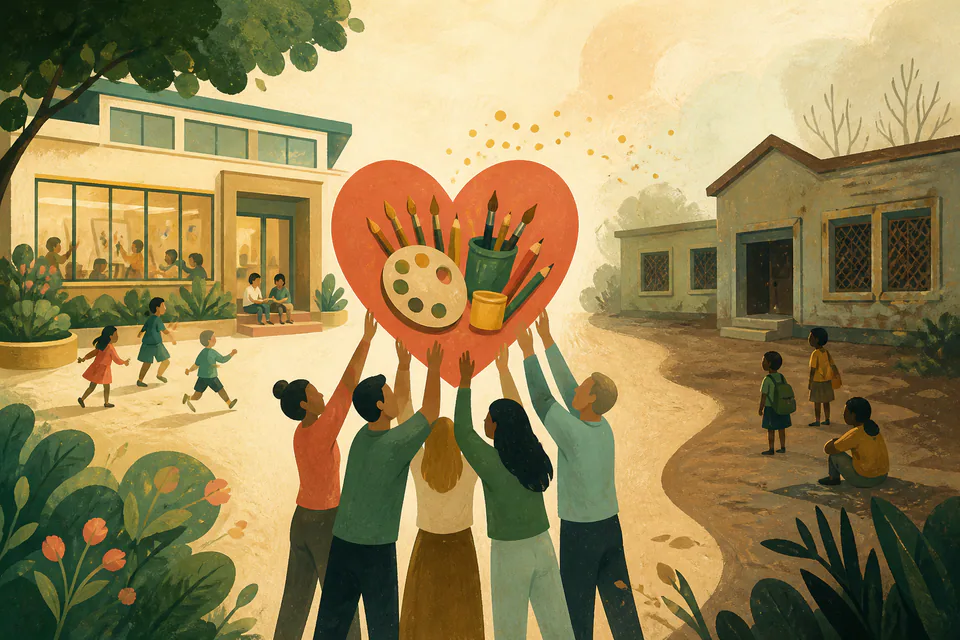
Rich parents want to buy their public-school class an art teacher. Should the school say no?
Parents at a well-resourced public school raise enough money for art teachers and smaller classes. Nearby schools cannot raise comparable amounts, widening differences within the same district.
Can helping your own community become unfair to the larger one?