Episode 428: Teamwork and Collaboration in Capable Kids with David and Sissy
44 min
Listen through the publisher, then discuss the episode here or arrange an in-person Roundtable. Your city determines where to meet.
Roundtables are designed for groups of four, with a shared subject and room for everyone to speak. Come for discussion, with no dating expectation.
David opens with a story about asking his son’s league for a “losing team,” so his very competitive son could practice being a good teammate when results didn’t go his way. Sissy and David explain that kids need to be taught the behaviors underneath teamwork, and research shows cooperative learning supports academic success instead of taking away from it. They walk through practices from the chapter: competition with compassion, repair after harsh words, reset plans for big emotions, and shared tasks with clear goals and rotating roles. They also offer help for both the child who takes over and the child who stays quiet. The episode wraps with the funny end of the basketball story and a Capable Lab. Families pick one shared task, practice one teamwork behavior and then talk about what each person contributed. Resources mentioned: CDC’s 2023 national survey of high school students. (https://www.cdc.gov/yrbs/results/2023-yrbs-results.html) About 55% said they feel close to people at school. OECD 2023 survey of social and emotional skills (https://www.oecd.org/en/publications/social-and-emotional-skills-for-better-lives_35ca7b7c-en.html). 15-year-olds reported lower trust than 10-year-olds. NIH Study promoting early adolescents' achievement and peer relationships: the effects of cooperative, competitive, and individualistic goal structures (https://pubmed.ncbi.nlm.nih.gov/18298270/) NIH Study on The Longitudinal Relationship Between Peer Relations and Empathy and their Joint Contribution to Reducing Bullying in Middle School: Findings from a Randomized Trial of Cooperative Learning (https://pubmed.ncbi.nlm.nih.gov/36818659/) . . . . . . Exclusions apply. MERCY SHIPS: Please donate today at MercyShips.org/podcast (https://tinyurl.com/RONMercyShips). JOLIE: Jolie will give you your best skin & hair guaranteed. Head tojolieskinco.com/RBG (https://tinyurl.com/RBGJolie) to try it out for yourself with FREE shipping. IPSY: Get your first Ipsy original bag for $5, with $10 off the regular $15 monthly subscription, at ipsy.com/rbg (https://tinyurl.com/RBGIpsy). WAYFAIR: Get organized, refreshed, and ready for the holidays for way less. Head toWayfair.com (https://tinyurl.com/RBGWayfair) right now to shop all things home. OUR PLACE: Stop cooking with toxic cookware, and upgrade to Our Place today.
Episode information is provided by the publisher. Listening takes place on the publisher’s service.
"These practices are to support us in our life, but our life is also our practice." — Willem Kuyken Dr. Willem Kuyken, a clinical psychologist at the University of Oxford, led MYRIAD, the largest trial of mindfulness training in schools, with more than 8,000 students aged 11 to 14 in 84 UK schools. In this conversation Willem tells David what the trial found. Students who were taught mindfulness by their own teachers did no better than students whose schools carried on with their usual social-emotional teaching, and most of them practiced just once. The teachers, who learned mindfulness for themselves first, did benefit. Willem and David talk about the meeting where the results were revealed, whether mindfulness training can be prescribed or has to be chosen, what protected young people's mental health through the pandemic, and how Willem would design the trial today. They also talk about parenting, two small practices from Willem's book Mindfulness for Life, and what the London Underg
Embryo Research in the Netherlands: Sean and Scott reflect on the Dutch Senate narrowly passing legislation allowing scientists to create human embryos (https://www.medicalbrief.co.za/netherlands-approves-embryo-creation-for-research/) specifically for research, such as gene-editing experiments. They critique this move as an erosion of human dignity from conception that treats unborn lives as disposable commodities. Major U.S. Tech Outages: Following widespread disruptions across airlines, banks, and Microsoft Outlook, the hosts weigh whether foreign cyberattacks, AI vulnerabilities, or fragile legacy code are to blame. They challenge listeners to resist conspiracy theories through "epistemic humility" while reflecting on how biblical truth-telling underpins the trust our economy and communities rely on. The Youth Sports Industrial Complex: From kids missing school for travel tournaments to families spending fortunes on F1 racing academies, the $40 billion youth sports industry is reac
What if the behavior that frustrates you most about your child is actually connected to one of their greatest God-given strengths? In this special Q&A episode of the Celebrate Kids Podcast, Dr. Kathy Koch and Wayne Stender answer real questions from parents and leaders they recently met in San Antonio. They explore how to help children develop genuine belonging, why the 8 Great Smarts can change how we understand misbehavior, and how Christian families can navigate difficult relationships during the holidays with biblical conviction, unconditional love, and thoughtful hospitality. Dr. Kathy explains why knowing how God made our children changes the way we correct them, encourage them, and prepare them for healthy relationships. Wayne also shares how understanding his own children's strengths has helped him become a father whose kids know they are seen, understood, and loved. As Celebrate Kids prepares to expand its ministry in 2027, we're also exploring new ways to bring Dr. Kathy's te
Why does Allah allow good people to suffer? When hardship enters your life, does it mean Allah is displeased with you, or could your struggles be bringing you closer to Him? Every believer experiences moments of pain, loss, uncertainty, and heartbreak. But in Islam, suffering is not necessarily a sign of Allah's anger, and experiencing sadness does not mean your faith is weak. In this powerful and comforting Islamic lecture, Ustadh Reece explores the deeper wisdom behind life's difficulties, the true meaning of Sabr, and how Muslims can remain connected to Allah ﷻ during their hardest moments. Through lessons from the Qur'an, authentic Hadith, and the lives of the Prophets, this reminder explores: - Why Allah tests those who believe in Him - How hardship can become a means of spiritual growth - What Prophet Muhammad ﷺ taught us about grief and sadness - The patience and beautiful du'a of Prophet Ayyub (AS) - How the story of Prophet Yusuf (AS) reveals Allah's wisdom - Why both blessing
Big News! Clicking Here (https://meditationsounds.supercast.com/) Email List (https://bit.ly/3T010m4) Guided Meditation for Children | Hot Air Balloon Ride AdventureLet your child’s imagination soar in this relaxing guided meditation designed just for kids. In this peaceful hot air balloon adventure, your child will float high above the clouds, exploring the sky while feeling calm, safe, and happy. Perfect for bedtime, nap time, or quiet moments during the day, this meditation helps children slow down, breathe deeply, and find their inner calm. With gentle storytelling and soothing background music, this experience promotes emotional balance, better sleep, and a peaceful heart. Ideal for ages 4–10, but magical for dreamers of all ages. #GuidedMeditationForChildren#KidsMeditation#RelaxationForKids#BedtimeMeditation#MindfulnessForKids#HotAirBalloonMeditation#CalmKids#MeditationStory#PositiveKidsContent#PeacefulParenting guidedmeditation for children, kids meditation, bedtime meditation f
How do you get your kids interested in learning without making it feel like homework? In today's episode, we're revisiting some of Ryan's favorite conversations with Kenny Curtis, host of Greeking Out (https://podcasts.apple.com/us/podcast/greeking-out-from-national-geographic-kids/id1483233279) and History Snacks (https://podcasts.apple.com/us/podcast/history-snacks/id1874130976), about how to encourage your kids' interests, nurture their natural curiosity, take those interests beyond a screen, and turn their curiosity into real-world experiences. Check out the full episodes with Kenny Curtis (https://podcasts.apple.com/us/podcast/greeking-outs-kenny-curtis-on-how-ancient-myths-teach/id1430315931?i=1000682597107)! | Apple Podcasts (https://podcasts.apple.com/us/podcast/greeking-outs-kenny-curtis-on-how-ancient-myths-teach/id1430315931?i=1000682597107), Spotify (https://open.spotify.com/episode/2CZPpfwjiwEsvb84EZyyz5), YouTube (https://www.youtube.com/watch?v=qAu5_O-KZNg) Pick up a cop
Dr. Emily King, a school psychologist and mom of two neurodivergent sons, explains that neurodivergent kids often have uneven skills, so it falls to the adults, not the child, to adapt. For autistic kids, she says to start with their strengths and clear barriers until they can advocate for themselves. For kids with ADHD, she says to treat their struggles as regulation differences rather than a lack of intelligence, and to protect their creativity. She encourages parents and teachers to look for patterns, ask “When is this not happening?”, and believe each other when a child does fine in one setting and struggles in the other. Resources mentioned: The Neurodivergent Learner (https://link.amazon/B02b7SKLg) by Dr. Emily King Learn with Dr. Emily: learnwithdremily.com (https://www.learnwithdremily.com/) Dr. Emily King on Substack (https://learnwithdremily.substack.com/), where her workshops are hosted The Neurodiverse Classroom (https://www.learnwithdremily.com/teachers), her professional
Sadie talks about the identity struggles she faced as a teen on Duck Dynasty and Dancing with the Stars, and how the story of the woman at the well inspired her new book: real change happens when things get personal. She shares practices from her own home, like “We will always rejoice in the truth,” her parents’ advice to “be the first to tell them” about your struggles, and “Even the best miss,” a phrase she and her daughter took from watching Serena Williams. She also explains how conviction says “God has more for you,” while shame says “I am something wrong.” She closes by encouraging parents to live their faith in a way their kids can see working. Resources mentioned: It’s Not Personal (https://link.amazon/B02GIywe7) by Sadie Robertson Huff Sadie on Instagram: @legitSadieRob (https://www.instagram.com/legitsadierob/?hl=en) WHOA That’s Good podcast (https://podcasts.apple.com/us/podcast/whoa-thats-good-podcast/id1433974017) Episode 40: Growing God Confidence in Kids with Sadie Rober
The episode opens with a quick “first instinct” test for parents and Sissy’s story of not making the sixth-grade cheerleading squad. Her mom let her be sad instead of fixing it, and that disappointment led Sissy to the leadership and mentoring that shaped her career. Drawing on growth-mindset and productive-failure research, Sissy and David explain that struggle helps kids learn, but only when we engage with the mistake instead of rescuing them too early. They suggest two questions for parents: “Is my child unsafe or just uncomfortable?” and “Whose disappointment is this?” They also share practical steps: show empathy before teaching the lesson, praise the process, help kids “fail forward,” and let your kids see you fail. The episode ends on “the power of yet,” including the “yet” of Lamentations 3. They give parents a simple framework to try this week (feel, reflect, move) and a set of questions to ask kids at dinner or in the car. Resources mentioned: Carol Dweck’s research on growth
Organizations should collect less personal information rather than simply promise stronger security.
Share your view, then see how readers voted. No sign-in required. This poll is shared across stories.
Do you agree or disagree?
Common Quandary
A Common Quandary to discuss
Another conversation to explore, separate from this news story.
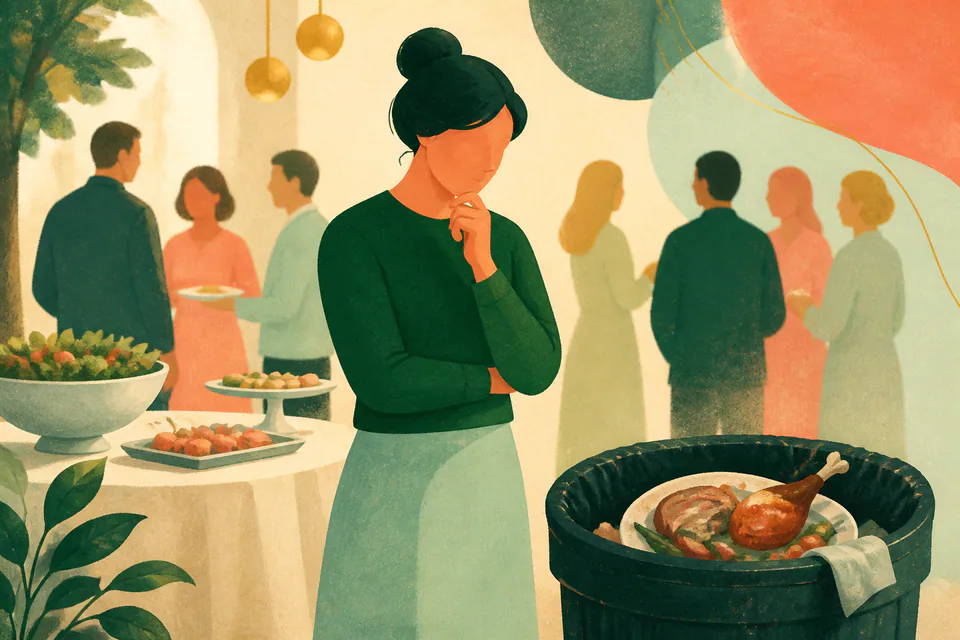
You are vegetarian, but the leftover steak is headed for the trash. Do you eat it?
A vegetarian avoids buying meat because of animal welfare concerns. At work events, untouched meat is routinely thrown away, and eating it would neither increase demand nor cause another animal to be harmed.
Should a moral practice be judged by its consequences or its consistency?