216. Joel Jamieson: How to Improve VO2 Max, HRV & Longevity Without Overtraining
64 min
Listen through the publisher, then discuss the episode here or arrange an in-person Roundtable. Your city determines where to meet.
Roundtables are designed for groups of four, with a shared subject and room for everyone to speak. Come for discussion, with no dating expectation.
What if working out harder isn't actually making you healthier? And what if the secret to improving your fitness, recovery, and longevity is knowing when to push—and when to pull back? In this episode, I'm joined by Joel Jamieson, performance coach, HRV expert, and creator of Morpheus, to explore the science of VO2 max, heart rate variability (HRV), Zone 2 training, and exercise recovery. After decades of training elite athletes, Joel explains why the same principles that drive peak performance can help everyday people improve cardiovascular fitness, build strength, and age better. We discuss why more exercise isn't always better, how chronic stress and poor sleep affect your ability to recover, and how to use wearable data without becoming obsessed with every number. In this episode, you'll learn: Why VO2 max is an important measure of cardiovascular fitness and longevity How to use HRV and resting heart rate to understand stress and recovery The difference between Zone 2 cardio and high-intensity interval training Why recovery is when your body actually adapts and gets stronger How to balance strength training, cardio, and rest for sustainable results Why sleep, stress, and lifestyle should influence how hard you train The biggest takeaway? You don't need to train like an elite athlete to benefit from the science of performance. The key is finding the right balance between exercise and recovery—and building a fitness routine you can sustain for life. Learn more about Dr. Shah: Website: drshah.com (https://drshah.com/) Clinic: next-health.com (https://www.next-health.com/) Instagram: @darshanshahmd and @extend_podcast Book Pre-Order: https://www.amazon.com/YourNewHealthOS (https://www.amazon.com/dp/1969905158?channelId=500&lv=shuf&plpRedirect=mhFallback&th=1) Learn more about Joel Jamieson: Website: trainwithmorpheus.com (https://trainwithmorpheus.com/) Instagram: @coachjoeljamieson Thank You to Our Sponsors! Next Health: Your destination for cutting-edge health optimization - from IV therapy to hormone balancing, peptides and stem cells. Explore at next-health.com (https://www.next-health.com/)!
Episode information is provided by the publisher. Listening takes place on the publisher’s service.
What if the scale isn't telling you the whole story? Have you ever been consistent with your workouts, making better food choices, and really trying to take care of yourself, only to step on the scale and see absolutely no change? And just like that, your motivation takes a hit. You start questioning whether your workouts are working, whether you're doing enough, or whether you need to change something. But here's what I want you to understand: The scale is only measuring one small piece of your health and fitness journey. It doesn't measure how much stronger you've become, how much better your endurance is, how much energy you have, or how much easier it is to do things that used to feel difficult. And if you're only using the scale to determine whether you're making progress, you could be missing some pretty amazing changes happening in your body. Today, we're talking about five ways to measure your fitness progress beyond the scale so you can start recognizing the changes that actua
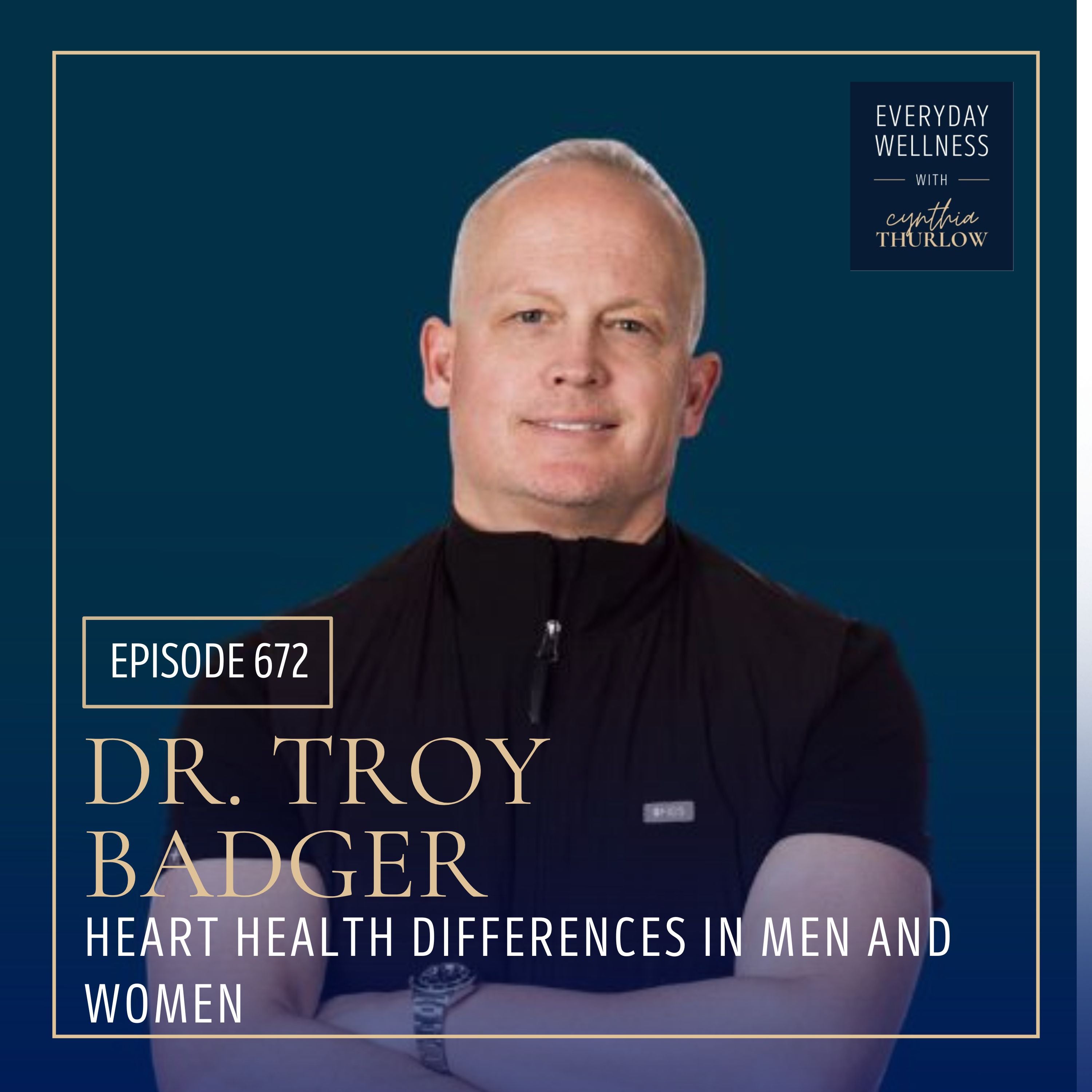
Today, I’m honored to connect with Dr. Troy Badger. He is a board-certified cardiologist and interventionalist and the founder of Cardiostrong, a concierge preventive cardiology clinic in Provo, Utah, focused on reducing cardiovascular risk, optimizing metabolic health, and improving strength and cardiorespiratory fitness for executives and athletes. In today’s conversation, we discuss Dr. Badger’s gender- and age-specific approach to heart health, including treatment differences for men and women, and diagnoses such as INOCA, SCAD, vasospastic disease, and Takotsubo. We examine emotions and their influence on heart health, coronary ischemia and cardiomyopathies, labs and diagnostics, how Dr. Badger assesses risk in his patients, and the differences between a CAC and a CCTA. Dr. Badger also shares the labs he finds essential for all patients and discusses the role of VO2 Max, cardiovascular training, and lifestyle—specifically nutrition, the use of GLP-1 drugs, and a multidisciplinary
For all the references, links, and a written breakdown, see the associated StayCurious Metabolism Newsletter: https://staycuriousmetabolism.substack.com/p/how-a-mothers-diet-rewrites-her-childrens?r=40ekz2 What your mother ate during pregnancy may shape your cardiovascular health today. New research published in Nature Cardiovascular Research reveals that a maternal Western diet—high in sugar and saturated fat—can epigenetically program her offspring to develop atherosclerosis and heart disease. In this video, I’ll break down how maternal nutrition impacts epigenetic bookmarks activate inflammatory genes, and why this matters for obesity, diabetes, and cardiovascular disease. We’ll also explore how ketogenic diets, healthier nutrition choices, and lifestyle interventions may help reverse this metabolic programming and support lifelong heart health. Most importantly, you’ll see why epigenetic legacy is not destiny. While we may inherit predispositions, lifestyle, nutrition, metabolic he
Is your body weight stable, but you're still not eating enough to properly fuel your training, recovery, and overall health? Introducing Why Stable Weight Doesn't Always Mean You're Eating Enough from Jeff Hoehn of the Mind Muscle Connection Podcast (https://www.buzzsprout.com/1508401). Just because your weight isn't changing doesn't necessarily mean you're adequately fueled. In this episode, Jeff breaks down why maintaining a stable body weight doesn't always mean you're meeting your body's energy needs, especially if you're training hard, staying lean, or spending long periods dieting. You'll learn: Why stable body weight doesn't automatically mean adequate energy availability Who is most at risk of underfueling, even when their weight isn't changing How high training output, staying too lean, and chronic dieting can contribute to low energy availability The potential signs of underfueling, including changes in performance, recovery, hormones, and menstrual health Why spending too lo
If you're training hard but feeling wiped, eating a restricted diet for your gut, or just never hungry after a tough workout, you might not be getting the protein you need. This episode breaks down how much you really need and how to get it without upsetting your gut. YOU'LL TAKEAWAY: Macronutrients and calories 101, and how restrictive diets throw off your balance How your body digests protein, and why it matters before workouts The many roles of protein, from enzymes and iron storage to post-workout appetite How much protein you need, plus 3 easy low FODMAP ways to boost it — RESOURCES & LINKS MENTIONED: ⤵️ Want high touch coaching support for IBS & fuelling performance? Apply for coaching. (http://gutfitnutrition.com/apply) Free Training: How to Control IBS So You Can Fuel Your Training Without a Lifelong Low FODMAP Diet (https://gutfitnutrition.com/heal-ibs-training-live) Supporting your immune system when you're sick (Ep. 70) (https://open.spotify.com/episode/5bCto0jWLcbC5hQW4hrH6
In this episode of The WarriorBabe Show, Nikkiey reveals the 5 specific exercises that actually work for losing stubborn menopause belly fat - and why the crunches, cardio, and calorie cutting you’ve been doing aren’t the answer. She breaks down why you can’t spot reduce belly fat, what actually drives results (building lean muscle, training your deep core, and boosting your metabolism), and walks through each exercise step by step: goblet squats for targeting your largest muscle groups, dead bugs for activating the transverse abdominis (your body’s natural corset), Romanian deadlifts for hormone-friendly fat loss, plank pull-throughs for core stability under movement, and step-back lunges for balance, glute activation, and calorie burn - all without needing a gym. Plus why pairing these moves with the right nutrition strategy is the missing piece, and how the Macro Method has helped over 20,000 women finally see their menopause belly change. Full notes, timestamps and the transcript:
What if one of the most powerful tools for healthy aging isn't another supplement, medication, or expensive treatment—but learning how to regulate your own nervous system? We know chronic stress can take a toll on our health. But what if we could actually train our bodies to respond differently to stress, improve our resilience, and potentially influence how we age? In this episode, I'm joined by Howard Martin, Executive Vice President of HeartMath, to explore the fascinating connection between heart rate variability (HRV), the nervous system, emotional health, and longevity. For decades, HeartMath has studied how the heart communicates with the brain and how our emotional states influence the rhythms of our heart. Howard explains the concept of heart coherence, why the balance between our sympathetic and parasympathetic nervous systems matters, and how simple daily practices may help us become more resilient to stress. We also discuss why HRV tends to change as we age, how emotional r
What if menopause isn't the beginning of your decline—but the beginning of your most powerful chapter? And what if the reason fasting isn't working for you has more to do with stress than willpower? In this episode, I welcome back Dr. Mindy Pelz, bestselling author of Fast Like a Girl and Age Like a Girl, to explore how menopause, hormones, and nervous system health influence the way women age. Dr. Pelz challenges the traditional narrative around menopause, explaining how declining estrogen may affect the brain, behavior, and identity. We also discuss why intermittent fasting isn't one-size-fits-all, how chronic stress can affect metabolism and weight management, and why sometimes doing less is exactly what your body needs. In this episode, you'll learn: How menopause and declining estrogen can influence brain health, mood, and behavior Why fasting strategies may need to change throughout a woman's menstrual cycle and menopause How chronic stress, cortisol, and nervous system regulatio
What if your body is giving you clues about your health that you're overlooking? From changes in your tongue and skin to chronic tension, anxiety, and digestive issues, traditional Chinese medicine offers a different perspective on how seemingly unrelated symptoms may be connected. In this episode, I'm joined by Dr. Chris Motley, a practitioner of traditional Chinese medicine and acupuncture, to explore how ancient healing practices can complement modern approaches to health and longevity. We dive into the fascinating world of acupuncture, meridians, fascia, nervous system regulation, herbal medicine, and the mind-body connection, exploring how traditional Chinese medicine interprets patterns in the body and approaches chronic health concerns. Dr. Motley explains why he believes symptoms shouldn't always be viewed in isolation, how emotional stress may influence physical health, and why understanding the body's interconnected systems is central to his practice. In this episode, you'll
Street design should prioritize pedestrians and public transport over private cars.
Share your view, then see how readers voted. No sign-in required. This poll is shared across stories.
Do you agree or disagree?
Common Quandary
A Common Quandary to discuss
Another conversation to explore, separate from this news story.
The best garden plot has been abandoned for months. Who gets to take it?
Garden plots have a three-year waiting list. One member's plot has gone untended for months and messages go unanswered, but other gardeners know they recently faced serious health problems.
How long should a shared resource remain reserved out of compassion?