Listen through the publisher, then discuss the episode here or arrange an in-person Roundtable. Your city determines where to meet.
Roundtables are designed for groups of four, with a shared subject and room for everyone to speak. Come for discussion, with no dating expectation.
Harrison Pitt is a writer specialising in philosophy and intellectual history, a senior policy fellow at Restore Britain, a contributing editor at The European Conservative and a fellow at the New Culture Forum. Born in 1998, he is writing a book that sets out a systematic philosophy of national belonging. Harrison and I argue about the question underneath almost every other political fight in Britain right now: what actually makes someone part of a nation and does it matter? We go through citizenship, values, what Harrison calls demographic security, why he thinks the post-1945 consensus overcorrected and whether a mass democracy can work without a shared people. - - - - - - - - - - - - - - - - - - - - - - - - - - - - - - - - - - - - - - - - - - - - - - - - - - TIMESTAMPS: 00:00:00 - Why Is Britain Failing? 00:03:12 - Have Conservatives Lost Their Confidence? 00:08:27 - Can You Even Define British Values? 00:12:06 - Citizenship By Descent 00:18:14 - Why Should We Care? 00:27:07 - Are We Heading For Defeat? 00:31:05 - In A Mass Democracy, Does It Matter? 00:35:30 - Insulated Until Now 00:39:13 - The Conversation With His Daughter 00:46:13 - Can It Stay Peaceful? 00:53:52 - Luxury Beliefs 00:56:43 - The Facts Of Life Are Conservative 01:02:07 - Brothers On Opposite Sides 01:11:41 - The Middle Class Is Being Squeezed 01:14:03 - The Italians At London Brick 01:17:54 - We Want Stuff Now, You Pay Later 01:23:34 - From Atheist To Conservative 01:28:39 - Could You Be Wrong? 01:34:29 - A Discerning Welfare State 01:43:14 - Could Restore Win Bedford? - - - - - - - - - - - - - - - - - - - - - - - - - - - - - - - - - - - - - - - - - - - - - - - - - - CONTACT PETE › Website – http://petermccormack.com (http://petermccormack.com/) › Feedback – https://www.petermccormack.com/contact › Email – [email protected] › Instagram – https://www.instagram.com/mccormack555/ › X/Twitter – https://x.com/petermccormack/ CONNECT WITH HARRISON PITT › X/Twitter – https://x.com/Harry_pitt › Substack – https://substack.com/@harrisonpitt › The European Conservative – https://europeanconservative.com/ - - - - - - - - - - - - - - - - - - - - - - - - - - - - - - - - - - - - - - - - - - - - - - - - - - LISTEN / SUBSCRIBE › Apple Podcasts: https://apple.co/40ruY9K › Spotify: https://spoti.fi/3Wc94Vu › Fountain: https://bit.ly/FountainPM › YouTube: https://bit.ly/YouTube_PM › Rumble: https://bit.ly/RumblePM FILMED BY CURTIS TAYLOR › https://www.curttaylor.co.uk/ › https://x.com/curttayloruk/ EDITED BY CONOR MCCORMACK › https://x.com/ConorM04 - - - - - - - - - - - - - - - - - - - - - - - - - - - - - - - - - - - - - - - - - - - - - - - - - - Hosted on Acast.
Episode information is provided by the publisher. Listening takes place on the publisher’s service.
Access the masterclass instantly for free: https://nci.university/learn Uploaded 10-01-26 Your goals don’t fail because you lack discipline — they fail because they were aimed at the wrong system. Optimizing behavior without fixing brain chemistry is like issuing commands to a damaged machine. Until the chemical environment is right, effort just increases friction and burnout. All goals live in the conscious mind — but control does not. Real behavior is governed by the mammalian brain, the ancient systems that decide safety, threat, and energy allocation. Every resolution collapses when those lower systems detect risk, even if you consciously “want” the outcome. Goal-setting ignores this hierarchy — and that’s why it keeps failing. Once you target the parts of the brain actually in charge, change stops feeling like force. Discipline becomes unnecessary when the system itself is aligned. Please note that the content provided in this broadcast is for informational and educational purpose
Prince Harry criticizes the Trump administration’s approach to Ukraine and says he would return to military service if asked. Palace Intrigue covers his interview with The Telegraph during a visit to Lviv, his support for Ukraine, and his comments about veterans being prepared to serve again. Former royal protection chief Dai Davies argues that Harry’s public remarks could complicate his security and create difficulties for King Charles. A source close to the Duke of Sussex pushes back, questioning Davies’s decision to discuss Harry’s protection publicly. Royal writer Tom Sykes also criticizes the timing of Harry’s publicity during Prince William and Kate Middleton’s Earthshot visit to India. Plus, Harry discusses life in Britain with Meghan Markle, Prince Archie, and Princess Lilibet during an appearance on ITV’s This Morning. He shares updates on the children’s adjustment to school, Christmas plans, country walks, and pub life. The family’s Winter Wonderland visit also draws coverage
Hey everybody, Tom Bilyeu here. On today’s episode of Impact Theory, we’re taking on a topic that’s got the whole world holding its breath: the escalating crisis between the United States and Iran. As tensions ratchet up, we’re asking the tough questions—how did we get stuck in this “escalation trap,” and what does it mean for America’s global leverage, our economy, and our very sense of security? The conversation focused on why the traditional idea of “strategy” might be failing policymakers, using powerful analogies—like chess versus roulette—to show how doubling down in conflict can spiral out of control. We’ll break down the risks of tactical “wins” that create even bigger crises, the real leverage Iran holds with control of the Strait of Hormuz, and the mounting pressure on President Trump as political support erodes and legacy hangs in the balance. A key theme that emerged is what happens when military might runs into decentralized opposition, and why high-stakes gambles—like the
Before House Democrats voted on Hakeem Jeffries for Speaker, nobody was running against him, but a group of new progressive members, known as "The Bloc," wouldn't commit to backing him without guarantees. Asked about the holdouts, Jeffries told reporters: "You'll have to ask, you know, those individuals." In the Senate, Chris Van Hollen was challenging Chuck Schumer for leader, and Schumer was bristling. Meanwhile, John Fetterman was hinting he could leave the party if Van Hollen won. Don was joined by Mehdi Hasan, founder and editor-in-chief of Zeteo, to talk about who should lead the Democrats and whether the party was already blowing its big win. GUEST: Mehdi Hasan, founder and editor-in-chief of Zeteo FIND THE DON LEMON SHOW: Youtube: https://www.youtube.com/@TheDonLemonShow Substack: https://substack.com/@donlemon Facebook: facebook.com/donlemon Instagram: instagram.com/donlemonofficial Tik Tok: tiktok.com/@donlemonofficial LEMON NATION: Website: donlemon.com Buy Merch: https://do
Vals AI founder Rayan Krishnan joins Theo to discuss his new report revealing that frontier AI models have few guardrails against autonomous weapons, including targeting civilians and a school in simulated and real warzone footage. They also break down GPT-6.2 Astra’s post-training limitations compared to Anthropic’s Fable models, why Anthropic is nerfing public RSI capabilities, and why Vals AI’s timeline still points to full recursive self-improvement by July 2027. MTS chronicles the singularity, live. Monitoring the situation of tech and AI. Follow MTS: Spotify |https://open.spotify.com/show/4HUNNmV1pjV7CW6Lphm1rM Apple |https://podcasts.apple.com/us/podcast/mts/id1891088763 – Brought to you by: Mongo DB - Anyone can prototype an agent. Lovable - Turn ideas into software people love with Lovable. Start today at https://lovable.dev/ Factory - A 24/7 system turning signals into production software. Visithttps://factory.com/ Neon (by Databricks) - Scale your startup on Neon. The Postgr
Dive into the anatomy of a sneaker to better understand your clothing’s carbon footprint, and how to be a more responsible consumer. Uploaded 23-04-20 -- Australians call them “runners." The British know them as “trainers.” Americans refer to them as “sneakers.” Whatever you call them, these casual shoes are worn by billions of people around the world. Today, roughly 23 billion shoes are produced each year. So, how can we balance our love of sneakers with the need for sustainability? Angel Chang explores how shoe manufacturing impacts our planet. Lesson by Angel Chang, directed and animated by Ella Dobson. Animator's website: https://www.elladobson.com/ Sign up for our newsletter: http://bit.ly/TEDEdNewsletter Support us on Patreon: http://bit.ly/TEDEdPatreon Find us on Twitter: http://bit.ly/TEDEdTwitter Peep us on Instagram: http://bit.ly/TEDEdInstagram View full lesson: https://ed.ted.com/lessons/the-life-cycle-of-a-sneaker-angel-chang Thank you so much to our patrons for your suppo
Why is Britain failing to grow, and how much of the problem lies in the way the country is governed? Paul Collier joins me to discuss why Britain has concentrated too much power in Whitehall and the Treasury, leaving towns and cities without the money or freedom to shape their own futures. We discuss what went wrong with British capitalism, why investment flows away from productive businesses, and how energy costs, housing and political incentives affect the next generation. Paul makes the case for breaking up Treasury power, rebuilding local economies and giving people a credible reason to believe things can improve. - - - - - - - - - - - - - - - - - - - - - - - - - - - - - - - - - - - - - - - - - - - - - - - - - - TIMESTAMPS: 00:00:00 - Whitehall Makes Brilliant People Useless 00:01:14 - What's Gone Wrong With Capitalism? 00:04:05 - A Message Of Hope That Survives Interrogation 00:09:57 - My Son Votes Green 00:12:10 - Why Central Planning Always Fails 00:18:04 - Britain Is Far Too Ce
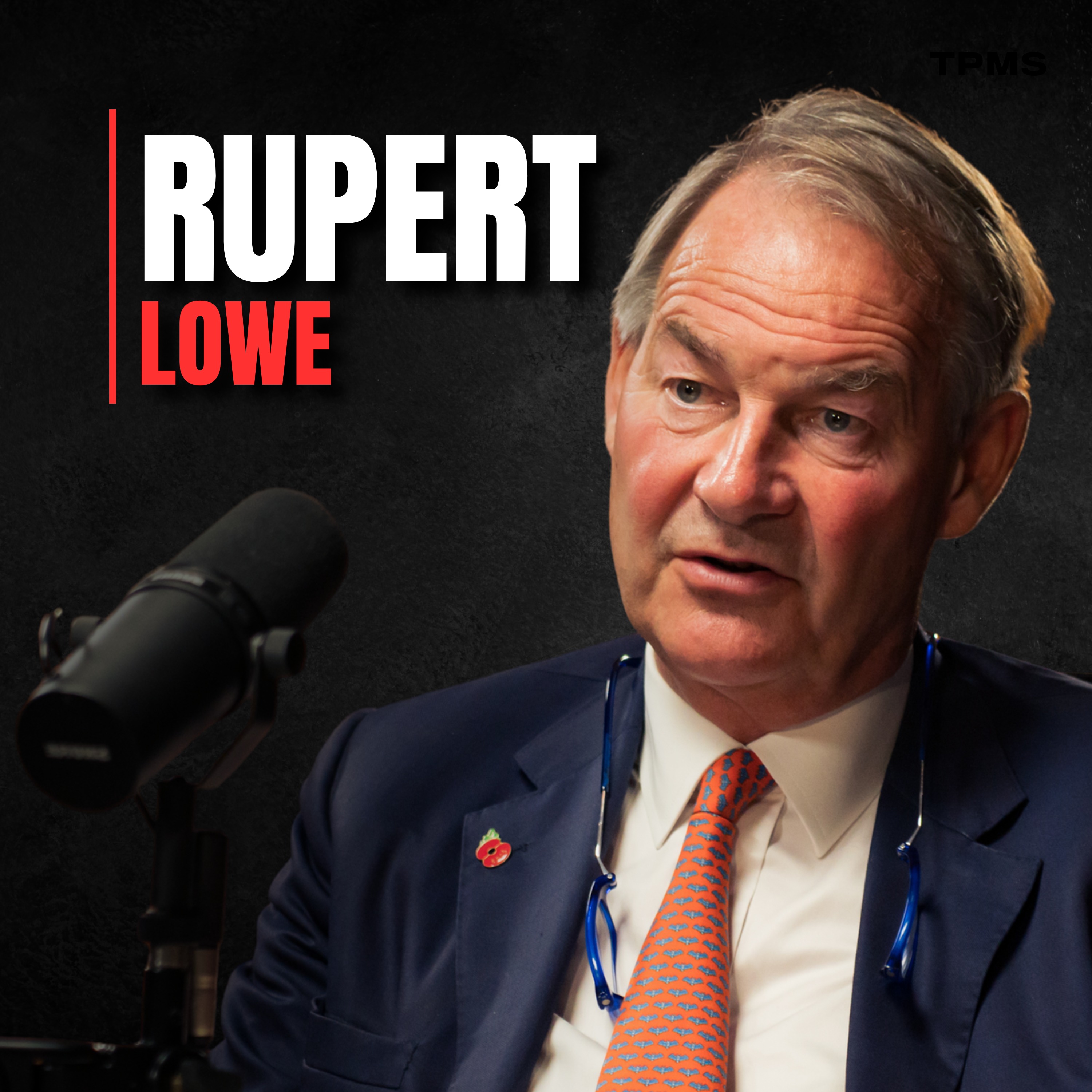
Rupert Lowe is the MP for Great Yarmouth and the leader of Restore Britain, the party he launched after leaving Reform UK. He returns with a blunt diagnosis: Britain is bankrupt, the state is no longer serving the people who pay for it and none of the main parties will admit how bad the numbers have become. Rupert and I discuss whether the state has become a force bigger than any elected government, why he believes the electorate still does not understand the scale of the debt, the £100,000 of legacy borrowing per household being handed to the next generation and what Restore would actually do - on tax, energy, the triple lock and welfare. They also get into the media's treatment of Restore, accusations of a secret deal, his fallout with Reform and the olive branch that went nowhere, whether Andy Burnham will make rejoining the EU his last throw of the dice and why Rupert thinks the euro cannot survive. - - - - - - - - - - - - - - - - - - - - - - - - - - - - - - - - - - - - - - - - - -
Why does the world feel more dangerous at a time of extraordinary technological progress? Gideon Rachman joins me to discuss his book, War Is Interested in You, and the return of leaders driven by territory, personal glory and their place in history. We explore Putin’s ambitions in Ukraine, the pressures on NATO, Trump’s decisions over Iran and how miscalculation could turn regional conflicts into something much bigger. Gideon explains why the risk of a wider war has risen, while arguing that World War III is neither inevitable nor highly likely. We also discuss nuclear deterrence, the cost of conflict for ordinary people, Britain’s weak growth, rising taxes and debt and what AI could mean for jobs and the next generation. - - - - - - - - - - - - - - - - - - - - - - - - - - - - - - - - - - - - - - - - - - - - - - - - - - TIMESTAMPS: 00:00:00 - Why Aren't We Living In The Best Of Times? 00:02:53 - All Prime Ministers Eventually Go Mad 00:04:44 - Why It Gets Dangerous To Step Down 00:06:
Anonymous sources are justified when naming them would prevent important public-interest reporting.
Share your view, then see how readers voted. No sign-in required. This poll is shared across stories.
Do you agree or disagree?
Common Quandary
A Common Quandary to discuss
Another conversation to explore, separate from this news story.
A pricey AI tutor can turn B students into A students. Should schools let them use it?
An effective AI tutor adapts to each student and dramatically improves performance, but its subscription is expensive. A public school cannot provide it to everyone and worries that allowing its use will deepen existing inequality.
Should access be limited when a beneficial tool cannot yet be shared fairly?