English-language podcasts

Supreme Court Oral Arguments

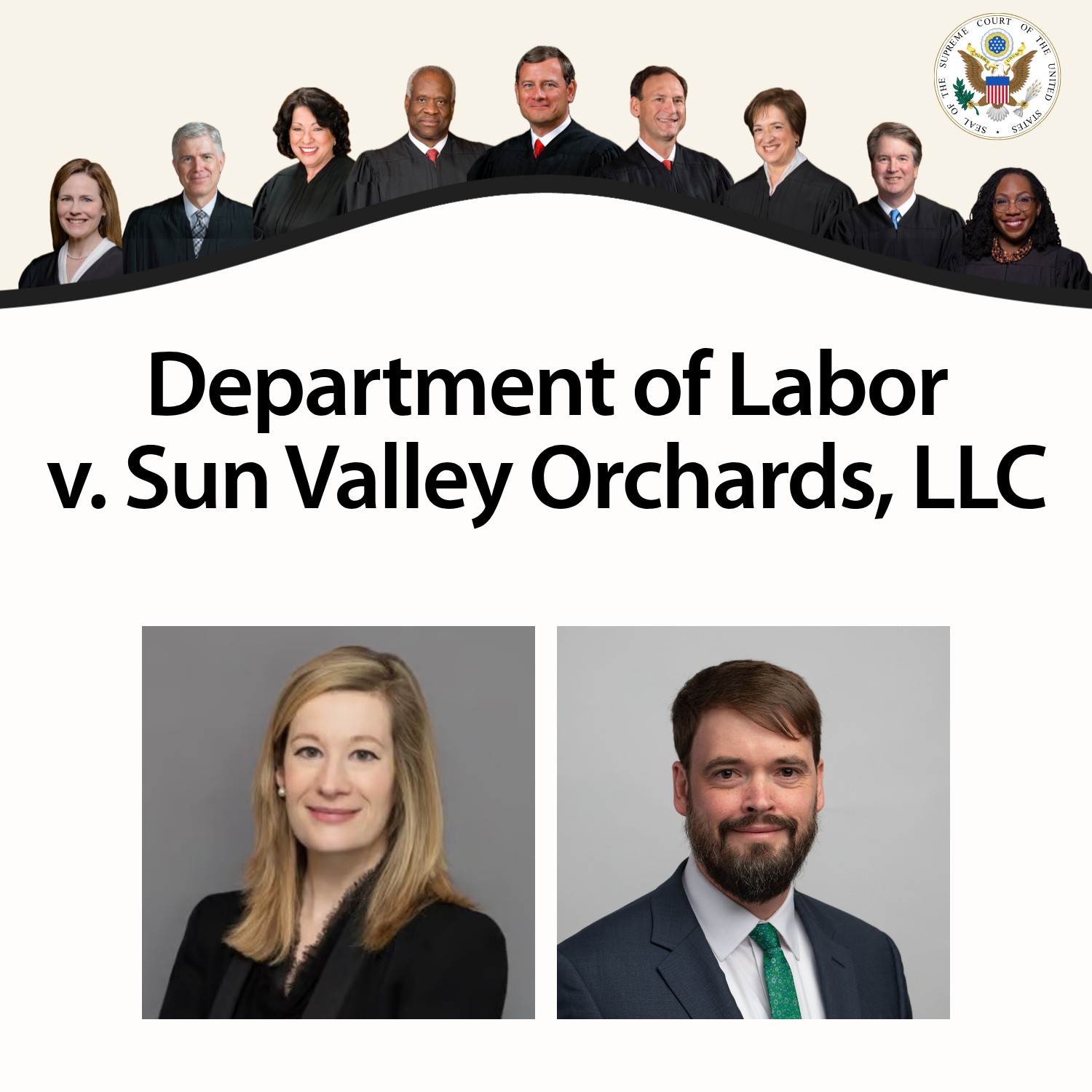
[25-966] Department of Labor v. Sun Valley Orchards, LLC
103 min

Listen through the publisher, then discuss the episode here or arrange an in-person Roundtable. Your city determines where to meet.

Roundtables are designed for groups of four, with a shared subject and room for everyone to speak. Come for discussion, with no dating expectation.

Department of Labor v. Sun Valley Orchards, LLC Justia (https://supreme.justia.com/cases/federal/us/2026/25-966/) · Docket (https://www.supremecourt.gov/docket/docketfiles/html/public/25-966.html) · oyez.org (https://www.oyez.org/cases/2026/25-966) · YouTube (https://www.youtube.com/watch?v=K2nVsb_BRfU) Argued on Nov 10, 2026. Petitioner: Department of Labor,. Respondent: Sun Valley Orchards, LLC. Advocates: Sarah M. Harris (for the Petitioners) Robert E. Johnson (for the Respondent) Facts of the case (from oyez.org) Sun Valley Orchards, a New Jersey farm, hires seasonal workers through the H-2A visa program. Under this program, the farm must provide certain benefits, such as safe housing and transportation, which it outlines in a “job order” that serves as a work contract. After an investigation into the 2015 growing season, the Department of Labor alleged that Sun Valley breached this contract by providing infested housing, failing to provide required kitchen access, and firing workers before their contracts ended. The Department of Labor used its own administrative law judges to order Sun Valley to pay over $550,000 in civil penalties and back wages. Sun Valley sued the government, arguing that Article III of the Constitution requires a federal court—rather than an executive agency—to decide cases involving monetary remedies for contract violations. The farm also contended that the specific federal law governing the H-2A program, 8 U.S.C. §1188(g)(2), does not grant the Department of Labor the power to conduct these types of in-house trials for money damages. After a federal district court dismissed Sun Valley’s lawsuit challenging the agency’s authority, the farm appealed to the U.S. Court of Appeals for the Third Circuit. The Third Circuit reversed the lower court’s decision, holding that the Department of Labor cannot adjudicate these private contractual disputes in an internal administrative forum. Question May the Department of Labor legally use its own administrative proceedings to collect money from employers who violate worker contracts, or does the Constitution require such cases to be decided by a federal court?

Episode information is provided by the publisher. Listening takes place on the publisher’s service.

Listen at the source ↗

Featured places to meet in Palo Alto, CA

Explore these places and arrange a conversation through ThinkMatch.

City guide for Palo Alto, CA

More from Supreme Court Oral Arguments

Supreme Court Oral Arguments

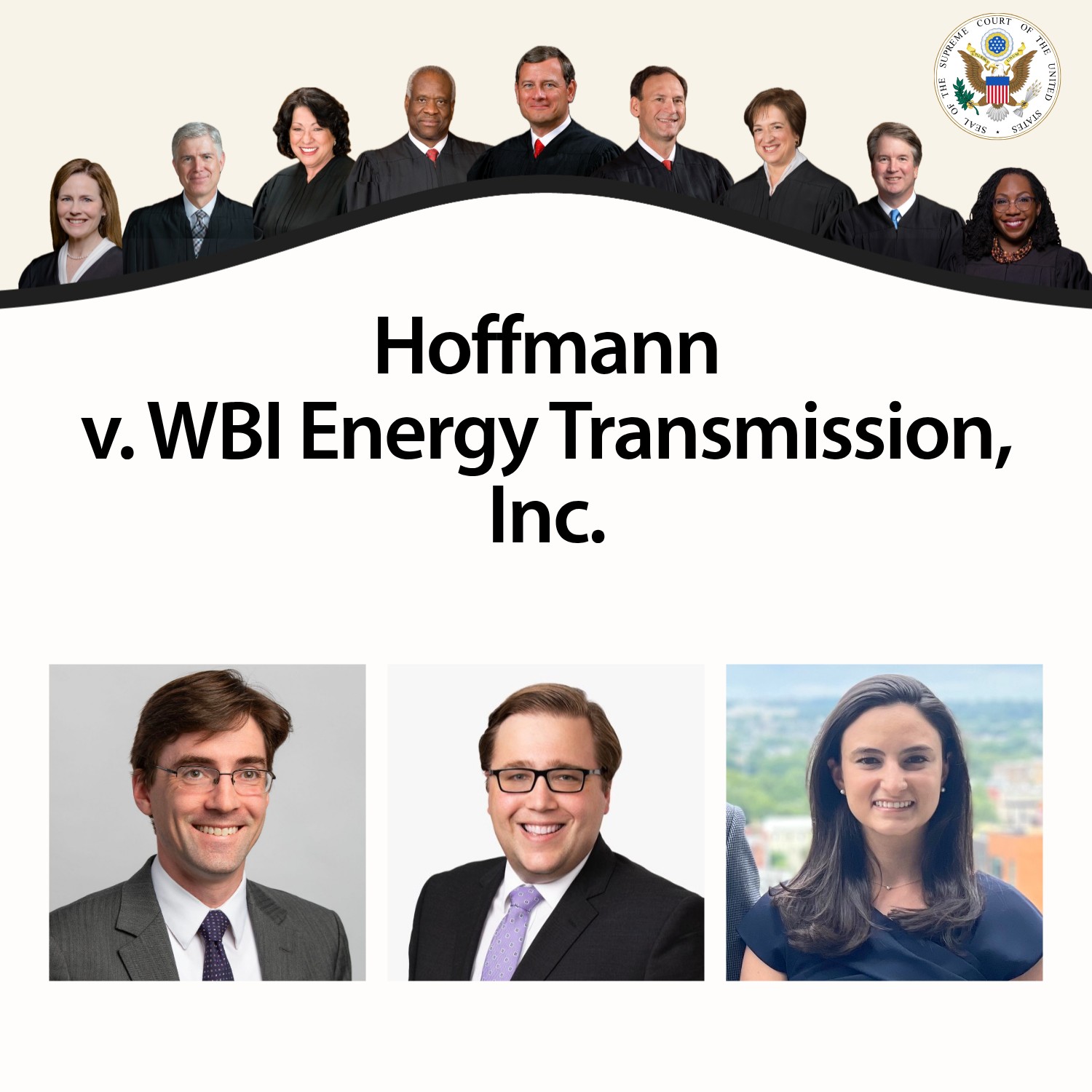
[25-159] Hoffmann v. WBI Energy Transmission, Inc.

60 min

Hoffmann v. WBI Energy Transmission, Inc. Justia · Docket (https://www.supremecourt.gov/docket/docketfiles/html/public/25-159.html) · oyez.org (https://www.oyez.org/cases/2026/25-159) · YouTube (https://www.youtube.com/watch?v=JFZQ8OSmpCI) Argued on Nov 9, 2026. Petitioner: Leonard W. Hoffmann. Respondent: WBI Energy Transmission, Inc. Advocates: Robert J. McNamara (for the Respondents) Paul W. Hughes (for the Respondent) Zoe A. Jacoby (for the United States, as amicus curiae, supporting the Respondent) Facts of the case (from oyez.org) WBI Energy Transmission, Inc. is a private natural gas company that holds a federal certificate authorizing it to use eminent domain to build and operate a natural gas pipeline. WBI used that authority to condemn an easement across ranchland in McKenzie County, North Dakota, owned by Leonard Hoffmann, Margaret Hoffmann, Denae Hoffmann, Rocky & Jonilla Farms, LLP, and Randall Stevenson. After roughly three years of litigation over the value of the taken

Discuss this episode

Supreme Court Oral Arguments

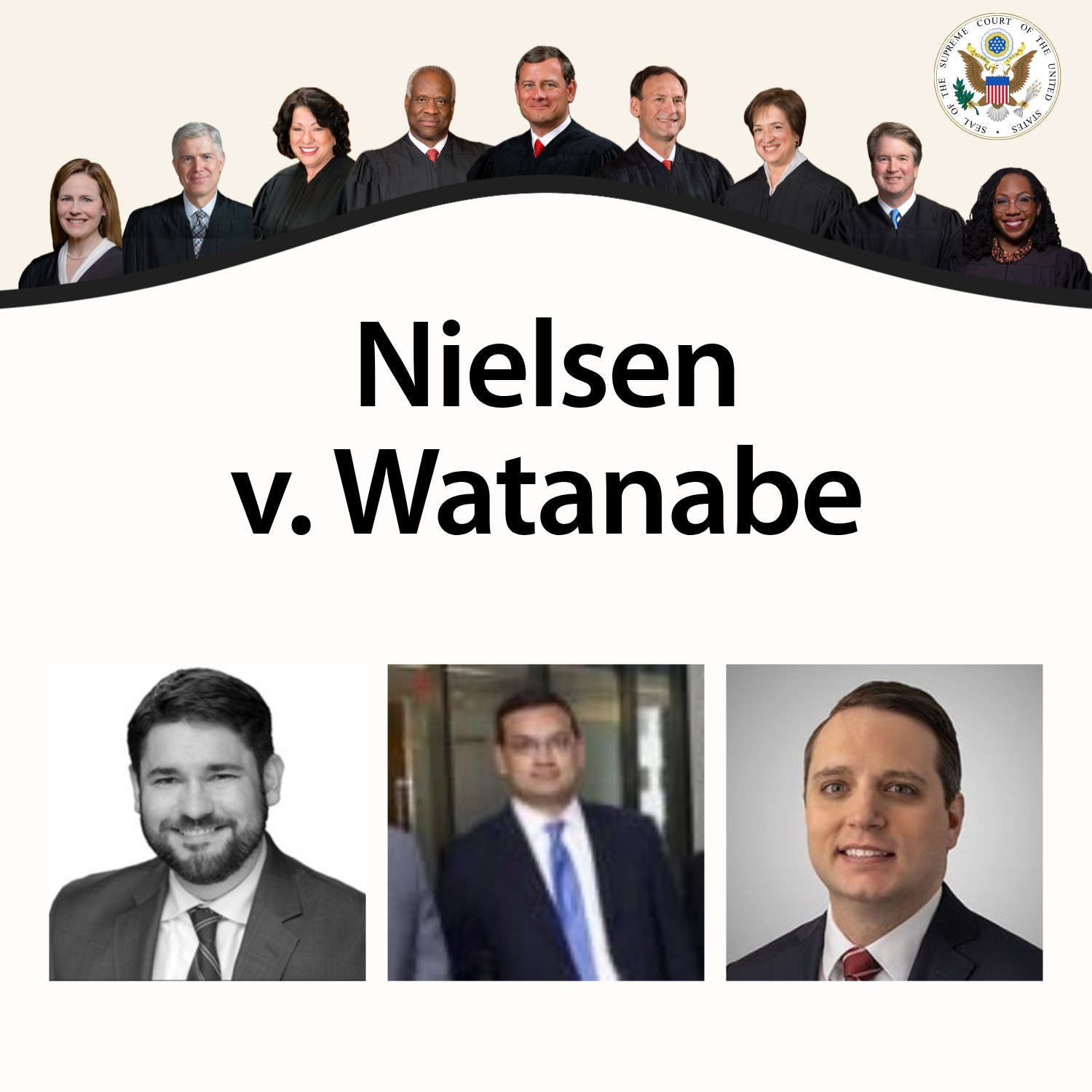
[25-417] Nielsen v. Watanabe

83 min

Nielsen v. Watanabe Justia · Docket (https://www.supremecourt.gov/docket/docketfiles/html/public/25-417.html) · oyez.org (https://www.oyez.org/cases/2026/25-417) · YouTube (https://www.youtube.com/watch?v=hi29t0a4Qm8) Argued on Nov 9, 2026. Petitioner: Francis Nielsen. Respondent: Kekai Watanabe . Advocates: Lucas M. Walker (for the Petitioner) Vivek Suri (for the United States, as amicus curiae, supporting the Petitioner) Joshua M. Wesneski (for the Respondent) Facts of the case (from oyez.org) Kekai Watanabe was a federal detainee at the Federal Detention Center in Honolulu when, in July 2021, rival gang members attacked him during a prison riot. After staff restored order, prison officials documented his visible injuries and placed him on sick call. Later that day, Watanabe told correctional officers he had headaches and pain and asked to see medical staff. He eventually described his condition to Francis Nielsen, a staff nurse at the facility, who denied his request to go to the ho

Discuss this episode

Supreme Court Oral Arguments

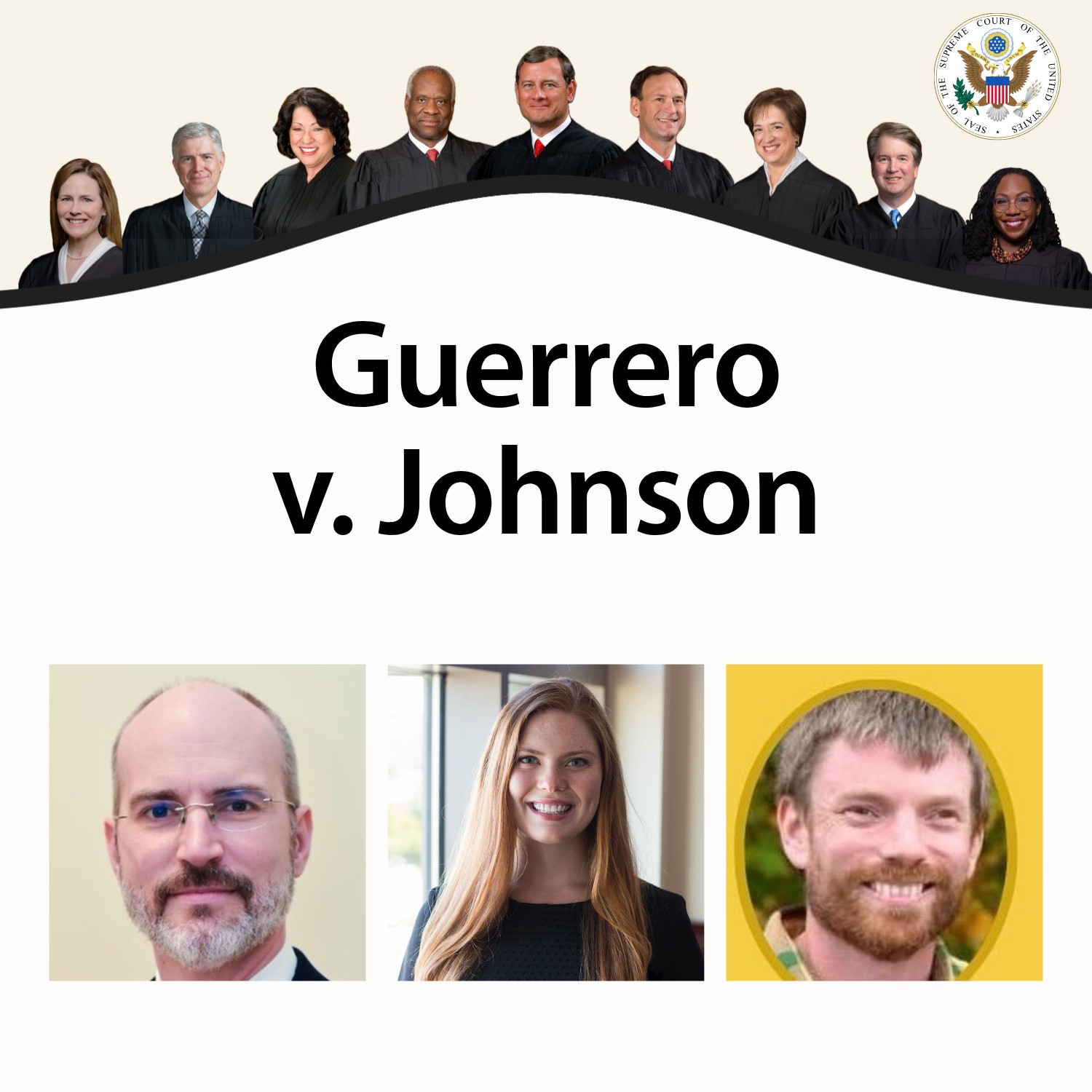
[25-1003] Guerrero v. Johnson

59 min

Guerrero v. Johnson Justia · Docket (https://www.supremecourt.gov/docket/docketfiles/html/public/25-1003.html) · oyez.org (https://www.oyez.org/cases/2026/25-1003) · YouTube (https://www.youtube.com/watch?v=QzOSlEEjjvQ) Argued on Nov 4, 2026. Petitioner: Eric Guerrero. Respondent: Dexter Johnson. Advocates: William R. Peterson (for the Petitioner) Emily M. Ferguson (for the United States, as amicus curiae, supporting the Petitioner) Jeremy Schepers (for the Respondent) Facts of the case (from oyez.org) Dexter Johnson kidnapped, raped, and murdered Maria Aparece in June 2006, years after the Supreme Court decided Atkins v. Virginia, 536 U.S. 304 (2002), which held the Eighth Amendment prohibits executing intellectually disabled people. At trial, Johnson’s own defense expert tested his IQ between 74 and 88, concluded he showed no obvious adaptive deficits, and opined that he was not intellectually disabled. Johnson was convicted of capital murder and sentenced to death in June 2007. John

Discuss this episode

Community Poll

Cities should actively seek views from residents who do not attend public meetings.

Share your view, then see how readers voted. No sign-in required. This poll is shared across stories.

Do you agree or disagree?

Choose one answer

Common Quandary

A Common Quandary to discuss

Another conversation to explore, separate from this news story.

Your adorable child could pay for college by becoming an influencer. Do you start filming?

Parents post cheerful videos of their young child and earn enough to fund the child's education. The child enjoys filming now but cannot understand what it means for strangers to watch those moments years later.

Can parents consent to a permanent public identity on a child's behalf?

Explore this quandary