2520: Bitcoin CAPITULATION - Wells Fargo Just Revealed a $2.35 BILLION BTC Position
15 min
Listen through the publisher, then discuss the episode here or arrange an in-person Roundtable. Your city determines where to meet.
Roundtables are designed for groups of four, with a shared subject and room for everyone to speak. Come for discussion, with no dating expectation.
Wells Fargo just revealed a staggering $2.35 BILLION Bitcoin ETF position, with its reported BlackRock IBIT holdings more than DOUBLING in three months! The banking giant disclosed approximately 49.6 million shares, a 103% increase from June, representing indirect exposure to roughly 28,070 BTC. Michael Saylor is amplifying the story as major Wall Street institutions expand their reported Bitcoin exposure. Meanwhile, Chase, Wells Fargo, and Bank of America customers experienced online banking disruptions while Bitcoin's decentralized network continued operating. Today we break down the SEC filing, Bitcoin's November capitulation, the difference between institutional ETF exposure and actual Bitcoin ownership, and why self-custody remains central to Bitcoin's original mission. Prefer video?
Episode information is provided by the publisher. Listening takes place on the publisher’s service.
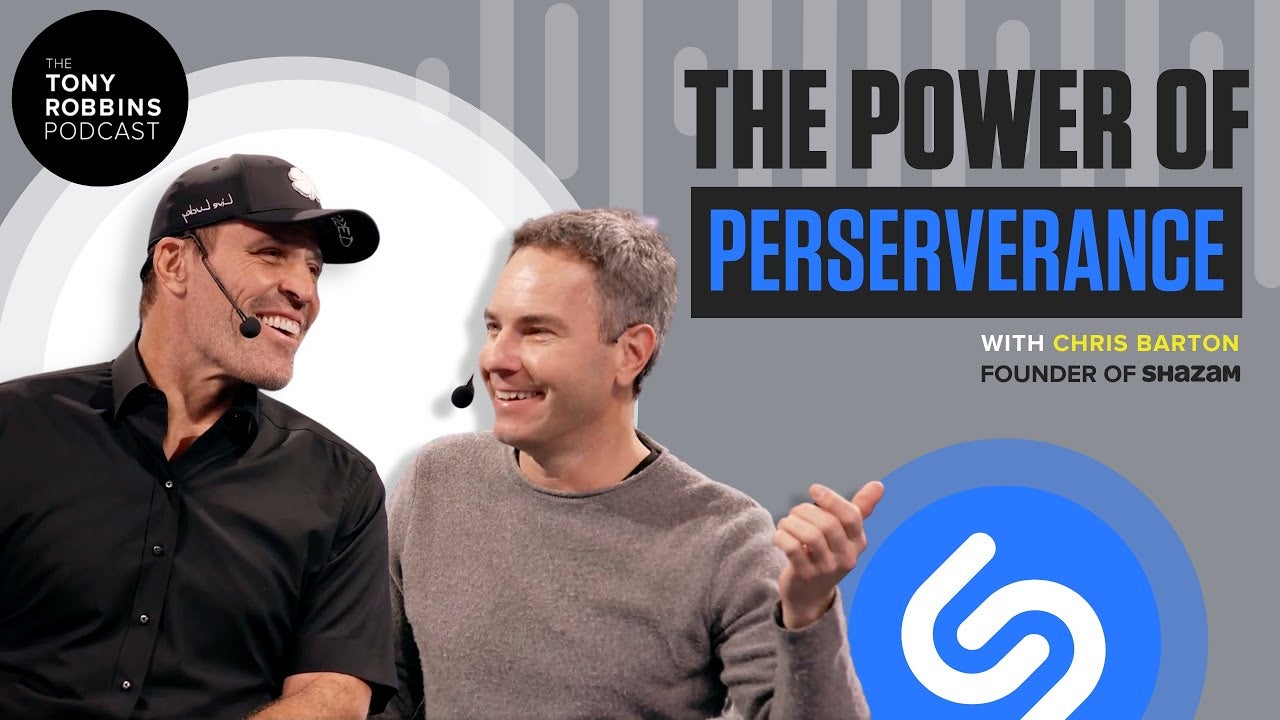
In this video, we drop you inside a Tony Robbins Business Mastery seminar for a 1-hour masterclass in how to take a far-fetched seemingly impossible business idea all the way from your brain to market. Uploaded 30-09-22 You’ll see Tony Robbins in a one-on-one interview with the co-founder of the wildly popular music recognition app, Shazam. Shazam is one of those magic tech innovations that stopped us in our tracks with its astonishing capability the first time we saw it. Launched in the summer of 2002, Shazam just turned 20 years old, and in those 20 years, it has surpassed 70 billion song I.D.s with its 225 million monthly users around the world. All of this began in 1999 when Chris Barton, then an undergrad student at UC Berkeley, founded Shazam Entertainment with his business partner. Watch the video for the whole story of how Chris’s creation led to an Apple acquisition in September 2018 for a reported $400 million. Tony digs into the mindset of a true creative entrepreneur and ex
In this week's episode of The Wrap with Chris Whalen, Chris says Fed Chair Kevin Warsh has lost credibility with the markets. He compares Warsh to G. William Miller, Carter’s Fed chair, and argues that quarter-point hikes all year would have kept long-term yields in check. He also lays out what real leadership would look like: successive quarter-point hikes and a gap between the fed funds rate and the interest paid on reserves. Chris warns that rates are already at their upper bound. Long-term yields are up four and a half points since 2021, the bottom ten of the 38 mortgage companies he tracks are basically insolvent, and firms like Brookfield are walking away from commercial properties they can’t refinance. He explains why the Fed needs to think in spreads, not just rates, and why the push for centralized Treasury clearing could hurt demand right as Treasury needs to raise $800 billion in January, setting up a possible bond market breakdown. Plus: why central banks can’t fix war-driv
In this Jim Rohn Motivation video, The Discipline That Changes Everything, you’ll discover why success isn’t built on inspiration—it’s built on habits, clarity, and structure. Discipline isn’t just a skill; it’s the operating system of your life. And Jim Rohn breaks down the seven techniques that turn discipline into your greatest advantage. Key Topics From This Motivational Video: How to eliminate negotiation and build unshakable self-leadership Why micro-commitments drive lasting momentum The truth about recovery as a strategy—not a reward How to anchor behavior to identity for automatic follow-through How to train fast action, shorten hesitation, and create rhythm This Jim Rohn motivational video is a blueprint for personal excellence. It’s not about hype—it’s about mastery. These seven techniques teach you how to build habits you can trust, eliminate the drag of indecision, and live like the version of you who already wins. Discipline doesn’t make life harder—it makes your mission
My guest today is Hayden Field, The Verge’s senior AI reporter, and we’re discussing the Anthropic IPO for our third and final episode in our series about AI in real life. The numbers are gigantic, but not really that important. The real story is what happens now — and whether Anthropic can continue to thread the needle of caring about and investing in AI safety while also being a public company beholden to shareholders. So you’ll hear Hayden and I dive into this tension, and what to make of Anthropic’s unique corporate governance structure in the wake of the Jensen Huang saga. Read the full interview transcript on The Verge. (https://www.theverge.com/e/1038701) Links: With biggest IPO of all time, Anthropic’s ‘good guy’ reputation is on the line | The Verge (https://www.theverge.com/ai-artificial-intelligence/1037459/anthropic-ipo-safe-ai-reputation-power-structure) Anthropic starts trading on Wall Street | The Verge (https://www.theverge.com/ai-artificial-intelligence/1035384/anthrop
Jordi Visser is a veteran macro investor with 30+ years of experience and the author of the VisserLabs Substack. In this conversation, we break down why AI is destroying capitalism, the wave of cyber attacks shaking markets, the AI stock selloff, and the Anthropic IPO. We also discuss why bitcoin still matters, the 200-day moving average, global liquidity, and the year-end pain trade. ======================== ======================== This episode is sponsored by GraniteShares. GraniteShares is launching AIL and ANS, two ETFs built to trade Anthropic's daily move. AIL seeks two times Anthropic's daily performance and ANS seeks two times the opposite, with no margin or borrowing needed. Both reset daily, are built for short-term traders, and carry significant risk. Learn more at https://www.graniteshares.com/anthropic-leveraged-etfs This video includes a paid sponsorship with GraniteShares. AIL and ANS are proposed funds and are not yet available for trading; their launch depends on Anth
Hey everybody, Tom Bilyeu here. On today’s episode of Impact Theory, we’re taking on a topic that’s got the whole world holding its breath: the escalating crisis between the United States and Iran. As tensions ratchet up, we’re asking the tough questions—how did we get stuck in this “escalation trap,” and what does it mean for America’s global leverage, our economy, and our very sense of security? The conversation focused on why the traditional idea of “strategy” might be failing policymakers, using powerful analogies—like chess versus roulette—to show how doubling down in conflict can spiral out of control. We’ll break down the risks of tactical “wins” that create even bigger crises, the real leverage Iran holds with control of the Strait of Hormuz, and the mounting pressure on President Trump as political support erodes and legacy hangs in the balance. A key theme that emerged is what happens when military might runs into decentralized opposition, and why high-stakes gambles—like the
Bitcoin enters the DANGER ZONE, crashing into the $57K range and hitting a NEW 2-YEAR LOW as Michael Saylor's Strategy faces approximately $15 BILLION in unrealized losses on its 850,849 BTC treasury. Peter Schiff claims $20,000 Bitcoin would bankrupt MSTR, while Saylor maintains that even $1 Bitcoin wouldn't trigger liquidation. We break down the numbers behind Saylor's Bitcoin empire, its cash reserves, financial obligations and the genuine risks facing Strategy during this extreme fear environment. Is Saylor facing an existential crisis, or could this historic Bitcoin bloodbath become another extraordinary accumulation opportunity? Prefer video?
BlackRock, the world's largest asset manager, says Bitcoin is exhibiting an almost inverse correlation with the AI trade, strengthening the case for BTC allocation. Arthur Hayes predicts a potential $1.5 trillion Anthropic IPO could fuel Bitcoin's next explosive rally through either an AI market boom or government intervention. Meanwhile, Michael Saylor explains how AI is absorbing global capital, demonetizing human labor and strengthening the investment thesis for absolutely scarce assets. Discover why Bitcoin's monetary properties are becoming increasingly valuable in the age of artificial intelligence. Prefer video?
Bitcoin is getting hammered, but JPMorgan's $266,000 BTC valuation is challenging the bears! With gold commanding an estimated $30 TRILLION market cap, Bitcoin reaching gold market-cap parity would imply approximately $1.43 MILLION per coin. Is this the ultimate Bitcoin bear trap? Meanwhile, new research from River estimates that ten major financial firms increased their combined Bitcoin ETF exposure by approximately 54,400 BTC during Q3. Wells Fargo, Goldman Sachs, Bank of America, and even JPMorgan appear in the data. We break down the institutional money trail, the gold valuation math, and what this market crash could mean for Bitcoin's long-term future. Prefer video?
Environmental commitments should be judged by measured outcomes rather than announced targets.
Share your view, then see how readers voted. No sign-in required. This poll is shared across stories.
Do you agree or disagree?
Common Quandary
A Common Quandary to discuss
Another conversation to explore, separate from this news story.
Your family connection could get your child into their dream school. Do you use it?
A university argues that considering family ties builds loyalty and encourages donations that fund scholarships. Critics say the preference preserves inherited advantage and takes places from stronger applicants.
Can benefits to the whole institution justify an unequal admissions advantage?