2523: Bitcoin DANGER ZONE - Michael Saylor Is Now $15 BILLION Underwater
13 min
Listen through the publisher, then discuss the episode here or arrange an in-person Roundtable. Your city determines where to meet.
Roundtables are designed for groups of four, with a shared subject and room for everyone to speak. Come for discussion, with no dating expectation.
Bitcoin enters the DANGER ZONE, crashing into the $57K range and hitting a NEW 2-YEAR LOW as Michael Saylor's Strategy faces approximately $15 BILLION in unrealized losses on its 850,849 BTC treasury. Peter Schiff claims $20,000 Bitcoin would bankrupt MSTR, while Saylor maintains that even $1 Bitcoin wouldn't trigger liquidation. We break down the numbers behind Saylor's Bitcoin empire, its cash reserves, financial obligations and the genuine risks facing Strategy during this extreme fear environment. Is Saylor facing an existential crisis, or could this historic Bitcoin bloodbath become another extraordinary accumulation opportunity? Prefer video?
Episode information is provided by the publisher. Listening takes place on the publisher’s service.
Jordi Visser is a veteran macro investor with 30+ years of experience and the author of the VisserLabs Substack. In this conversation, we break down why AI is destroying capitalism, the wave of cyber attacks shaking markets, the AI stock selloff, and the Anthropic IPO. We also discuss why bitcoin still matters, the 200-day moving average, global liquidity, and the year-end pain trade. ======================== ======================== This episode is sponsored by GraniteShares. GraniteShares is launching AIL and ANS, two ETFs built to trade Anthropic's daily move. AIL seeks two times Anthropic's daily performance and ANS seeks two times the opposite, with no margin or borrowing needed. Both reset daily, are built for short-term traders, and carry significant risk. Learn more at https://www.graniteshares.com/anthropic-leveraged-etfs This video includes a paid sponsorship with GraniteShares. AIL and ANS are proposed funds and are not yet available for trading; their launch depends on Anth
American swimmer Michael Phelps knows about paving the road to greatness. As the most decorated Olympian of all time, Phelps holds 28 medals. Additionally, he holds all-time records for Olympic gold medals, Olympic gold medals in individual events and Olympic medals in individual events. Uploaded 28-06-20 But getting to the top, and staying there, wasn’t easy. In this episode, Phelps sits down with Tony Robbins to discuss becoming one of the most successful athletes of all time. They talk about his training schedule, the highs of being an Olympic athlete and the let down that happens after the Olympics are over. Phelps also discusses the depressive states he would fall into because he wasn’t sure who he was outside of swimming. Raised mostly by his mother after his parents’ divorce, he had a lot of unresolved anger toward his father. These feelings of hurt and rejection played a big role in his decision to ask for help for his mental health struggles in 2012. During in-patient treatmen
In this week's episode of The Wrap with Chris Whalen, Chris says Fed Chair Kevin Warsh has lost credibility with the markets. He compares Warsh to G. William Miller, Carter’s Fed chair, and argues that quarter-point hikes all year would have kept long-term yields in check. He also lays out what real leadership would look like: successive quarter-point hikes and a gap between the fed funds rate and the interest paid on reserves. Chris warns that rates are already at their upper bound. Long-term yields are up four and a half points since 2021, the bottom ten of the 38 mortgage companies he tracks are basically insolvent, and firms like Brookfield are walking away from commercial properties they can’t refinance. He explains why the Fed needs to think in spreads, not just rates, and why the push for centralized Treasury clearing could hurt demand right as Treasury needs to raise $800 billion in January, setting up a possible bond market breakdown. Plus: why central banks can’t fix war-driv
Hey everybody, Tom Bilyeu here. On today’s episode of Impact Theory, we’re taking on a topic that’s got the whole world holding its breath: the escalating crisis between the United States and Iran. As tensions ratchet up, we’re asking the tough questions—how did we get stuck in this “escalation trap,” and what does it mean for America’s global leverage, our economy, and our very sense of security? The conversation focused on why the traditional idea of “strategy” might be failing policymakers, using powerful analogies—like chess versus roulette—to show how doubling down in conflict can spiral out of control. We’ll break down the risks of tactical “wins” that create even bigger crises, the real leverage Iran holds with control of the Strait of Hormuz, and the mounting pressure on President Trump as political support erodes and legacy hangs in the balance. A key theme that emerged is what happens when military might runs into decentralized opposition, and why high-stakes gambles—like the
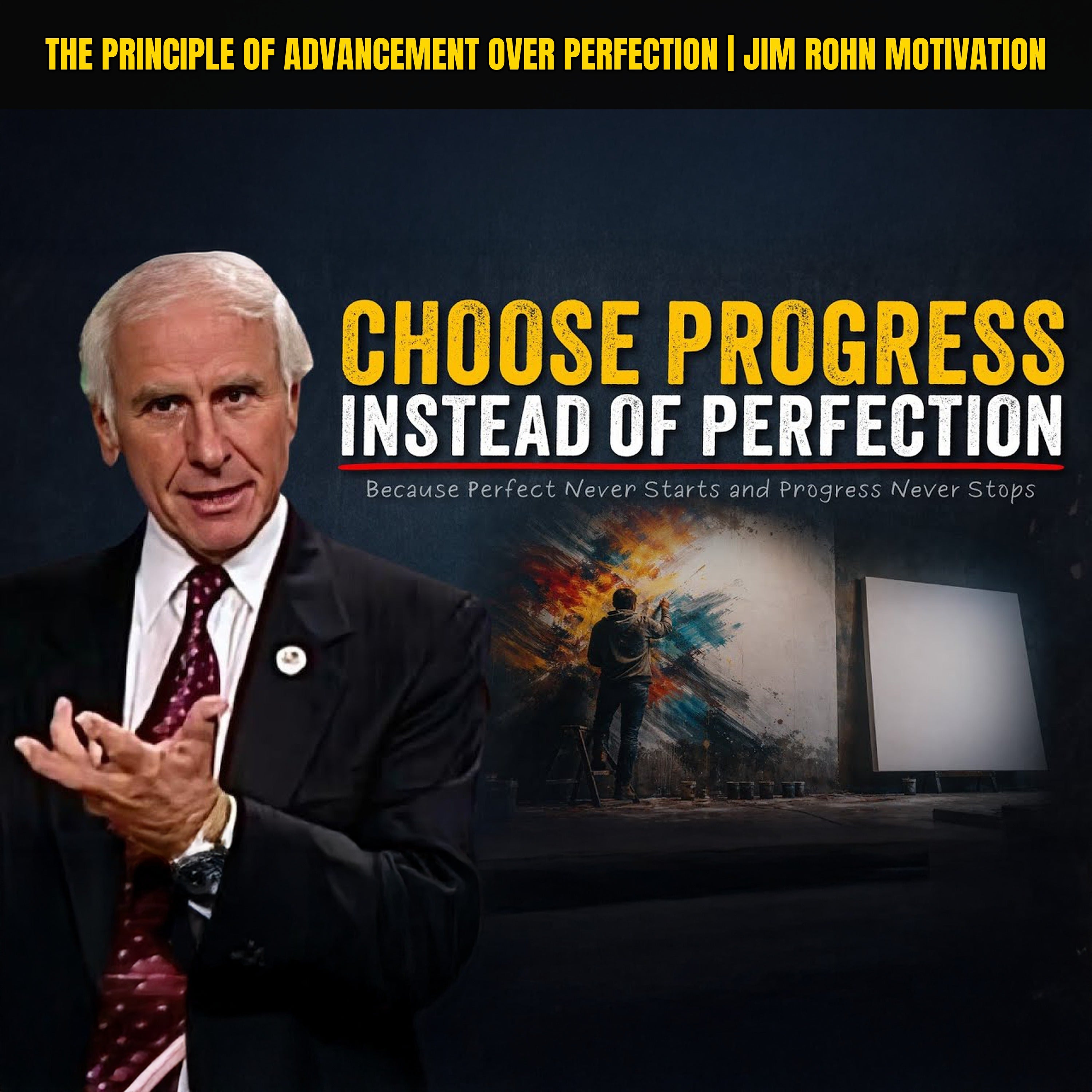
In this Jim Rohn Motivation video, you’ll discover how the pursuit of perfection can be the greatest trap of all. Jim reveals why action—not readiness—is the real key to success, and how progress is the true measure of growth, not flawless beginnings. Key Topics From This Motivational Video: The danger of perfectionism as procrastination Why certainty is a luxury you can’t wait for How action creates clarity, not the other way around The power of feedback in personal growth Confidence as a byproduct of steady progress This powerful Jim Rohn motivational video explores the illusion of perfection and why waiting for the “perfect moment” often leads to missed opportunities. Jim explains how progress is made through action, how feedback accelerates your growth, and why you don't need to be flawless to move forward. It's an inspiring message that urges you to take that first imperfect step—because the world rewards those who act, not those who wait. This Jim Rohn Motivational Video Is Perfe
My guest today is Hayden Field, The Verge’s senior AI reporter, and we’re discussing the Anthropic IPO for our third and final episode in our series about AI in real life. The numbers are gigantic, but not really that important. The real story is what happens now — and whether Anthropic can continue to thread the needle of caring about and investing in AI safety while also being a public company beholden to shareholders. So you’ll hear Hayden and I dive into this tension, and what to make of Anthropic’s unique corporate governance structure in the wake of the Jensen Huang saga. Read the full interview transcript on The Verge. (https://www.theverge.com/e/1038701) Links: With biggest IPO of all time, Anthropic’s ‘good guy’ reputation is on the line | The Verge (https://www.theverge.com/ai-artificial-intelligence/1037459/anthropic-ipo-safe-ai-reputation-power-structure) Anthropic starts trading on Wall Street | The Verge (https://www.theverge.com/ai-artificial-intelligence/1035384/anthrop
BlackRock, the world's largest asset manager, says Bitcoin is exhibiting an almost inverse correlation with the AI trade, strengthening the case for BTC allocation. Arthur Hayes predicts a potential $1.5 trillion Anthropic IPO could fuel Bitcoin's next explosive rally through either an AI market boom or government intervention. Meanwhile, Michael Saylor explains how AI is absorbing global capital, demonetizing human labor and strengthening the investment thesis for absolutely scarce assets. Discover why Bitcoin's monetary properties are becoming increasingly valuable in the age of artificial intelligence. Prefer video?
Bitcoin is getting hammered, but JPMorgan's $266,000 BTC valuation is challenging the bears! With gold commanding an estimated $30 TRILLION market cap, Bitcoin reaching gold market-cap parity would imply approximately $1.43 MILLION per coin. Is this the ultimate Bitcoin bear trap? Meanwhile, new research from River estimates that ten major financial firms increased their combined Bitcoin ETF exposure by approximately 54,400 BTC during Q3. Wells Fargo, Goldman Sachs, Bank of America, and even JPMorgan appear in the data. We break down the institutional money trail, the gold valuation math, and what this market crash could mean for Bitcoin's long-term future. Prefer video?
Wells Fargo just revealed a staggering $2.35 BILLION Bitcoin ETF position, with its reported BlackRock IBIT holdings more than DOUBLING in three months! The banking giant disclosed approximately 49.6 million shares, a 103% increase from June, representing indirect exposure to roughly 28,070 BTC. Michael Saylor is amplifying the story as major Wall Street institutions expand their reported Bitcoin exposure. Meanwhile, Chase, Wells Fargo, and Bank of America customers experienced online banking disruptions while Bitcoin's decentralized network continued operating. Today we break down the SEC filing, Bitcoin's November capitulation, the difference between institutional ETF exposure and actual Bitcoin ownership, and why self-custody remains central to Bitcoin's original mission. Prefer video?
Local communities should have more freedom to set their own rules.
Share your view, then see how readers voted. No sign-in required. This poll is shared across stories.
Do you agree or disagree?
Common Quandary
A Common Quandary to discuss
Another conversation to explore, separate from this news story.
Your grandfather brought home an ancient artifact. A museum wants it back. Do you surrender it?
In your grandfather's attic you discover a beautiful ancient object he brought home while working overseas decades ago. Your family treasures it and his papers suggest the rules were murky. A museum from that country says it belongs to their collection and asks for its return.
Can a family inherit clear ownership of something acquired through unclear power?