Blake Mycoskie is the founder of TOMS Shoes and the host of the podcast No Magic Pill. He opens up about being misdiagnosed with Bipolar 2 and working with a doctor on a new approach to his depression. He also talks about the positive effect that mantras and meditation have on his mental management. More about Blake: Official Website & Current Projects Website: blakemycoskie.com (https://blakemycoskie.com/) Podcast (No Magic Pill with Blake Mycoskie): nomagicpill.com (https://nomagicpill.com/) (also on Apple Podcasts (https://podcasts.apple.com/us/podcast/no-magic-pill-with-blake-mycoskie/id1894266723)) Newsletter (No Magic Pill on Substack): nomagicpills.substack.com (https://nomagicpills.substack.com/) Mental Wellness Venture (ENOUGH): weareenough.co (https://weareenough.co/) Social Media Instagram: @blakemycoskie (https://www.instagram.com/blakemycoskie/) Book Book (Start Something That Matters): Penguin Random House (https://www.penguinrandomhouse.com/books/201230/start-something-t
Have you ever found yourself saying, "I did it again. Why can't I get this right? Why do I keep going back to the same habits with food?" Maybe you've promised yourself that today would be different. You were going to eat better, make healthier choices, stop emotional eating, or finally get control of those cravings. But then life happened, emotions got the best of you, or you found yourself falling into an old pattern again. And instead of giving yourself grace, you immediately go to guilt, frustration, and disappointment. You start questioning yourself. Maybe you tell yourself you're never going to change, that you just don't have enough discipline, or that you'll always struggle with food. But friend, I want to remind you of something today: God's compassion for you doesn't disappear when you struggle with your behavior. Your mistakes don't surprise Him. Your struggles don't make Him love you less, and you don't have to earn His grace by getting everything right. Today, we're going
Most humans on this planet right now are missing pieces of their own soul, and that single fact rewrites everything you have ever believed about why your life is not working. ⠀ Sorita Sol is a shamanic teacher based in southwest France who built Solhenge, a retreat center around a stone circle that contains what she calls a portal. She has spent years watching clients try and fail to manifest the lives they say they want, and what she has learned points to one cause almost nobody is talking about. Soul loss. Fragments of the self that leave the body during trauma and never come back, leaving a hole the archons and the inverted matrix fill with fear, distraction, and separation consciousness. And while those pieces are missing, free will is a story the ego tells itself. ⠀ In this interview she goes somewhere almost no one in consciousness or shamanism will go. Reality is a simulation within a simulation within a simulation. The ego has been taken over by archonic energy that wants you i
Jay explains how the small tasks we keep putting off can quietly cost us time, money, and peace of mind, and shares six practical rules for overcoming procrastination. He breaks down the different emotions that keep us from taking action, from fear and perfectionism to resentment and boredom, and explains why each requires a different approach. Jay shares how to recognize what's really holding you back and choose the right strategy to finally get things done. With Love and Gratitude, Jay Shetty JAY'S DAILY WISDOM DELIVERED STRAIGHT TO YOUR INBOX What I Discuss: 00:00 Introduction 00:25 The Hidden Cost of Procrastination 01:30 What Unfinished Tasks Do to Your Brain 03:05 Rule One: If You're Confused, Get One Answer 06:15 Rule Two: If You're Embarrassed, Talk About It Before Taking Action 10:25 Rule Three: If You're Afraid, Don't Do It Alone 11:55 The Power of Support When Facing Our Fears 14:20 Rule Four: If You're Resentful, Determine If It's Still a Yes 17:25 Rule Five: If You're a Pe
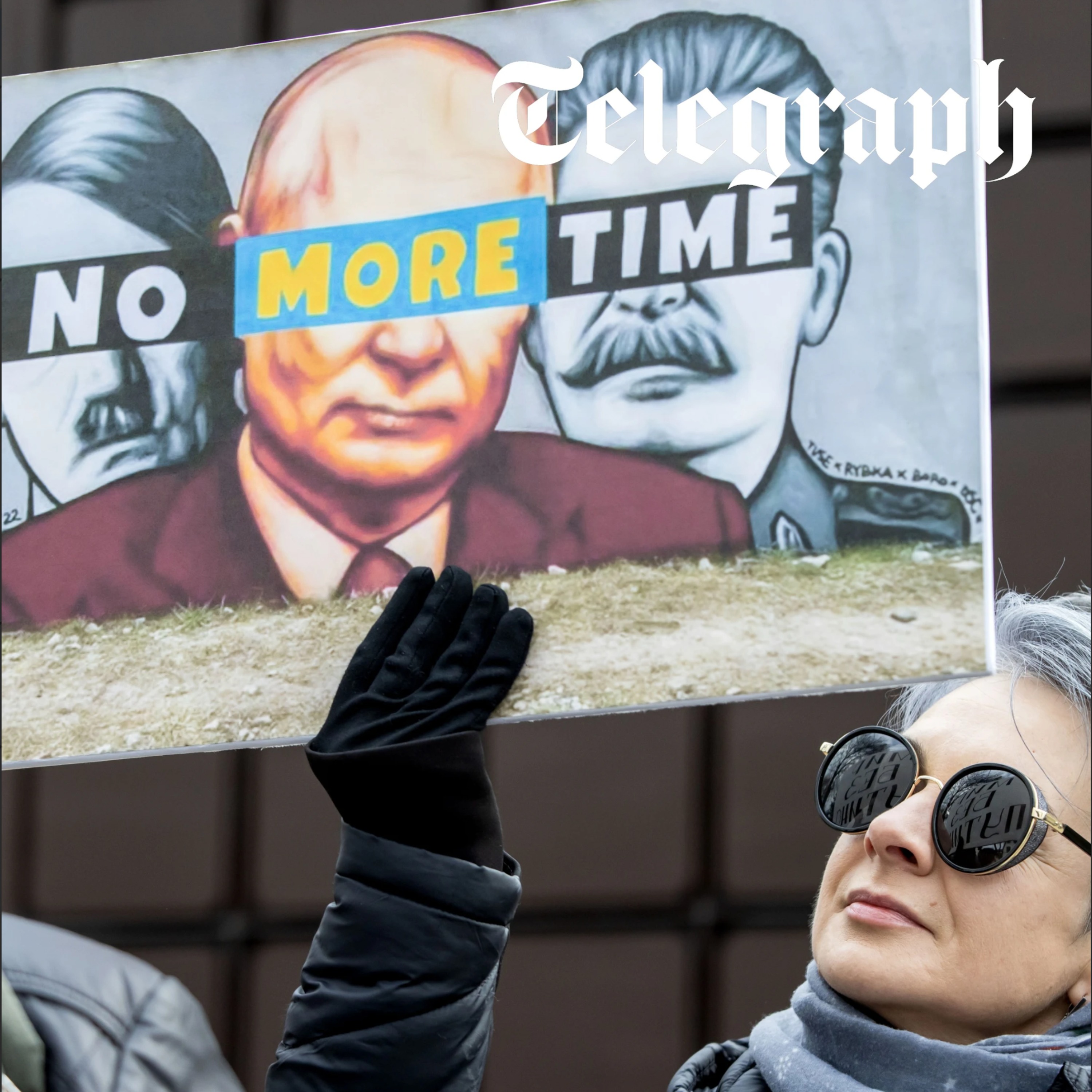
Day 1,734. Today, as President Zelensky describes Donald Trump’s fond words for his self-confessed ‘friend’ Vladimir Putin as “strange”, he also reports another reduction in Starlink connectivity. That hasn’t, however, translated into a Russian breakthrough at the front. In fact, Moscow’s troops are said to be up in arms over the ‘anti-drone ponchos’ they’ve been issued, which apparently offer about as much flexibility as Jared Kushner’s forehead. Elsewhere, Hungary’s leader Peter Magyar has visited Ukraine in a further sign of thawing relations between the two neighbours, even finding time for a spot of volleyball with his Ukrainian counterpart. And we head to Spain, where Sunday’s snap election could see Europe’s hard-right ‘firewall’ begin to crumble. Contributors: Dominic Nicholls (Host on Ukraine: The Latest). @DomNicholls on X. Sophie O'Sullivan (Telegraph Journalist) With thanks to Spanish journalist Xavier Colás of EL MUNDO. @Xaviercolas on X. Producer: Phil Atkins Senior Produ
Episode 2885: Vinnie Tortorich and Wendy Strgar discuss why vaginal health matters for women's overall health and removing shame from the conversation. https://vinnietortorich.com/2026/11/vaginal-health-matters-episode-2885 PLEASE SUPPORT OUR SPONSORS Pure Vitamin Club VILLA CAPPELLI EAT HAPPY KITCHEN YOU CAN WATCH THIS EPISODE ON YOUTUBE: @FitnessConfidential Podcast Vinnie's workout videos are available to purchase! TO PURCHASE VINNIE'S WORKOUT VIDEOS, CLICK THIS LINK: https://vinnietortorich.com/workout Vaginal Health Matters Today's topic is vaginal health. The conversation may be too sensitive for younger listeners, so parental discretion is advised. Vaginal health is part of overall health. It's okay to talk about it openly. There's no need for shame or embarrassment. The vagina has its own balance of bacteria. When that balance changes, someone may notice an unusual smell or discharge. Itching, pain, or discomfort can also be a sign that something is off. pH is one part of that
Most of us say we fear death. But for many of us, death is really a stand-in for something deeper and harder to name: the fear of losing the abilities, achievements, and sense of self we’ve spent our lives building. In this episode of Office Hours, I explore why the prospect of physical and mental decline can be more frightening than death itself, and how we can learn to face it with less fear. Drawing on Buddhist philosophy and modern psychology, I explain how confronting our mortality can help us make peace with it. *** — Brought to you by: • Noble Mobile (https://noblemobile.com/arthurbrooks)—With Noble, there is only one plan: The No-Bull Plan. It’s simple. It’s transparent. And if you use less data, you get cash back. Get an exclusive offer at:https://noblemobile.com/arthurbrooks — Where to find Arthur Brooks: • Website: https://arthurbrooks.com/ • In-person Retreats: https://retreats.arthurbrooks.com/ • Newsletter: https://www.arthurbrooks.com/newsletter • X: https://x.com/arthur
We can feel deeply connected to celebrities, fictional characters, and even AI chatbots, even though we've never met them in real life. But when do these one-sided relationships start interfering with our happiness? In this episode of Office Hours, I explore the science of parasocial relationships, how our attachment styles influence them, and the potential consequences of turning to AI for companionship. I also share three ways to manage unhealthy attachments and make more room for the real-life relationships we need. *** — Brought to you by: • LMNT (http://drinklmnt.com/Arthur)—A science-backed electrolyte drink mix that helps you feel and perform your best, without sugar, artificial ingredients, or gimmicks. Get a free sample pack at DrinkLMNT.com/Arthur (http://drinklmnt.com/Arthur). • Helix Sleep (https://go.helixsleep.com/audio-partner/)—A mattress designed for every body. — Where to find Arthur Brooks: • Website: https://arthurbrooks.com/ • In-person Retreats: https://retreats.a
Residents' quality of life can justify caps on tourism even when businesses lose income.
Share your view, then see how readers voted. No sign-in required. This poll is shared across stories.
Do you agree or disagree?
Common Quandary
A Common Quandary to discuss
Another conversation to explore, separate from this news story.
The stadium can ban violent fans by scanning every face at the gate. Would you walk in?
A stadium can use facial recognition to identify people banned for violence and shorten security lines. Every visitor would be scanned, error rates are not zero, and the resulting biometric data could become useful to police or advertisers.
How much privacy may a crowd be asked to trade for collective safety?