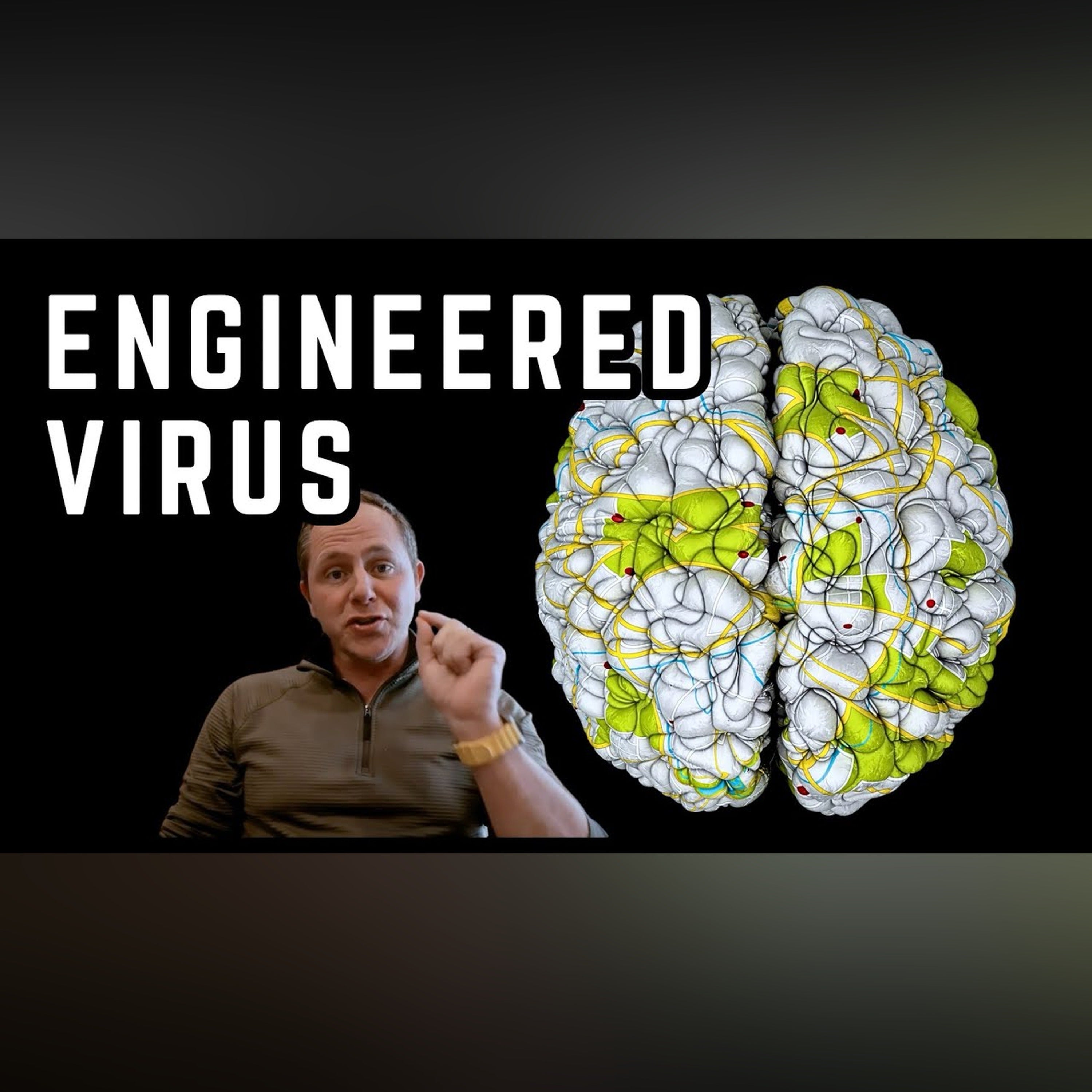
Free INTENSIVE behavior science training: https://nci.university/opt-in-page-808244 Uploaded 13-12-25 Link to original paper: https://www.cell.com/cell/fulltext/S0092-8674(25)01305-4 A neuroscience paper published in Cell just days ago answers a question researchers have been trying to solve for years: what actually changes in the brain during a psilocybin experience—and why those changes can last. Using a genetically modified rabies virus as a neural tracer, researchers were able to map—cell by cell—how psilocybin alters brain connectivity. This allowed them to see, for the first time, which brain regions gain connections, which lose them, and how those changes depend on what the brain is doing during the experience itself. The findings help explain long-standing observations discussed by neuroscientists, psychiatrists, and researchers often referenced on platforms like Huberman Lab: • Why psilocybin can reduce depression and anxiety • Why the default mode network quiets during psyche
In this episode, you’ll learn the secret to a better, happier life: connecting with the people around you. When I met my husband Chris, I was at a bar ordering a bourbon on the rocks to go. In a plastic cup (very classy, I know). Then I heard a voice behind me say, “That sounds great. Make it two.” I turned around. And here we are, celebrating 30 years of marriage. That one moment led to three children and decades of memories. All because a stranger decided to say something. I’ve been thinking about this ever since I sat down with Dr. Nicholas Epley for today’s episode of The Mel Robbins Podcast. He’s a psychologist and behavioral scientist at the University of Chicago who has spent years studying how we connect with other people, why we so often get it wrong, and what we miss out on when we don't say something in these moments: friends, lovers, colleagues, and magic. His research has found that happiness isn't just about the occasional big moment in life. It's about all the little goo
Jonathan Alpert, a psychotherapist practicing in New York and Washington D.C., and author of “Therapy Nation,” joined guest host Harry Hurley on the Guy Benson Show today to discuss everyone’s favorite topic: talking about politics at the Thanksgiving table! Alpert explained why he thinks talking about politics at holiday gatherings has become contentious nowadays and stated that the topic has become a quasi religious belief system for many people. Alpert and Hurley then turn to “Trump Derangement Syndrome” and— while it’s not an official clinical diagnosis, Alpert calls it the “defining pathology of the past decade” due to how people are changing their lives around because of Trump. Listen to the full interview with Alpert and Hurley here!
Nick Spencer from Theos Think Tank drops in to discuss what makes the West the West, secularism’s debt to Christianity and what to make of Christian Nationalism. Nick was here in Australia doing a bunch of events for ISCAST – an organisation that looks at the intersection of science and faith – a topic that Nick has written a lot about. As an accomplished historian Nick is brilliant at taking complex events and ideas and making them accessible and really engaging. On this episode of Life & Faith, in a wide-ranging discussion, we consider the ways Christianity influenced the West in both good and bad ways, and how that influence is sometimes misunderstood by both sceptics and believers. We also look at the way Christianity, ironically, had a role in the development of secularism and whether the thoroughly secular vision of life is running out of steam. And we consider the rise of Christian Nationalism around the world. Where does this come from, and what does it mean? Explore: Theos Thi
In this Thanksgiving-weekend edition of the New England Morning Buzz, Greg and the crew take on a complicated “Who’s the Douchebag?” family dilemma: a 36-year-old discovers through DNA testing that the man who raised them may not be their biological father. The results suggest a different ancestry and raise questions about a half-sister, a possible biological father, and whether the listener’s mother has concealed the truth—or may not know it herself. Greg, Laura, Scotty, and callers debate the right to know your biological origins, the limits of consumer DNA tests, family medical history, adoption, honesty, and the potential fallout of revealing a long-held secret. Should the listener confront their mother, speak privately with their parents, or avoid disrupting the family? Opinions are divided, but one piece of advice recurs: seek answers honestly and thoughtfully, without turning a painful conversation into a public family blowup. A candid New England radio discussion about DNA ance
Melanie and I went to Key West for a wedding this past weekend, so on this episode we talk about our trip to the southernmost point of the United States and all the adventures therein. There was a wine cruise, there was a very fun wedding, and there was no shortage of flight drama for Mel and Caroline. We also talk through our final football games of the season, and it's my turn for Five Favorites. Happy Thanksgiving, everybody! We're so grateful for all of you. Our Amazon Shop (http://amazon.com/shop/bigboo) Show Notes: Key West, Florida (https://en.wikipedia.org/wiki/Key_West) "That is one nutty hospital" (https://www.tiktok.com/@ittakesaferrie/video/7190097024396709163) Danger Charters in Key West (https://www.dangercharters.com/) "Your Man" by Josh Turner (https://www.youtube.com/watch?v=nADTbWQof7Y) LSU and the SEC have some issues to work out (https://www.nytimes.com/athletic/7811328/2026/11/25/sec-vs-lsu-lawsuits-next-steps/) Trev Alberts isn't going to Michigan after all (https
Listen to the full episode (https://www.patreon.com/c/conspirituality) Catherine Liu’s Traumatized: The New Politics of Public Suffering (Verso, 2026) argues that public disclosures of trauma have been commodified into a “trauma script” that serves the professional managerial class, displaces class struggle, and has turned millennials and GenZers into quivering, stress-intolerant snowflakes who cannot advocate for social change. Matthew reviews the book and the extensive press tour that has accompanied it, where Liu gums up her theory with personal reactionary and contradictory sniping in the style of “Boomer Punching Down on Millennials, and Left on Identity.” And at such a strange time, amidst a tidal wave of youth social movements that are deeply connected to the public disclosures of collective trauma, from #MeToo to BLM to Gaza. At the very moment in which progressive and left-wing youth are throwing off the right-wing stereotype of being whiney, privileged, and coddled, America’s
Jean-Luc Mélenchon, 75, greeted the GTA VI launch with a tweet calling video games "a complete art form"—a textbook case of the bubble-breaking tactics we covered in our Janonism episodes. That same evening, La France Insoumise staged "L'Enfance au cœur de la Nouvelle France," launching its Plan for Childhood. Matthew summarizes Mélenchon's keynote on the centrality of social reproduction, how all contempt for youth must be repudiated, because insoumission (insubordination) is the first act of a child's political identity. Other panelists spoke on intrafamilial sexual violence, the need to reform child protection and abolish privatized daycare, and Francesco Tonucci's City of Children. All in all, it amounts to a forceful answer to what we're more used to over here in QAnon "Save the Children" panics and the parental anxiety buttons pushed by Trump's 2024 campaign. Last: imagine what the US Squad might have accomplished by now if they'd had some support from the generations—not to ment
Listen ad-free (https://www.patreon.com/c/conspirituality) A recent petition to have Ayanna Pressley become Speaker of the House in America gained traction online. A lot of solid critiques regarding the process of American democracy came to light. In its wake trailed a host of conspiracy theories around race and power. Derek and Julian look at the trickle that turned into a flood.
Telling another person's difficult story carries responsibilities beyond getting the facts right.
Share your view, then see how readers voted. No sign-in required. This poll is shared across stories.
Do you agree or disagree?
Common Quandary
A Common Quandary to discuss
Another conversation to explore, separate from this news story.
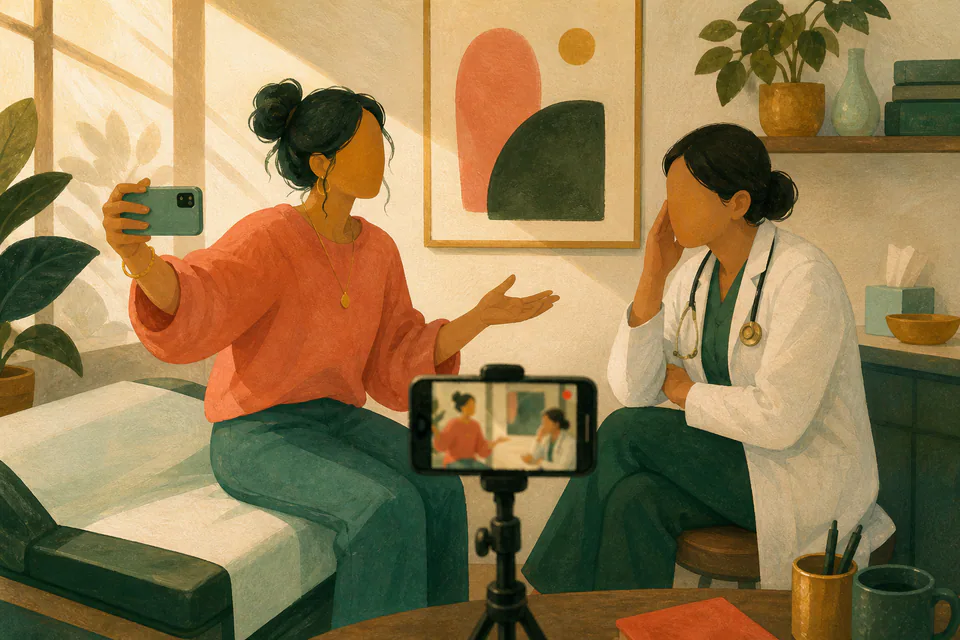
A patient records every doctor visit for their followers. Can the doctor refuse to be filmed?
A patient with a large social-media following livestreams their health journey and wants to record every appointment. They say the videos help others and keep doctors accountable. Their physician finds the camera distracting and worries that casual remarks will be edited out of context.
Whose comfort should control a conversation about one person's body and another person's work?