Listen through the publisher, then discuss the episode here or arrange an in-person Roundtable. Your city determines where to meet.
Roundtables are designed for groups of four, with a shared subject and room for everyone to speak. Come for discussion, with no dating expectation.
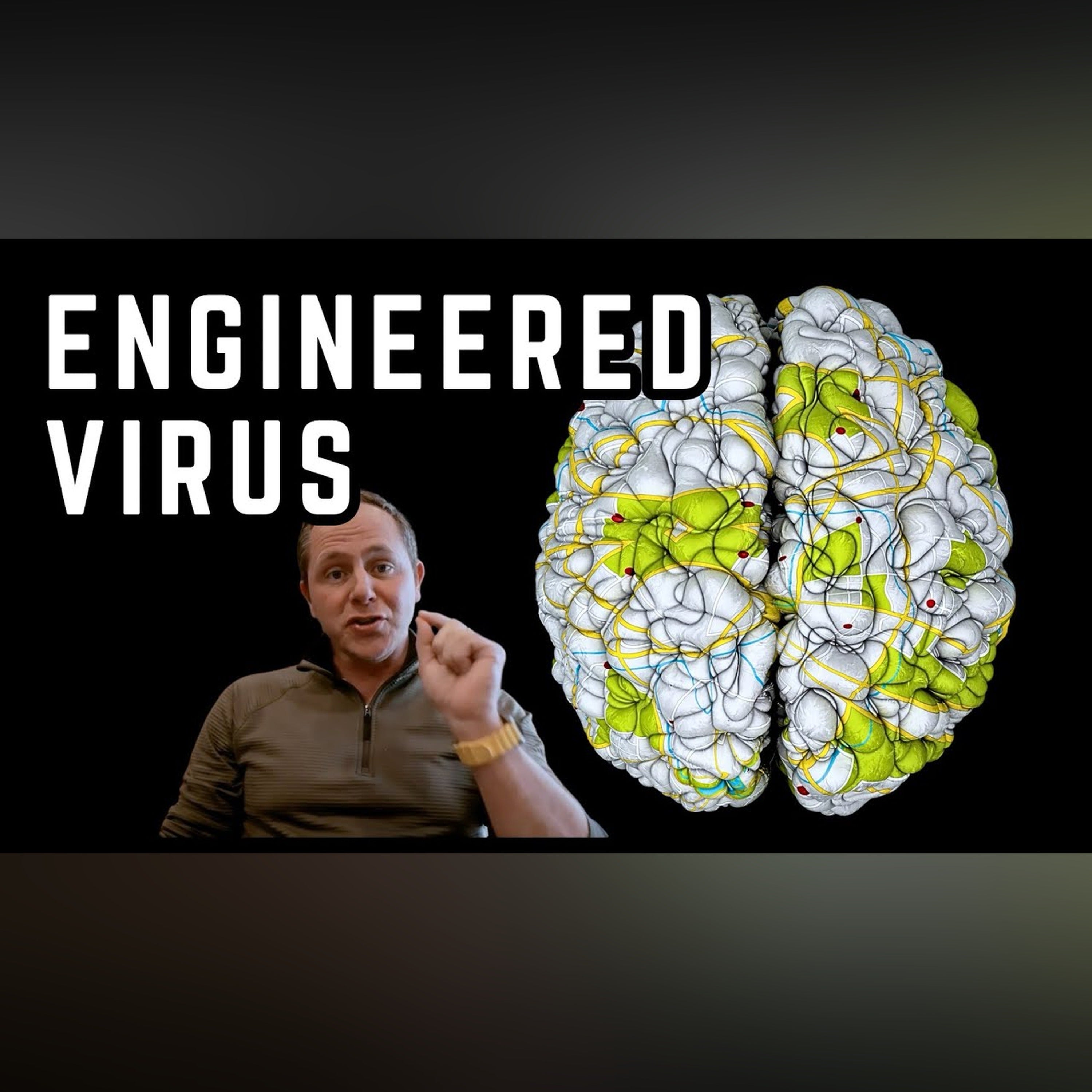
Free INTENSIVE behavior science training: https://nci.university/opt-in-page-808244 Uploaded 13-12-25 Link to original paper: https://www.cell.com/cell/fulltext/S0092-8674(25)01305-4 A neuroscience paper published in Cell just days ago answers a question researchers have been trying to solve for years: what actually changes in the brain during a psilocybin experience—and why those changes can last. Using a genetically modified rabies virus as a neural tracer, researchers were able to map—cell by cell—how psilocybin alters brain connectivity. This allowed them to see, for the first time, which brain regions gain connections, which lose them, and how those changes depend on what the brain is doing during the experience itself. The findings help explain long-standing observations discussed by neuroscientists, psychiatrists, and researchers often referenced on platforms like Huberman Lab: • Why psilocybin can reduce depression and anxiety • Why the default mode network quiets during psychedelic states • Why sensory perception feels intensified • Why context and mental state during a trip matter so much • Why a single experience can lead to lasting psychological change One of the most important results from the study is this: only brain regions that are active during the psilocybin experience undergo lasting rewiring. Inactive regions do not change. That finding has major implications for mental health treatment, psychotherapy, and our understanding of how perception, mood, and identity are shaped at the neural level. In this video, I walk through: • How the rabies tracer virus works and why it was used • What changed in sensory, emotional, and self-referential brain networks • How this relates to depression, anxiety, PTSD, and trauma • What this discovery means for future psychedelic research
Episode information is provided by the publisher. Listening takes place on the publisher’s service.
In today's episode, Jordan sits down with Shaolin Master Shi Heng Yi and world-renowned spiritual leader Sadhguru for an extraordinary conversation about self-mastery, spirituality, Shaolin philosophy, meditation, consciousness, and the pursuit of inner peace. Bringing together the ancient wisdom of Shaolin teachings and yogic philosophy, Shi Heng Yi and Sadhguru explore what it truly means to master the mind, overcome suffering, and unlock human potential. They examine the relationship between discipline and spiritual growth, the differences between a master and a guru, and why developing awareness may be more important than pursuing external success. The conversation explores the origins of Shaolin martial arts, the influence of Bodhidharma, and the connections between Buddhism, Zen meditation, and yoga. Shi Heng Yi reflects on his personal journey from physical mastery towards a deeper understanding of consciousness, while Sadhguru explains how our thoughts, emotions, and attachment
If we want a greater level of peace, if we want the world to be different, it begins with choosing to be different ourselves. In this talk, Sage Robbins shares PEACE, the framework for ignited leadership that has been her North Star at home and in business. Leadership, she reminds us, isn't just in our businesses, we're all leaders, as parents, friends, and family and it's less about our words than the energy we're transmitting. Uploaded 23-08-26 The five keys: Presence (state of being over projection or performance), Embrace (holding your ground in the totality of life, not the absence of chaos), Accountability (leaning in and going first, tidying up our own internal mess), Conscious responses (catching our triggers and asking whether we're contributing to harmony or to the schism), and Extending it outward in service (empowering others to shine). None of it is about being perfect, it's about catching ourselves in real time and choosing love over fear. Because the world isn't changed
He solved “the most important unsolved problem in science”… If you need more optimistic science and tech stories, subscribe to support HUGE*! Demis Hassabis is a Nobel Prize winner and CEO of Google DeepMind. He is one of the most important people alive on what is quickly becoming the biggest technological advance of our lifetime. Because the biggest way AI is going to impact your life, you can’t see. It’s not a chatbot or an image generator. It’s the tools he and his team are building that are invisible to you – in new drug design, nuclear fusion, natural disasters detection, quantum computers. So who Demis is and what he chooses to build matters a lot. And he’s fascinating… He’s a childhood chess prodigy who at 17 turned down a reportedly million dollar job offer from a gaming company to go to college instead, and then get a PhD in neuroscience. He founded his company DeepMind with a mission to “solve intelligence” – starting with beating video games. He sold that company to Google s
Ever put off investing because you feel like you need to know everything first? Same. Elliott thought investing meant picking individual companies and understanding the whole share market. Ana bought ten ETFs (bundles of investments you buy in one go) because choosing just one felt too risky. Both were trying not to get it wrong, and playing it safe made things messier for both of them. So how much do you actually need to know before you start? In this episode, Ana Kresina and Elliott O'Callaghan look back at their first investments and what confused them along the way. From a $10 crypto gift to ten ETFs that held a lot of the same companies, they talk about the gap between reading about investing and actually doing it. In this episode we'll chat about: Why Ana bought ten ETFs to feel safer, then found out she owned a lot of the same companies several times over. What a $10 Ethereum gift taught Elliott about watching his money go up and down. How Elliott went from thinking investing wa
Before the holiday leftovers come out, here is what a year of pesticide policy is putting back into them. This bonus episode opens with the news: an executive order boosting glyphosate production, a Supreme Court ruling that limits state lawsuits over Roundup's cancer warnings, and EPA approvals of new pesticides that scientists say meet the definition of forever chemicals, a label the agency disputes. We also ask what it means that the Make America Healthy Again movement, and its leader, Robert F. Kennedy Jr., are defending those choices. Then you'll hear Kelly Ryerson, the Glyphosate Girl, explain what glyphosate may be doing to our bodies and soil, where it hides in everyday foods, and the practical steps you can take today to limit your exposure. This interview was recorded before the news above broke, for Nutrition Without Compromise, a podcast brought to you by Örlö Nutrition, a brand Corinna works with. It was originally published as episode 68 in fall of 2023. Episode blog page
PBS Member Stations rely on viewers like you. To support your local station, go to: http://to.pbs.org/DonateSPACE ↓ More info below ↓ Uploaded 09-01-19 Check out the new Space Time Merch Store! Support Space Time on Patreon Astronomers are the worst at naming things. Dark energy AND dark matter? Who can remember which is which. But perhaps one astronomer has just fixed it, with a theory that says perhaps actually they are they same stuff. Space Time Journal Club digs into "A Unifying Theory of Dark Energy and Dark Matter" by J. Farnes, 2018 Tweet at us! @pbsspacetime Facebook: facebook.com/pbsspacetime Email us! pbsspacetime [at] gmail [dot] com Comment on Reddit: http://www.reddit.com/r/pbsspacetime Help translate our videos! Previous Episode: Why String Theory Is Wrong Hosted by Matt O'Dowd Written by Graeme Gossel and Matt O'Dowd Graphics by Luke Maroldi Assistant Editing and Sound Design by Linda Huang Made by Kornhaber Brown (www.kornhaberbrown.com) Jamie Farnes, astrophysicist at
Free NCI Masterclass — How to Dominate in a DECAYING World. [Click here to join] https://nci.university/opt-in-page-page Uploaded 05-09-25 ⸻ Every creature has a place in nature. Remove it, and it gets sick. Shorter life. Weaker body. Broken mind. Humans aren’t different. Cities, screens, and concrete have become the perfect conditions for disease — mental and physical. Some researchers call them psychopath factories. This video looks at what happens when we drift too far from the environment we were built for. Why disconnection from nature doesn’t just make us stressed — it changes who we are. And why the longer we wait, the harder it becomes to return. If you’ve felt that something about modern life is making us unwell, you’re not imagining it. The evidence is all around us.
Master the skills that change lives — enroll in your free human behavior course today: https://nci.university/learn Uploaded 21-03-26 The Behavior Operations Manual: https://a.co/d/0fW16gWU Six Minute X-Ray Book: https://a.co/d/0gzrKcBF You didn't choose what you believe. You think you did. But the mechanism that put those beliefs inside you is the same one running through every cult, every viral movement, every argument where facts bounced off like they were irrelevant. It has a name. And once you see it, you'll never not see it. ───────────────────────── This video breaks down the Cognitive Viral Loop — a five-stage replication cycle that operates inside every human mind on earth. Including yours. Right now. Here's what we cover — and why the order matters: Stage 1 — Attachment (0:00) Ideas don't enter through logic. They enter through something already active inside you. Fear. Belonging. Moral certainty. If you don't know what your active receptors are, you're an open door. This sec
Independent civilizations, separated by geography and centuries, described the same underlying structure of reality. If the pattern holds across time and culture, it stops being myth. It becomes a model. Uploaded 11-02-26 Master the skills that change lives — enroll in your free human behavior course today: https://nci.university/learn Please note that the content provided in this broadcast is for informational and educational purposes only and should not be construed as legal, medical, financial, or professional advice. No material in this communication establishes any form of professional relationship that is privileged or confidential. The insights and opinions expressed herein solely reflect the personal views of the speaker based on his extensive expertise and academic background in his field of study. These are purely personal opinions and should not be taken as direct statements of fact about any individuals, whether stated explicitly or implied. Any opinion shared in this broad
Landscape restoration needs funding commitments that extend beyond normal political terms.
Share your view, then see how readers voted. No sign-in required. This poll is shared across stories.
Do you agree or disagree?
Common Quandary
A Common Quandary to discuss
Another conversation to explore, separate from this news story.
A stranger rings up fancy apples as the cheap kind. Do you mind your own business?
At self-checkout, the shopper beside you labels expensive organic apples as the cheapest variety. An employee is distracted nearby. The difference is only a few dollars, the store is a huge chain, and the shopper notices that you noticed.
When does witnessing a small cheat make it any of your business?