Most of us rarely stop to think about everything protest has given us. In this solo episode, Corinna shares highlights from an intimate evening with Annie Leonard and André Carothers, authors of Protest: Respect It. Defend It. Use It., at Patagonia's Santa Cruz store, and reflects on what free speech means to her. She reminds us that rights we enjoy today were won through protest, and that they need people to keep using them. Then she gets practical, with three ways to act: reach out to your representatives, engage in local politics where you may have a greater chance of affecting the outcome, and make it personal. You will hear why a letter that tells your story is stronger than a copied petition, and why your voice matters. Topics Covered An evening with Annie Leonard and André Carothers at Patagonia's Santa Cruz store Why Protest is one of Corinna's all-time favorite books from Patagonia Books, and a guide she will give her kids What free speech means to Corinna, from hosting this p
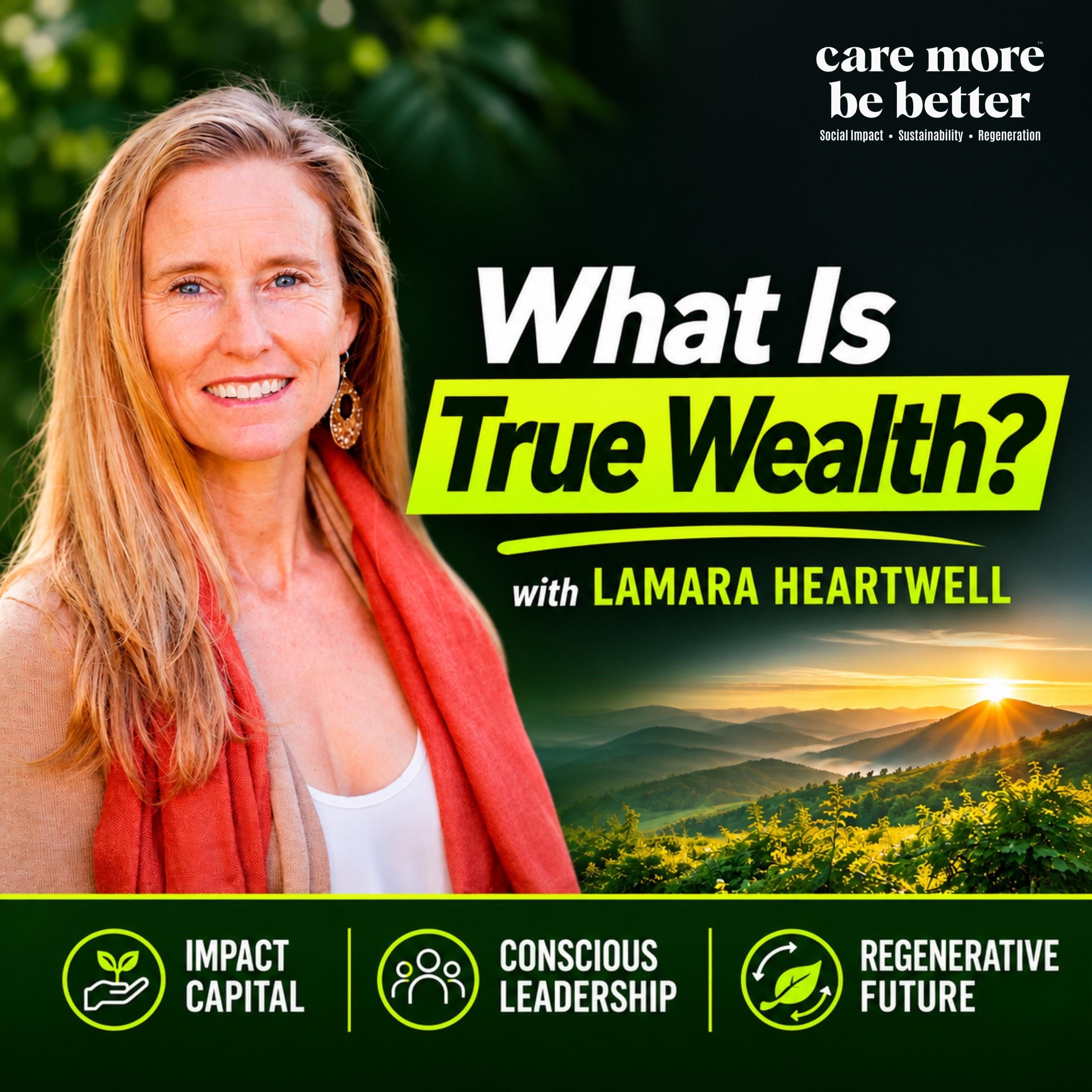
What would change if we measured wealth by how alive we feel, and by whether our choices restore or destroy life? Lamara Heartwell was born into the Exxon lineage and received her first inheritance in her early twenties, at a time when she was struggling to feel at home in her own life. That experience sent her on two parallel journeys: one to understand where her money came from, and one to come home to her body and the Earth. In this conversation she traces the original meaning of the word wealth, shares what it was like to speak at an ExxonMobil shareholder meeting, and explains why moving capital toward regenerative businesses is part of living with integrity. She also describes the Origin global event and a simple daily practice anyone can try. Take her questions with you: what genuinely sustains life for you? Topics Covered Growing up in an oil family and receiving an Exxon inheritance in her early twenties Why the root of the word wealth is wellbeing, and how far our culture has
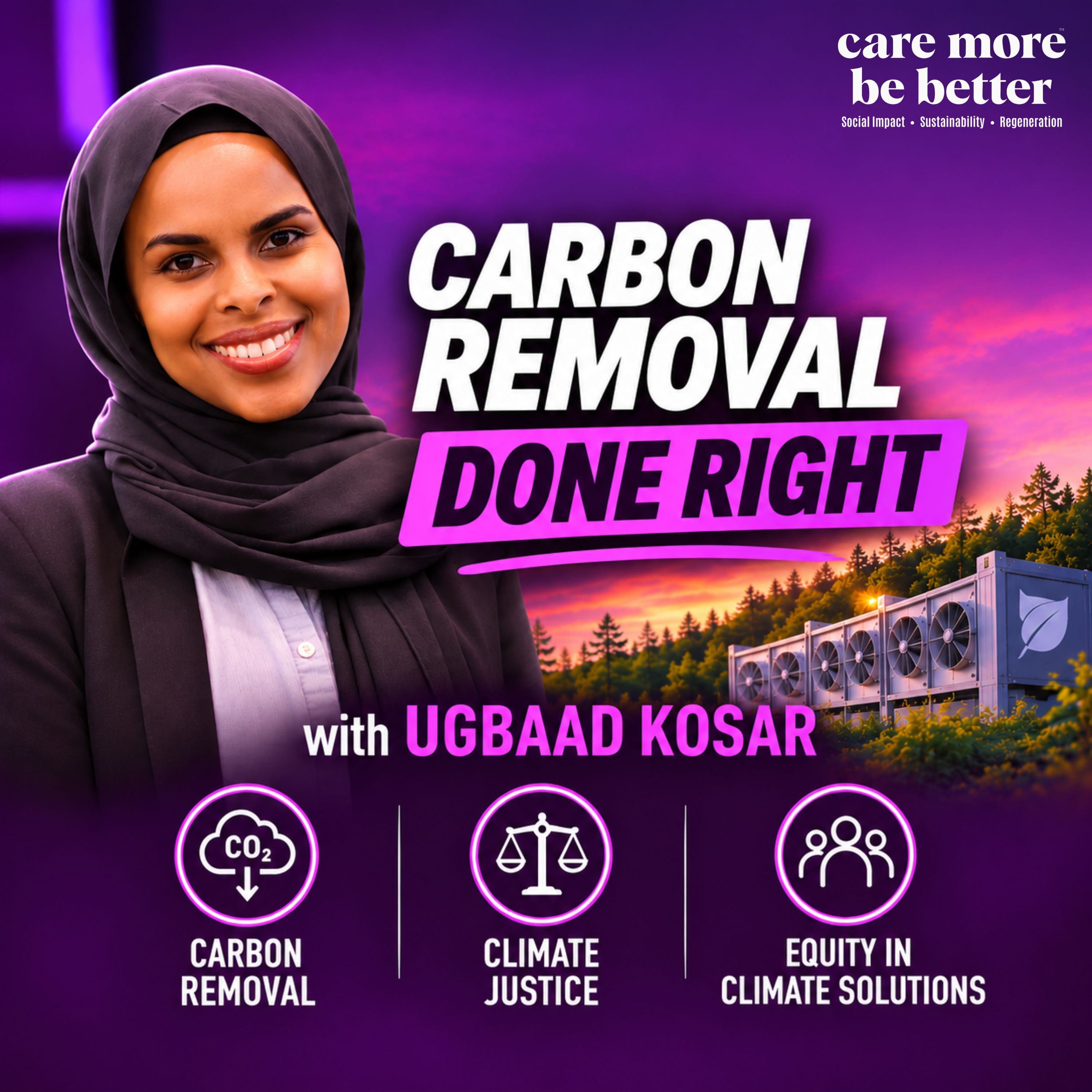
Cutting emissions is the first job, but scientists say we also need to remove carbon that is already in the air, and how we do it will decide whether people trust it. Ugbaad Kosar brings a human-rights lens to the question, shaped by the 2011 drought and famine that reached her family in Somalia. In this conversation she explains the range of carbon removal approaches, from soil and forests to direct air capture and the ocean, and why the land-based options may be the ones ready to go today. She also makes the case that community input is not a courtesy but a requirement, with data centers as a real-time lesson, and shares what Carbon180's CORE framework asks of anyone building a project. You will leave with practical ways to get informed and speak up when a project is proposed near you. Show Note: 00:00 – Why Land-Based Carbon Removal Benefits Go Beyond Carbon 00:28 – Introduction to Care More Be Better 00:47 – Meet Ugbaad Kosar: Equity and Justice at Carbon180 02:26 – Ugbaad’s Journe