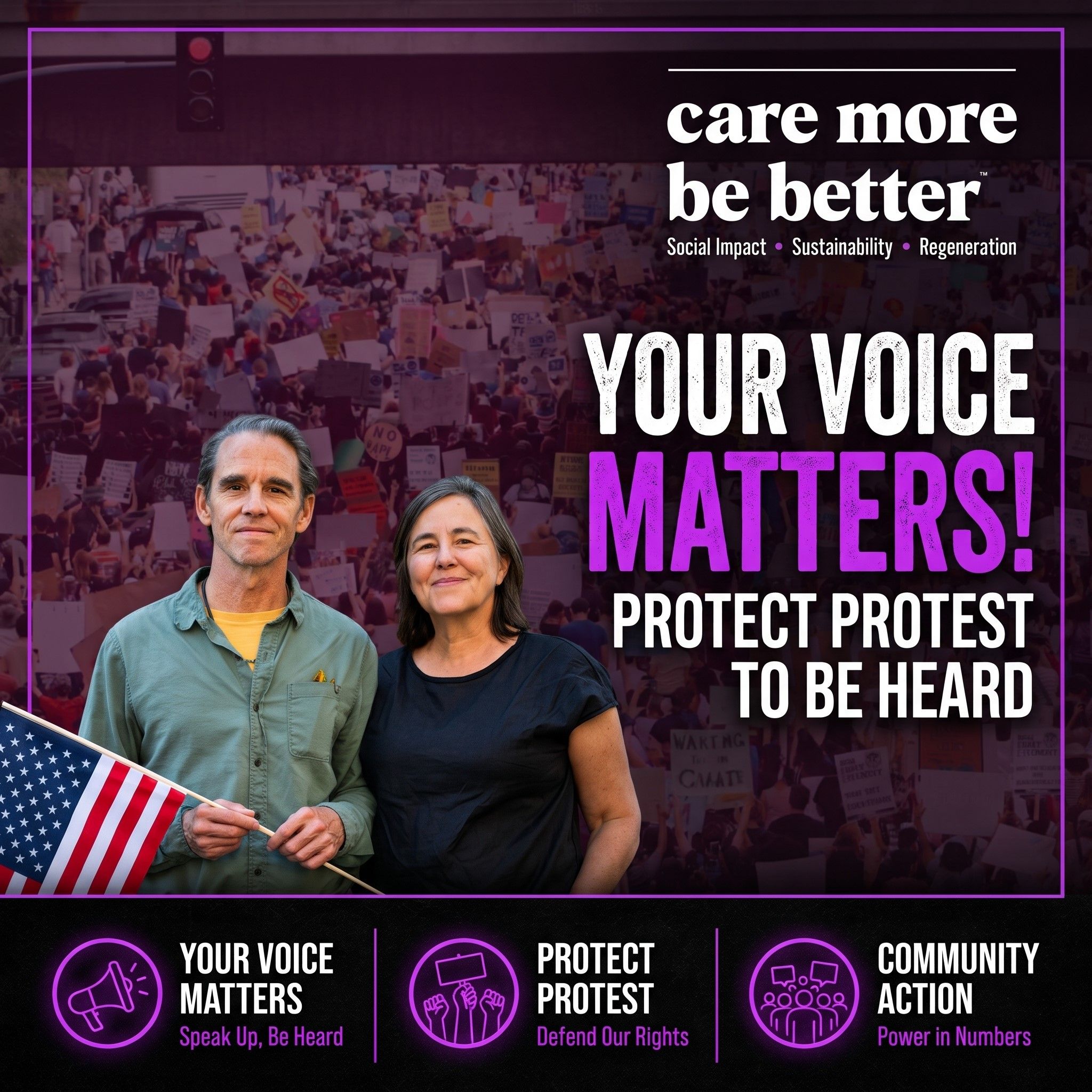
Your Voice Matters: Protect Protest and Free Speech to Be Heard
12 min
Listen through the publisher, then discuss the episode here or arrange an in-person Roundtable. Your city determines where to meet.
Roundtables are designed for groups of four, with a shared subject and room for everyone to speak. Come for discussion, with no dating expectation.
Most of us rarely stop to think about everything protest has given us. In this solo episode, Corinna shares highlights from an intimate evening with Annie Leonard and André Carothers, authors of Protest: Respect It. Defend It. Use It., at Patagonia's Santa Cruz store, and reflects on what free speech means to her. She reminds us that rights we enjoy today were won through protest, and that they need people to keep using them. Then she gets practical, with three ways to act: reach out to your representatives, engage in local politics where you may have a greater chance of affecting the outcome, and make it personal. You will hear why a letter that tells your story is stronger than a copied petition, and why your voice matters. Topics Covered An evening with Annie Leonard and André Carothers at Patagonia's Santa Cruz store Why Protest is one of Corinna's all-time favorite books from Patagonia Books, and a guide she will give her kids What free speech means to Corinna, from hosting this podcast to speaking up for others How protest has secured rights many of us take for granted Why rights need to be used and defended to last Reaching out to your representatives and senators Engaging in local politics where you may have a greater chance of affecting the outcome Why storytelling makes your voice stronger Petitions versus personal letters and calls: why both matter How to explain why you are asking, and why your representative has a stake in the decision A listener challenge: write or call this week and tell your story Resources and Links Episode blog: https://caremorebebetter.com/your-voice-matters-protest-free-speech-and-making-it-personal/ Corinna's interview with Annie Leonard and André Carothers: https://caremorebebetter.com/if-we-lose-the-right-to-protest-we-lose-everything-with-annie-leonard-andre-carothers/ BOOK REVIEW | Protest: Respect It, Defend It, Use It by Annie Leonard and Andre Carothers: https://caremorebebetter.com/book-review-protest-respect-it-defend-it-use-it-by-annie-leonard-and-andre-carothers/ Protest: Respect It. Defend It. Use It. (authors' website): https://theprotestbook.com/ Protest: Respect It. Defend It. Use It. (on Amazon): https://amzn.to/4tYlYER Find and contact your U.S. senators: https://www.senate.gov/senators/senators-contact.htm Find your U.S. representative: https://www.house.gov/representatives/find-your-representative CONNECT & SUPPORT CARE MORE BE BETTER YouTube: https://www.youtube.com/c/caremorebebetter TikTok: https://www.tiktok.com/@caremorebebetter Instagram: https://www.instagram.com/caremorebebetter Facebook: https://www.facebook.com/CareMoreBeBetter LinkedIn:https://www.linkedin.com/company/care-more-be-better Hosted by Simplecast, an AdsWizz company.
Episode information is provided by the publisher. Listening takes place on the publisher’s service.
A tow truck driver arrived at a rural accident scene after midnight, after the ambulance had left and the police were finishing up. His job was routine: pull the badly damaged sedan from the embankment and take it back to the tow yard. Then, while working alone beside the wreck, he heard a woman’s voice. “Wait.” He searched the car, checked the seats and floorboards, and looked around the accident scene. No one was there. A few minutes later, the voice came again—clearer this time and seemingly from inside the empty vehicle. “Please wait.” He tried to convince himself that exhaustion and the strange acoustics of the roadside had fooled him. Then the next afternoon, someone else at the tow yard heard a woman speaking from the same car. #GhostStories #HauntedCar #SpiritVoice #Paranormal #Spirits #GhostEncounter #Afterlife #Unexplained #ParanormalStory #TheUnexplained Love real ghost stories? Want even more? Want even more? Stay connected with us on social: Instagram: https://www.instagra
How can you make your voice heard in a noisy world? The key is public speaking and presentation literacy, and we can help: http://bit.ly/TMCPSApp Uploaded 14-01-21 -- Storytelling is an ancient art; as humans developed language and culture, we learned to share our stories, thoughts, and dreams. And that storytelling evolved into public speaking, and our audience— thanks to the internet— is the whole world, not just a campfire. So how can we make our voices heard in such a busy space? Chris Anderson digs into why presentation literacy is the skill of the future. Lesson by Chris Anderson, directed by Avi Ofer. Support Our Non-Profit Mission ---------------------------------------------- Support us on Patreon: http://bit.ly/TEDEdPatreon Check out our merch: http://bit.ly/TEDEDShop ---------------------------------------------- Connect With Us ---------------------------------------------- Sign up for our newsletter: http://bit.ly/TEDEdNewsletter Find us on Twitter: http://bit.ly/TEDEdTwit
Remove your personal information from the web at https://joindeleteme.com/SPACETIME One of the most important reasons we go to space is to know our own planet better. Today I'm going to tell you about an orbiting facility that literally watches Earth's biosphere breath and grow and die with incredible resolution. I'll talk about its profound existential and economic importance, and about why it's in danger of being lost. PBS Member Stations rely on viewers like you. To support your local station, go to:http://to.pbs.org/DonateSPACE Sign Up on Patreon to get access to the Space Time Discord! Check out the Space Time Merch Store Pale Blue Dot By Carl Sagan Search the Entire Space Time Library Here: https://search.pbsspacetime.com/ Hosted by Matt O'Dowd Written by Fernando Franco Félix & Matt O'Dowd Post Production by Leonardo Scholzer, Yago Ballarini & Stephanie Faria Directed by Andrew Kornhaber Associate Producer: Bahar Gholipour Executive Producer: Andrew Kornhaber Executive in Charge
In Brought to You By: How Corporations Warped the Truth, Conned the Public, and Broke Democracy (https://bookshop.org/a/12343/9781639736331), Amy Westervelt exposes the plot hidden within the familiar story of science denial. Over the last century, Big Industry has built a vast apparatus of think tanks, lobbyists, sponsored university labs, and obliging news networks to con the public and fool decision-makers, poisoning the informational ecosystem and warping the nature of truth along the way. With her signature wit and incisiveness, Westervelt introduces the masterminds of corporate misinformation: Herb Schmertz, the public relations pioneer who made Mobil “the thinking man's oil company;” Richard Edelman, the PR guy who helped the dairy industry vilify oat milk; David Petraeus, the disgraced spy chief using counter-insurgency tactics to discredit climate science; and many more. She shows how these company men have worked to usher in an era of unprecedented corporate control. Only by
Thanksgiving is here, and some of your aunts and uncles may have softened their stances since last year. So, should you engage when politics comes up? And if so, how? Jessica Tarlov, co-host of Raging Moderates and Fox News’s The Five returns to the show to offer some tips for handling Thanksgiving (and the rest of the year), discusses her new book, and she and Sarah listen to some voters talk about how political divisions have affected their lives…and what those voters think of people who think differently. Show links: Raging Moderates with Scott Galloway and Jessica Tarlov (https://www.youtube.com/@RagingModerates) Jessica’s book, I Disagree: Winning Arguments Without Losing Friends (https://www.penguinrandomhouse.com/books/803493/i-disagree-by-jessica-tarlov/) Feeling frustrated by the state of American democracy? The Context, a podcast from the Charles F. Kettering Foundation, explores the challenges facing democracy, how to fix what’s broken, and what we can do to make it work bet
Master the skills that change lives — enroll in your free human behavior course today: https://nci.university/learn Uploaded 09-01-26 You were never reacting to chaos — you were responding to structure. Outcomes don’t appear suddenly; they’re assembled long before you notice them. Understanding how pressure is built changes how the world feels immediately. All influence follows patterns once you know where to look. Reality doesn’t break — it gets reshaped in layers. Every system depends on predictable human responses. Given the right conditions, behavior becomes almost automatic. Once you see the architecture, panic loses its leverage. Detection beats reaction — every time. Please note that the content provided in this broadcast is for informational and educational purposes only and should not be construed as legal, medical, financial, or professional advice. No material in this communication establishes any form of professional relationship that is privileged or confidential. The insi
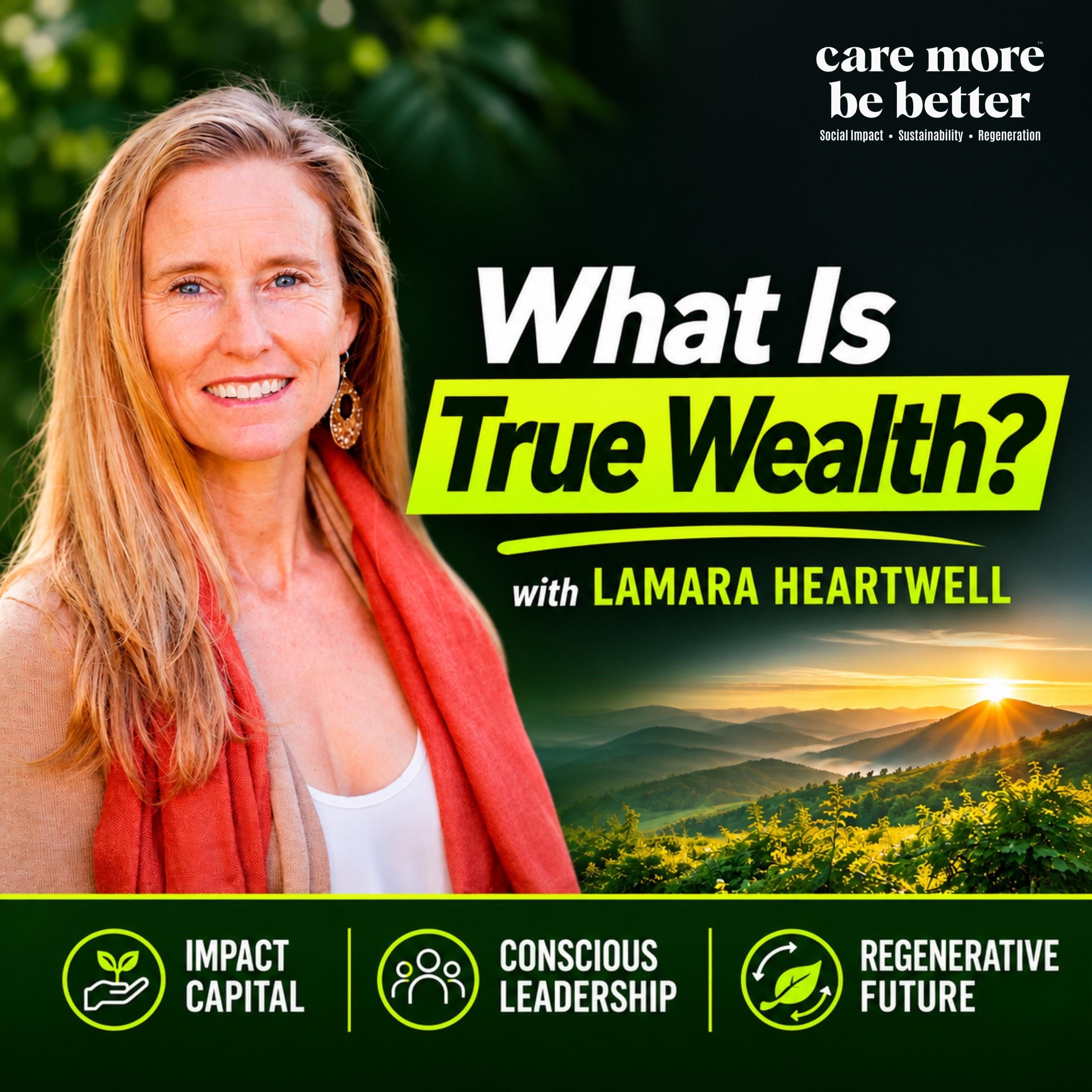
What would change if we measured wealth by how alive we feel, and by whether our choices restore or destroy life? Lamara Heartwell was born into the Exxon lineage and received her first inheritance in her early twenties, at a time when she was struggling to feel at home in her own life. That experience sent her on two parallel journeys: one to understand where her money came from, and one to come home to her body and the Earth. In this conversation she traces the original meaning of the word wealth, shares what it was like to speak at an ExxonMobil shareholder meeting, and explains why moving capital toward regenerative businesses is part of living with integrity. She also describes the Origin global event and a simple daily practice anyone can try. Take her questions with you: what genuinely sustains life for you? Topics Covered Growing up in an oil family and receiving an Exxon inheritance in her early twenties Why the root of the word wealth is wellbeing, and how far our culture has
Cutting emissions is the first job, but scientists say we also need to remove carbon that is already in the air, and how we do it will decide whether people trust it. Ugbaad Kosar brings a human-rights lens to the question, shaped by the 2011 drought and famine that reached her family in Somalia. In this conversation she explains the range of carbon removal approaches, from soil and forests to direct air capture and the ocean, and why the land-based options may be the ones ready to go today. She also makes the case that community input is not a courtesy but a requirement, with data centers as a real-time lesson, and shares what Carbon180's CORE framework asks of anyone building a project. You will leave with practical ways to get informed and speak up when a project is proposed near you. Show Note: 00:00 – Why Land-Based Carbon Removal Benefits Go Beyond Carbon 00:28 – Introduction to Care More Be Better 00:47 – Meet Ugbaad Kosar: Equity and Justice at Carbon180 02:26 – Ugbaad’s Journe
A workable temporary compromise is often better than delaying all action.
Share your view, then see how readers voted. No sign-in required. This poll is shared across stories.
Do you agree or disagree?
Common Quandary
A Common Quandary to discuss
Another conversation to explore, separate from this news story.
Your anonymous gift could inspire millions more if you reveal your name. Do you?
A donor wants to make a transformative gift without recognition. The charity believes announcing the gift and the donor's identity would encourage matching contributions and help far more people.
Can the opportunity to create more good outweigh a preference for privacy?