3616: Chocolate and Athletes by Nancy Clark on Sports Nutrition
11 min
Listen through the publisher, then discuss the episode here or arrange an in-person Roundtable. Your city determines where to meet.
Roundtables are designed for groups of four, with a shared subject and room for everyone to speak. Come for discussion, with no dating expectation.
Get the 200+ Page Optimal Living Daily Workbook (PDF) - Free. Want to turn today's episode into an actionable plan? Episode 3616: Nancy Clark explains what chocolate really offers athletes, from the flavonoids in cocoa to the protein and electrolytes that make chocolate milk a strong recovery drink. She looks at sugar spikes, caffeine and weight, and makes the case that chocolate enjoyed in moderation can fit into a balanced sports nutrition plan without crowding out nutrient-dense foods. Read along with the original article(s) here: Quotes to ponder: "Chocolate's energy boost comes from sugar, more so than caffeine." "Like any food that is eaten in excess, chocolate can be fattening." "Hence, you want to enjoy chocolate in moderation, so it does not crowd-out other nutrient-dense foods."
Episode information is provided by the publisher. Listening takes place on the publisher’s service.
Get the 200+ Page Optimal Living Daily Workbook (PDF) - Free. Want to turn today's episode into an actionable plan? Episode 4233: Kate Galliett explains three reasons we make health, fitness and life harder than they need to be: ignoring how the body works as a connected system, trusting only extreme intensity, and leaking the energy that fuels motivation and discipline. She makes the case that appropriate effort, not maximum effort, is the only sustainable path to lasting results. Read along with the original article(s) here: https://fitforreallife.substack.com/p/why-you-make-everything-harder-than Quotes to ponder: "The better way is to give appropriate effort and get appropriate results. This is the only sustainable way." "If you try and live at the extremes, you will constantly ping-pong back and forth from one extreme to the other." "Just imagine - you might not actually lack discipline after all, you just might be leaking energy that feeds your ability to be disciplined." We spen
For a written breakdown and key references, see the associated letter: https://open.substack.com/pub/staycuriousmetabolism/p/the-carb-loading-myth-is-finally?r=40ekz2&utm_campaign=post&utm_medium=web&showWelcomeOnShare=true (https://open.substack.com/pub/staycuriousmetabolism/p/the-carb-loading-myth-is-finally?r=40ekz2&showWelcomeOnShare=true) Paper: https://academic.oup.com/edrv/advance-article/doi/10.1210/endrev/bnaf038/8432248?login=false Description: Do you really need to carb-load for peak performance, or is that just sports nutrition inertia? In this conversation, Nick sits down with Dr. Andrew Koutnik to break down a new meta-analysis of randomized controlled trials challenging the classic “you need carbs for performance” narrative. The key twist is that the strongest predictor of fatigue across studies isn’t muscle glycogen, but a subtle drop in blood glucose and overall brain fuel. You’ll learn where the carb-loading doctrine came from, what the original studies missed, why gl
Trent and Peaches are tired of watching people celebrate minimum standards like they are excellence. The episode starts with Trent declaring Rudy the worst sports movie ever and immediately turns into a broader conversation about how organizations, teams, and candidates spend enormous amounts of energy supporting the bottom performers while sometimes failing to recognize the people who are actually crushing it. Their argument is not that struggling people deserve no support — it is that finishing last, barely passing, or simply meeting the minimum should not automatically be treated like an exceptional performance. They use athletes like Michael Jordan, Kobe Bryant, and other elite performers to make the point that talent does not eliminate work. Then the conversation comes back to Air Force Special Warfare preparation. Candidates claim they do not have time to train while sometimes putting in only a few hours each week for a pipeline they say is their biggest goal. Trent and Peaches e
Professor Clare Collins speaks with Melbourne dietitian and gut-health researcher Sarah Melton about diet stacking, which is the phenomena of combining multiple dietary strategies at the same time, often without a clear plan. Diet stacking can severely limit food choice,, increase stress and reduce the number of foods a person feels confident to eat. They discuss how 'stacked diets' risk not being nutritional adequate, how restrictions can affect nutrition, health and wellbeing, and why diagnosis and professional guidance are important - before removing foods from your usual intake. Key Topics Diet stacking is an increasing phenomenon that clinicians are seeing Gut conditions can include identifiable diseases, like coeliac disease and inflammatory bowel disease, and disorders of gut-brain interaction, like irritable bowel syndrome. The more diets that are stacked, the more food groups excluded and the greater the risk for poor nutrition, health and wellbeing Some diet combinations may
If you have ever wondered: “Why am I the most capable person in the room and also the most drained?” “How long can my brain actually do its best thinking in a day?” “How do I protect my best hours without my performance costing me my health?” - this episode is for you. Layne and Tess launch The Awake Advantage with Dr Kristy Goodwin, the neuro-performance scientist who independently reviewed Awake’s new research. Drawing on 1,750+ responses across 100+ organisations, 2020 to 2026, the conversation asks why the most capable people in the room are so often the most depleted, and why seniority offers no protection. Kristy brings the brain science: why leaders are running 2026 software on ancient hardware, the 4 to 6 hour daily battery for your heaviest thinking, and how to build habits the brain will actually keep, one to three at a time. Along the way Layne and Tess share what the data looks like from the inside, including why leaders going first sets the signal for everyone else. Then c
What if the shape of your jaw—and the way you breathe—could affect everything from your sleep and energy to headaches, hormones, and overall health? Dr. Hilary Fritsch is a biological and airway dentist whose own health struggles led her to question much of what she had learned in conventional dental school. Her search for root causes led her to discover the profound connections among nutrition, jaw development, nasal breathing, sleep, and whole-body health. In this episode, Hilary explains what airway dentistry is and why she believes the work of Dr. Weston A. Price is foundational to understanding the narrowing jaws and crowded teeth so common today. She reveals how an underdeveloped palate and mouth breathing can contribute to disrupted sleep, teeth grinding, TMJ problems, headaches and fatigue in adults—and hyperactivity, bedwetting and restless sleep in children. We also explore the importance of breastfeeding and nutrient-dense foods for healthy jaw development, orthodontic expan
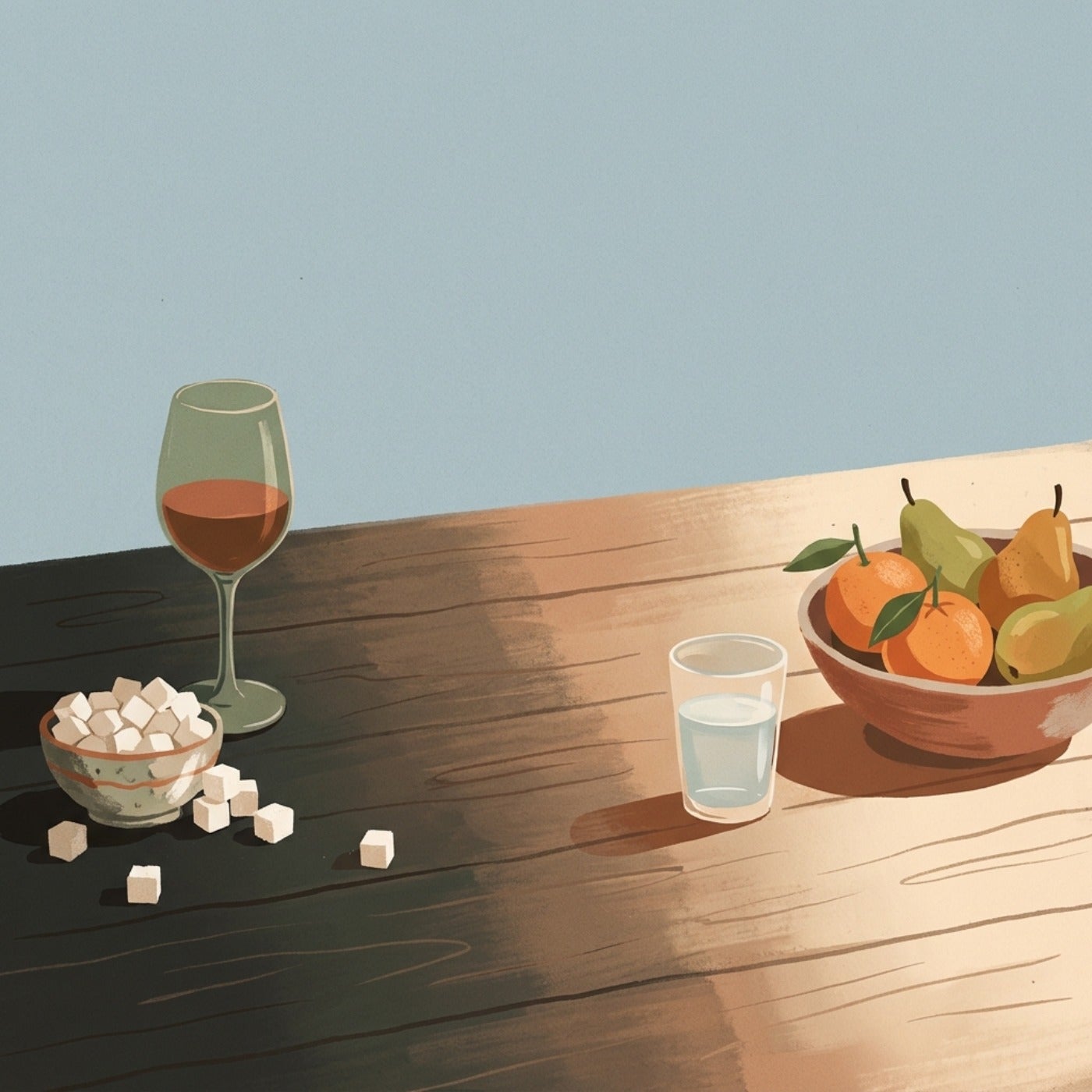
Get the 200+ Page Optimal Living Daily Workbook (PDF) - Free. Want to turn today's episode into an actionable plan? Episode 3615: Becca Shern explains why the common nutrition advice of everything in moderation may not be serving people well. She looks at how heavy marketing and social norms around sugar and alcohol make it easy to overconsume while still feeling moderate, and what the actual recommended limits are. The takeaway is that taking a critical look at what moderation really means, and setting a higher standard, can build healthier habits for ourselves and the people around us. Read along with the original article(s) here: http://minimalwellness.com/reconsideringmoderation/ Quotes to ponder: "Moderation is a squishy term." "Our consumption patterns are dramatically influenced by marketing, but they're also molded by social norms." "Setting a higher standard for ourselves helps others do the same."
Get the 200+ Page Optimal Living Daily Workbook (PDF) - Free. Want to turn today's episode into an actionable plan? Episode 3614: Kym Wilson shares how she left a corporate finance career to pursue scuba diving and a 2,000-kilometer pilgrimage, and the panic she felt when her savings fell behind her peers. She explains why she came to see that net worth and life's worth are different measures, and why the experiences that change us also ripple out to others. The takeaway is that the cost of neglecting a dream can be greater than the money it takes to follow one. Read along with the original article(s) here: https://tinybuddha.com/blog/value-following-dreams-dont-make-money/ Quotes to ponder: "When you answer the call to adventure, you never know where you will end up." "Your net worth is not your life's worth." "I know that one day, when I am old and dying, I won't regret the things I never had, but I will regret the moments I didn't seize and the adventures and growth I never experien
Get the 200+ Page Optimal Living Daily Workbook (PDF) - Free. Want to turn today's episode into an actionable plan? Episode 3613: Jessi Kneeland explains why what most people need during the holidays is better support rather than more things to buy. She describes three places worth investing instead: regulating your nervous system through rest and gentle movement, setting and holding boundaries with family and obligations, and affirming your own sense of self when old roles pull you back. The takeaway is that keeping your own wellbeing at the top of the list is one of the healthiest habits to protect this time of year. Read along with the original article(s) here: https://www.jessikneeland.com/post/3-investments-to-make-this-holiday-season Quotes to ponder: "But the thing that most of us actually need isn't more stuff." "No matter what comes your way, as long as you're willing to choose yourself, you'll be ok." "So be on your own side and treat yourself like someone you love."
Security claims about important digital products should face independent testing.
Share your view, then see how readers voted. No sign-in required. This poll is shared across stories.
Do you agree or disagree?
Common Quandary
A Common Quandary to discuss
Another conversation to explore, separate from this news story.
You find a family secret after a relative dies. Does the truth come out?
Sorting through a deceased relative's papers, you discover evidence of a serious betrayal that would change how the family remembers them. Revealing it could answer old questions—and cause fresh pain.