415. Why Did the Republicans Lose the 2026 Midterm Elections? (Vocabulary in the News)
35 min
Listen through the publisher, then discuss the episode here or arrange an in-person Roundtable. Your city determines where to meet.
Roundtables are designed for groups of four, with a shared subject and room for everyone to speak. Come for discussion, with no dating expectation.
Today, we're looking at the results of the 2026 US midterm elections, where the Democratic Party achieved a major victory, taking control of Congress from the Republicans. Midterm elections are often difficult for the party that controls the White House, but this particular result has been described as a significant rejection of Donald Trump's presidency. So, what went wrong for the Republicans? Why did so many voters change their minds, and what issues influenced the result? We'll use this story to explore some useful English vocabulary connected to elections, politics, economics, and public opinion. As always, I'll explain what each word or expression means, show you how it's used, and connect it to the news story. Article - https://www.bbc.com/news/articles/cqkgjvr00zmyo TRANSCRIPT - https://thinkinginenglish.blog/2026/11/23/415-why-did-the-republicans-lose-the-2026-midterm-elections-vocabulary-in-the-news/ Borough by Blue Dot Sessions 00:00 Introduction 01:01 Black Friday Offer 01:33 Midterms Explained 03:04 Democrats Flip Congress 04:32 Why Republicans Lost 06:29 Vocabulary 06:54 Midterm Election 08:12 Incumbent 09:54 Sweep to Victory 11:06 Resounding Rejection 12:27 Cost of Living 14:14 Grapple With 15:32 Lay the Blame 17:00 Retaliation 18:15 Disciplined 19:42 Resonate 20:49 Pull Off an Upset 22:24 Galvanize 23:44 A Drag On 24:41 Backfire 27:16 Shift Towards 28:12 Big Picture Questions 29:29 Final Thoughts
Episode information is provided by the publisher. Listening takes place on the publisher’s service.
Black Friday sale: one week only Our Black Friday sale starts Friday, November 27. For one week, you can get a yearly Culips membership for $126. That’s 30% less than paying monthly for a year. You’ll get every lesson, all of our study tools, unlimited live speaking classes, and ad-free audio, all in our new app. There’s no coupon code. Just visit Culips.com before the sale ends on Thursday, December 3. Get the Black Friday deal at Culips.com (https://culips.com/). Andrew and Indiana catch up on what they’ve been doing lately. Indiana tells a story about a painful trip to the dentist, and Andrew talks about going to a rap concert by himself in Seoul. They also talk about AI music in gyms and cafes, a famous horror movie that Indiana saw at a special screening with its actors, and Andrew’s new rice cooker. Along the way, you’ll learn useful English vocabulary like “that’s the kicker,” “at the top of one’s game,” “more bang for your buck,” “clocked in, clocked out,” “right on the button,
Have you ever heard your parents say something that made absolutely no sense when you were a kid—but years later, you finally understood what they meant? In this special episode from the Real English Conversations Podcast archives, Curtis and former co-host Amy take a nostalgic trip back to childhood and share some of the funniest, most memorable things their parents used to say. From "Money doesn't grow on trees!" to "Don't make me turn this car around!" and "Because I said so!", we explore the everyday English expressions that parents have been using for generations. But there's more to this conversation than just funny memories! Curtis and Amy explain what these expressions actually mean, when native English speakers use them, and how you can use them naturally in your own conversations. Whether you're an English learner who wants to understand everyday spoken English, an international professional looking to sound more natural, or simply someone who enjoys funny childhood memories,
Master the skills that change lives — enroll in your free human behavior course today: https://nci.university/learn Uploaded 15-01-26 EXECUTIVE SUMMARY: Video: What It Feels Like to See Into People Purpose: Reframe how human behavior is actually driven and perceived Outcome: Permanent shift in how you experience people and conversations CORE IDEA: Human behavior is not driven by beliefs, opinions, or logic. Those are after-action reports. Behavior is driven by the nervous system’s constant assessment of: • safety • approval • power • avoidance of shame Decisions are made before conscious thought. Beliefs are constructed afterward to justify what already happened. WHY THIS MATTERS: Most people spend their lives interacting with: • beliefs • arguments • explanations • surface narratives As a result, they miss the layer where real decisions are made. This video focuses on that lower layer — the one that actually governs: • conflict • influence • attraction • resistance • leadership • trus
There's no how-to for this human experience and certainly none for being a woman. But there are patterns, seasons, and chapters, each with its own gift and its own invitation. In this heartfelt reflection, Sage Robbins shares what the decades have taught her: the innocence of her younger years, the humbling health awakening of her 40s, and the gradual coming home to herself that she calls the most authentic chapter of her life. Uploaded 07-10-26 Watch more videos like this How Sage and Tony Robbins Finally Became Parents After 20 Years of Trying: https://youtu.be/oUx3Uj9rUTc 5 Simple Ways to Feel More Peaceful Every Day: https://youtu.be/NaYILgJK15g You're Not Broken, You're Just Living the Wrong Identity: https://youtu.be/pqMOp4ROz1E How to Free Yourself from Difficult Emotions: https://youtu.be/hwsHxLR259M Join my weekly newsletter 'The Mirror' to receive these exclusive videos each week: https://www.sagerobbins.com (https://www.sagerobbins.com/) Follow Sage Robbins: Instagram: https
In this Jim Rohn Motivation video, Jim Rohn explains how success is predictable when you follow a proven set of principles. From building daily habits to maintaining discipline, persistence, and vision, he emphasizes the importance of consistency and responsibility in achieving long-term success. Key Topics From This Motivational speech: - Success is predictable and follows principles. - Consistency and habits are key to success. - The role of discipline in achieving goals. - Attitude and resilience in facing setbacks. - Importance of persistence and focus. Jim Rohn shares that success isn't about luck or fate but about following a formula. Small, consistent actions lead to significant results over time. Discipline is the bridge between your goals and accomplishments, requiring daily commitment, even when motivation is low. He emphasizes the power of habits, and how your success is a reflection of the habits you cultivate. Attitude, persistence, and taking full responsibility for your
In this episode, we sit down with Devon McLeod to talk about flower essences and how they can support emotional balance, nervous system regulation, and self-awareness. Devon explains that flower essences are different from essential oils or herbal medicine because they are not based on a plant’s physical or chemical properties. Instead, they are made by capturing the energetic imprint of a flower in water, a method first developed by Dr. Edward Bach in the 1920s. His work focused on the emotional patterns beneath physical symptoms, which became the foundation of the 38 Bach flower remedies. We talk through Devon’s own path to this work, from traditional clinical training at Columbia to discovering flower essences during a difficult season in her own life. She shares that what drew her in was not a theory, but the feeling that she became more like herself while taking them. Next, we talk practical use. Devon explains how blends can be personalized, how many remedies people often combine
The Collins Dictionary Word of the Year is… Mogging! In today’s Thinking in English episode, I want to explain what it means to “mog someone” and discuss why this word was chosen as the Word of the Year by Collins Dictionary. I’ll also discuss some of the other contenders and runners up for the 2026 Word of the Year, including Carspreading, Ghost Jobs, and Manchesterism. Through these words we will discuss modern online culture, economics, British politics, and the environment! TRANSCRIPT - https://thinkinginenglish.blog/2026/11/16/414-what-is-the-2026-word-of-the-year-english-vocabulary-lesson/ Borough by Blue Dot Sessions
In September 2026, Canadian Prime Minister Mark Carney called for the world’s “middle powers” to haver closer relationship. He gave a speech at the European Union, encouraging the members to create “an alliance strong enough so that no one can dictate our choices.” And Canada might become the first affiliate member of the EU, as part of this middle power strategy. But what exactly is a middle power? What makes a country powerful? And why are middle powers becoming increasingly important in international politics? TRANSCRIPT - https://thinkinginenglish.blog/2026/11/09/413-what-is-a-middle-power-english-vocabulary-lesson/ Borough by Blue Dot Sessions
On September 30, 2026, the US state of Tennessee attempted to execute Christa Pike, a woman who had been on death row for more than 30 years. Pike was sentenced to death for the 1995 murder of 19-year-old Colleen Slemmer. After being convicted of the murder, Pike spent decades in prison before her execution was finally scheduled. But the execution did not go as planned. Pike was given two doses of a drug called pentobarbital as part of the execution process, but she survived. She was taken to hospital and is still alive as of the time of recording this episode. The death penalty is one of the oldest forms of punishment in human history. Some people believe it is an appropriate punishment for the most serious crimes. Others believe that governments should never have the power to take someone's life. So today, we're going to look at what the death penalty is, its long history, where it is still used today, and the arguments for and against it. And at the end, we'll return to the case of
Tourism revenue should help cover the costs visitors create for local residents.
Share your view, then see how readers voted. No sign-in required. This poll is shared across stories.
Do you agree or disagree?
Common Quandary
A Common Quandary to discuss
Another conversation to explore, separate from this news story.
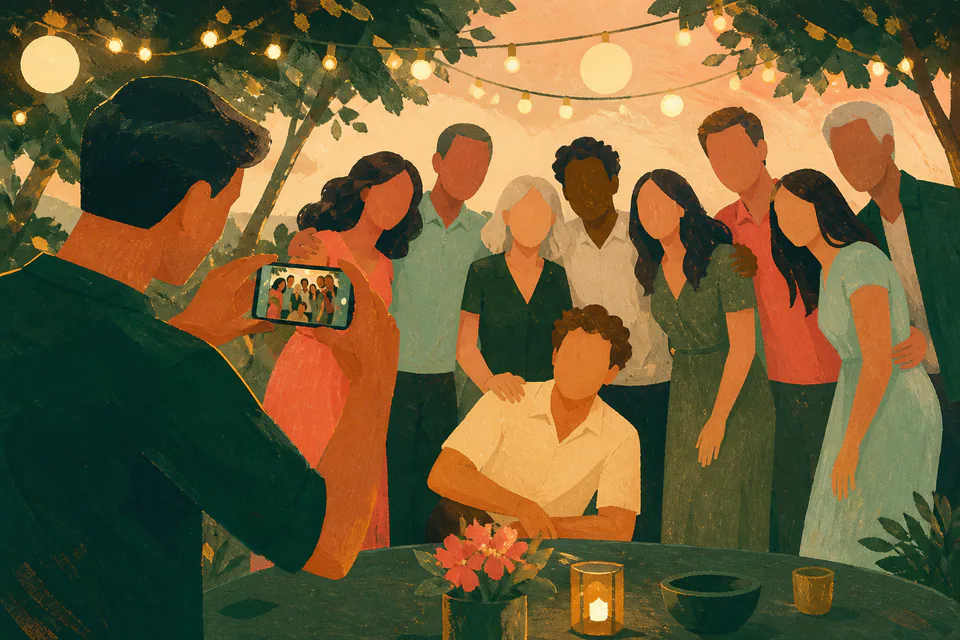
Everyone loves the group photo except you. Can you forbid them from posting it?
At a reunion, someone takes a joyful group photo that captures the night perfectly. Everyone looks wonderful except you, caught at an awful angle. The group wants to post it publicly and promises nobody else will care.
How much control should one person have over a memory shared by many?