What are the behaviors that are to characterize the lives of Christians? What actions, thoughts, and type of speech should be avoided? In this sermon on Ephesians 5:3–5 titled “Evils not…Among Saints,” Dr. Martyn Lloyd-Jones teaches on Paul’s exhortation to live according to God’s word. In this passage, Paul provides a list of things that are generally characteristic of those who do not follow Christ— sexual immorality, uncleanness, covetousness, and other vices. His point is that Christians are to make every effort to avoid them. But in a world that actively engages in and encourages such sins, how can believers avoid them? First, Dr. Lloyd-Jones says, Christians must kill temptation at the first hint of it— they must not allow it even a small foothold in their lives. They are to run at the sight of it. Paul states that such things are to “not even be named among you.” Many read these verses and conclude that Christians are to be dull people. Yet that is not at all what these instruct
What does progress mean in Islam? Dr Ahmed Paul Keeler joins Muhammad Jalal on The Thinking Muslim to discuss Mizan, the Qur’anic principle of balance and justice, and what it might mean to restore it today. What did Moorish Spain and Mughal India share? How did European colonialism shape the way Muslims understand their own history? Keeler argues that Mizan helped give Islamic civilisation its coherence across different cultures. He traces how the Western idea of progress took hold and asks what happens when technological advancement becomes the measure of a good society. What would it look like for Muslims to put Mizan into practice in their own communities? Find Ahmed Paul Keeler here: IG: https://www.instagram.com/ahmedpaulkeeler Become a member here: Or give your one-off donation here: Listen to the audio version of the podcast: Spotify: https://open.spotify.com/show/7vXiAjVFnhNI3T9Gkw636a Find us on: X: https://x.com/thinking_muslim LinkedIn: https://www.linkedin.com/company/the-
"These practices are to support us in our life, but our life is also our practice." — Willem Kuyken Dr. Willem Kuyken, a clinical psychologist at the University of Oxford, led MYRIAD, the largest trial of mindfulness training in schools, with more than 8,000 students aged 11 to 14 in 84 UK schools. In this conversation Willem tells David what the trial found. Students who were taught mindfulness by their own teachers did no better than students whose schools carried on with their usual social-emotional teaching, and most of them practiced just once. The teachers, who learned mindfulness for themselves first, did benefit. Willem and David talk about the meeting where the results were revealed, whether mindfulness training can be prescribed or has to be chosen, what protected young people's mental health through the pandemic, and how Willem would design the trial today. They also talk about parenting, two small practices from Willem's book Mindfulness for Life, and what the London Underg
Two paths, two futures: blessing or exile. Explore Leviticus' dramatic covenant challenge—and the astonishing hope that remains even when God's people fail. Thank you for being part of this journey with us! You can find the questions to dig a little deeper into this passage here (https://www.twosistersandacupoftea.com/episodes/leviticus/ep10-choice-changes-everything). How have you been enjoying this series? Please pop us an email at [email protected] or send us a DM on Instagram or Facebook. It's always a joy to hear from you and to hear how a book like this is landing with those who are listening. Join us next week as we look at chapter 27.
Ephesians E2 — The great surprise of the Gospel is that Jesus is not just the messianic king of ancient Israel but the savior and Lord of all humanity. So as the apostle to the Gentiles, Paul saw it as his job to create communities of people following Jesus who were intentionally multi-ethnic and diverse in every sense of the word. In this second teaching of a five-part series, Tim teaches from Ephesians 3, where Paul explores the new people group that has come into existence because of Jesus’s life, death, and resurrection. Tim gave this message at Door of Hope Church in Portland, Ore., on October 20, 2013. OFFICIAL EPISODE TRANSCRIPT View this episode’s official transcript. (https://d1bsmz3sdihplr.cloudfront.net/media/emsb-ephesians-e2-final-transcript.pdf) REFERENCED RESOURCES SHOW MUSIC “Nob Hill Instrumental” by Drexler SHOW CREDITS Aaron Olsen edited and remastered today's episode. JB Witty writes our show notes. Powered and distributed by Simplecast. Hosted by Simplecast, an Ads
FROM TODAY’S RECAP: - Video: Acts Overview (Part 2) (https://www.youtube.com/watch?v=Z-17KxpjL0Q)- Video: James Overview (https://www.youtube.com/watch?v=qn-hLHWwRYY)- Join our RECAPtains (https://bit.ly/recaptains)Note: We provide links to specific resources; this is not an endorsement of the entire website, author, organization, etc. Their views may not represent our own. SHOW NOTES:
This week's talk is an exhortation by Brother Stephen Ball, titled "Seeing You", given at the San Diego Ecclesia in California, USA on October 25th, 2026. We hope this strengthens your Faith and brightens your day! Thank you for listening, God bless, and talk to you next week. Send talk suggestions or comments to: [email protected] For Show Notes, visit our website: GoodChristadelphianTalks.com (https://goodchristadelphiantalks.com/) Social Media: Facebook (https://facebook.com/GoodChristadelphianTalks/) | Instagram (https://www.instagram.com/goodchristadelphiantalks/)
Organizations should explain important automated decisions in language people can understand.
Share your view, then see how readers voted. No sign-in required. This poll is shared across stories.
Do you agree or disagree?
Common Quandary
A Common Quandary to discuss
Another conversation to explore, separate from this news story.
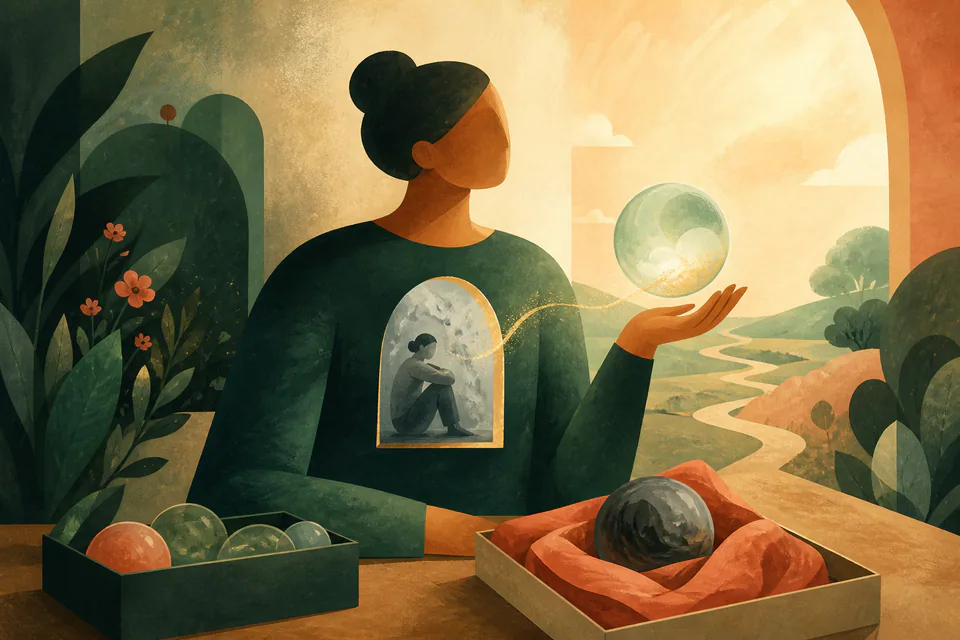
A pill can erase your most painful memory without changing anything else. Do you take it?
A safe new treatment can remove the emotional pain attached to one chosen memory while leaving the factual memory intact. Losing the pain might bring enormous relief, but the experience shaped your relationships, choices, and sense of who you are.
Are painful memories injuries to heal or parts of ourselves to keep?