[428] – The Emotional Toll of Shift Work: Why We Carry Stress Between Jobs
14 min
Listen through the publisher, then discuss the episode here or arrange an in-person Roundtable. Your city determines where to meet.
Roundtables are designed for groups of four, with a shared subject and room for everyone to speak. Come for discussion, with no dating expectation.
Text me what you thought of the show (https://www.buzzsprout.com/1959372/fan_mail/new) Why is it so difficult to switch off after a stressful job, even when you've already moved on to the next task? For nurses, police officers, paramedics, emergency dispatchers and other shift workers, the emotional stress of shift work can build throughout a shift. Difficult conversations, distressed patients, aggressive behaviour and the responsibility of making important decisions can leave us mentally exhausted. In this episode of A Healthy Shift, I draw on my 40 years of policing experience to explore how workplace stress accumulates, why we sometimes replay difficult experiences in our minds, and how repeated emotional demands can affect shift worker wellbeing. We'll explore the difference between healthy reflection and rumination, the impact of emotional labour, and why finding small opportunities for mental recovery between demanding tasks may be useful. I'll also discuss how simple breathing exercises may help shift workers feel calmer during stressful moments, while recognising that proper breaks, manageable workloads and organisational support remain essential. Because managing shift work stress isn't simply about becoming more resilient. It's also about understanding the demands we're experiencing and recognising when we need support. In our next episode, we'll explore how taking just a couple of minutes may help us settle during a demanding shift, and I'll share more about my free 2 In / 3 Out breathing guide. If you know a shift worker who carries the emotional weight of their job from one task to the next, share this episode with them. The job might be finished, but that doesn't always mean we've stopped carrying it. ---------------------------- LinkedIn: https://www.linkedin.com/in/roger-sutherland ___________________ Use of this information is strictly at your own risk. _______________________
Episode information is provided by the publisher. Listening takes place on the publisher’s service.
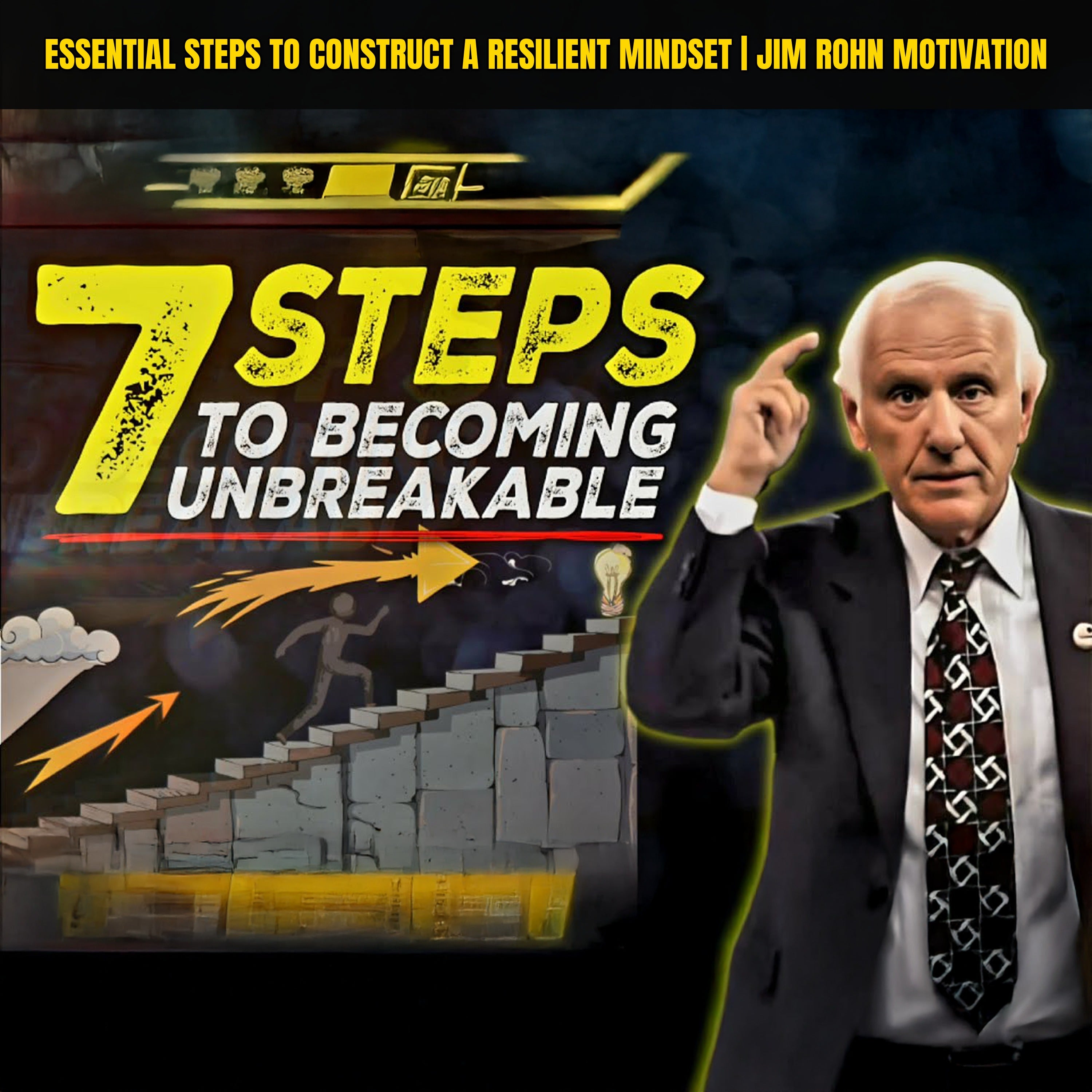
In this Jim Rohn Motivation speech, we unpack the real meaning of resilience—not as something you're born with, but something you build. It’s not about pretending life is easy. It’s about developing the mindset, discipline, and strength to keep going when everything in you says stop. Key Topics From This Motivational speech: Resilience as a skill, not a trait Taking full ownership of your life and mindset Reframing adversity into growth opportunities Emotional regulation and grounded self-talk Endurance, grit, and the decision to grow daily This Jim Rohn Motivational speech reminds us that resilience doesn’t come from waiting for life to calm down—it comes from training your mind to rise in the middle of the chaos. It’s a mindset built on consistent ownership, reframed challenges, and the ability to lead yourself under pressure. Strength isn’t given. It’s earned—through the unseen decisions you make when no one is watching. This Jim Rohn Motivational speech Is Perfect For: Anyone feeli
We’re about to time travel into the future Sam Altman is building… I interviewed Sam Altman, the CEO of OpenAI, the company behind ChatGPT. They’re trying to build a “superintelligence” that could far exceed humans in almost every field – and they just released their most powerful tool yet, GPT-5. A few years ago, that would’ve sounded like science fiction! Not anymore. In fact, they’re not alone. We’re in the middle of the most high stakes global race any of us have ever seen. Hundreds of billions of dollars and an unbelievable amount of human work… It’s a profound moment. Most people never see a huge technological shift like this in their lives and it’s happening all around us right now. So in this conversation, I’m going to try to time travel into the future with Sam Altman, to see what he’s trying to build… so you and I can really understand what’s coming. Welcome to HUGE* Conversations. Chapters: 0:00 What future are we headed for? 2:06 What can GPT-5 do that GPT-4 can’t? 6:57 Wha
Today, Mel is taking 58 years of hard-earned life lessons and is packing them into under an hour, to save you some of the time, frustration, and worry it took her to learn them the hard way. In this episode, Mel is fielding real questions from listeners around the world. From making friends and bouncing back from rejection to feeling stuck in life and wondering if it's all going to work out, Mel is sharing the advice she wishes she'd known sooner. And she's not holding back. You'll hear Mel get personal about her own setbacks, and what she's learned about starting over, going after what you want, and trusting yourself when life doesn't go according to plan. You'll learn: -How to stop worrying about the future when nothing feels certain -How to make big life decisions, including whether or not to have kids -How to make new friends as an adult -What to do when you get rejected from your dream job -What to do when a friend ghosts you -How to stop procrastinating and finally follow through
Happy Sunday! Welcome to Heal Squad’s The Sunday Set Up. Life lessons to help you start the week. How much of success comes down to simply showing up? This week, we talk keeping an open mind, taking chances, and recognizing the doors that open along the way. From Olympic athletes appearing on national television alongside Mercedes Moné to performers who keep showing up week after week hoping for their big break, we explore why success isn't always about talent or luck. Sometimes it's about making connections, putting in the effort, and being willing to try without knowing what we'll get in return. We talk knowing when to stop investing time in people who aren't willing to help themselves, and why even experiences that don't work out can teach us something valuable. The takeaway: don't wait for the perfect moment or expect someone else to make things happen. Be willing to take a chance, walk through the doors that open, and remember that half of life is just showing up. Plus, a little b
For written details on this paper, see the StayCurious Metabolism Newsletter: https://staycuriousmetabolism.substack.com/p/the-art-of-a-heartbeat-one-of-the?r=40ekz2 Snyder Interview 1: https://youtu.be/mCrc4gfbK2o Snyder Interview 2: https://youtu.be/kMpGkg4zMOU Snyder Interview 3: This one! Snyder Interview 4: Coming Soon… Leptin Resistance Letter: https://staycuriousmetabolism.substack.com/p/obesitys-secret-letters-the-hidden?r=40ekz2 Gift Guide: https://staycuriousmetabolism.substack.com/p/saint-dr-nicks-holiday-gift-guide?r=40ekz2 This conversation with Stanford’s Professor Michael Snyder breaks down one of the most important exercise studies ever published — a deep, molecular look at what really happens inside your body when you work out. We explore how thousands of molecules shift in real time, why inflammation during exercise is actually a good thing, how omega-3 signaling, mitochondrial remodeling, nitric oxide pathways, and metabolic flexibility all come together in a coordin
Imagine if every big change in our lives came with a whole community stepping up beside us… In this episode, I sit down with Dr Arne Rubinstein, former GP and emergency doctor, founder of the Rites of Passage Institute, and a man who's spent more than 30 years walking young people across the threshold into adulthood. Arne's work began around a fire at his very first men's gathering, listening to a hundred men wrestle with the same handful of wounds. Then in the Emergency Dpt, he kept meeting teenagers who'd pushed it one step too far... kids trying to become adults with nobody there to hold them. He came to believe every young person will go through a rite of passage either way. The question is whether we leave them to create their own, or gather around and help. We talk about why our culture is so good at turning away from the big moments - from first periods to menopause to death - and what opens up when we turn towards them. We explore: Separation, transformation and integration, an
Text me what you thought of the show (https://www.buzzsprout.com/1959372/fan_mail/new) Can working night shifts affect your fertility, ovulation or IVF success? After speaking with numerous women trying to fall pregnant while working shifts, including those undergoing expensive IVF treatment, I wanted to explore what the research actually tells us. In this episode of A Healthy Shift, we discuss how night shifts, disrupted sleep and circadian misalignment may affect reproductive health. We cover: Why the fertile window is so short. Shift work, reproductive hormones and menstrual irregularities. What research says about night shifts, fertility and IVF outcomes. The roles of sleep, stress, nutrition, weight and exercise. Practical steps for women trying to conceive while working shifts. Research links shift work with menstrual irregularities, but evidence that night shifts directly cause infertility or reduce IVF success remains uncertain. If you're trying to get pregnant while working ni
Text me what you thought of the show (https://www.buzzsprout.com/1959372/fan_mail/new) How do you manage shift work stress when your job is unpredictable, demanding and you're constantly looking after other people? For nurses, police officers, paramedics, emergency dispatchers and other shift workers, workplace stress doesn't always end when a difficult situation is over. It can build throughout a shift and follow us home, making it harder to relax and recover. In this episode of A Healthy Shift, I draw on my 40 years of policing experience and training as a breathwork facilitator to explore practical ways shift workers can manage stressful moments before, during and after work. We'll look at how recognising early signs of stress, taking small opportunities to pause and using simple breathing exercises may help you feel more settled during a demanding shift. I'll also explain how my free 2 In / 3 Out breathing technique works and introduce the Shift Worker Breathwork Toolkit, a collect
Text me what you thought of the show (https://www.buzzsprout.com/1959372/fan_mail/new) Can a simple two-minute breathing exercise help you manage stress during a demanding shift? For nurses, police officers, paramedics, emergency dispatchers and other shift workers, workplace stress can build quickly. When you're constantly responding to other people's needs, finding time to settle between demanding tasks isn't always easy. In this episode of A Healthy Shift, I draw on my 40 years of policing experience and my training as a breathwork facilitator to explore how slow, comfortable breathing may help shift workers manage stressful moments. We'll look at what happens in the body during stress, why breathing can influence aspects of our physiological state, and how small moments of recovery may fit into a busy working day. I'll also introduce my simple 2 In / 3 Out breathing technique, which involves a gentle two-second inhale followed by a comfortable three-second exhale. It's a practical
Creators should be compensated when their work is used commercially to train AI systems.
Share your view, then see how readers voted. No sign-in required. This poll is shared across stories.
Do you agree or disagree?
Common Quandary
A Common Quandary to discuss
Another conversation to explore, separate from this news story.
A better public school is one borrowed address away. Would you use it?
Your child is struggling at the assigned school. A grandparent lives inside the boundary of a much stronger public school and offers to let you use their address. The desired school has limited places and verifies residency unevenly.
Can a parent's duty justify taking an opportunity allocated by an unfair boundary?