456 Move Through Your Shame and Get Your Sh*t Done
64 min
Listen through the publisher, then discuss the episode here or arrange an in-person Roundtable. Your city determines where to meet.
Roundtables are designed for groups of four, with a shared subject and room for everyone to speak. Come for discussion, with no dating expectation.
You’re Not in Trouble is OUT NOW! Purchase your copy HERE (http://geni.us/YoureNotInTrouble). What if the reason you can't get things done isn't just your ADHD? What if it's SHAME? Y'all, I recently taught a class inside FOCUSED about how to follow through, and something became painfully obvious: so many of us are carrying around massive amounts of shame, and it's keeping us STUCK. In this episode, we're talking about the connection between ADHD, shame, perfectionism, and procrastination. I'm unpacking how our childhood experiences can shape the way we see ourselves, why shame sends us into avoidance mode, and how our inner critic makes it even harder to accomplish the things we desperately want to do. I'm also sharing three powerful books that helped me understand shame and a practical technique called thought stopping that you can use when you find yourself spiraling. Because here's what I want you to know: You don't have to shame yourself into getting things done. In fact, that shame might be the very thing holding you back. Let's talk about how to move through it and finally follow through. Books mentioned in this episode Adult Children of Emotionally Immature Parents — Lindsay C. Gibson Healing the Shame That Binds You — John Bradshaw Complex PTSD: From Surviving to Thriving — Pete Walker You're Not in Trouble — Kristen Carder Watch this episode on YouTube (https://www.youtube.com/@I.have.adhd.podcast) Want help with your ADHD? Join FOCUSED (https://ihaveadhd.com/focused/?internal-link=)! Have questions for Kristen? Call 1.833.281.2343 Hang out with Kristen on Instagram (https://www.instagram.com/i.have.adhd.podcast/) and TikTok (https://www.tiktok.com/@i.have.adhd.podcast?_r=1&_t=8q1HUBkkYE9)
Episode information is provided by the publisher. Listening takes place on the publisher’s service.
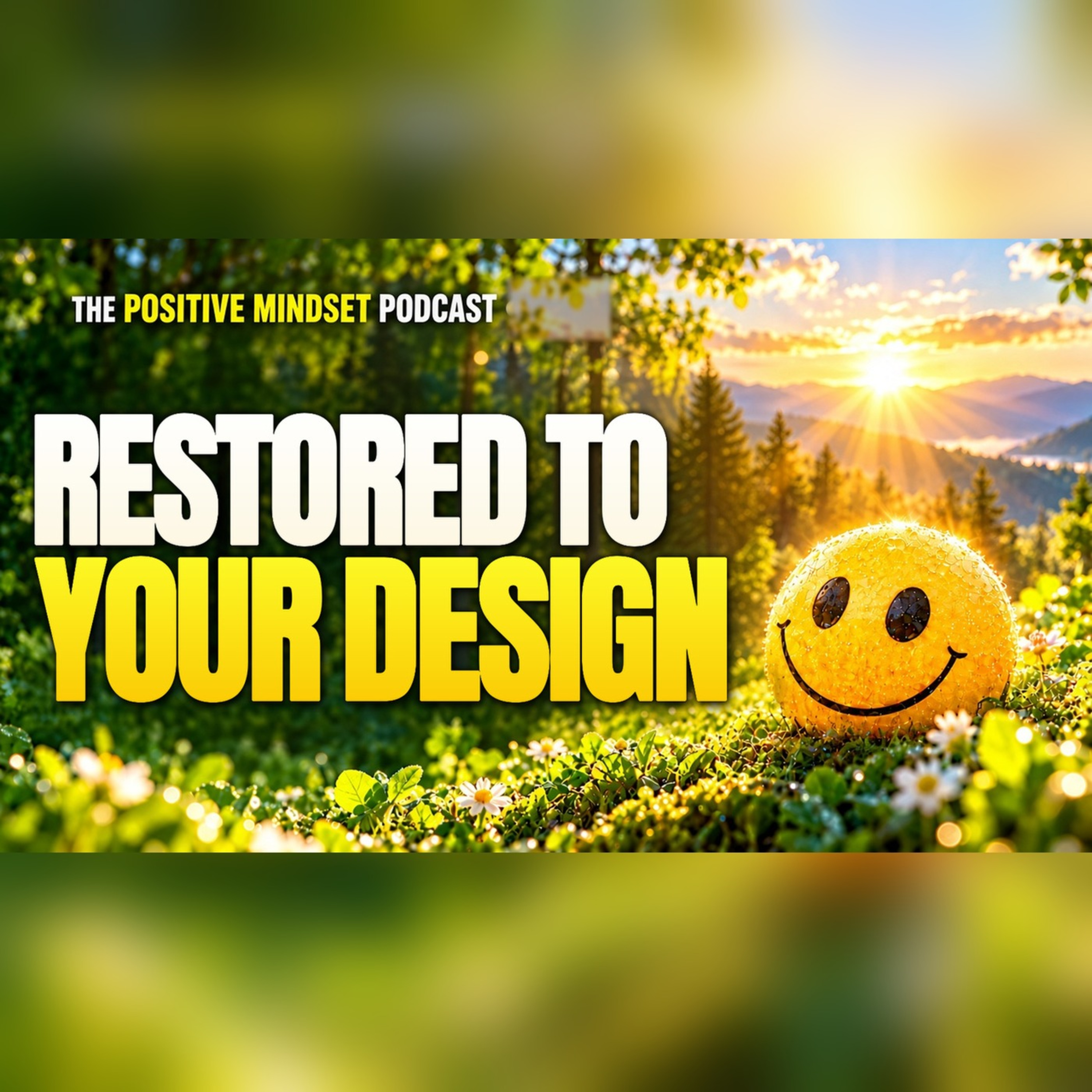
What if the change you've been asking for is already knocking? In this best-of compilation from The Positive Mindset Podcast, Henry Lawrence pulls together his best moments on letting go and being restored to who God made you to be, from six episodes: the stirring you feel when it's time to change; an opening prayer for anyone who feels alone right now; why your higher self is the true you, the one designed by God, not a more productive version of you; the cast on a broken arm that protected you and now limits you; the old painted-over furniture that gets restored, not rebuilt; why so much of our tiredness comes from holding too tight; how God moves what you couldn't; why everything is borrowed; and choosing to keep believing when it feels like a war broke out around you. It includes a prayer near the start and closes with the rising tide, a blessing and a thank-you. In this episode: • "That stirring is the truth knocking on a door that you've been leaning on with your whole weight." •
Love grows when we stop trying to change each other and start questioning our own thoughts. In this conversation, Tony and Sage Robbins share the simple questions from Byron Katie’s The Work that have helped them build a strong, conscious relationship. They explain how the stories we believe about our partner, ourselves, and situations often create unnecessary pain. Instead of reacting from fear or assumptions, these questions create space for empathy, clarity, and deeper connection. Uploaded 11-02-26 Watch more videos like this How Sage and Tony Robbins Actually Met: https://youtu.be/pCfXH26fqHY 7 Keys to Restoring True Connection | Sage Robbins at Tony Robbins' Date with Destiny 2026: https://youtu.be/vraPXGpVtvc Creating Moments of Stillness in the Chaos | Sage Robbins: https://youtu.be/eR6e50AmeRY Ignite The Internal | Sage Robbins on The School of Greatness: https://youtu.be/pAyysULh3Zc Join my weekly newsletter 'The Mirror' to receive these exclusive videos each week: https://www
The real story about “de-extinction”... The Tasmanian tiger was declared extinct in 1982. But now… scientists are trying to bring it BACK. And it’s not alone! You might’ve seen news about dire wolves, woolly mammoths, passenger pigeons… dodo birds… dinosaurs?? “De-extinction” has become a huge and urgent scientific debate. But when I took a deep dive into what’s really going on here, I realized we're getting this conversation very, very wrong. We're on the cusp of a huge genetic breakthrough… and yet the most "huge if true" thing happening here isn’t bringing back extinct animals. It's what this means for all the animals alive today! And very few people seem to know about it… Chapters: 00:19 Can we bring back extinct animals? 01:22 Can we bring back a mammoth? 02:24 Is Jurassic Park possible? 05:44 Are Dire Wolves brought back from the dead? 6:26 What is de-extinction? 09:04 How do we save cute little animals? 11:08 Is the Tasmanian tiger coming back? 12:50 When is it ok to bring back
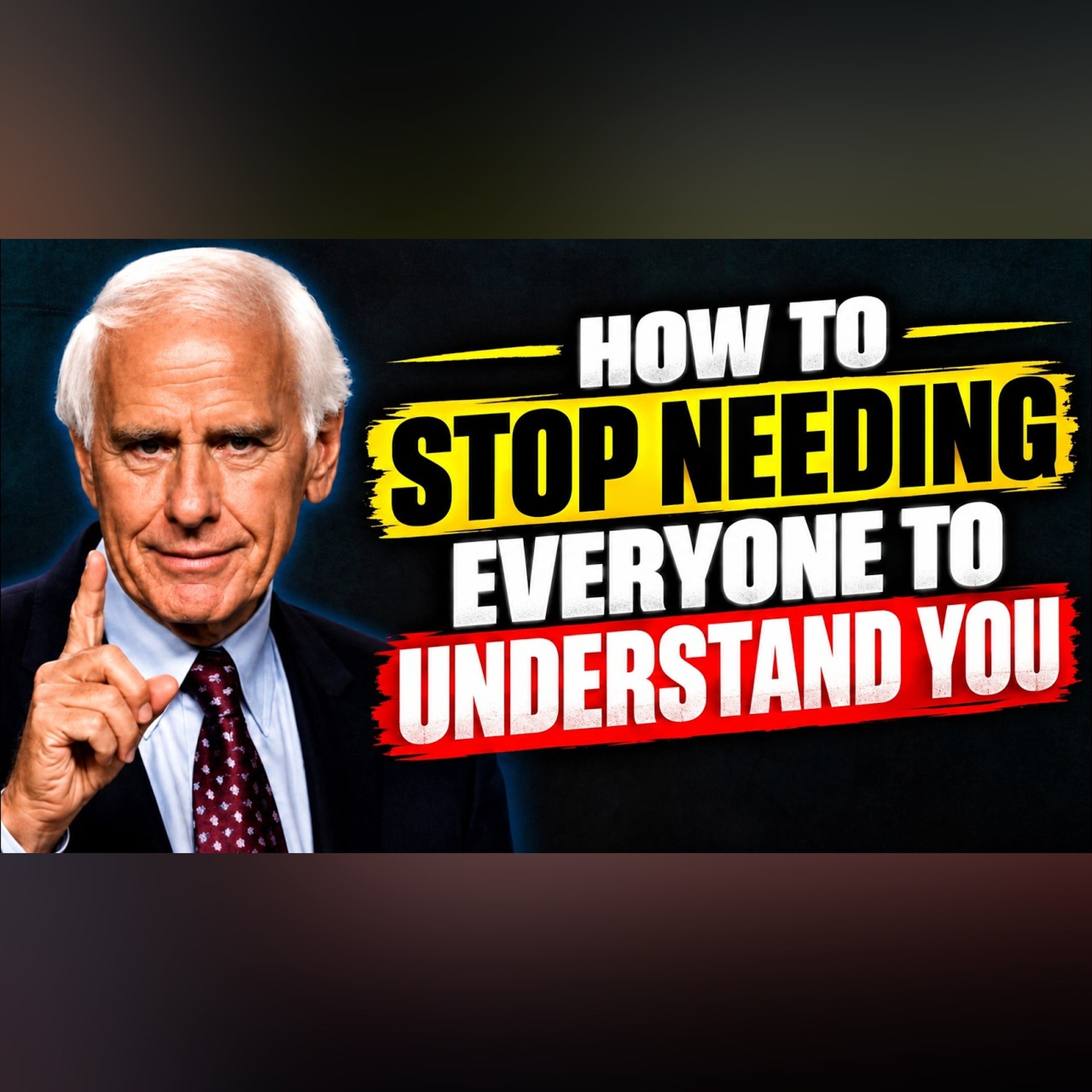
You went back. Maybe not to the same person, but to the idea of them. You rehearsed the conversation again in your mind. You thought of better words, sharper examples, a clearer way to say the thing you'd already said. You kept trying to win an argument that was already over, with a person who had already walked away. Uploaded 13-10-26 That hunger to be understood is one of the most natural things in the world. And it is also one of the quietest thieves of a person's peace that I know of. You explain yourself to one person, feel relief for a day, and then someone else shakes their head, and you're back building the case for your own life all over again. Here is the truth: it is not another person's job to understand you. It is your job to understand yourself. And once you've done that interior work, the opinions of people who don't understand you go from feeling like a verdict to feeling like weather. This seminar unpacks the single mechanic behind why you keep over-explaining your lif
For a written breakdown, early access to content like this, and extra nuances, see the associated StayCurious Metabolism newsletter: https://staycuriousmetabolism.substack.com/p/why-you-need-to-track-your-heart?r=40ekz2 If you want to try the omega supplement I use, Accentrate Omega Max, here’s the link: https://www.fenixhealthscience.com/staycurious Heart rate variability (HRV) is more than just a number, it’s a real-time window into how well your brain, heart, and nervous system are working together. In this video, we break down what HRV actually measures, why it’s such a powerful predictor of mortality and heart attack risk, and how it reflects something deeper: your body’s ability to adapt, recover, and respond to stress. We walk through landmark studies showing that low HRV is associated with significantly higher risk of death and first cardiac events—even after controlling for traditional risk factors. But this isn’t just about risk. HRV is something you can measure today and act
THE SEARCH FOR THE ULTIMATE RED LIGHT THERAPY IS OVER! After decades of exploring wellness technologies, Michael Jaco sits down with Rob Rene, founder of Exodus Strong, to explore the Red Light+ Total Body Reset system, the science behind red and near-infrared light, and why this technology has become such an important part of their wellness conversation. Rob's remarkable personal journey—including surviving five near-death experiences—inspired his mission to develop practical wellness tools that people can incorporate into their everyday lives. Discover the full-body Red Light+ Mat, designed for convenient 20-minute sessions, and the portable Red Light+ Wand, created for targeted use on areas such as the knees, shoulders, hands, and lower back. Michael and Rob discuss the technology, personal experiences, and how red light therapy may support a daily wellness routine. BLACK FRIDAY–CYBER MONDAY LISTENER EXCLUSIVE! This is your opportunity to explore Exodus Strong's special holiday offe
You’re Not in Trouble is OUT NOW! Purchase your copy HERE (http://geni.us/YoureNotInTrouble). Love this clip? Check out the full episode: Episode #412: How ADHD Steals Your Self-Trust and How to Get It Back with Dr. Russell Ramsay Listen to the full conversation in the original episode HERE (https://ihaveadhd.com/episode-412-how-adhd-steals-your-self-trust-and-how-to-get-it-back-with-dr-russell-ramsay/).
You’re Not in Trouble is OUT NOW! Purchase your copy HERE (http://geni.us/YoureNotInTrouble). For the first time ever, I’m in the hot seat on my own podcast! And the person asking the questions? Dr. Ari Tuckman, whose books I read long before I became an ADHD coach and who I now get to call my friend. (How cool is that?!) Ari interviews me about my new book, You’re Not in Trouble: The ADHD Guide to Building Healthy, Connected Relationships. We get into why so many of us with ADHD feel like we’re always one mistake away from being in trouble, how that feeling follows us into our closest relationships, and what it looks like to ask for what we need without apologizing for needing it.
You’re Not in Trouble is OUT NOW! Purchase your copy HERE (http://geni.us/YoureNotInTrouble). Love this clip? Check out the full episode: Episode #408: I Surveyed Over 2,100 Adults with ADHD—Here’s What Broke My Heart Listen to the full conversation in the original episode HERE (https://ihaveadhd.com/episode-408-i-surveyed-over-2100-adults-with-adhd-heres-what-broke-my-heart/).
Scarce treatments should be allocated by medical need rather than ability to pay.
Share your view, then see how readers voted. No sign-in required. This poll is shared across stories.
Do you agree or disagree?
Common Quandary
A Common Quandary to discuss
Another conversation to explore, separate from this news story.
A coworker tells you their salary in confidence—and proves everyone else is underpaid. Do you share it?
A coworker privately tells you their salary and asks you not to repeat it. You later realize the figure is strong evidence that several equally experienced colleagues are being underpaid.
When does fairness outweigh a promise of confidentiality?