#497 - Kyle Thompson // Holy Land Dispatches: October 7th
8 min
Listen through the publisher, then discuss the episode here or arrange an in-person Roundtable. Your city determines where to meet.
Roundtables are designed for groups of four, with a shared subject and room for everyone to speak. Come for discussion, with no dating expectation.
We read aloud from Surah 9 and explain why its message still shapes how many people justify religious violence today. We connect those claims to what we saw in Israel after October 7 and to Paul’s warning in Galatians about any gospel that contradicts Christ. • reading Surah 9 and naming what it says about killing unbelievers • explaining why Surah 9 is treated as a late, decisive message • tracing how ideology can fuel groups like Hamas • visiting Israel as a pilgrimage to real biblical sites • recounting what we learned at the Nova Music Festival site • walking through the Nahal Oz attack and the defense that slowed it • grounding our discernment in Galatians 1:8–9 • warning against picking and choosing Scripture share this podcast around and leave us a five star rating and review. Want to connect? Email [email protected]
Episode information is provided by the publisher. Listening takes place on the publisher’s service.
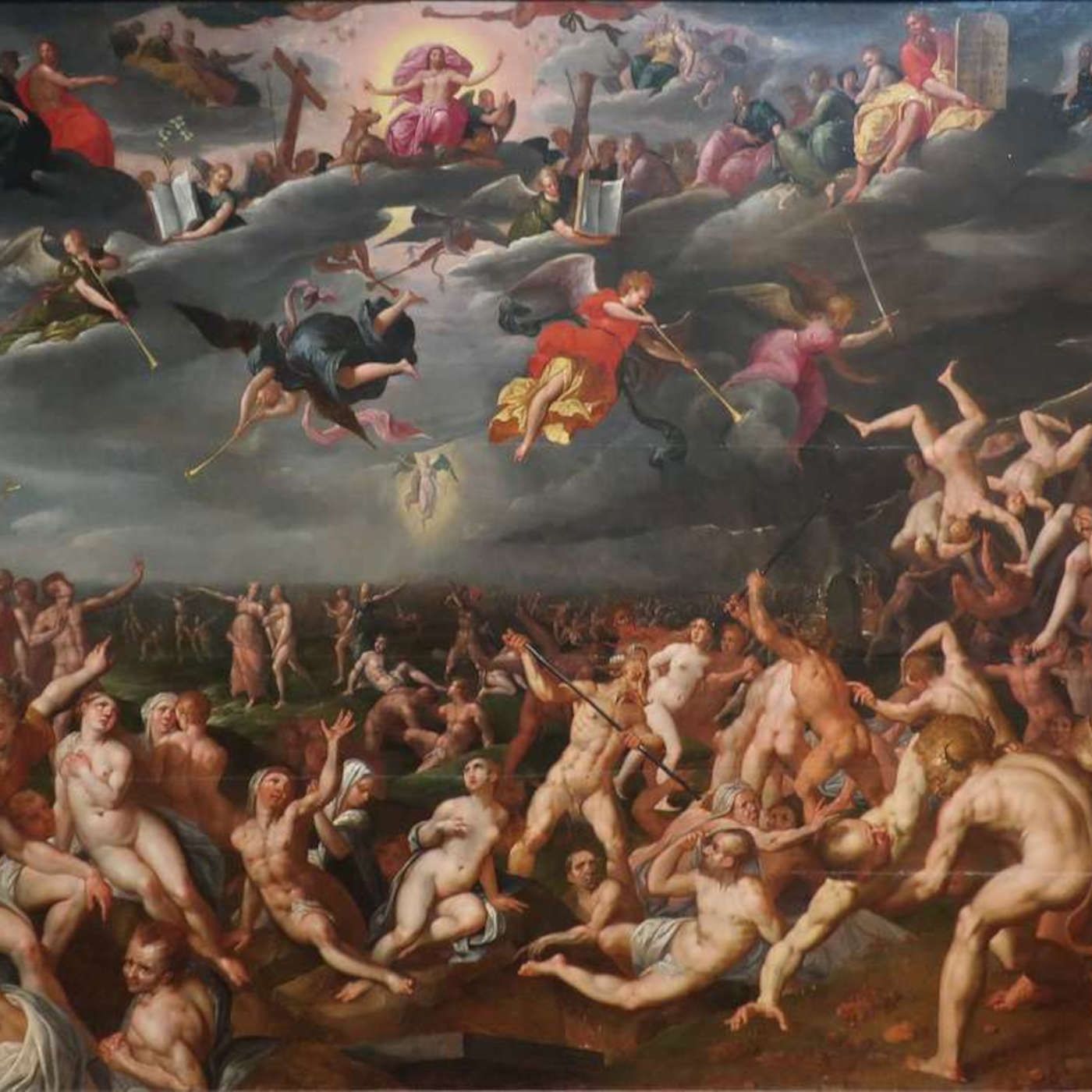
Luke 21: 20-28 - 'There will be signs in the sun and moon and stars.' Catechism of the Catholic Church Paragraphs: - 58 (in 'The Covenant with Noah') - The covenant with Noah remains in force during the times of the Gentiles, until the universal proclamation of the Gospel (abbreviated). - 674 (In 'The glorious advent of Christ, the hope of Israel) - The glorious Messiah’s coming is suspended at every moment of history until his recognition by “all Israel,” for “a hardening has come upon part of Israel” in their “unbelief” toward Jesus. St. Peter says to the Jews of Jerusalem after Pentecost: “Repent therefore, and turn again, that your sins may be blotted out, that times of refreshing may come from the presence of the Lord, and that he may send the Christ appointed for you, Jesus, whom heaven must receive until the time for establishing all that God spoke by the mouth of his holy prophets from of old.” St. Paul echoes him: “For if their rejection means the reconciliation of the world,
David Charvet, star of Baywatch and Melrose Place, joins Candace to talk about walking away from all of it to raise his kids, and about the morning coffee talks that kept her going on Special Forces. What would you give up to be the first face your kids see every morning and the last one they see at night? David moved from France at 10, learned English in New York, and finished high school in Los Angeles, where a visit from Mel Gibson sent him to acting classes. Six months after graduating, he was on Baywatch. When his daughter, Rain, and son, Shaya, were born, he chose to stay home and be the dad he never had. He went to every practice, built a construction company, and now runs fitness studios alongside both kids. He and Candace look back on the nightly conversations he started in the jungle, the day Candace realized she hadn’t been the teammate she wanted to be, and the night he and Matt Barnes got lost, hip-deep in mud, with no water. Marcy, a cancer survivor in her late 50s, has a
Read Online (https://catholic-daily-reflections.com/2026/11/25/gratitude-that-heals-your-redemption-is-at-hand/) Your Redemption is at Hand “People will die of fright in anticipation of what is coming upon the world, for the powers of the heavens will be shaken. And then they will see the Son of Man coming in a cloud with power and great glory. But when these signs begin to happen, stand erect and raise your heads because your redemption is at hand.” Luke 21:26–28 Today’s Gospel presents a vivid and unsettling prophecy from our Lord. He foretells the destruction of Jerusalem and the terrible suffering that will come upon its inhabitants. He speaks of armies surrounding the city, people fleeing for safety, and a time of judgment and punishment. But then, in the midst of this apocalyptic vision, Jesus turns His disciples’ gaze upward with these words of hope: “Stand erect and raise your heads because your redemption is at hand.” The initial portion of this discourse is often understood a
Are we really making room for God to move? This week on Mature Me, I sit down with my old friend @davidhall1981, pastor of Revival City Church in Australia. I've known David since the late '90s, and man, this guy has been around ministry a long time. I love his heart for God and the wisdom that comes from years of walking out the calling. We talk about the importance of staying rooted in God's Word, making room for the Holy Spirit, having the right voices in your life and what it takes to keep going when things get hard. Just because things don't look the way you thought they would doesn't mean God isn't working. Sometimes maturity is simply refusing to quit on what God has called you to.
In this episode, Angus Hervey shares the other half of the news: what’s going right in the world and why we so rarely hear about it. Angus, the solutions journalist behind Fix the News, joins Eric Zimmer to explore why bad news sticks with us, how progress can happen alongside real setbacks, and what changes when we pay attention to both. From the rollout of malaria vaccines to efforts to restore degraded land, Angus shares stories that show what people are doing about some of the world’s toughest problems and where those efforts are making a difference. Feeling overwhelmed in your life? Check out Overwhelm is Optional (https://www.oneyoufeed.net/overwhelm)— a 4-week email course that helps you feel calmer and more grounded without needing to do less. In under 10 minutes a day, you’ll learn simple mindset shifts (called “Still Points”) you can use right inside the life you already have. Key Takeaways: What solutions journalism can teach us about how people solve problems Why bad news g
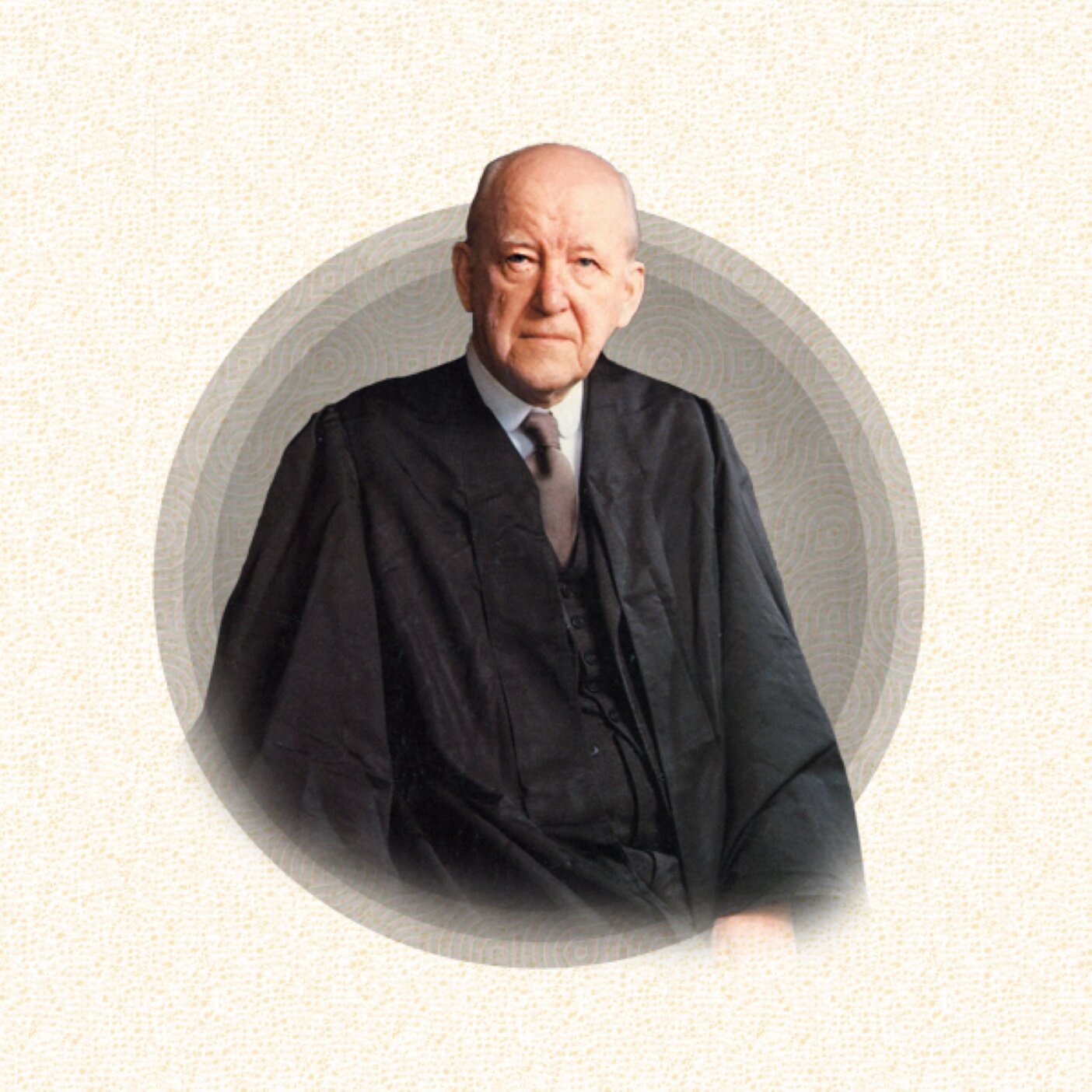
How does one know if they are a born-again Christian? What are some ways they can test their lives to see if they have been saved? What are the manifestations of darkness and why should one know them? In this sermon on Ephesians 5:8–13 titled “Unfruitful Works of Darkness,” Dr. Martyn Lloyd-Jones walks through a standard against which Christians can measure their lives, teaching that it is important to know these so that they can see whether or not they are producing the fruit that stems from being a follower of Christ and being changed by the Holy Spirit. The first manifestation is the mind—those who are in darkness are ignorant of God and the truth about themselves and the state of their souls. They deny that their sin is grievous enough to separate them from God, and they don’t see the need to submit their lives to the authority of Jesus Christ. Another manifestation is the will. Many people today are trying to make the world a better place— they see all the crime in the world and t
We step up to the Garden Tomb in Jerusalem and sit with the shock of an empty grave while Luke 24 names the question we all have to answer. We land on the truth that the precise location is secondary to the reality of the resurrection and the offer of eternal life through Jesus. • A pilgrimage through Israel as real places and real history • The Garden Tomb setting and what we see at the entrance • The silence of the group and the weight of stepping inside • Luke 24 and the message of the empty tomb • Why the exact site matters less than the resurrection • Sin debt, substitutionary atonement, and John 3:16 • Repentance, faith in Christ, and the urgency of eternity Want to connect? Email [email protected]
We stand at Golgotha through John 19 and face the greatest injustice in human history, where the innocent Jesus is condemned and crucified. We slow down on his final words, “It is finished,” and why Tetelestai means the debt is paid in full for rebels like us. • the brutality of the cross and the innocence of Jesus • a pilgrimage view of Israel as real gospel history • the likely location of Golgotha near the Garden Tomb • John 19:28–30 and the moment Jesus declares “It is finished” • Tetelestai as completion, goal achieved, paid-in-full receipt language • how the finished work of Jesus counts for us personally • the disciples’ despair and the unseen plan of God to save the world Want to connect? Email [email protected]
We walk through the Garden of Gethsemane and the olive press to see how a real place of crushing explains Jesus’ agony and obedience. We also face the hard mirror of sleeping disciples and ask where our own weakness opens the door to temptation. • our Israel pilgrimage as a way to read Scripture as real history • Gethsemane as an oil press and a place of crushing • Luke 22 and Jesus praying under agony and sweating blood • the weight of sin and substitutionary atonement as the reason for the crushing • Matthew 26 and the warning to watch and pray • the modern pattern of falling asleep on duty and sliding into temptation • olive trees surviving after the trunk dies through healthy roots and new shoots • the image of a crushed olive “sweating oil” pointing back to Jesus before the cross Stay sharp. Want to connect? Email [email protected]
Communities losing a major industry deserve transition support before jobs disappear.
Share your view, then see how readers voted. No sign-in required. This poll is shared across stories.
Do you agree or disagree?
Common Quandary
A Common Quandary to discuss
Another conversation to explore, separate from this news story.
The stadium can ban violent fans by scanning every face at the gate. Would you walk in?
A stadium can use facial recognition to identify people banned for violence and shorten security lines. Every visitor would be scanned, error rates are not zero, and the resulting biometric data could become useful to police or advertisers.
How much privacy may a crowd be asked to trade for collective safety?