Listen through the publisher, then discuss the episode here or arrange an in-person Roundtable. Your city determines where to meet.
Roundtables are designed for groups of four, with a shared subject and room for everyone to speak. Come for discussion, with no dating expectation.
And as always, a MASSIVE thank you to this week's sponsors: Copilot Money → www.copilot.money/tyler (https://www.copilot.money/tyler) — use code TYLER2 for two free months. Gelt → joingelt.com/tyler (https://joingelt.com/tyler) because it’s not too late to make game-changing tax moves. If you're a business or a high-net worth individual, you might want to check this one out today. And on to the show notes!! A portfolio can look perfect on paper and still be completely wrong for the person holding it. Sometimes the most expensive investing lessons begin with a truck you never buy. In this episode, Tyler shares five lessons from 20 years of investing, from an early CD penalty to a lucky stock-picking streak and a retirement account quietly doing its work. He considers what those experiences mean for people making decisions today, especially in their 50s, 60s and beyond. You’ll learn: Why liquidity matters when your plans might change How to choose a portfolio you can live with through uncertainty Why a winning streak can make luck look like skill How automation can support saving or retirement withdrawals What an honest look at spending can reveal about having enough Tyler’s takeaway: know what you want your money to do before deciding how to put it to work. If you found the episode helpful, please leave a review on Apple or Spotify.
Episode information is provided by the publisher. Listening takes place on the publisher’s service.
In today’s episode, Kyle Grieve and Shawn O’Malley discuss Rollins, one of the two giants of American pest control. They look at how a business that has grown revenue for 100 quarters in a row saw its stock fall nearly in half after Google’s AI answers changed how homeowners find pest control companies. Along the way, they cover route density, Rollins’ acquisition playbook, why its customers stick around for years, the family that built it, the risks to its growth, and the company’s current intrinsic value. IN THIS EPISODE YOU’LL LEARN: (00:00:00) Intro (00:04:11) Why a company with 100 straight quarters of revenue growth saw its stock fall nearly in half (00:07:25) Why paying a fast-grower price for a steady grower can hurt investors (00:10:54) How route density makes each new customer almost pure profit (00:12:39) How Google’s AI search changed the way homeowners find pest control (00:27:28) The four reasons customers stick with their pest control provider (00:37:49) How Rollins make
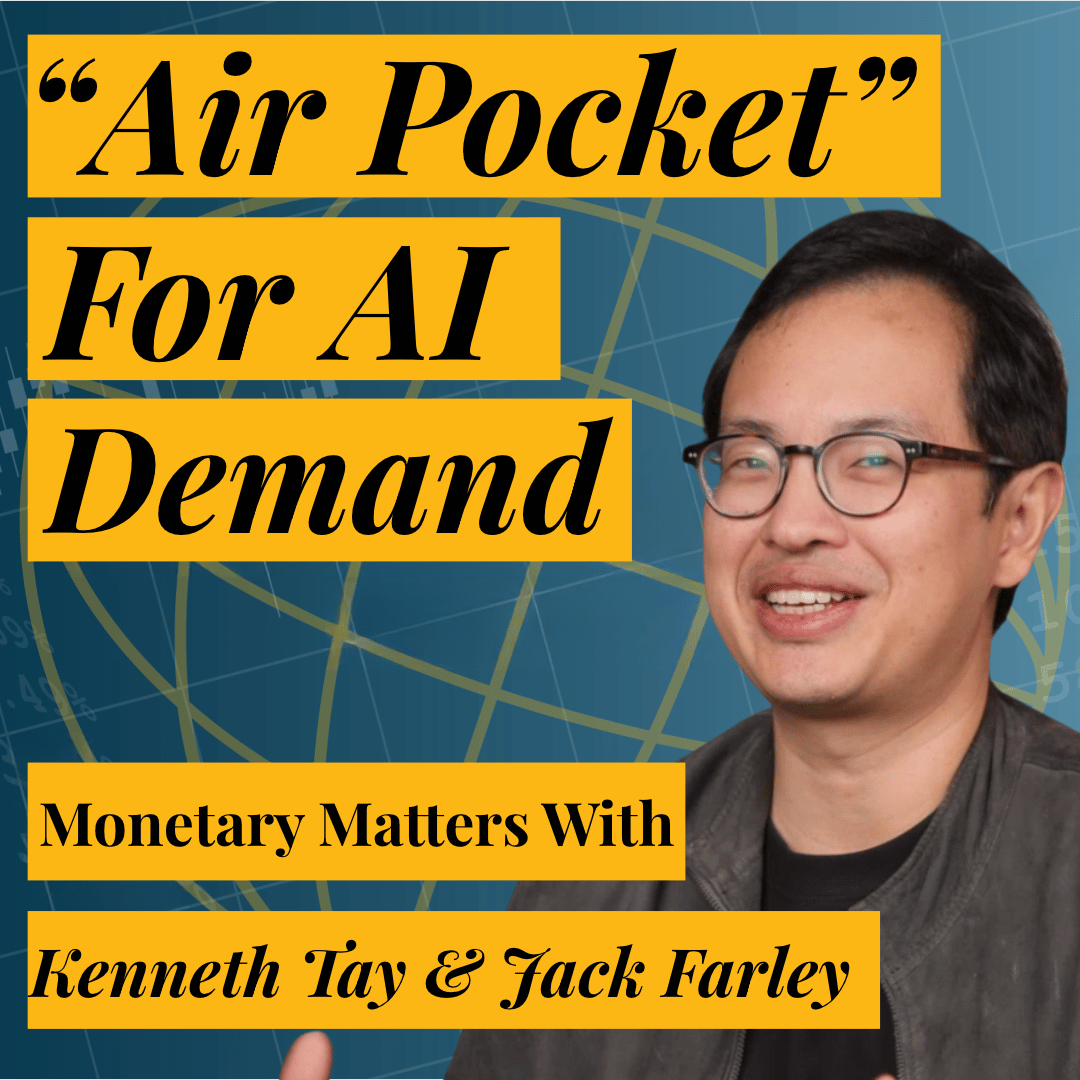
This episode is brought to you by Sarmaya Partners. Learn more about Sarmaya’s LENS ETF, their full data and comparison, including performance here: Recorded at the TomorrowX Summit, Jack sits down with Kenneth Tay, head of content at Funda, the Singapore-based research firm whose analysts call companies around the world to ask what they're really spending on AI. Kenneth explains why Funda's surveys turned the firm cautious: enterprise AI budgets for 2027 aren't growing fast enough to justify what the market expects from frontier-lab revenues, and the scramble for forward-deployed engineers suggests AI is hard to roll out inside large companies. They discuss whether coding alone can carry AI demand, why Funda sees cybersecurity incumbents like CrowdStrike as beneficiaries rather than casualties, and where token prices are headed. Kenneth explains why investors in China and the rest of Asia turned bearish before New York and the Bay Area, and how they spotted shortages in NAND memory an
Most people wait for the year to be good to them. They hope. They resolve. They set intentions in January and abandon them in February. And then they wonder why the next December looks exactly like the last one. Uploaded 25-09-26 But the year didn't fail them. They lived it the same way they lived the one before. And a year lived the same way produces the same result. That's not bad luck. That's just arithmetic. Here is the truth: there is a small set of habits that, once you build them, quietly make every year better than the one that came before. Not dramatically. Not overnight. But steadily, so that after five years you're standing somewhere the old version of you could never have reached. This seminar walks through 10 things you must understand about the habits that make every year climb instead of repeat. CHAPTERS 0:00 Intro — a year lived the same way 1:07 The invisible arithmetic underneath every year 5:00 #1 — Review the year before you plan the next 5:24 #2 — Learn one new thi
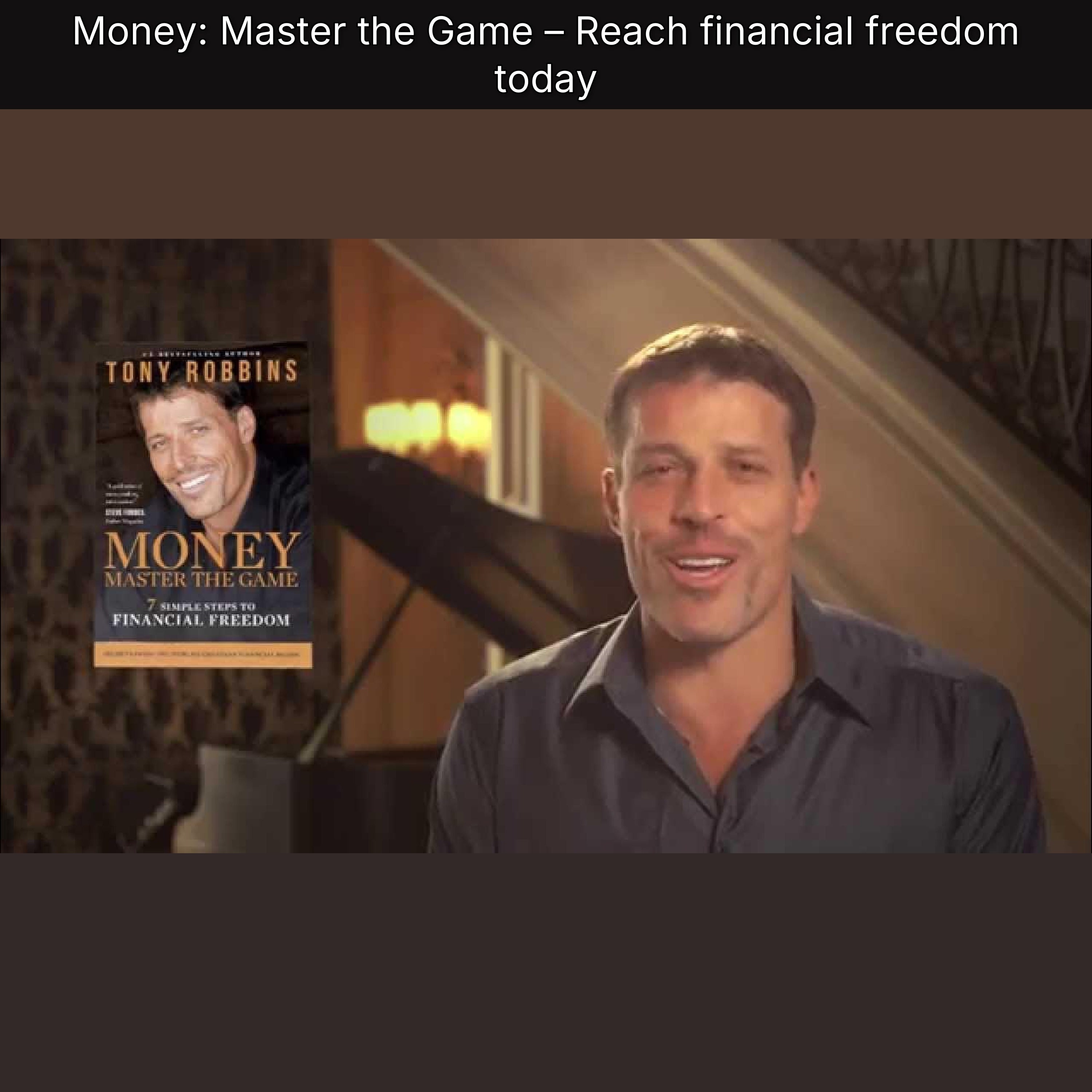
Do you want to achieve financial freedom? Financial freedom is the ultimate dream. It’s the ability, as Tony Robbins says, “to do what you want, when you want, with whom you want, as much as you want.” It’s living the fulfilling life you deserve. It’s a big promise, but this book delivers. When it was first written, Money: Master the Game was Tony’s first book in two decades. It was a passion project, because Tony knew that it could truly transform lives. He spent more than four years interviewing 50 of the most brilliant minds in the financial world, and their advice is all here, including: Carl Icahn, a legend of investing who has delivered his clients 1600% return over 14 years. Jack Bogle, the founder of Vanguard, with 64 years in the financial business. Ray Dalio, the da Vinci of investing, who before retirement required $5 billion to even start investing with him. Tony has taken all of their advice and distilled it into a step-by-step plan anyone can use to achieve financial free
Imagine taking a walk in the woods after a particularly busy week. You listen to the birds, watch the sunlight filter through the trees, and gradually notice little things you would normally walk past without a second thought. Nature has a way of bringing us back to the present moment. Hello everyone, and welcome to Daily English. Today's expression is “have a way of doing something.” When we say someone or something has a way of doing something, we mean that they have a particular ability or tendency to produce a certain effect, sometimes in a way that's difficult to explain. Let's look at a few examples. Imagine you're walking through a supermarket when you suddenly hear a song you used to listen to years ago. Within seconds, you're thinking about an old friend, a particular summer, and a version of yourself you haven't thought about in a long time. You might say: “Music has a way of bringing back memories we didn't even know we still had.” Now, imagine you've been worrying about a p
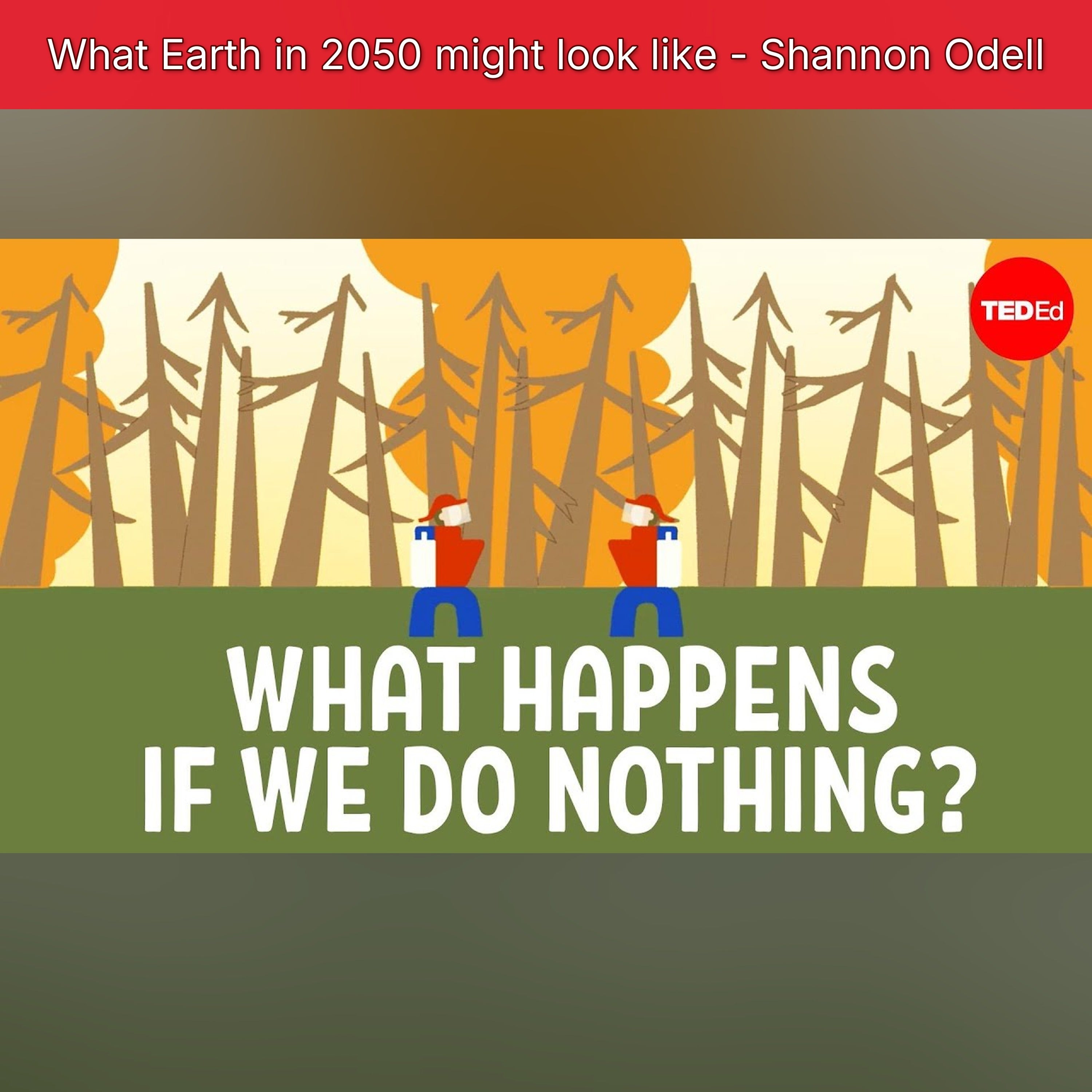
What could our future world look like if we continue to do nothing about climate change? Take a look at the possibilities. -- While we’re already feeling the devastating effects of human-caused climate change, governments continue to fall short on making and executing emissions pledges that would help thwart further warming. So, what will our world look like in the next 30 to 80 years, if we continue on the current path? Shannon Odell offers a glimpse at Earth's possible future. Lesson by Shannon Odell, directed by Sofia Pashaei. This video made possible in collaboration with Speed & Scale Learn more about how TED-Ed partnerships work: https://bit.ly/TEDEdPartner A special thanks to Mark Maslin who provided information and insights for the development of this video. Support Our Non-Profit Mission ---------------------------------------------- Support us on Patreon: http://bit.ly/TEDEdPatreon Check out our merch: http://bit.ly/TEDEDShop ---------------------------------------------- Con
And as always, a MASSIVE thank you to this week's sponsors: Facet → facet.com/tyler (https://facet.com/tyler) for an exclusive $550 kickstart offer! And on to the show notes!! What if the sensible purchase is the one you actually want? An almost-80-year-old swimmer’s new Dodge Charger gives Tyler a reason to question how much daily enjoyment gets sacrificed to resale value and “maybe later.” In this episode, Tyler explores how thinking about the last one changes decisions about money, possessions and attention. From kitchens designed for hypothetical buyers to a walk with a beloved hound, he asks what happens when preparing for the next thing crowds out enjoying this one. You’ll learn: When resale value deserves a say—and when it starts running your life. Why waiting for more money, space or time can become a permanent habit. How cost per use changes the meaning of an expensive purchase. Why ordinary moments rarely announce their final appearance. How one extra minute can make room for
And as always, a MASSIVE thank you to this week's sponsors: Gelt → joingelt.com/tyler (https://joingelt.com/tyler) because it's not too late to make game-changing tax moves. If you're a business or a high-net worth individual, you might want to check this one out today. Thrive Market → Use link thrivemarket.com/tyler (https://thrivemarket.com/tyler) to get $30 off your first two orders. You cannot get this deal on the website — it's only through my link. And that right there covers your membership fee, so sign up now before this exclusive offer ends. Anthropic → claude.ai/tyler (http://claude.ai/tyler) to experience AI for minds that don't stop at good enough. And on to the show notes!! A $2 million portfolio isn’t one uniform pile of spending money. Where it lives, when markets fall, and which government thresholds it crosses can change the retirement it buys. In this episode, Tyler revisits his $2 million plan in part four of the series, adding context around dynamic guardrails, taxe
People leaving prison should receive practical help finding housing and work.
Share your view, then see how readers voted. No sign-in required. This poll is shared across stories.
Do you agree or disagree?
Common Quandary
A Common Quandary to discuss
Another conversation to explore, separate from this news story.
Software says a student cheated with AI. Is that enough to fail the paper?
A teacher suspects several essays were written with AI. Detection software marks one student's work as highly likely to be generated, but the software is known to make mistakes and the student denies using it.
How should responsibility be assigned when evidence is powerful but unreliable?