Listen through the publisher, then discuss the episode here or arrange an in-person Roundtable. Your city determines where to meet.
Roundtables are designed for groups of four, with a shared subject and room for everyone to speak. Come for discussion, with no dating expectation.
You may know the five-part self-coaching Model (CTFAR) really well. You might even be able to explain every part of it. But knowing the Model intellectually and actually using it to change your life are two very different things. The real transformation happens when you begin to see the world through this lens automatically. In this episode, I'm taking you behind the scenes of a coaching session I recorded with real clients several years ago. You'll hear me work through Model after Model, helping people understand how their thoughts and feelings influence their actions and results. We'll look at everyday challenges involving relationships, money, parenting, body image, and more, and explore how the Model can help you approach them differently. Watch this episode on YouTube: https://youtu.be/RRhhFzxofrk Get full show notes, transcript, and more information here: https://jodymoore.com/591
Episode information is provided by the publisher. Listening takes place on the publisher’s service.
This new tech is changing how movies get made. So @mkbhd and I tested it out... Watch MKBHD's video: https://youtu.be/RM7SobH8ZO0 I’ve been obsessed with sci-fi movies since I was a kid. I love being transported to another world. But lately, I’ve been wondering: How do those worlds look so… REAL? The tech behind movies has exploded in complexity and realism, changing how stories come to life on screen. Luckily, at the same time, those tools are becoming more and more available to more people telling stories. It’s not just blockbusters like Avatar 2 or Avengers or Dune. It’s also smaller budget films like Everything Everywhere All at Once or even… YouTube creators? In this video, Marques Brownlee and I test out 3 movie-making tools that are changing how movies, shows, and maybe even YouTube videos (??) get made. We’re at ZeroSpace Studios in New York to show you how each of these crazy technologies work - and how you might be able to use them. Along the way, we hit big questions like: W
In this Jim Rohn Motivation video, Jim dives deep into the extraordinary power of small habits and how they shape your destiny . Success isn’t about massive change—it’s about daily choices, small disciplines, and consistent effort that compound over time. Key Topics From This Motivational Video: Why small habits shape your future How identity drives behavior change The secret to breaking bad habits for good Why consistency beats intensity every time How responsibility leads to true freedom Jim Rohn shares that the key to real transformation lies not in dramatic change, but in quiet, consistent action. From saving a dollar to reading one page, these small acts—done daily—build momentum, shape identity, and ultimately determine your outcomes. This message challenges you to stop chasing success and start attracting it by becoming the kind of person success is drawn to. This Jim Rohn Motivational Video Is Perfect For: Anyone feeling stuck and unsure how to begin People who want to break ba
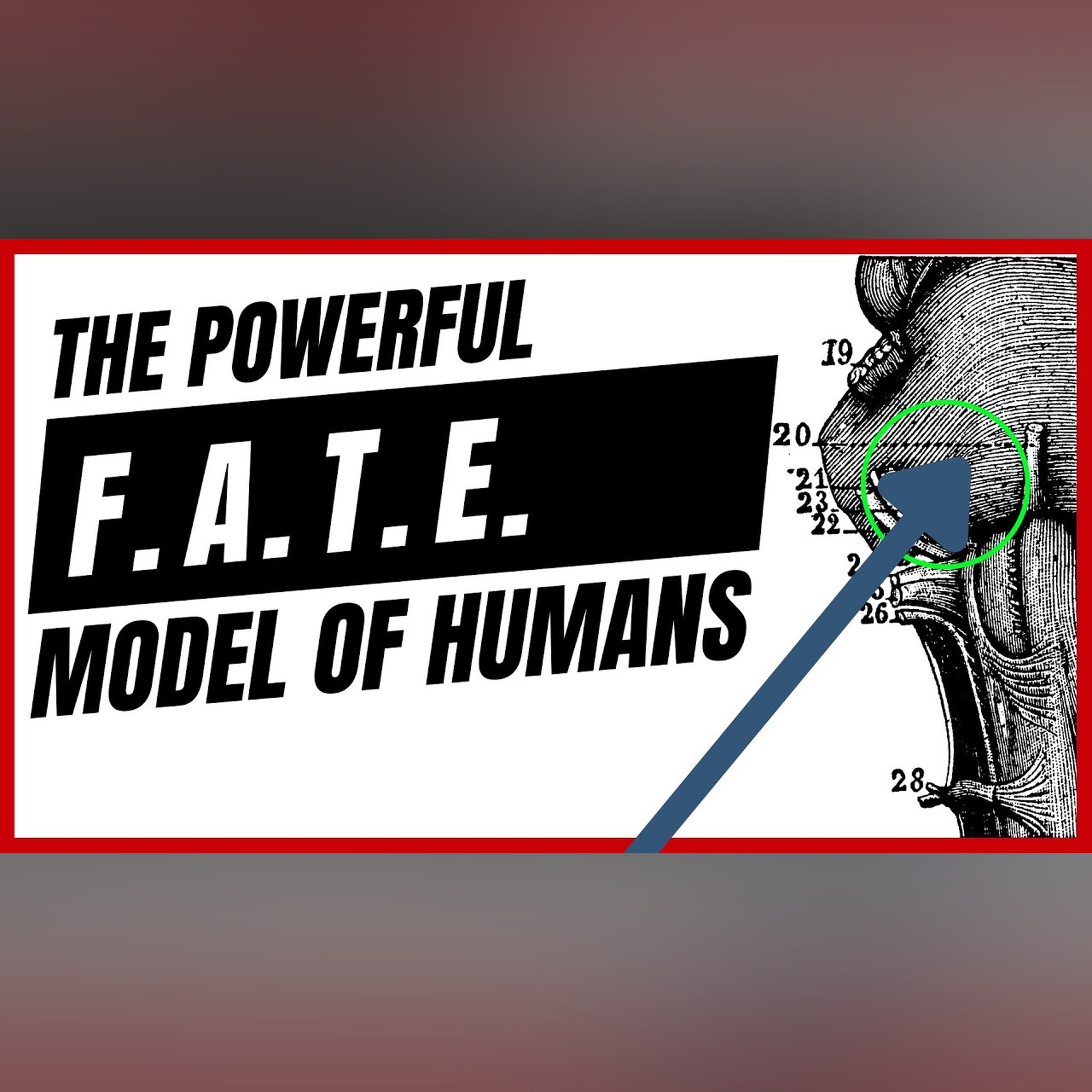
Join NCI University today to master human behavior and influence: Uploaded 10-09-22 The FATE model shows us what our ancestors prioritized to survive. The FATE Model shows us the four ‘entry points’ into the human mind and helps us understand how persuasion and influence can target unconscious processes near the spinal cord to maximize the power of any technique we need to apply. Want to join the official Chase Hughes app? TAGS: influence, persuasion, Chase Hughes, behavior surgeon, behavior panel, body language, behavior profiling, training, sales, hypnosis, success, you've been lied to, exposed, how fraud happens, exposing how the brain can be hijacked.
What if everything you've been chasing was already inside you? It took me 40 years to understand that happiness isn't somewhere in the future, it's here, in this moment. As a younger woman, I avoided pain, resisted it, distracted myself from it. What I know now is that pain doesn't break us. It rearranges us. And on the other side of it is something I wouldn't trade for anything, lived wisdom, inner comfort, and a clarity that simply cannot be rushed. Uploaded 04-03-26 In this conversation with @lewishowes, I share what I wish I had known decades sooner: about fulfillment, presence, the gift hidden inside our most difficult moments, and why it might just be the simplest things that wake us up the most. Watch more videos like this How To End Self Sabotage with 1 Simple Choice: https://youtu.be/-0Ln4-h4LQQ Do This When You Feel Triggered and Your Life Will Transform: https://youtu.be/h7YylJ3nuok Creating Moments of Stillness in the Chaos: https://youtu.be/eR6e50AmeRY Turning Towards Fear
To check the transcript: https://www.buzzsprout.com/2379282 Imagine someone who has lived abroad for many years. One evening, they're talking to a friend about their hometown. They mention the streets they used to walk down, the familiar voices, and the little things they never thought they'd miss. Their friend asks: “Why do you get so emotional whenever you talk about your hometown? Do you want to move back?” They reply: “It's not that simple. It goes deeper than that. I miss a version of my life that doesn't exist there anymore.” Hello everyone, and welcome to Daily English. Today's expression is “It goes deeper than that.” We use this expression when something is more complicated, meaningful, or emotionally significant than it first appears. In other words, there's something beneath the surface that people might not immediately recognize. In our opening example, the person isn't necessarily longing to return to their hometown. What they miss might be their childhood, the people they
A kiss can be wonderful. It can create an instant connection, spark romance, or make you feel closer to someone. But a kiss can also have the opposite effect — and sometimes ruin everything. So what makes kissing so powerful, and why can one kiss make such a difference? There's some fascinating science behind it. https://www.scientificamerican.com/article/why-we-kiss/ We spend an enormous amount of time worrying about what's going to change. What's next? What's coming? How do we prepare? But what if we're paying attention to the wrong things? Some of the most important forces shaping our lives never change, and understanding them may be far more valuable than trying to predict the future — something humans are notoriously bad at. Morgan Housel, partner at The Collaborative Fund and author of Same as Ever: A Guide to What Never Changes (https://amzn.to/3SwWn6u) (https://amzn.to/3SwWn6u)), joins me to explain why the things that stay the same may be the most important things to understan
Do you replay conversations in your head, second-guess decisions, or find yourself dwelling on things you wish you'd done differently? Overthinking can leave you mentally exhausted, stuck in the past, or unable to move forward. But what if the goal isn't to stop thinking so much as to get better at directing your thoughts? In this episode, Mark Butler and I explore four common ways overthinking shows up in our lives: dwelling on past mistakes, worrying about what other people think, struggling to make decisions, and getting caught up in what might go wrong. We'll talk about how to recognize when thinking has stopped being useful and what you can do to redirect your mind instead. Watch this episode on YouTube: https://youtu.be/XMDf2-iCqf0 Get full show notes, transcript, and more information here: https://jodymoore.com/592
What if finding your purpose isn't about discovering one thing you're supposed to do for the rest of your life? Your interests, responsibilities, and priorities can change as you move through different stages of life. You can love being a mom and still feel drawn to something more, or find yourself curious about a completely different direction than the one you're currently pursuing. In this episode, I'm joined by Brittney Zeedik for a conversation about finding purpose, following your interests, and making room for new opportunities while honoring the other important parts of your life. Brittney shares her journey through motherhood, hairstyling, coaching, and building a business, including the unexpected pivots that helped her find a greater sense of fulfillment. Watch the episode on YouTube: https://youtu.be/frmm-H6TFmU Get full show notes, transcript, and more information here: https://jodymoore.com/590
Elected representatives should serve people who voted against them as seriously as their supporters.
Share your view, then see how readers voted. No sign-in required. This poll is shared across stories.
Do you agree or disagree?
Common Quandary
A Common Quandary to discuss
Another conversation to explore, separate from this news story.
One friend is rich, one is broke, and everyone ordered differently. How do you split dinner?
A group of longtime friends traditionally divides restaurant bills equally. Their incomes have grown increasingly unequal, and one friend now declines gatherings because even their share is difficult to afford while others order without thinking about price.
When should friendship adjust for differences in wealth?