Listen through the publisher, then discuss the episode here or arrange an in-person Roundtable. Your city determines where to meet.
Roundtables are designed for groups of four, with a shared subject and room for everyone to speak. Come for discussion, with no dating expectation.
What can other people see about you at work that you might be missing? This week, Helen and Sarah borrow brilliance from the Squiggly Careers community, who asked for an episode on blind spots. They explore three ways blind spots can show up at work. You might take a strength for granted or miss when it goes into overdrive. A Confidence Gremlin might tell you you’re bad at something other people have seen you do well. Or a suggestion you meant to make things easier might land as a list of extra things to do. What you’ll learn - How to use the ‘what three words?’ exercise to spot your strengths and work out when they’re most useful - How to challenge your Confidence Gremlins by asking people you trust for examples of what they’ve seen you do well - How to check whether your impact matches your intent when you share an idea or give feedback For questions about Squiggly Careers or to share feedback, email [email protected]. Need some more squiggly career support? 1. 2. 3. 4.
Episode information is provided by the publisher. Listening takes place on the publisher’s service.
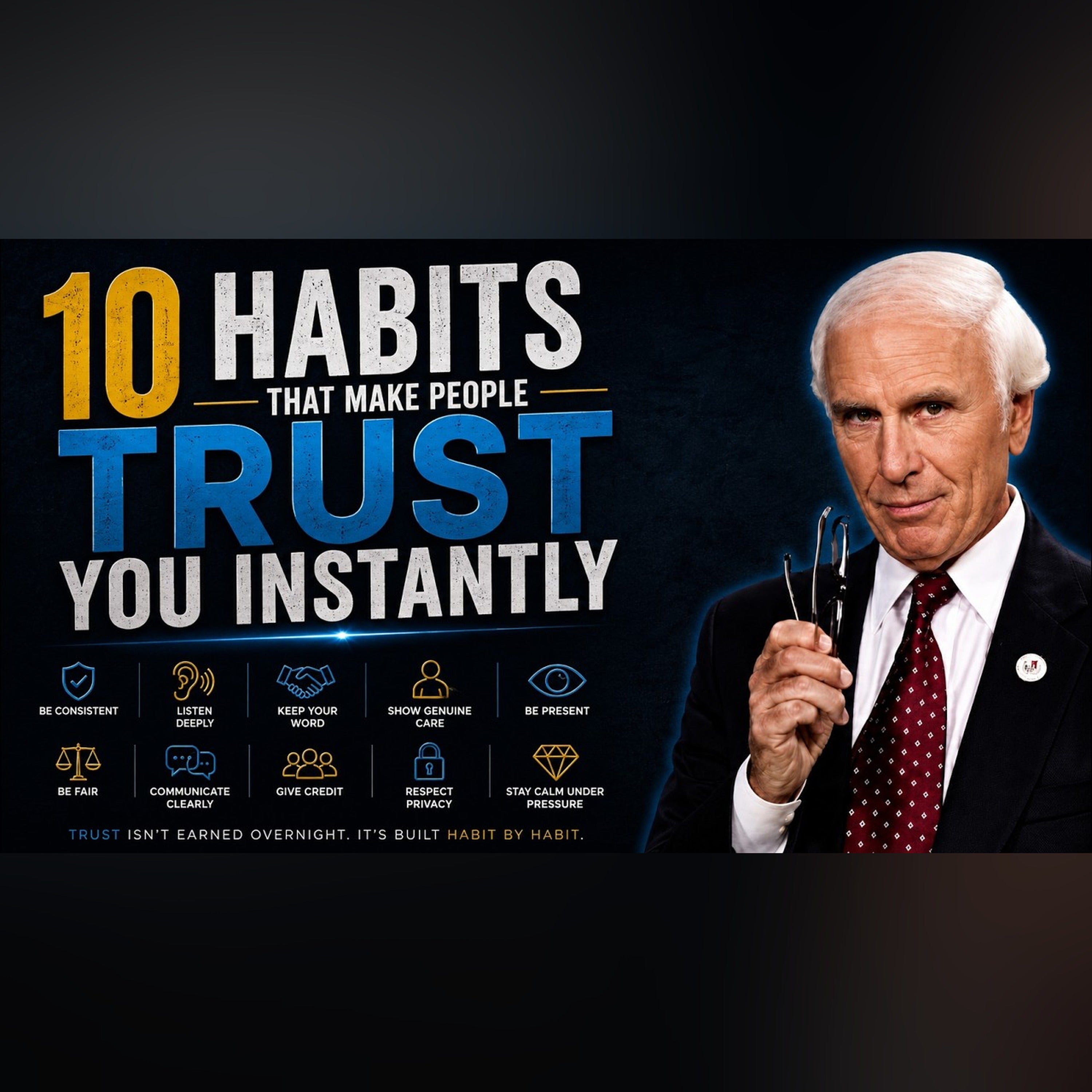
Watch two people meet for the first time. Inside of a few minutes, one of them has already decided about the other. And most of the time, they don't even know they've made the decision. They just walk away with a feeling. He seemed solid. Or, something about her felt off. Uploaded 27-08-26 That feeling, formed in minutes, follows you for years. Most people believe trust is earned slowly, over long stretches, through big gestures. And some of it is. But the foundation, the part that decides whether the slow building ever gets a chance to begin, that part is built fast, in small moments, through habits you may not even know you have. Here is the truth: trust is not a mood and it is not luck. Trust is a prediction. When somebody trusts you, they are betting that the version of you they see today is the version they will get tomorrow. This seminar walks through ten things you must understand about becoming the kind of person others are safe to rely on. CHAPTERS 0:00 Intro — the decision ma
Are You a Giver or a Taker? - Tony Robbins Podcast Adam Grant is an organizational psychologist, which means he meets with large companies to solve interpersonal problems. He’s a renowned professor at the Wharton School of Business and is a bestselling author to boot. We featured Adam on the Tony Robbins podcast to learn more about givers and takers. How can businesses get the most of their employees and vice versa? According to Adam Grant, it’s all about identifying givers and takers. Having written the book Give and Take, Adam Grant is a pro at identifying characteristics in others that can help us to categorize them as givers or takers in relationships. There are numerous things we look to as markers of success in our society. Is the person in question or being observed putting in the hard work necessary to succeed? Do they have an internal motivation or passion for the job? What type of talent or skill have they cultivated? Adam Grant believes that success is less dependent on thes
Sobriety hasn't made your ex a better parent — yet. Do you keep volunteering your kids for visits, or step back let them choose? It's Feedback Friday! And in case you didn't already know it, Jordan Harbinger (@JordanHarbinger (https://twitter.com/JordanHarbinger)) and Gabriel Mizrahi (@GabeMizrahi (https://twitter.com/GabeMizrahi)) banter and take your comments and questions for Feedback Friday right here every week! If you want us to answer your question, register your feedback, or tell your story on one of our upcoming weekly Feedback Friday episodes, drop us a line at [email protected]. Now let's dive in! Full show notes and resources can be found here: jordanharbinger.com/1420 (https://jordanharbinger.com/1420) On This Week's Feedback Friday: You fought for years to win full custody of your three kids from an ex whose addiction put them in danger. Now she's sober and getting voluntary visits — but she still bribes, fibs, and makes overnights uncomfortable. How do you prote
Are you on track with the Baby Steps? Get a Free Personalized Plan. (https://ter.li/zqzs8w) Have a money question? Ask Ramsey is here to help. (https://ter.li/vpd8ego2) George Kamel and Jade Warshaw answer your questions and discuss: I cosigned two cars with my mom that were then repossessed We live in my father-in-law's house and I want out but husband wants to stay. How do I get my kids to understand that our lifestyle is different because we refuse to go into debt I was just laid off and I can no longer afford my apartment. Everyone is saying there will be a market correction, what should I do to prepare? I have $28,000 of credit card debt, the interest rate is killing my finances. Next Steps: Have a question for the show? Call 888-825-5225 weekdays from 2–5 p.m. ET New to the show and want to learn more? Check out our 7 Baby Steps! (https://ter.li/1sn8b18j) Start your free budget today. Download the EveryDollar app! (https://ramsey.solutions/8tj2bn) ⏰ Black Friday ends midnight—get
The deadline finally makes the work impossible to ignore. Until then, the commitment keeps waiting. What could an earlier start give you that last-minute pressure cannot? In this episode of The Level Up Podcast, Paul Alex breaks down how to give important work real attention before urgency becomes the only reason to act. Completing good work under pressure does not show what the delay cost you. Paul asks listeners to notice when consequences are deciding the moment their own goals become important, especially where no one else is enforcing a deadline. Start with a small piece that requires actual thought and produces something you can examine. An early attempt may expose a missing answer or an underestimated task while time remains to respond. Preparation should lead into the work, rather than fill the whole session around it. In this episode, you’ll learn: • Why relying on pressure can leave personal goals without a real beginning. • How an early attempt reveals questions while you ca
Sam Klar of GMO explains the investment case for American reindustrialization and why owning the S&P 500 may leave investors with less exposure to it than they expect. The opportunity extends beyond building factories to the businesses that supply, power, connect and maintain them. Sam joins Justin Carbonneau and Jack Forehand to explore why national security, corporate supply-chain decisions and public policy could support a long-term revival of U.S. industry. He discusses China's manufacturing rise, what COVID revealed about the risks of offshoring, and why he sees reshoring as a trend that reaches beyond any single administration. Turning that trend into investment returns requires more than identifying companies with the right story. Sam explains how he combines business quality and valuation, using examples including Martin Marietta, Clean Harbors and MYR Group. We also discuss automation, inflation, AI's competition for investor attention, and the growing gap between a technology
Delegating can help us get more done and give other people opportunities to develop. But even when we know we're doing too much ourselves, handing work over isn't always easy. In this Squiggly Shortcut, Helen and Sarah share two delegation don'ts and what to do instead. From giving people freedom over how they work to agreeing what support they need, they explore how to make delegation more effective for everyone involved. What You'll Learn - Why being clear on the what and when, rather than the how, gives people more freedom to work in their own way - How to ask for clarity when someone delegates something to you - Why delegating and disappearing can leave people struggling unnecessarily - How to agree what support someone needs and when to check in Need some more squiggly career support? 1. 2. 3. 4.
Do you ever open your inbox when you’ve only just checked it? Replying straight away can feel good. You’ve ticked something off your list and you feel on top of what’s coming in. But what could you get done if you waited a little longer? In this Squiggly Shortcut, Helen and Sarah borrow brilliance from the marshmallow experiment to explore what happens when we apply it to our email habits. One marshmallow is the quick win we get from checking or replying now. Two marshmallows might mean finishing a piece of work without interruptions or having more time to think through a reply. What You’ll Learn What one-marshmallow habits look like in your inbox Why checking email can help you feel more in control, even when nothing new has come in What checking email twice a day could change about how you focus and respond For a deeper dive, listen to episode #510: The Marshmallow Test: How to Master Delayed Gratification for Career Success (https://www.squigglycareers.com/listen/the-marshmallow-tes
How much does your job title shape what you think you could do next? In this episode, Helen and Sarah borrow brilliance from a shift they’ve noticed in career development in some companies, from titles and functions to talents and teams. They explore why job titles can be hard to let go of and how focusing on your talents instead can open up more possibilities for your squiggly career. They share a useful reframe, asking “How could my talents connect me to teams?” instead of “How do my talents fit a title?” and turn it into practical ideas to help you get clear on your talents, explore different teams and find out where you’d enjoy putting those talents to use. What You’ll Learn – Why attachment to job titles can limit the possibilities you explore – How to spot your natural talents, strengths and skills – How to map the teams around you and find out what they do – Why looking at teams within a department can reveal more opportunities – How to explore your future talent-team fit throug
Teams owe supporters honest explanations during long periods of poor results.
Share your view, then see how readers voted. No sign-in required. This poll is shared across stories.
Do you agree or disagree?
Common Quandary
A Common Quandary to discuss
Another conversation to explore, separate from this news story.
The company allows an $80 dinner. Is ordering the lobster fair game?
During work travel, company policy permits an expensive dinner. A modest option is nearby, but colleagues choose the nicest restaurant because the company can easily afford it and everyone is within the stated limit.
Is following a rule enough when you are spending someone else's money?