You’re worried your sister-in-law’s weight loss has gone too far. Is it your place to say something, and if so, how? Welcome to Feedback Friday! And in case you didn't already know it, Jordan Harbinger (@JordanHarbinger (https://twitter.com/JordanHarbinger)) and Gabriel Mizrahi (@GabeMizrahi (https://twitter.com/GabeMizrahi)) banter and take your comments and questions for Feedback Friday right here every week! If you want us to answer your question, register your feedback, or tell your story on one of our upcoming weekly Feedback Friday episodes, drop us a line at [email protected]. Now let's dive in! Full show notes and resources can be found here: jordanharbinger.com/1417 (https://jordanharbinger.com/1417) On This Week's Feedback Friday: Your sister-in-law started a weight loss journey with strength training, macros, and a brief stint on a GLP-1. A year later, she’s still shrinking — and looking frail rather than fit. Knowing her past struggles with food, you want to help w
Think “like” and “um” make you sound dumb? Linguist Valerie Fridland reveals why so-called bad English is older — and smarter — than you think. Full show notes and resources can be found here: jordanharbinger.com/1416 (https://jordanharbinger.com/1416) What We Discuss with Valerie Fridland: Why many speech habits we call lazy or uneducated — like saying “ax” for “ask” or “walkin’” for “walking” — actually have centuries of history behind them, from Beowulf and Chaucer to the Salem witch trial transcripts. How language innovation tends to come from people with the least social power — the young, the working class, and women — and how words like “dude,” “y’all,” and even “you” were shaped by speakers outside polite society. What the “never end a sentence with a preposition” rule reveals about the elitist roots of English grammar, and why our irritation with accents or a figurative “literally” says more about how we view the speakers than the speech. Why lower-pitched voices are heard as
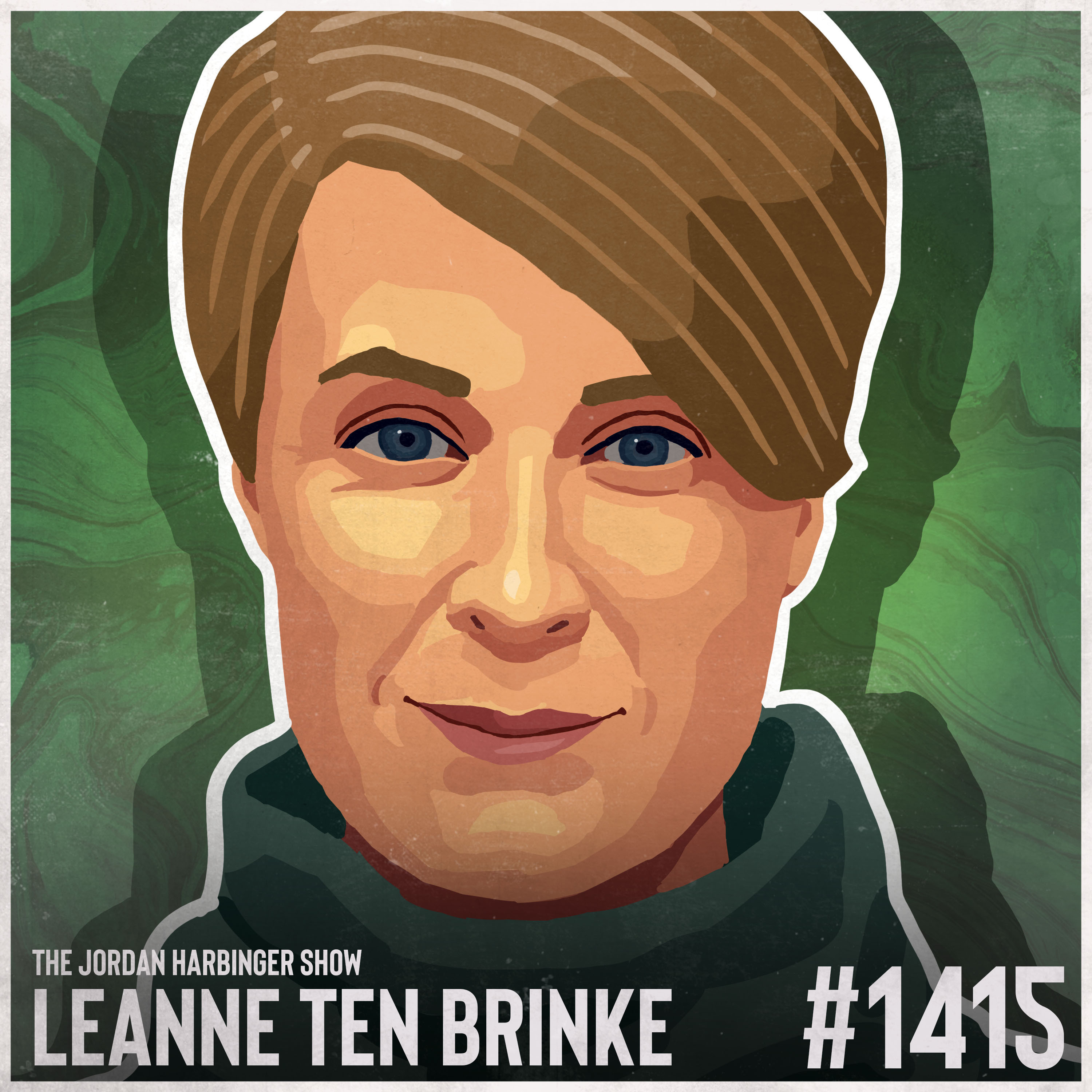
Is ruthlessness the secret to success? Researcher Leanne ten Brinke shares why the science says no — and how to handle the poisonous people around you. Full show notes and resources can be found here: jordanharbinger.com/1415 (https://jordanharbinger.com/1415) What We Discuss with Leanne ten Brinke: Why psychopathy isn’t just for serial killers. callous, manipulative traits exist on a continuum, more like cholesterol than a virus, and depending on the cutoff used, roughly 10 to 20 percent of people show elevated levels without meeting any clinical diagnosis. How poisonous people reveal their priorities. In a point allocation game, those highest in psychopathy chose $500 for themselves and $100 for a stranger over $550 and $300 — sacrificing their own gain just to beat someone else by a wider margin. Why ruthlessness isn’t the secret to success. Leanne’s study of hedge fund managers linked higher psychopathy to making less money year over year, and senators high in dark traits proved le
Your ex blew up your family and now barely parents. Is full custody the holy grail, or just a faster way for everyone to fail? Welcome to Feedback Friday! And in case you didn't already know it, Jordan Harbinger (@JordanHarbinger (https://twitter.com/JordanHarbinger)) and Gabriel Mizrahi (@GabeMizrahi (https://twitter.com/GabeMizrahi)) banter and take your comments and questions for Feedback Friday right here every week! If you want us to answer your question, register your feedback, or tell your story on one of our upcoming weekly Feedback Friday episodes, drop us a line at [email protected]. Now let's dive in! Full show notes and resources can be found here: jordanharbinger.com/1414 (https://jordanharbinger.com/1414) On This Week's Feedback Friday: You found your wife in bed with the best friend you’d been told never to worry about — then learned it was a five-year affair. Now you have your daughters five days a week, pay support, and watch your eldest sob every Friday. Is i
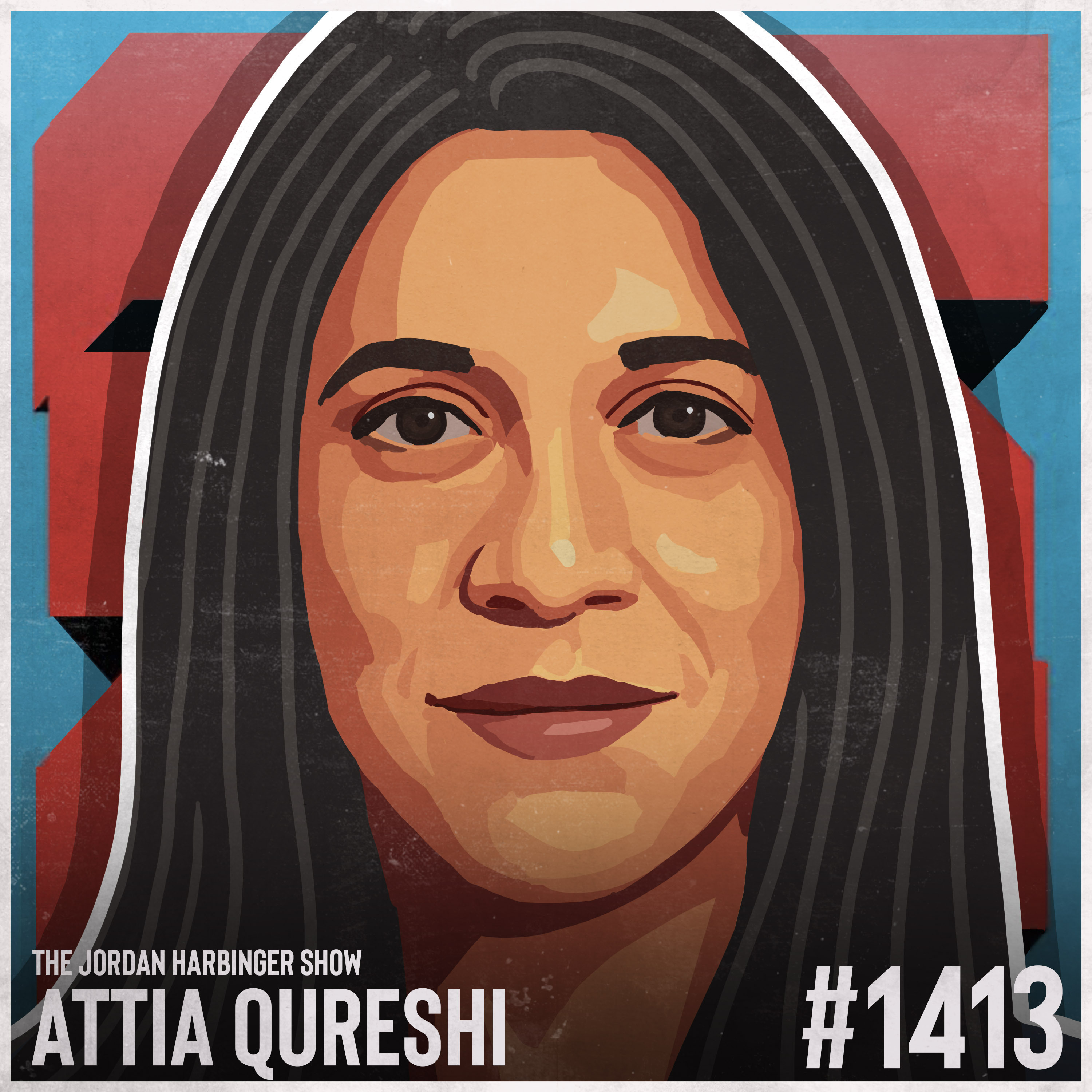
From cartel bosses to cranky neighbors, Attia Qureshi explains how to build negotiation muscle memory in 30 seconds a day — before the stakes get high. Full show notes and resources can be found here: jordanharbinger.com/1413 (https://jordanharbinger.com/1413) What We Discuss with Attia Qureshi: How Attia stood up to a cartel-linked boss derailing a Colombian farming cooperative with a drone, and why showing strength works against bad-faith actors while relational negotiation that meets everyone’s needs wins the other 95 percent of the time. Why small, no-strings gestures of reciprocity (like a box of cherries) can thaw even a hostile relationship and pave the way for a big ask — and the simple test that separates influence from manipulation: would they be upset if you told them exactly what you were doing? Why the “conqueror mentality” and worst-case-scenario thinking keep so many of us from ever making the ask — like the client who took on two promotions’ worth of responsibility over
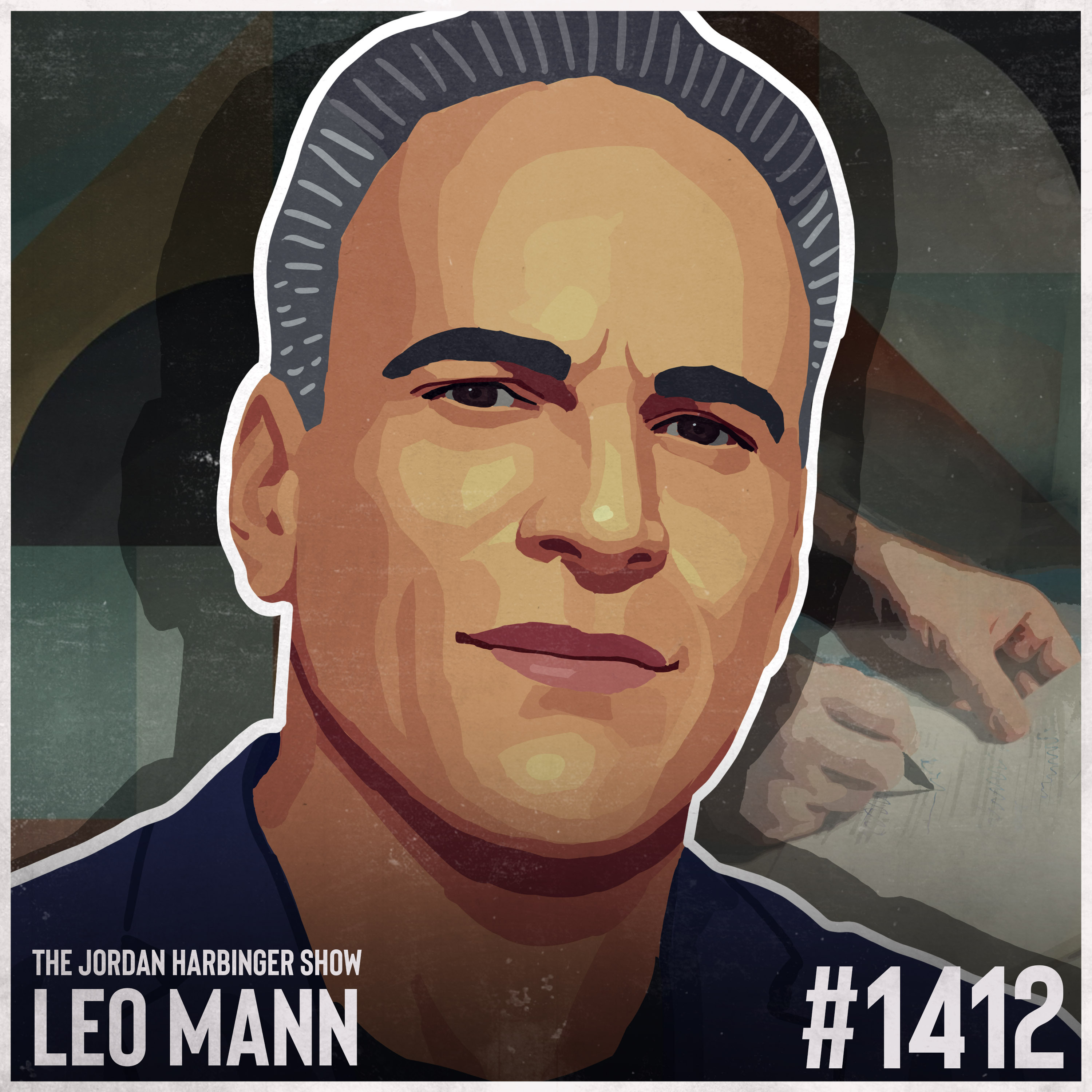
Four seconds of awkwardness or $7,000 in regret? Lawyer Leo Mann reveals how to spot (and strike) contract traps before you sign on the dotted line. Full show notes and resources can be found here: jordanharbinger.com/1412 (https://jordanharbinger.com/1412) What We Discuss with Leo Mann: Why the most boring, “standard” contract language is often the most dangerous — and how four stacked psychological traps (social awkwardness, a decision that feels already made, the authority gap, and manufactured confusion) keep smart people from reading what they sign. How a salesperson’s verbal promises can vanish the moment you sign, thanks to integration (or merger) clauses — and why anything you were told out loud needs to be written into the contract before your pen ever touches the paper. What employees should know about invention assignment agreements and non-competes — from listing preexisting side projects (even ideas) on the PIIA schedule to negotiating more consideration, a shorter term, a
On this Skeptical Sunday, Nick Pell reads between the lines of banned book lists to show how outrage moves units — and what real censorship looks like. Welcome to Skeptical Sunday, a special edition of The Jordan Harbinger Show where Jordan and a guest break down a topic that you may have never thought about, open things up, and debunk common misconceptions. This time around, we’re joined by Full show notes and resources can be found here: jordanharbinger.com/1411 (https://jordanharbinger.com/1411) On This Week's Skeptical Sunday: Why most so-called banned books aren’t banned at all — they’ve been challenged, moved to another shelf, or pulled from a school, yet remain on Amazon. No US book has faced a legality trial since Naked Lunch in 1966, while the Bible is outlawed in nearly 60 countries. How underground cartoonist Mike Diana became a rare modern exception: convicted in Florida in 1994 over his comic zine Boiled Angel, barred from drawing anything obscene even for himself, and sub
Love won over your skeptical dad, but his adult kids still treat you like an interloper. Is it about you, or the inheritance? Welcome to Feedback Friday! And in case you didn't already know it, Jordan Harbinger (@JordanHarbinger (https://twitter.com/JordanHarbinger)) and Gabriel Mizrahi (@GabeMizrahi (https://twitter.com/GabeMizrahi)) banter and take your comments and questions for Feedback Friday right here every week! If you want us to answer your question, register your feedback, or tell your story on one of our upcoming weekly Feedback Friday episodes, drop us a line at [email protected]. Now let's dive in! Full show notes and resources can be found here: jordanharbinger.com/1410 (https://jordanharbinger.com/1410) On This Week's Feedback Friday: A year and a half ago, you were torn between your older Australian boyfriend and a family convinced it was all daddy issues, so you wrote us for some advice (episode 1187 (https://www.jordanharbinger.com/family-under-threat-thanks-
Gouged (https://www.amazon.com/dp/B0GFD4X7RJ/?tag=jordanharbing-20) author Lindsay Owens explains how corporate America reinvented the ripoff with algorithms and surveillance pricing, and how shoppers can fight back. Full show notes and resources can be found here: jordanharbinger.com/1409 (https://jordanharbinger.com/1409) What We Discuss with Lindsay Owens: How price-fixing went digital. RealPage software allegedly let landlords share sensitive data and follow the same rent recommendations, complete with a hard price floor, a soft ceiling, and advice to leave units empty rather than offer discounts. What happened when 400+ shoppers filled identical 23-item Instacart carts at the same stores. 75% of items varied in price from person to person, by as much as 23%, and the average 7% gap costs a family of four roughly $1,200 a year. Why surveillance pricing, which taps your location, device, purchase history, clicks, and even what you confess to AI shopping agents, doesn’t just soak the
Forget Hannibal Lecter. Sociopath (https://www.amazon.com/dp/1668003198/?tag=jordanharbing-20) author Patric Gagne shares what secondary psychopathy really looks like — and why it’s more treatable than we think. Full show notes and resources can be found here: jordanharbinger.com/1408 (https://jordanharbinger.com/1408) What We Discuss with Patric Gagne: Psychopathy is a spectrum, and “sociopath” is clinically obsolete. Patric’s diagnosis is now called secondary psychopathy. Unlike rare primary psychopaths, secondary psychopaths feel hardwired emotions and can learn social ones like empathy, guilt, and shame, so treatment is possible. As a kid, Patric learned that admitting she didn’t feel guilt got her in trouble, so she learned to mask and lie — not out of malice, but survival. Her acting out, from stealing a barrette to stabbing a bully with a pencil, was about releasing building pressure, not causing pain. Punishment doesn’t work on psychopathic kids or adults — they’ll just find an
If you like exploring how great companies are actually built, I recommend checking out the Leap Forward podcast. Hosted by entrepreneur David Rusenko, it is a great show for our listeners who want to hear the founders of AirBnb, Reddit, Twitch and others together with the people who knew them before their success.