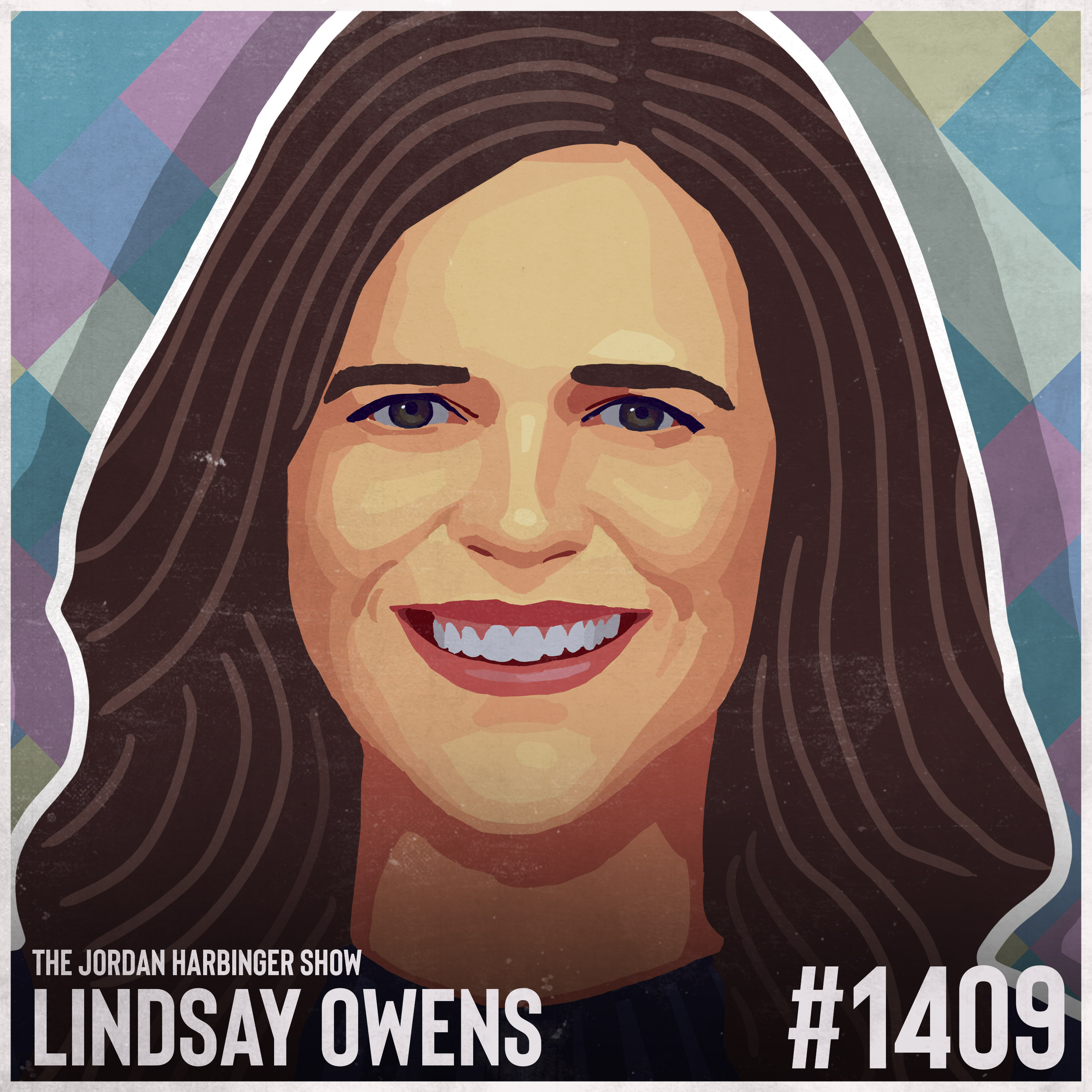
1409: Lindsay Owens | How Your Own Data Is Used to Overcharge You
82 min
Listen through the publisher, then discuss the episode here or arrange an in-person Roundtable. Your city determines where to meet.
Roundtables are designed for groups of four, with a shared subject and room for everyone to speak. Come for discussion, with no dating expectation.
Gouged (https://www.amazon.com/dp/B0GFD4X7RJ/?tag=jordanharbing-20) author Lindsay Owens explains how corporate America reinvented the ripoff with algorithms and surveillance pricing, and how shoppers can fight back. Full show notes and resources can be found here: jordanharbinger.com/1409 (https://jordanharbinger.com/1409) What We Discuss with Lindsay Owens: How price-fixing went digital. RealPage software allegedly let landlords share sensitive data and follow the same rent recommendations, complete with a hard price floor, a soft ceiling, and advice to leave units empty rather than offer discounts. What happened when 400+ shoppers filled identical 23-item Instacart carts at the same stores. 75% of items varied in price from person to person, by as much as 23%, and the average 7% gap costs a family of four roughly $1,200 a year. Why surveillance pricing, which taps your location, device, purchase history, clicks, and even what you confess to AI shopping agents, doesn’t just soak the rich — it monetizes urgency, like a sick kid, a funeral flight, or a last-minute prom dress. How repair locks on everything from McFlurry machines to John Deere tractors create a daisy chain of price gouging on purchases, parts, labor, and replacements — and why threatening to void your warranty over third-party repair is illegal. How to fight back by turning the experiment around: compare prices logged in vs. out, in the app vs. on the website vs. in store, and with or without loyalty cards. Have friends check the same fare, limit tracking, and speak up — backlash made Coke and Instacart retreat. And much more... Do you even Reddit, bro? HomeServe: Find the plan that's right for you: homeserve.com (https://www.homeserve.com/)
Episode information is provided by the publisher. Listening takes place on the publisher’s service.
This is an edited lesson from NCI Grad School. Check out Grad School here: https://nci.university/nci-4 Uploaded 26-06-25 Scholarships AVAILABLE now. Want to command attention the moment you walk in—without saying a word? In this video, Chase Hughes reveals the exact behavioral psychology, body language, and frame control techniques used by elite operators, interrogators, and top-level influencers. Learn how to walk into any room and instantly radiate authority, presence, and control—before you even speak. Free behavior skills training: https://nci.university/masterclass Chase’s books on Amazon: https://www.amazon.com/stores/Chase-Hughes/author/B06VW1H89K?ref=sr_ntt_srch_lnk_1&qid=1750928422&sr=8-1&isDramIntegrated=true&shoppingPortalEnabled=true (https://www.amazon.com/stores/Chase-Hughes/author/B06VW1H89K?isDramIntegrated=true&qid=1750928422&ref=sr_ntt_srch_lnk_1&shoppingPortalEnabled=true&sr=8-1) ⸻ Keywords: frame control, nonverbal dominance, how to own the room, influence and pers
This week on The Necessary Conversation, it's Chad, Haley, and Mary Lou. Bob is still recovering but sent in a video message about Trump calling Putin his friend that we watch together. 🇷🇺 Trump held the first-ever three-way talks with Putin and Xi, called it a "12 out of 10," and produced nothing. Then at a press conference he called Putin his friend — and when asked if Putin is a friend to America, the president of the United States said, "I can't speak to America." That same day, Trump's friend Putin launched massive strikes into Ukraine, hit Poland with two missiles — an act of war against a NATO ally — then struck near a Ukrainian restaurant and drone-bombed the first responders, killing a 7-year-old child and a 20-year-old paramedic. We watch Bob's video and ask Mary Lou: is Russia our friend? 🇨🇳 The House Foreign Affairs Committee revealed Trump's Commerce Department approved nearly 880,000 advanced AI chips for Chinese military-linked companies including Alibaba, Tencent, a
In this Jim Rohn Motivation speech, we uncover the invisible force shaping your life: your standards. It’s not your dreams, your goals, or your intentions—it’s what you tolerate. Your life will always reflect what you consistently accept. If you want to change your future, it starts by raising your floor—not just your ceiling. Key Topics From This Motivational speech: The true meaning of your personal standards Why your identity sets the limit for your results ️ How to break cycles of self-sabotage The power of non-negotiables in your daily life Why lasting transformation starts with structure Every breakthrough starts with a line in the sand. ♂️ That moment when you decide: no more excuses, no more settling, no more going back. From that moment, your life begins to rise. But raising your standard isn’t just about hype—it’s about building rituals, habits, environments, and accountability around the person you choose to become. This Jim Rohn Motivational speech Is Perfect For: ⚡ Anyone
Today, Mel is taking 58 years of hard-earned life lessons and is packing them into under an hour, to save you some of the time, frustration, and worry it took her to learn them the hard way. In this episode, Mel is fielding real questions from listeners around the world. From making friends and bouncing back from rejection to feeling stuck in life and wondering if it's all going to work out, Mel is sharing the advice she wishes she'd known sooner. And she's not holding back. You'll hear Mel get personal about her own setbacks, and what she's learned about starting over, going after what you want, and trusting yourself when life doesn't go according to plan. You'll learn: -How to stop worrying about the future when nothing feels certain -How to make big life decisions, including whether or not to have kids -How to make new friends as an adult -What to do when you get rejected from your dream job -What to do when a friend ghosts you -How to stop procrastinating and finally follow through
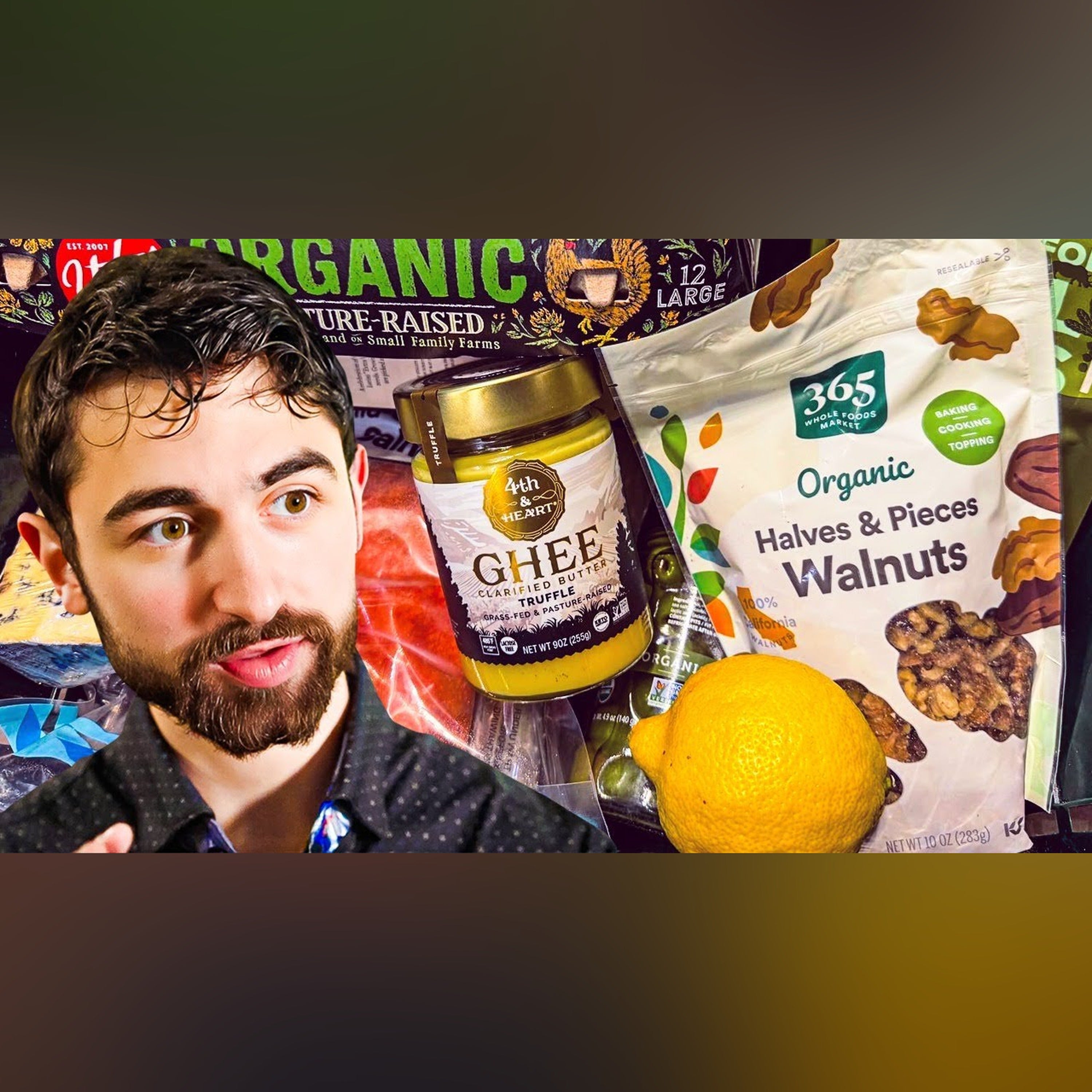
For all references and a written breakdown, references and brands recommendations, see the Newsletter: https://staycuriousmetabolism.substack.com/p/ketosis-casein-and-chocolate-what?r=40ekz2 CHAPTER *Call our service line at 815-STAY-CUR (815-782-9287) *Learn more about the data, here: https://staycuriousmetabolism.substack.com/p/life-or-death-in-the-fine-print-the?r=40ekz2 I’ve been asked countless times to make a What I Eat in a Day video — and I’ve finally cracked, like an egg. In this video, I break down what I eat and the science behind every choice. This isn’t a “follow my diet” video — it’s a framework for how to think about food. Whether you’re low-carb, keto, or simply curious about how to optimize your nutrition, this breakdown will give you practical insights into how to make science-backed food choices. For my full shopping list and preferred brands (no affiliations), check out the linked newsletter (above). Referenced Content: How to Cook Eggs: https://youtu.be/Dhmq6F5M8kc
There’s a big problem with gravity… Build and learn with KiwiCo! Gravity is a lie. I went into zero gravity to explain why… But it won't be easy because gravity is actually one of the most controversial subjects in all of physics. This is not some philosophical debate. A huge amount of the tech you use every day depends on our current (limited) understanding of gravity. If we can understand gravity a little bit better, we can build more things that are huge if true! So in this video, I joined the European Space Agency on a real zero gravity flight and interviewed theoretical physicists to understand: What really IS gravity? And what are the real life sci-fi ways we might use it in the future? Chapters: 0:00 The big problem with gravity 0:58 What is a zero gravity flight? 1:40 What is gravity? 2:49 What’s Einstein’s equivalence principle? 3:40 What does zero gravity feel like? 5:52 Why is falling the same as floating? 6:58 How did gravity disappear? 9:28 Why is gravity not a force? 11:3
You’re worried your sister-in-law’s weight loss has gone too far. Is it your place to say something, and if so, how? Welcome to Feedback Friday! And in case you didn't already know it, Jordan Harbinger (@JordanHarbinger (https://twitter.com/JordanHarbinger)) and Gabriel Mizrahi (@GabeMizrahi (https://twitter.com/GabeMizrahi)) banter and take your comments and questions for Feedback Friday right here every week! If you want us to answer your question, register your feedback, or tell your story on one of our upcoming weekly Feedback Friday episodes, drop us a line at [email protected]. Now let's dive in! Full show notes and resources can be found here: jordanharbinger.com/1417 (https://jordanharbinger.com/1417) On This Week's Feedback Friday: Your sister-in-law started a weight loss journey with strength training, macros, and a brief stint on a GLP-1. A year later, she’s still shrinking — and looking frail rather than fit. Knowing her past struggles with food, you want to help w
Think “like” and “um” make you sound dumb? Linguist Valerie Fridland reveals why so-called bad English is older — and smarter — than you think. Full show notes and resources can be found here: jordanharbinger.com/1416 (https://jordanharbinger.com/1416) What We Discuss with Valerie Fridland: Why many speech habits we call lazy or uneducated — like saying “ax” for “ask” or “walkin’” for “walking” — actually have centuries of history behind them, from Beowulf and Chaucer to the Salem witch trial transcripts. How language innovation tends to come from people with the least social power — the young, the working class, and women — and how words like “dude,” “y’all,” and even “you” were shaped by speakers outside polite society. What the “never end a sentence with a preposition” rule reveals about the elitist roots of English grammar, and why our irritation with accents or a figurative “literally” says more about how we view the speakers than the speech. Why lower-pitched voices are heard as
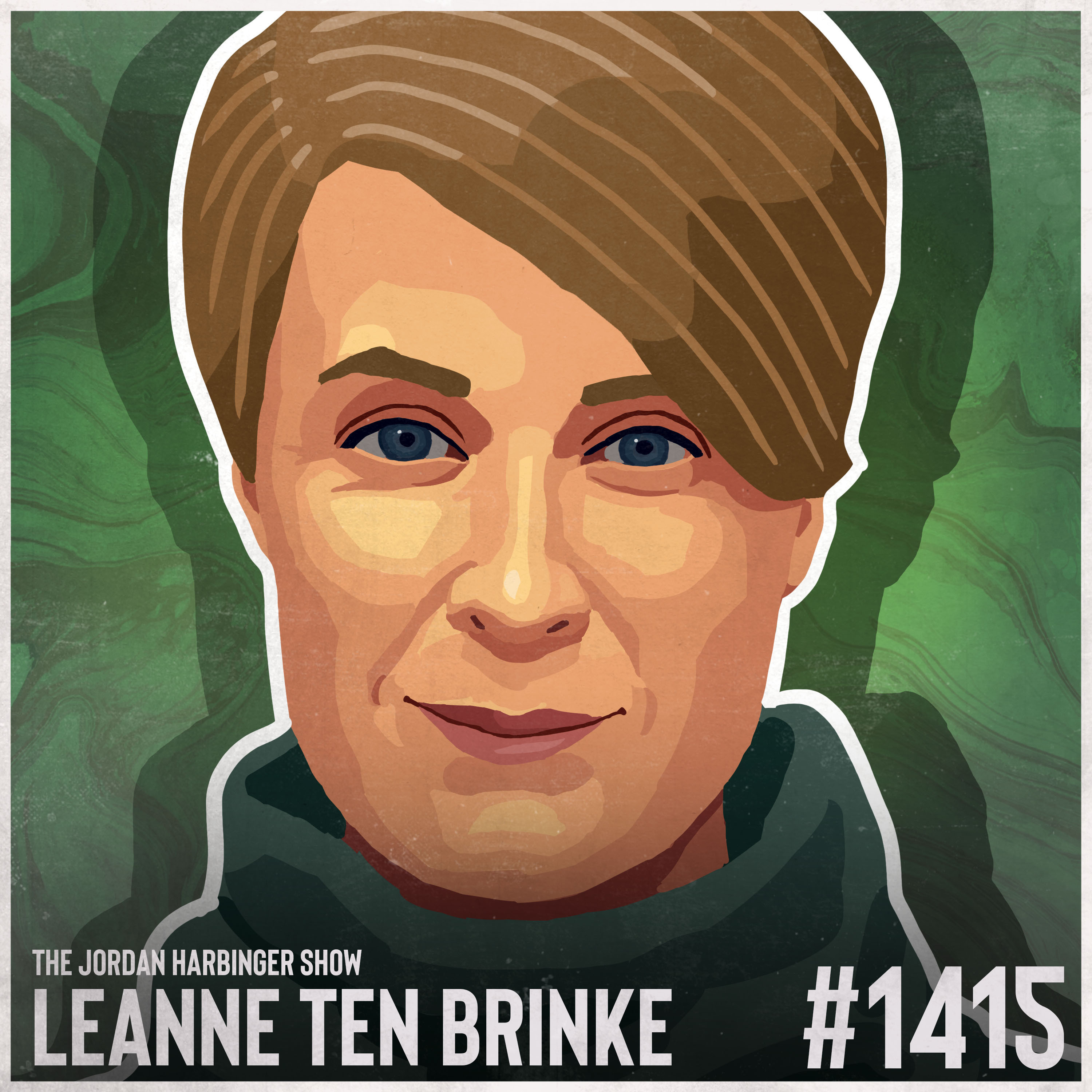
Is ruthlessness the secret to success? Researcher Leanne ten Brinke shares why the science says no — and how to handle the poisonous people around you. Full show notes and resources can be found here: jordanharbinger.com/1415 (https://jordanharbinger.com/1415) What We Discuss with Leanne ten Brinke: Why psychopathy isn’t just for serial killers. callous, manipulative traits exist on a continuum, more like cholesterol than a virus, and depending on the cutoff used, roughly 10 to 20 percent of people show elevated levels without meeting any clinical diagnosis. How poisonous people reveal their priorities. In a point allocation game, those highest in psychopathy chose $500 for themselves and $100 for a stranger over $550 and $300 — sacrificing their own gain just to beat someone else by a wider margin. Why ruthlessness isn’t the secret to success. Leanne’s study of hedge fund managers linked higher psychopathy to making less money year over year, and senators high in dark traits proved le
Supporters should be consulted before major changes in their club's ownership or location.
Share your view, then see how readers voted. No sign-in required. This poll is shared across stories.
Do you agree or disagree?
Common Quandary
A Common Quandary to discuss
Another conversation to explore, separate from this news story.
One slice of pizza remains and everyone is pretending not to want it. Can you take it?
Six friends have been circling the last slice of pizza for twenty minutes. Nobody claims it when you ask, yet two people keep glancing at the box. You are still hungry and paid the same share as everyone else.
Does politeness require leaving something that nobody will openly claim?